By
By 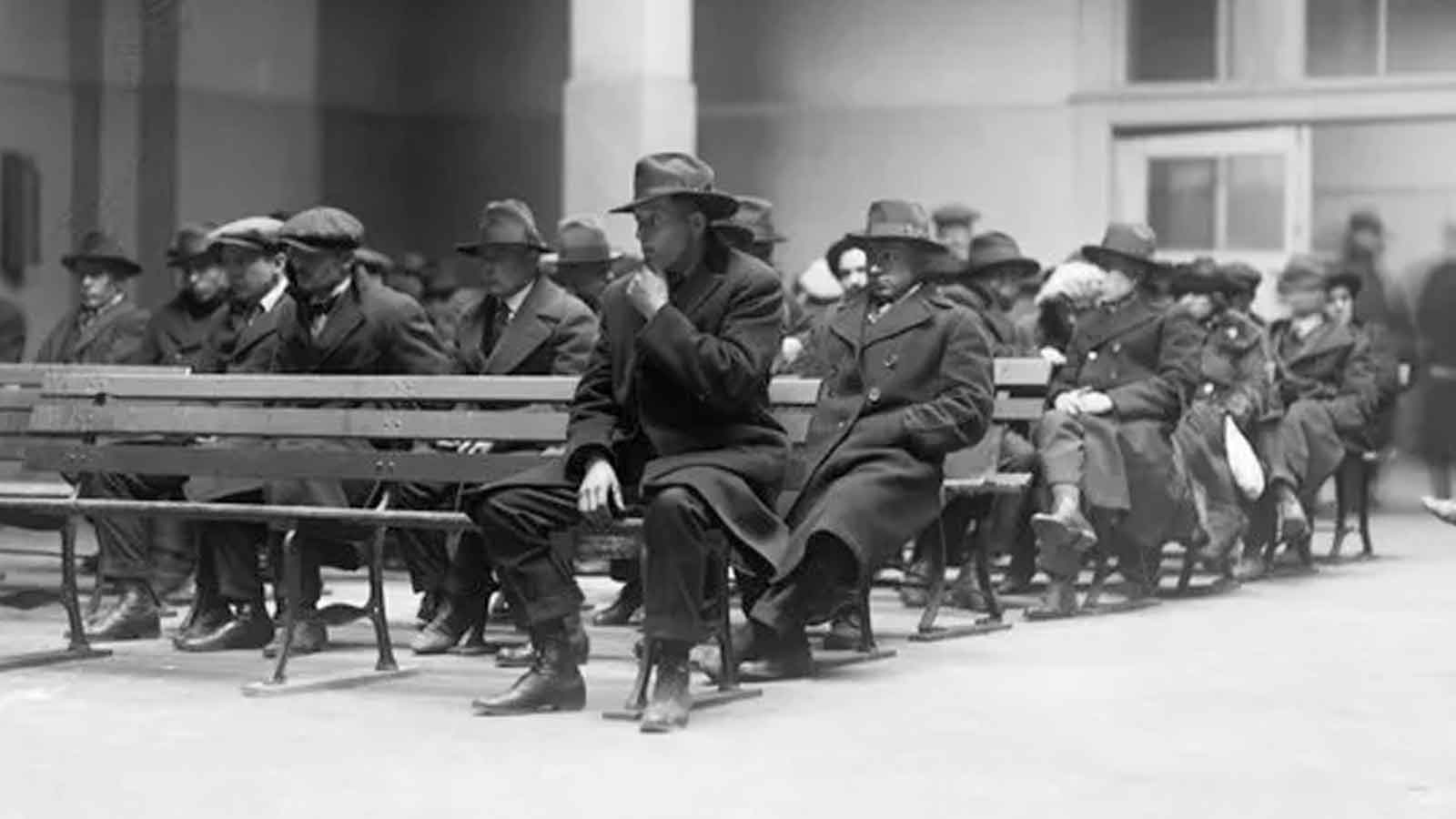
American history is filled with moments that are difficult to look back on, but understanding them is essential to understanding the country itself. Behind the familiar stories of progress, innovation, and national triumph are periods marked by injustice, violence, discrimination, political repression, and devastating mistakes. Many of these moments were captured in photographs that still make history feel immediate generations later. These are not the stories that always appear on postcards or in patriotic documentaries, but they shaped the United States in profound ways. Here are fifteen facts and images that offer a look at some of America’s most troubling historical chapters.
History
Japanese Americans Were Forced Into Internment Camps
After the attack on Pearl Harbor, the U.S. government forcibly relocated more than 120,000 people of Japanese ancestry, most of them American citizens, to incarceration camps during World War II. Families were given little time to leave their homes and were forced to live behind barbed wire.
The Atlantic
The Tulsa Race Massacre Destroyed a Thriving Black Community
In 1921, a white mob attacked the Greenwood District of Tulsa, Oklahoma, a prosperous Black neighborhood sometimes known as Black Wall Street. Homes and businesses were destroyed, and dozens of people were killed, although the exact death toll remains uncertain.
Library of Congress
Child Labor Was Once Common in America
During the late 19th and early 20th centuries, children worked in factories, mines, mills, farms, and other dangerous workplaces. Photographs taken by reformer Lewis Hine documented children working long hours and helped expose the conditions faced by young workers.
New Georgia Encyclopedia
The Trail of Tears Forced Native Americans From Their Lands
The Indian Removal Act of 1830 led to the forced removal of thousands of Native Americans from their ancestral lands in the southeastern United States. The Cherokee and other nations endured devastating journeys, with thousands dying from disease, exposure, hunger, and exhaustion.
TIME
Segregation Was Enforced by Law
For decades, Jim Crow laws enforced racial segregation across much of the American South. Schools, transportation, restaurants, public facilities, and other parts of daily life were separated by race, with Black Americans subjected to systematic discrimination.
The Friday Footnote
The Dust Bowl Displaced Thousands of Families
Severe drought, poor farming practices, and enormous dust storms devastated parts of the Great Plains during the 1930s. Thousands of families lost farms and livelihoods, while many migrated west in search of work and more stable conditions.
Business Insider
The Great Depression Left Millions Without Work
The Great Depression created unemployment and poverty on an enormous scale after the stock market crash of 1929. Families lost homes, businesses collapsed, and large numbers of Americans relied on government relief or charitable assistance to survive.
Britannica
The Salem Witch Trials Led to Executions
In 1692 and 1693, accusations of witchcraft in colonial Massachusetts resulted in the execution of 20 people. The trials became one of the most notorious examples of mass fear and judicial failure in early American history.
Wikipedia
Black Americans Faced Violent Resistance to Reconstruction
After the Civil War, efforts to establish greater political and civil rights for formerly enslaved people were met with organized violence. Groups such as the Ku Klux Klan used intimidation and murder to suppress Black political participation and restore white control.
Anne Frank House
The United States Used Nuclear Weapons Against Japan
In August 1945, the United States dropped atomic bombs on Hiroshima and Nagasaki. The bombings killed large numbers of civilians immediately and through subsequent effects, and remain among the most consequential and controversial decisions in modern history.
The New York Times
The Salem Smallpox Epidemic Was Devastating
Smallpox repeatedly caused devastating outbreaks among populations in colonial America. Native American communities were particularly vulnerable because they had little previous exposure to diseases introduced from Europe, contributing to catastrophic population losses.
BBC
The Vietnam War Divided the Country
The Vietnam War became one of the most deeply divisive conflicts in American history. Millions of Americans served, tens of thousands of U.S. troops were killed, and widespread protests at home reflected growing opposition to the war and its human cost.
Jacobin
The Red Scare Destroyed Lives and Careers
During the early Cold War, fear of communism led to investigations, blacklists, loyalty programs, and public accusations across American society. The Hollywood blacklist was one of the most visible consequences, with many entertainment professionals losing work because of alleged political associations.
Students of History
The Great Migration Was Driven by Both Opportunity and Violence
Millions of Black Americans moved from the rural South to cities in the North, Midwest, and West during the 20th century. The migration offered new economic opportunities, but racism, housing discrimination, and racial violence remained major obstacles in many destination cities.
The 1968 Assassination of Martin Luther King Jr. Shocked the Nation
Martin Luther King Jr. was assassinated in Memphis, Tennessee, on April 4, 1968. His death triggered grief, protests, and unrest across the United States, becoming one of the defining tragedies of the civil rights era.
The post 15 Facts and Photos from America’s ‘Darker’ Periods appeared first on Den of Geek.