By
By 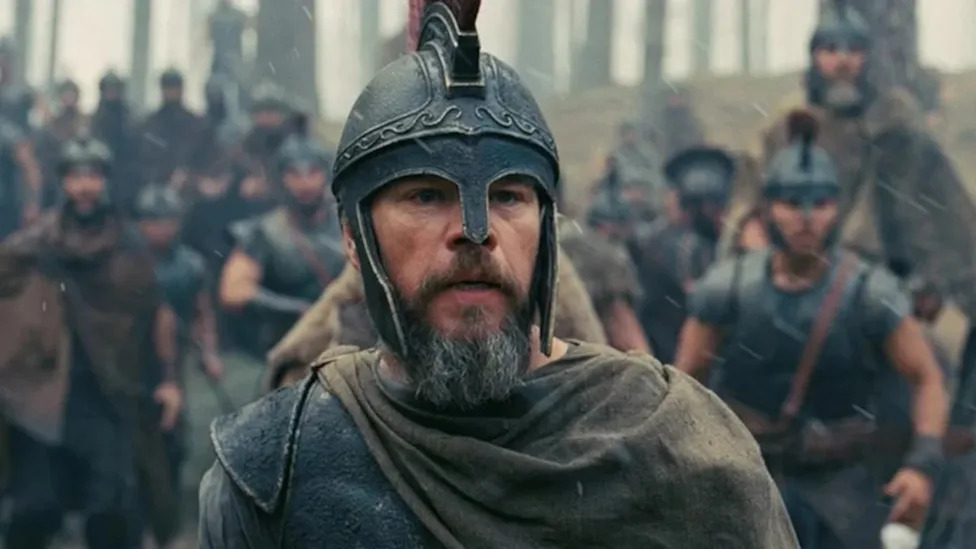
What is a good adaptation? By dictionary definition, adaptation means the process of changing and adjusting to better suit a new environment, condition, or purpose. Beginning as a scientific term popularized by Charles Darwin, it became applied to artistic endeavors in the 1860s as old plays were adapted for modern audiences of the time. Of course, this was far from the first instance of adaptation, as humans have arguably been creating adaptations since oral storytelling began thousands of years ago. Changing for a new audience is inherently part of oral storytelling.
Indeed, any English version of The Odyssey is inherently an adaptation. The text attributed to Homer is written in Homeric Greek and thus must be translated into English. Some may object that translation and adaptation are two different things, but by switching languages, one is inherently changing the source for a new environment or purpose. There are some things that simply cannot be said the same way.
Furthermore, the fact that Odysseus’s long journey home was written down at all is adaptation; although it was composed around the 8th century BC, it was transcribed from an oral tradition likely developed over several centuries in ancient Greece. And even after being written down, it seems performance was a crucial part of the storytelling. Changes in every telling were inevitable and perhaps expected. Historians have noted that the poem was often performed in the homes of important families during banquets. The story even ends at one such banquet.
Centuries later, The Odyssey continues to be adapted and thus changed and tweaked. English translations have squabbled about whether a literal word-for-word translation is more honest than one which attempts to take what is poetic in Homeric Greek and make it poetic in English.
Translations have condensed the story to make it more consumable in short sittings. Staged and filmed versions have altered the story in ways both subtle and drastic. Indeed, arguably the most famous film version before now was the Coen Brothers’ O Brother Where Art Thou? which changes the setting to the 1930s American South, among many other differences.
All of this is to say is that change is as inescapable as the tragic fates of Greek heroes. The question is whether changes work for the “new environment, condition, or purpose.” When one of the most high-profile and renowned filmmakers working today, like Christopher Nolan, directs the adaptation, the stakes are only heightened for these questions.
From the opening minutes, one can’t help but question whether this adaptation has the right answers. Within ten minutes, The Odyssey makes clear it is speaking to a 2026 American and broader western audience. The cast all speak with varying American accents, some of which are notably regional and decidedly not Greek. Audiences are treated to a diverse range of skin tones, though all share in the lack of Greek blood. As this does not have the excuse of completely transforming the setting, as the Coen Brothers did, the effect is initially quite jarring.
But then one settles into the vision Nolan always brings to his films, as he adapts this very old story for a new environment and seeks to tell the tale of a tragic man seeking redemption for the destruction he helped wrought. It is a story Nolan knows how to tell, reminding one of the wayward heroes seeking home in Interstellar, Inception, and Dunkirk. Batman is the same to some extent, as is J. Robert Oppenheimer, the subject of Nolan’s last work.
The Odyssey is no Oppenheimer. Nolan’s masterwork was a coup de grace of breathtaking editing, sound design, acting, and had one of his more deeply insightful scripts. While Nolan plunders many depths in The Odyssey, it has some rather lethargic stretches in its first two acts. Relying on Nolan’s oft-used method of telling tales as remembrances, this adaptation positions the narrative as Odysseus recounting his past to Calypso as he tries to remember who he is.
This is one of many changes from Homer’s work. Events and characters are condensed, reordered, or changed to suit Nolan’s vision of the tale. Odysseus does not trick the cyclops by calling himself Nobody, the gods are almost entirely absent (if not deliberately completely absent), and a new ending is written.
But despite its weighty, overdrawn structure at times, Nolan’s adaptation still sings true in so many ways. Accents aside, the talented performers here each suit their roles well, with Matt Damon, Anne Hathaway, Robert Pattinson, and Tom Holland getting the most time to shine. Some performers get shockingly little screentime. Indeed, Benny Safdie‘s turn as Agamemnon is much more dependent on filmmaking than acting to emphasize his aura. Lupita Nyong’o and Zendaya are hardly in the film, despite all the offscreen controversy.
It is in filmmaking where Nolan’s work really shines. Filmed entirely on IMAX cameras, regardless of accuracy or authenticity to the imagined Greek settings, The Odyssey‘s set design and costuming are immaculate and rich, serving up visual feast in frame after frame.
The design of some of the story’s most famed sequences is unique and powerful. The cyclops is truly terrifying and otherworldly, the Sirens sequence haunting and unexpectedly saddening, and the depiction of the siege of Troy striking as a marvel of sound and tension. It’s the big-screen cinematic experience that we’ve come to expect from Nolan.
Apart from the imperfections of the first two acts, Nolan brings it home (fittingly) in the amazing third act. Many of Nolan’s choices are unexpected and do indeed create new life and vision for the story. He draws out parts of the tale rarely emphasized in prior adaptations for an effective emotional catharsis.
Despite his reputation as a cold, cerebral filmmaker, Nolan’s entire career has shown a distinct humanism, and The Odyssey taps into that idea constantly. Nolan even seems to respond to the idea with a repeated line from Odysseus about not understanding how gods speak and Athena replying: “Who doesn’t understand thunder? Fire? A child’s smile?” Nolan understands these things well, and the third act is centered on the tragedy of loss in a multitude of ways. There is the joy of being reunited with loved ones, and the pain of facing one’s past and having hope for the future. Throw in some excellent sound design and editing, and The Odyssey occasionally reaches some transcendent places.
While the pacing could have been tightened and Nolan might have wrestled with the questions of authenticity of setting in slightly different ways, The Odyssey still proudly stands as one of the best film adaptations of the poem to date. It is adjusted to a new purpose and asks a modern, globalized, 2026 world to see itself in an Ancient Greek story. It is adventurous and grandiose and tragic and messy and uneven. In that way, it is very Greek.
Tell us your thoughts on The Odyssey below and rank it on Flickchart now!