By
By 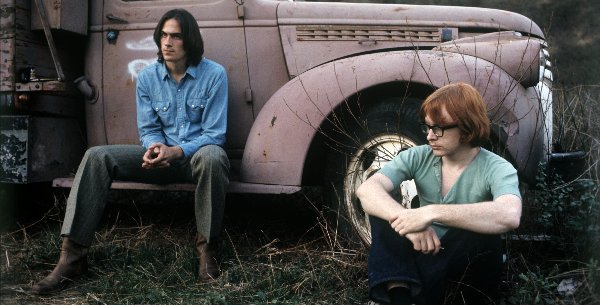
As someone bred on The British Invasion of the 1960s from an early age, I was aware of Peter Asher thanks to his partnership with Gordon Waller. Their titular duo, Peter and Gordon, inspired by The Everly Brothers‘ harmonies, garnered hits like “World Without Love” and “I Go to Pieces.”
However, like many of the propitious greats in the music industry, Asher’s career took on new turns with each emerging decade. Peter Asher: Everywhere Man pairs elements of his live show and personal reminisces with a more traditional documentary form.
Early on, a montage of familiar figures flashes across the screen. He’s there with Ed Sullivan. Mick Jagger. Paul McCartney. Linda Ronstadt. James Taylor. Diana Ross. Robin Williams. While Asher certainly had opportunities afforded him as a well-off British lad, you begin to realize it wasn’t simply a coincidence that he shared space with so many luminaries. He is a luminary himself. He had something to offer, and he did just that.
We are subsequently introduced to all sorts of people and different parts of Asher’s life pretty much chronologically. He had an early, if short-lived, career in films alongside his sisters, including Jane, who would become quite a visible actress during the Swinging 60s. It was through her that he was introduced to Paul McCartney. Paul even stayed with the family and used their basement music room to compose.
Peter was able to hear an early version of “I Want to Hold Your Hand” that Paul and John worked on together, and they gave away early Lennon-McCartney tracks, including “World Without Love.”
It was around this time that he had his first opportunity to record in EMI studios, and it sparked an interest in producing records. He admits, rather glibly, that it sounded like a dream to hire musicians better than yourself and tell them what to do! Soon enough, he would get an opportunity — not so much as a tyrant but a peer and a music aficionado.
It’s interesting hearing Asher say the British Invasion, which spread across the United States like wildfire, was 90% the Beatles and about 10% everyone else. Whatever the percentages, it’s evident Peter and Gordon experienced much of the same mania in their own right. Some of the recollections are wild!
Becoming a Producer
Asher got a major opportunity as the Head of A&R at the Beatles’ new enterprise, Apple Corps. Even as the Beatles began to disintegrate, he was on the ground floor of something fresh. It was during this period that he was introduced to the music of one of his most important collaborators, a young shaggy-haired American singer-songwriter named James Taylor. You may have heard of him.
source: Greenwich Entertainment
One obvious inflection point in Asher’s career came as Apple continued to fracture and his beloved father died unexpectedly around the same time. In the aftermath, the fledgling producer made a decision to set off once again for America and put his energy behind Taylor’s music. They didn’t achieve immediate success, but they started to build a community and with it momentum.
Their collaboration on Taylor’s second album, Sweet Baby James, orchestrated a new kind of sound with Taylor’s guitar at the center of each composition. And Asher made a choice I had never considered. He listed out all the musicians he used on the album’s jacket, giving them more visibility, and he took the same musicians out on tour so they could replicate their work in the studio during live performances. These seem like subtle decisions with major repercussions, creating more visibility for everyone.
His success with Taylor was followed by a long and fruitful partnership with Linda Ronstadt, one of the finest performers of her generation. If these were the only two artists he worked with, it would be enough, but there were many more through the years.
Conclusion: Peter Asher Everywhere Man
What comes through is not simply how fated Asher’s life seems. It’s more fundamental than that. His career was grounded in all of these life-changing and meaningful relationships.
Paul McCartney lived in his family’s home, and they shared a love of the same music. On tour, he and Gordon were backed by an American band. Asher didn’t know at that time that the guitarist Danny Kortchmar would show up in his life again when he was producing in the 70s.
Coincidentally, “Kootch” had grown up playing music with James Taylor and was also in the short-lived band The City with Carole King. Together, they would become crucial figures in the emerging singer-songwriting movement that kicked off in the 1970s.
Places like the Indica bookshop in London or the Troubadour in L.A. became cultural hubs and meeting places at a particular time and place. For that matter, Asher and Gordon Waller gravitated to each other at school because they were both aspiring musicians bonding over guitars and the Everly Brothers.
We know this intuitively, but musical endeavors at their best function in community with other people. Without knowing the first thing about producing, I gather it’s this quality that’s part of Asher’s success. He understands the human element. He was a musician, but he’s also an enthusiast. Music becomes a symbiotic relationship between the performer and the audience.
Part of the reason he still sings his songs and shares his stories generations later is out of gratitude. Because when we hear his early tunes from the Peter and Gordon days or spin a record he produced, it’s “part of an operation of reminiscence.”
Wherever we are now in our lives, the power of these songs is that they take us back to when we first heard them. Often, what makes the best songs special is how they are connected with a certain period or certain people in our lives.
So whether or not we lived down the hall from a Beatle or hung out at the Troubadour during its heyday, the same songs can have an indelible impact. In many ways, Asher has paid it forward, impacting our lives through music because music impacted him. It’s an ongoing gift we get to share in together.
Peter Asher Everywhere Man will be released in the U.S. on June 19th, 2026.
Does content like this matter to you?
Become a Member and support film journalism. Unlock access to all of Film Inquiry`s great articles. Join a community of like-minded readers who are passionate about cinema – get access to our private members Network, give back to independent filmmakers, and more.