By
By 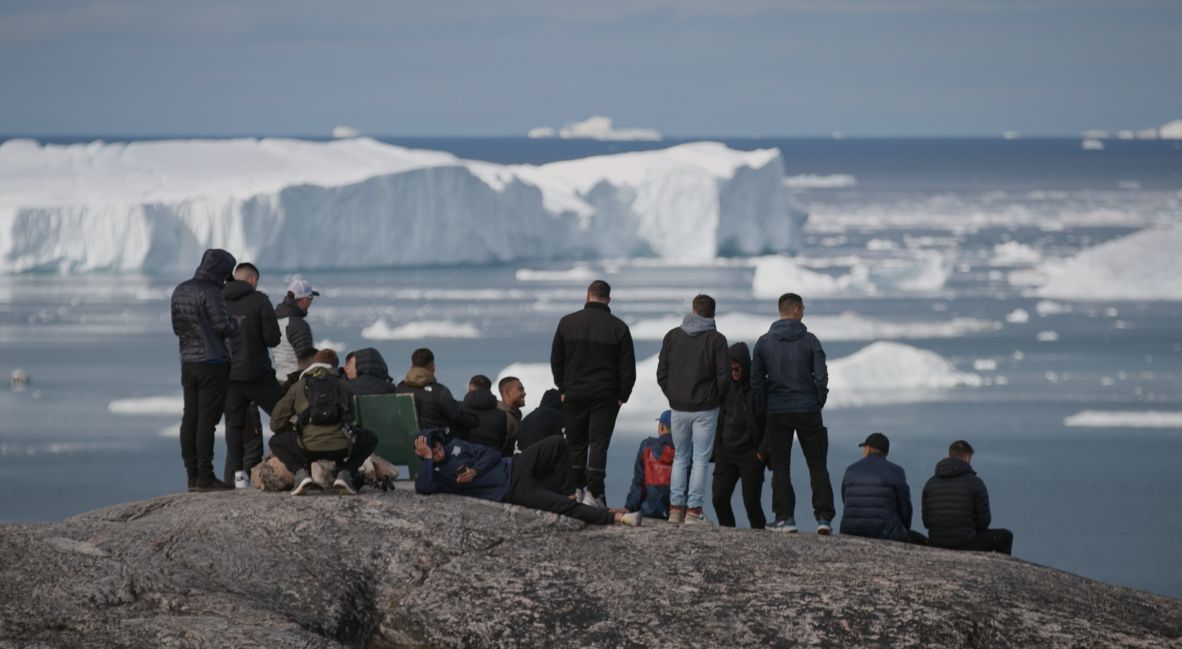
I know why some documentaries exist. World War II? Fair enough. Sharks? Obviously. Serial killers/true crime? Netflix legally has to release three a week, or white western women will cease to function. But a documentary about football in Greenland? My first thought was genuinely: Why would anyone make a documentary movie about this?
And yet by the end of No Place For Football, I was won over. Invested. Emotionally attached to tiny Arctic football clubs battling snow, mud, logistics, weather, geography, and apparently the wrath of Odin himself, just to fulfil fixtures that would make a rainy Tuesday night in Stoke feel like a Caribbean cruise.
And somehow, against all odds, it’s lovely.
Not “lovely” in the patronising “isn’t this quaint?” way. Properly lovely. Gentle. Human. Warm. The sort of documentary that sneaks up on you. You start by gawking at the absurdity of the premise and end up deeply caring whether FC Nuuk can get enough players onto a boat before a storm system destroys half the week’s schedule.
The film, directed with immense patience and affection by its filmmaking team, explores football in Greenland. Proper football. The kind that the whole world plays.
This is a place where the beautiful game collides headfirst with geography, climate, economics, and the basic physical limits of human civilisation. Greenland, as the film repeatedly reminds you, is not exactly set up for a smooth away day. There are no roads connecting towns. Let me repeat that. No roads. Imagine trying to organise the Vanarama National League if every trip to Gateshead required a helicopter, a fishing trawler, and divine intervention.
Good luck invading this, President Trump.
And yet football survives there. Not only survives — thrives.
That’s the thing that eventually drags you into No Place For Football. At first, you’re watching because the concept is bizarre. Football in Greenland sounds like one of those fake documentaries Alan Partridge would pitch to the BBC at 2am after six pints of Directors Bitter. Monkey Tennis. Youth Hostelling with Chris Eubank.
But the deeper the film goes, the more fascinating it becomes. Because this isn’t novelty football. These players care. The clubs care. Entire communities care. The dedication is astonishing.
The movie spends time exploring the history behind Greenlandic football and why the sport became such a vital social glue in isolated settlements where winters can feel eternal and travel itself becomes a military operation. Football there is not just entertainment. It’s ritual. Community identity. Shared purpose. A reason to gather. A reason to keep going when the weather outside looks like Hoth from The Empire Strikes Back.
And speaking of the weather…
Good grief.
The logistical nightmare created by Greenland’s climate becomes one of the documentary’s most compelling running themes. You intellectually understand that Greenland is cold before watching this. What you don’t understand is the sheer practical madness involved in attempting organised sport there. Flights are delayed for days. Teams stranded. Pitches unusable. Equipment arriving late. Entire schedules are collapsing because Mother Nature has decided today belongs to blizzards.
British football fans lose their minds if there’s a heavy rain and changeable winds so Burnley versus Wolves gets postponed. In Greenland, people are trying to stage football tournaments while standing inside what appears to be the opening sequence of The Thing at times.
And somehow they keep smiling.
That’s where the film really works. It never treats its subjects like curiosities. There’s no smug “look how weird these people are” energy. Instead, the filmmakers focus on the humanity of it all. Families, friendships, rivalries, pride, ambition. The tightness of the community comes through constantly. Everyone seems interconnected. Coaches helping players. Towns rallying around teams. Volunteers keeping clubs alive through sheer force of will and coffee.
There’s a wonderful underdog spirit to the entire thing. And yes, these players take it properly seriously.
One of the most endearing elements in the film is seeing teams use proper computer-based tactical analysis. You expect people to be drawing arrows in the snow with sticks. Instead, they’re reviewing footage like Pep Guardiola preparing for a Champions League semi-final.
There’s something gloriously funny about watching a player arrive after a five-hour boat journey through Arctic fog only to get hauled into a tactical session involving heat maps and pressing triggers. But it’s also admirable.
To them, this matters, and that sincerity becomes infectious.
That’s the magic trick No Place For Football pulls off. It starts as an anthropological curiosity and gradually becomes a sports drama where you genuinely care about results, performances, and whether teams can physically reach the next fixture without being consumed by the North Atlantic.
Visually, the film is pretty stunning too.
Frequently when we get sent these links to a review copy of a movie, we end up watching them on a computer of some kind. I fired up my in TV browser for this one and was watching it on an 85″ television after spending about 15 minutes typing in the URL. I’m genuinely glad I watched it like this.
Some of the landscapes are jaw-dropping. Greenland itself becomes one of the documentary’s stars. Vast icy coastlines. Tiny settlements dwarfed by mountains. Endless skies. Harbours wrapped in mist. The scale of the place constantly reinforces how improbable all of this is.
And the drone work? Outstanding. Honestly, whoever operated those drones deserves a pay rise Tiny football pitches sit against enormous frozen landscapes. Players training while surrounded by mountains that look like they were designed by Peter Jackson.
I half expected Werner Herzog to wander onscreen muttering about mankind’s futile struggle against nature while somebody warms up for a cup tie in minus fifteen degrees.
If I had any complaints itis that the film can feel quite long at times. There are moments where you realise this is undeniably a specialist subject. At certain points you suspect the editors fell deeply in love with Greenlandic football culture. There are sequences that probably could have lost ten minutes here and there. Some repetition creeps in. Certain themes get revisited one too many times.
But honestly? Football fans have sat through approximately five hundred hours of Welcome to Wrexham at this point, watching Ryan Reynolds discover that lower-league football occasionally contains rain and emotional people. So if we can make five seasons and counting out of Wrexham trying to get promoted while Rob McElhenney learns how pies work, then Greenland absolutely deserves its moment too.
At least Greenland has polar bears.
The slower pacing almost becomes part of the atmosphere after a while. The film isn’t trying to manufacture fake tension every thirty seconds. It simply lets these people exist onscreen. It trusts the audience to become immersed in the rhythms of the place. Sometimes that works beautifully. Occasionally it drifts. But even when it meanders, it remains oddly comforting.
There’s also an unmistakable sense of respect from the filmmakers. They clearly fell in love with the people they were documenting. And that affection becomes contagious for the audience. By the end, I found myself weirdly appreciative of Greenlandic football, and also of the opinion that some of these teams would probably still beat Tottenham Hotspur.
Look, I’m not saying Spurs would struggle away at Nuuk in sub-zero temperatures after three cancelled flights and a fishing boat transfer. I’m merely saying they are a bit shit right now.
Can you imagine Richarlison trying to play tiki-taka football while horizontal snow attacks his eyebrows at 40mph? There are probably Greenlandic centre-halves named Bjorn who would absolutely flatten Richarlison into the Arctic Circle and then politely apologise afterwards while offering him fermented shark meat.
Frankly, I’d watch that documentary too.
In the end, No Place For Football succeeds because it understands something fundamental about sport. At its core, football isn’t really about money or fame or billion-pound TV rights. It’s about people wanting to belong somewhere. Wanting to compete. Wanting to gather together and care about something collectively. This documentary captures that beautifully.
It may not be everybody’s bag. If you have zero interest in football whatsoever, the lengthy runtime and niche subject matter will test your patience. But if you’re a football fan fascinated by the extreme edges of the sport, then there’s something deeply engaging here.
It’s funny. Heartfelt. Frequently gorgeous to look at, and quietly comforting.
And by the end, you completely understand why somebody made a documentary about football in Greenland. I’m glad they did.
No Place for Football is now on streaming and digital services.
The post Review: NO PLACE FOR FOOTBALL (2026) appeared first on Last Movie Outpost.