By
By 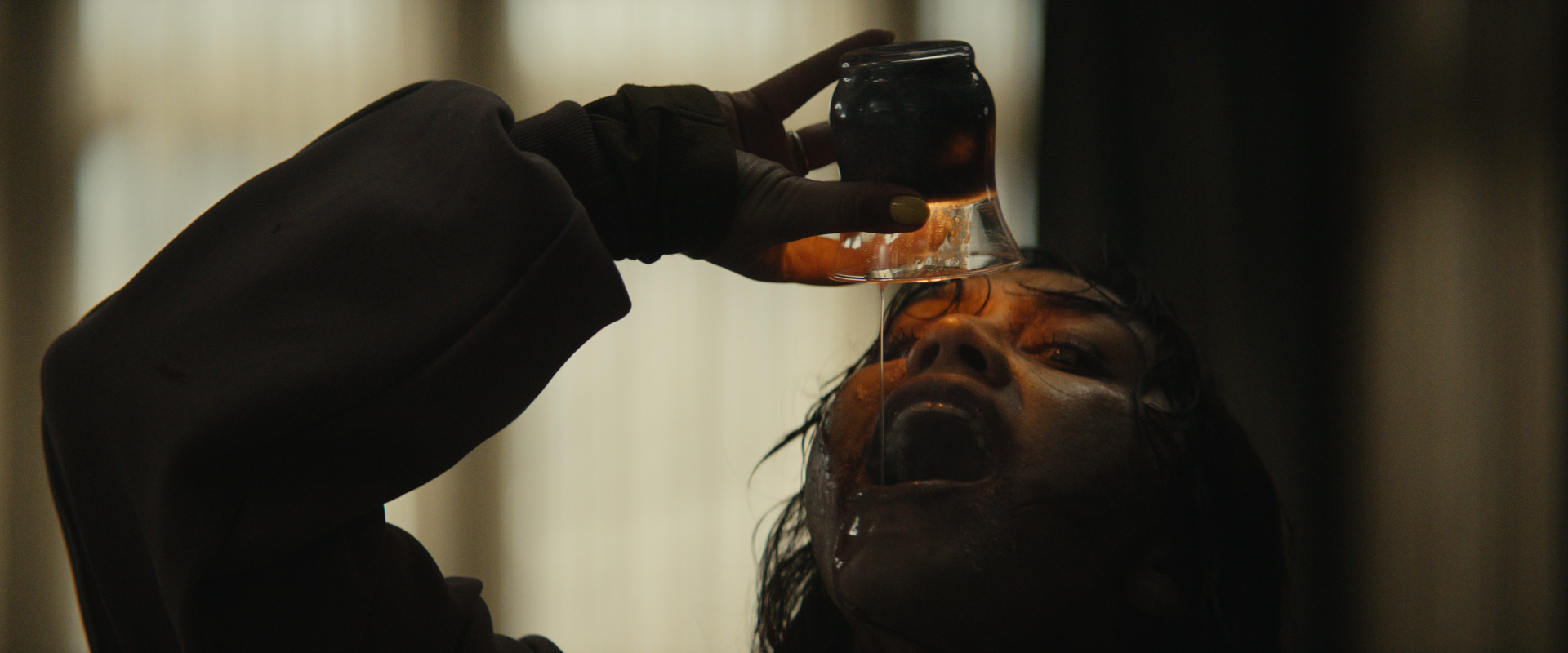
Evil Dead Burn (2026)
Every family has its demons.
Sam Raimi’s Evil Dead has never been gentle. It has also rarely been this joyless. Evil Dead Burn is the sixth chapter in the long-running horror franchise and the third modern non-Ash entry after Fede Álvarez’s Evil Dead in 2013 and Lee Cronin’s Evil Dead Rise in 2023. Directed and co-written by Infested director Sébastien Vaniček, alongside Florent Bernard, this latest blood-soaked outing once again leaves Ash Williams behind and follows a new group of unlucky souls who discover that death, grief and family trauma make a rather messy combination.
The problem with this newer branch of Evil Dead is that it can forget what made the originals so beloved in the first place. Raimi’s chapters were nasty, violent and extreme for their time, but they were also alive with madcap energy, demonic mischief and a wicked sense of fun. The 2013 reboot worked well enough as a grim new interpretation, stripping things back to brutal survival horror with a sharper emotional hook. Evil Dead Rise found a stronger balance, adding a fresh city location, some ghoulishly funny moments and a nastier family dynamic that helped it feel like more than just a cabin reheat.
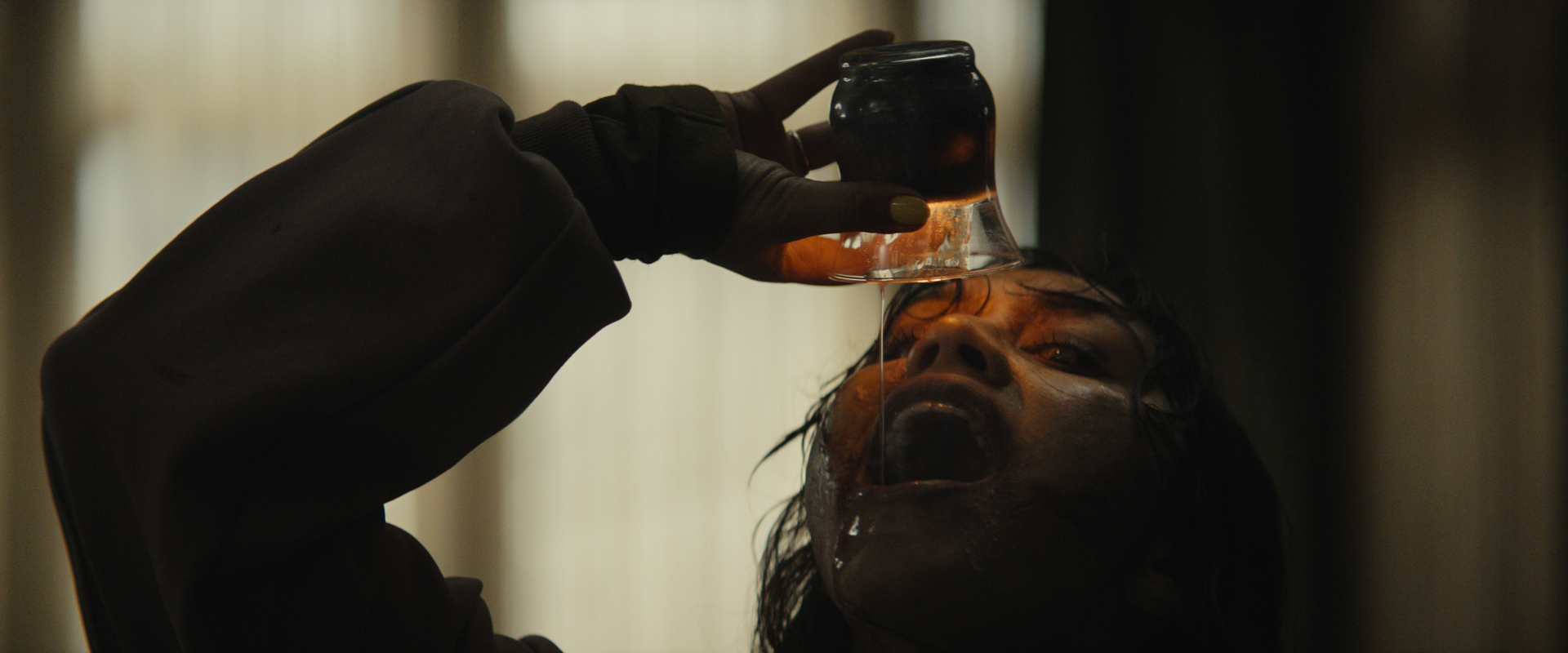
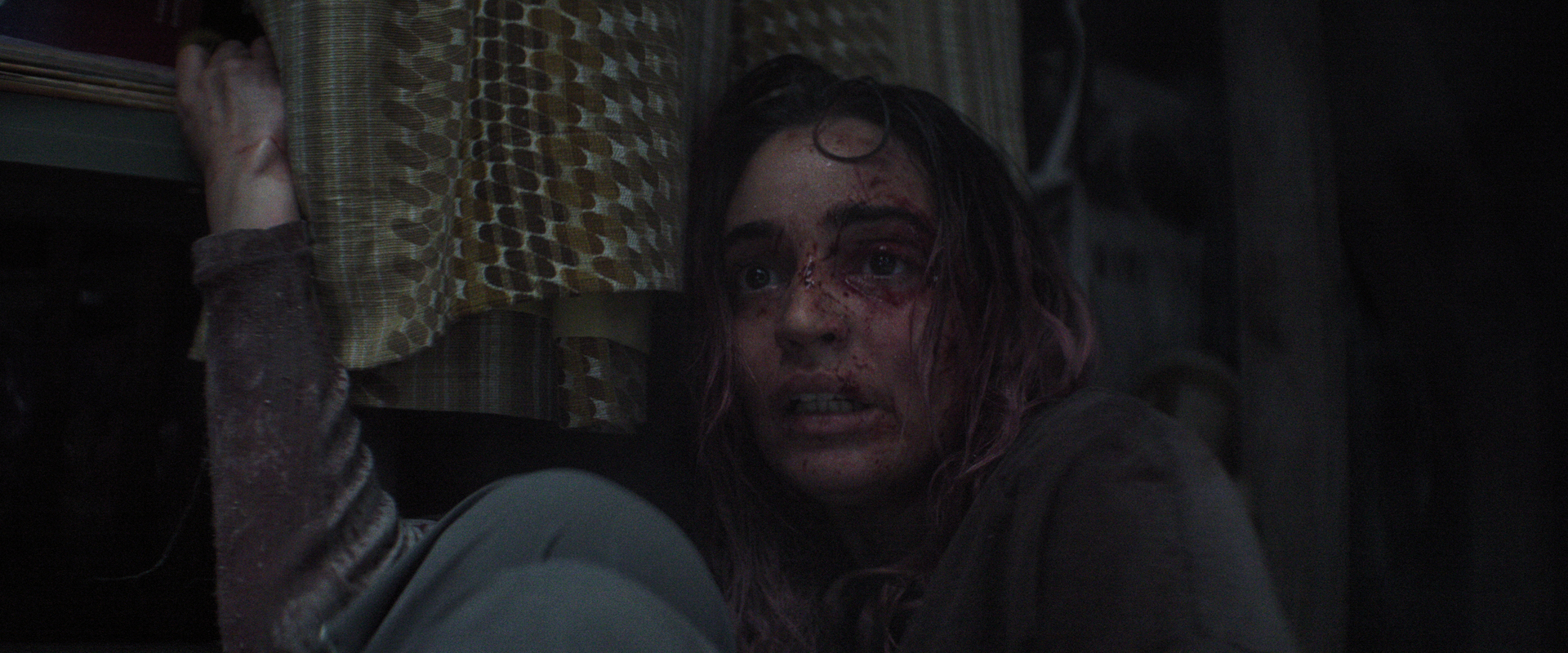
Evil Dead Burn, however, takes the series into much meaner territory. This is less Evil Dead than a New French Extremity endurance test with a Book of the Dead connection. Vaniček clearly wants to deliver the most savage chapter yet, and on that front, mission bloodily accomplished. There is blunt force trauma, dismemberment, impalement and enough bodily punishment to make the Deadites look less like gleeful demons and more like angry practical-effects supervisors with a grudge.
The story follows Alice (Souheila Yacoub), a French woman living in America, who is left grieving after the death of her husband, William “Will” Price (George Pullar), in a fatal car crash. Searching for comfort, Alice joins Will’s family at their dilapidated, secluded home, where his mother Susan (Tandi Wright), father Edgar (Erroll Shand), brother Joseph (Hunter Doohan), Joseph’s girlfriend Thya (Luciane Buchanan), and elderly grandmother Polly (Maude Davey) have gathered in the aftermath of the tragedy. What begins as a tense period of mourning soon turns increasingly hostile, as Alice finds herself surrounded by in-laws who may not be ready to accept her as one of their own. With grief, suspicion and family secrets already poisoning the household, the arrival of a demonic force pushes the reunion into chaos as members of the family begin transforming into Deadites.
That setup has potential. By placing Alice inside the home of the family that protected or excused her abusive husband, Burn could have found a strong emotional core. Instead, the screenplay by Vaniček and Bernard handles the abuse subplot with a heavy hand, repeatedly underlining Alice’s trauma without developing it in a meaningful way. The same goes for the story’s attempt to revive the Kandarian Dagger, a weapon rooted in the franchise’s Raimi-era mythology. On paper, it gives Alice a clearer survival objective and connects Burn back to the series’ past. In practice, it feels half-baked, more like a convenient franchise trinket than a meaningful addition. Rather than giving the horror added weight, these ideas become more grim ingredients in an already unpleasant stew.
Character development is also frustratingly thin. Alice has the clearest arc, but even she is trapped inside a story more interested in what can be broken, punctured or torn apart than who she actually is. The supporting characters are sketched mainly as sources of household tension before becoming bodies in the path of the next gruesome set-piece. Susan, Edgar, Joseph, Thya and Polly all have roles to play, but few leave much of an impression beyond their function in the carnage machine.
The performances are committed, even when the writing gives them little room to breathe. Yacoub brings physical intensity and emotional strain to Alice, while Wright and Shand add flashes of chilly family menace as Susan and Edgar. Yet the ensemble is not given enough personality to become memorable. In a franchise that gave horror one of its most iconic heroes, that lack of character spark is a major problem.
Vaniček also attempts to inject some comedy through Polly, whose dementia and blunt comments are used for awkward comic relief. The intention is clear: restore some of the strange humor that once made this franchise so distinctive. The execution, however, feels misjudged. Instead of cutting through the darkness with demonic absurdity, the jokes often sit uncomfortably beside the story’s heavier themes and rarely land with the manic precision of Raimi’s best work.
Technically, there’s enough to admire. Vaniček has a strong eye for claustrophobic spaces, grimy textures and chaotic movement. The production design is deliberately gritty and ugly, turning the family home into a rotting pressure cooker of grief, resentment and gore. Whether that ugliness is the point or not, it still makes the experience oppressive in a way that becomes draining rather than exhilarating. The cinematography by Philip Lozano gives the carnage a grim, tactile quality, and there are moments where the staging has real force. A few extended sequences show what this chapter could have been with sharper pacing and a stronger sense of demonic mayhem. The final ten or so minutes finally begin to feel more like Evil Dead, delivering a louder, wilder and more franchise-friendly burst of energy. By then, however, the damage has already been done.
The biggest issue is not the gore. Evil Dead and gore go together like chainsaws and poor decision-making. The issue is tone. This franchise works best when the horror feels deranged, inventive and perversely entertaining. Evil Dead Burn is certainly deranged and inventive in places, but it’s rarely entertaining. It is brutal without being thrilling, nasty without being cheeky and intense without being much fun. For the first time, an Evil Dead chapter feels like something to endure rather than enjoy. There is craftsmanship here, and gorehounds looking for the harshest entry in the series may find plenty to admire. But as a continuation of one of horror’s most beloved franchises, Evil Dead Burn mistakes cruelty for personality and bloodshed for momentum. This one does not raise hell. It just leaves the series looking a little burnt out.
2.5 / 5 – Alright
Reviewed by Dan Cachia (Mr. Movie)
Evil Dead Burn is distributed by Sony Pictures Australia