By
By 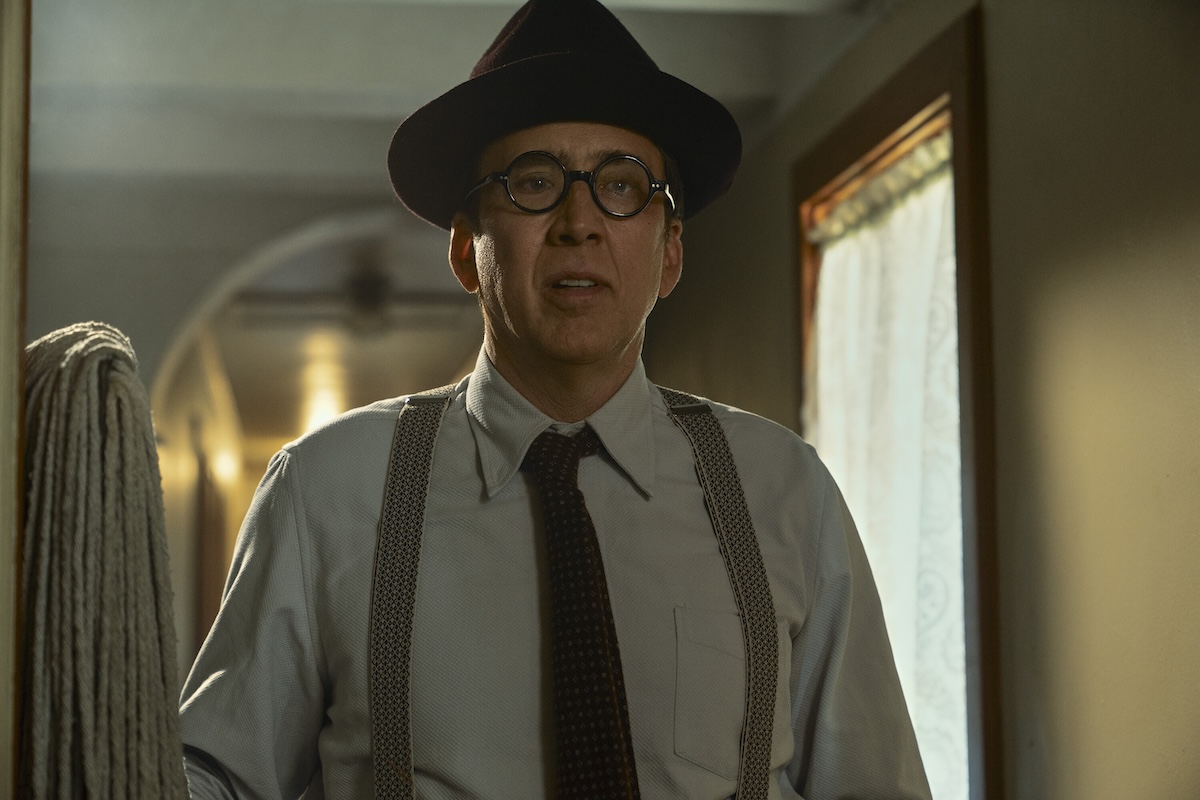
For a show about a guy whose radioactive blood allows him to shoot webs and crawl walls, Spider-Noir has surprisingly little to do with the superhero that inspired it. Not only does it star Nicolas Cage as Ben Reilly instead of Peter Parker, and not only does it eschew contentions like Uncle Ben and a blue and red suit, but Spider-Noir doesn’t even have that much in common with the 2009 Marvel Comics series Spider-Man: Noir or the movie Spider-Man: Into the Spider-Verse.
This isn’t to say that Spider-Noir has no antecedent. Rather, its touchstones are found on the screen, not the comics page. Showrunners Oren Uziel and Steve Lightfoot used the superhero show as an opportunity to pay tribute to some of their favorite crime movies of the 1930s and ’40s. For audiences drawn in by the lure of Spider-Man, Spider-Noir also serves as a primer, pointing them towards some of the greatest entries in the film noir genre, including these five classics.
Great Guy (1936)
Early in the fourth episode of Spider-Noir, Ben Reilly flaunts his noir fan creds by going to a theater to watch Great Guy, one of the lesser known crime outings for James Cagney. Although a song and dance man at heart, Cagney made his name in crime pictures like The Public Enemy, The Big Heat, and the J. Edgar Hoover-approved G-Men, in which Cagney brings his tough guy persona to law, wearing a badge as a member of the FBI.
Great Guy veers closer to G-Men than it does his more famous crime films, as he plays former boxer Johnny Cave, now an agent of the Department of Weights and Measures, assigned to investigate corrupt politician Marty Cavanaugh. Perhaps because Eliot Ness caught Al Capone on tax evasion charges, pencil pushers like Cave were frequent heroes in 1930s movies, provided that they still got off a few gun shots and got in a few gut punches. It’s easy to see why the morally-conflicted Ben Reilly would be interested in Great Guy, with its tale of a bad man trying to do good in a world filled with untrustworthy leaders.
The Maltese Falcon (1941)
Cage has made no secret about his admiration for Humphrey Bogart, and several of Bogie’s best parts inform his performance. We’ll talk about one in particular shortly, but the power dynamics between Reilly and his nemesis Silvermane (Brendan Gleeson) recall the relationship between Bogart’s private investigator Sam Spade and Kasper Gutman, the domineering rich man played by Sydney Greenstreet, in The Maltese Falcon.
Based on the novel by Dashiell Hammett and written and directed by John Huston, The Maltese Falcon follows the amoral Spade, who initially takes a job to track down the missing sister for a client (Mary Astor), which results in the murder of his partner and in a new task, to find a statue of the titular bird for Gutman. On the page and on the screen, The Maltese Falcon establishes the genre’s reputation for over-plotting. Ben Reilly can understand Spade’s frustration as a simple arson case balloons into a conspiracy that goes far beyond New York City.
Gilda (1946)
No noir is complete without a femme fatale, a beautiful woman who lures the hero deeper into trouble, against his better judgment. Charles Vidor’s Gilda gave the genre one of its all-time greats with Rita Hayworth as lounge singer Gilda Mundson. Gilda is the wife of Ballin Mudson (George Macready), a gangster living in Buenos Aires, who chooses not to punish American Johnny Farrell (Glenn Ford) for counting cards in his casino. Instead, Mudson hires Farrell to watch over Gilda, a job made easier by the affection she shows him.
But is it true love? Or does Gilda want to pit the hard-luck Farrell against her powerful husband? The answer isn’t as clean as you’d think, which might be why a movie-watcher like Ben Reilly doesn’t pick up on the similarities between his situation and that of Farrell. When lounge singer Cat Hardy (Li Jun Li) walks into his office and makes romantic overtures, Reilly’s cynical defenses melt. And when Hardy performs a big musical number in the first episode, Reilly’s just as dumbstruck as Johnny Farrell watching Gilda Mundson sing “Put the Blame on Mame.”
The Big Sleep (1946)
Speaking with Den of Geek, Cage identified playfulness as one of his favorite elements about Bogie. That might come as a surprise to those who only know the actor by reputation, assuming he always plays a stoic tough. But when Reilly puts on a silly hat and thick glasses to impersonate a janitor, Cage is borrowing from Bogie as well. Namely, he’s mimicking a moment in The Big Sleep, in which Bogart’s Philip Marlowe dons a pair of nerdy glasses and an upturned hat to question a bookseller.
In The Big Sleep, directed by Howard Hawks and based on the novel by Raymond Chandler, Marlowe becomes a nerd (and then returns to his normal self for a much steamier interrogation with the clerk across the street) on behalf of his client General Sternwood (Charles Waldron), who hired the PI to look into the actions of his daughters (Lauren Bacall and Martha Vickers). The search leads him through bookstores and into the world of lowlifes and gangsters, with a plot so convoluted that not even Chandler could follow it. But what The Big Sleep lacks in clarity, it makes up for with thrilling performances, performances that inspire Cage’s take on Ben Reilly.
The Lady From Shanghai (1947)
It would be a spoiler to get into too much detail about how and when Spider-Noir borrows from The Lady From Shanghai. Suffice it to say, Uziel and Lightfoot love Orson Welles movies, and paid homage to one of the most dazzling sequences from the auteur’s 1947 picture, which co-starred Rita Hayworth in another sizzling femme fatale performance.
Welles plays Michael O’Hara, an Irish sailor who falls for Elsa Bannister (Hayworth), wife of disabled attorney Arthur (Everett Sloane). Smitten by Elsa, Michael agrees to serve on Bannister’s yacht, where he agrees to help the attorney’s partner Grisby (Glenn Anders) fake his own death, hoping that the reward will finance a future with Elsa. Instead, Michael finds himself caught in an ever-evolving plot, filled with deception and dissemblances, which Welles visualizes with a still-impressive sequence in a house of mirrors. The sequence sets a standard that even modern shows like Spider-Noir, with all their special effects, aspire to match.
Spider-Noir is available to stream on MGM+ and Prime Video now.
The post Spider-Noir: 5 Classic Film Noirs That Shaped the Spider-Man Adventure appeared first on Den of Geek.