By
By 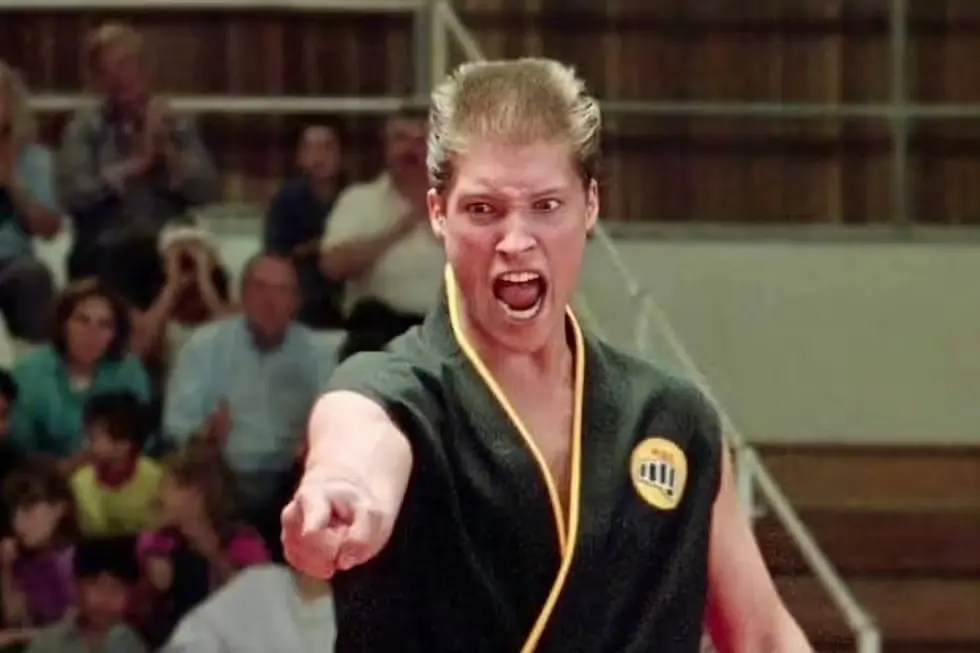
You played Mike Barnes in The Karate Kid Part III. Had you seen the earlier Karate Kid films before, and did you ever imagine you’d become part of such an iconic franchise?
I started as a fan of the films and bought a ticket to see The Karate Kid and The Karate Kid II. Once I learned about the open call audition for the role of Mike Barnes, I became fixated on winning the role. That required me to visualize myself becoming part of the franchise. The mind is a powerful force. It can become your greatest ally or your fiercest adversary.
What is your martial arts background?
My earliest martial arts experience was actually in Aikido. I took several beginner classes. Later I began studying Shotokan under Sensei William Stoner of New Castle, Pa. Eventually, our school joined the Japan Karate Federation under Shihan Fumio Demura.
Over the years I have studied some BJJ under Black belt and UFC vet Gabe Ruediger, Krav Maga and currently study at Master Jun Chong’s do hang in Beverly Hills, California. Additionally I was trained by Master Pat Johnson while preparing for The Karate Kid III and have also been trained by 10th degree Kenpo Grandmaster Darryl Vidal in stick fighting.
I heard you worked as a bouncer at a bar in Boston – do you remember any dangerous situations, and what did that job teach you?
I most important lesson with that job taught me it was that I did not want to be a bouncer. Period. I would tremendous amount of respect for anyone in the Security field. I remember one time that the captain of the Boston University wrestling team came in the bar. We’re talking about a guy that was in the unlimited weight category. Huge. He decided after getting pretty tuned up that it was a good idea to start pulling his pants down.
The owner of the bar gave me the plum job of discussing this with him. I told him that I get my drinks at the bar for a discount and if you would promise to keep his pants on. I would happily buy him drinks the rest of the night. I think Mr. Miyagi would have approved.
What made you decide to pursue a career in Hollywood?
I grew up in small western Pennsylvania steel town. I think that I was always curious about what lay beyond the horizon. And always had a sense of Wonderlust. I was looking for a way to express myself creatively and have a voice.
As a young boy, the movie theater was my oasis, my safe space where I could escape bullies, and get lost in the world of my earliest mentors, Obi-Wan Kenobi, the outlaw Josey Wales and Rocky Balboa. These characters planted the seats that later proving to my passion for film.
Do you remember when the producers approached you about returning for Cobra Kai? Did they have a different vision for your character compared to what we ultimately saw?
We discussed the ideas on a Zoom call. What we discussed was ultimately what we filmed. The big three were incredibly collaborative and generous during the entire process.
Was it surreal returning to the Karate Kid world and seeing Daniel LaRusso, John Kreese, and Terry Silver again?
It was more than that it was an incredibly positive feeling. It was tremendous to have the opportunity to work with Ralph, after all those years. Since that time I have appeared in thousands of episodes of network television and dozens of feature films. I returned to the role as an infinitely more experienced actor which allowed me to bring nuance and layers to the character.
Although I’ve known Billy Zabka since 1988, we’ve never had the opportunity to work together. Finally getting to do so was a bucket list moment for me. I also loved the dynamic between Barnes and Yuji’s character Chozen. We have also known each other for years.
You had a major fight scene with Johnny Lawrence—what was the most challenging part of it? Was it always planned that way?
The most difficult aspect of that scene was the fact that I have a full tear of my rotator cuff during filming. Postponed surgery because the surgeon told me that if I had a surgery, there was no way I would be healed in time for season six of cobra Kai.
The fight choreographer, Don Lee, structured the fight so that I could fight from my dominant right side minimizing the usage of my injured left arm. All things considered I think it worked out pretty well. Additionally, the other difficult constraint was a final amount of time to shoot the scene, but that’s how it always is in television.
Why do you think Mr. Miyagi’s story continues to resonate decades later?
The knowledge and truth of his sage words and philosophy is universal and timeless.
Can you tell us about the Bloodhound TV series, where you play Special Agent Chris Stone?
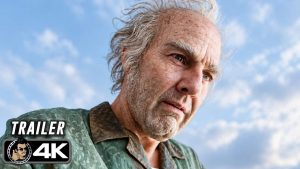
Bloodhound, now renamed “Framed” centers around the Isabel Gardner art museum heist. To date it remains the largest unsolved art theft in American history. The story moves between present day and the 1990’s when it occurred.
My character is dealing with mental decline and wants to solve the case before he is no longer able. The project is still in production. It has been a blast. We filmed in Italy as well as the US which gives the story a heightened visual aesthetic.
Bodyman is directed by your wife, Michele Kanan, and stars you alongside Johnathon Schaech, Emilio Rivera, and Tom Arnold. What can audiences expect from it?
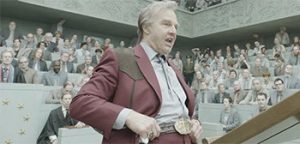
Bodyman is a political action thriller set against the backdrop of the fentanyl in human trafficking, crisis and unfolds during a California senatorial race. I played Senator Henry Whitaker, a deeply morally conflicted man.
Can you tell us about your book Success Factor X?
Success factor X is a book that I co-authored with the late Jill Liberman. We approached 50 exceptional individuals coming from all different fields of endeavor, ranging from the rap industry to business to sports to entertainment and ask them what success means to them and their advice on how to achieve it. It was an extraordinary undertaking and the information encapsulated in that book is invaluable for anyone trying to accomplish their goals.
You’ve appeared on TEDx talks and other platforms—what inspired you to move into motivational speaking?
As an actor communication is fundamental to my ability to influence the world around me. Motivational speaking is another conduit to my overall goal of inspiring others. I have a unique philosophy and battle test tested strategies that I am part when I speak that I believe can create a positive transformation.
What advice would you give to young martial artists trying to break into Hollywood today?
From a marketing standpoint, there’s never been a better time in history to break into the business. Various social media platforms for martial artists all over the world to elevate their visibility and get noticed by film on television decision makers.
What are your three favorite martial arts films of all time?
The Karate Kid, Bloodsport, and Lone Wolf McQuaid.
What are your two favorite fight scenes in film history?
Ironically, they are not martial arts scenes, but boxing scenes. The final fight in Rocky and Rocky IV.
Which three recent action movies would you recommend watching?
John Wick (all of them). Keanu is amazing.
Disclaimer: The images and videos used in this interview are sourced from other sources and are used for informational and editorial purposes only. All images remain the property of their respective copyright holders.
The post Sean Kanan Interview appeared first on Budomate Magazine.