By
By 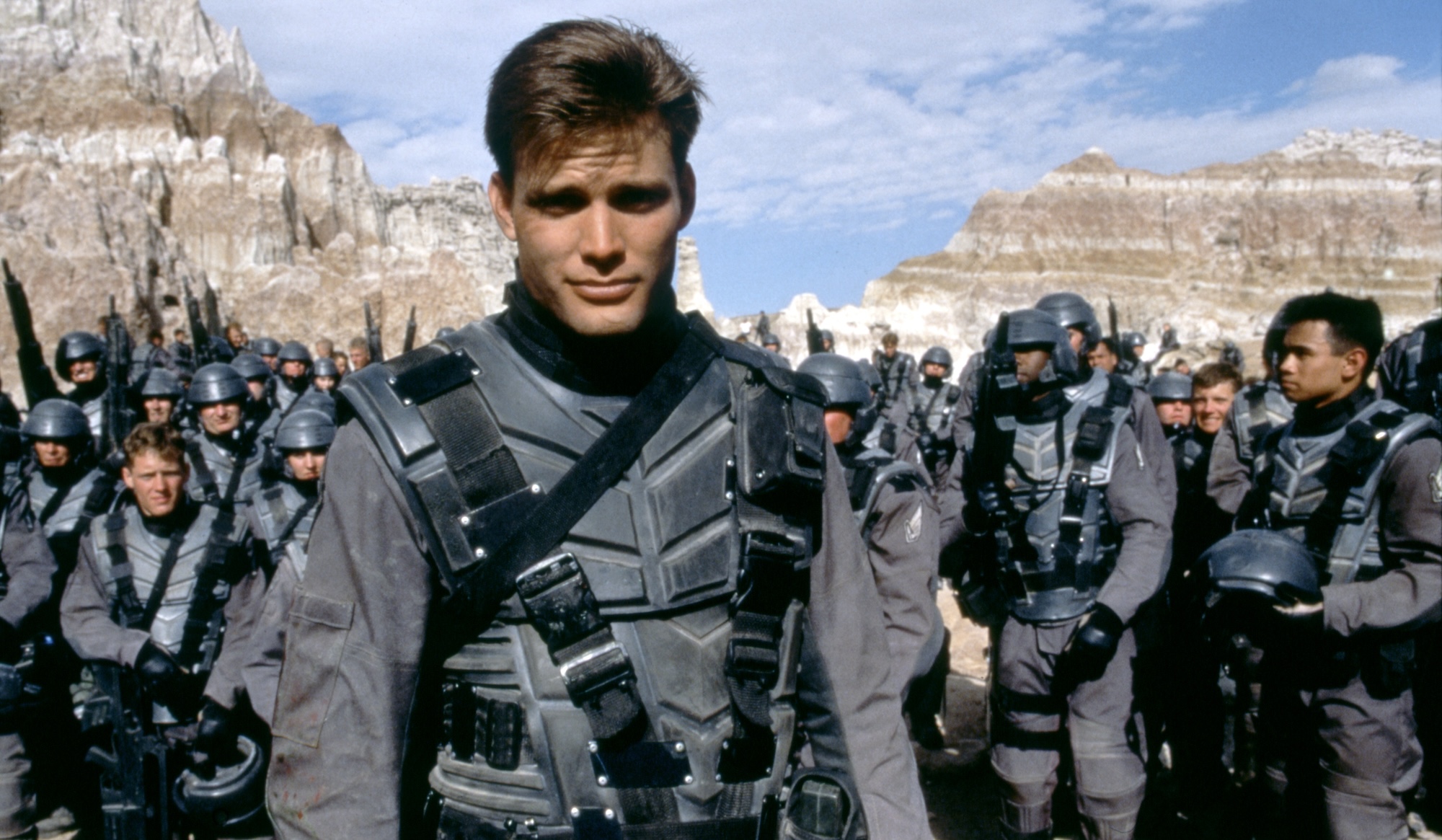
So over the long Labor Day weekend in the U.S.—a three-day respite that unofficially marks the end of summer with excursions to the beach or mountains, or at least hot dogs on the grill—President Donald Trump took to his personal social media app, Truth Social. Quite a lot. And among the President of the United States’ many wordy, often bombastic posts was what appeared to be an announcement for the honest-to-Palpatine uniforms intended for the burgeoning U.S. Space Force.
Complete with collar insignias, shoulder details, and hues that come in the monochrome selection of “space gray,” “midnight black,” and “silver gray,” the attire looks nearly like the spitting image of Imperial officers from Star Wars movies, not to mention a litany of other sci-fi characters deliberately modeled on a mode of fashionable dress in Germany between the years 1933 and 1945.
And if you think we’re joking about Nazi influences running rampant in the image shared by Mr. Trump, please consider he or his team admitted to taking exactly such (in)direct influence. In the same infographic with all the other details is a small section labeled “Design Inspiration.” Apparently the whole aesthetic is informed “by the discipline and functionality of the Starship Trooper uniform.”
Oh, dear.
For those uninitiated in the minutiae of increasingly obscure Gen-X and millennial pop culture, Starship Troopers was an exceedingly arch 1997 adaptation (and some would say outright betrayal) of Robert A. Heinlein’s 1959 sci-fi novel of the same name. Directed by Dutch provocateur and cynic Paul Verhoeven, the movie cast pinup-ready TV and rising Hollywood teen talent like Casper Van Dien (One Life to Live), Denise Richards (Melrose Place), and Neil Patrick Harris (Doogie Howser, M.D.) as bright, attractive, fresh-faced American youths who spout patriotic platitudes with the usual heavy-handed delivery of a ‘90s primetime soap. Or a 1930s propaganda film.
That was by design.
“We really, really tried to get away from the novel, because we felt that the novel was fascistic and militaristic,” Verhoeven was quoted by IndieWire as saying in 2016. “Our philosophy was really different [from Heinlein’s book],we wanted to do a double story, a really wonderful adventure story about these young boys and girls fighting, but we also wanted to show that these people are really, in their heart, without knowing it, are on their way to fascism.”
The effect comes through in the film with the good-looking people dying by the thousands as they’re sent on starships far away to fight an alien race of “bugs” that are blamed for a meteor striking planet Earth. (The evidence is deliberately vague and suspiciously scant.) There the kids are fed into what they happily refer to as “the grinder” of war while posing in ‘90s-flavored riffs on Leni Riefenstahl iconography. And in case this was missed by anyone, Harris’ intelligence officer wears the form-fitting, Nazi-infused regalia of a tight black uniform and its oh, so crisp, cleanly midnight-black, long leather trench coat.
According to actor Michael Ironside, even while making the film Verhoeven apparently mused he might be “too subtle for the American consciousness.” Paul, it would seem you weren’t whistling, “The Deutchlandlied.”
While Starship Troopers’ parody of hyper-nationalism and jingoistic valor is played with a tongue firmly in its cheek, it would seem many generations of viewers who grew up with it—or were already in their 50s in 1997—apparently missed the metaphor completely; this, despite the attire of the “good guys” in the movie looking conspicuously like the Third Reich, or at least the bad guys in Star Wars who were modeled on the same Triumph of the Will iconography. (Just wait until the president discovers where the word “stormtrooper” comes from!)
Yet somehow the architects of the growing U.S. Space force over at the Department of Defense and their orange-hued executive in the White House somehow missed these parallels while explicitly designing the Space Force after this? Maybe.
I’m not so sure since even Verhoeven had the good taste to not include the peaked cap of SS officers on Neil Patrick Harris. Sometimes, even to a satirist, a design can be a little too Nazi for a joke, much less a real-life military division.
The post Do We Really Need to Explain the Nazis Metaphor in Starship Troopers, Mr. Trump? appeared first on Den of Geek.