By
By 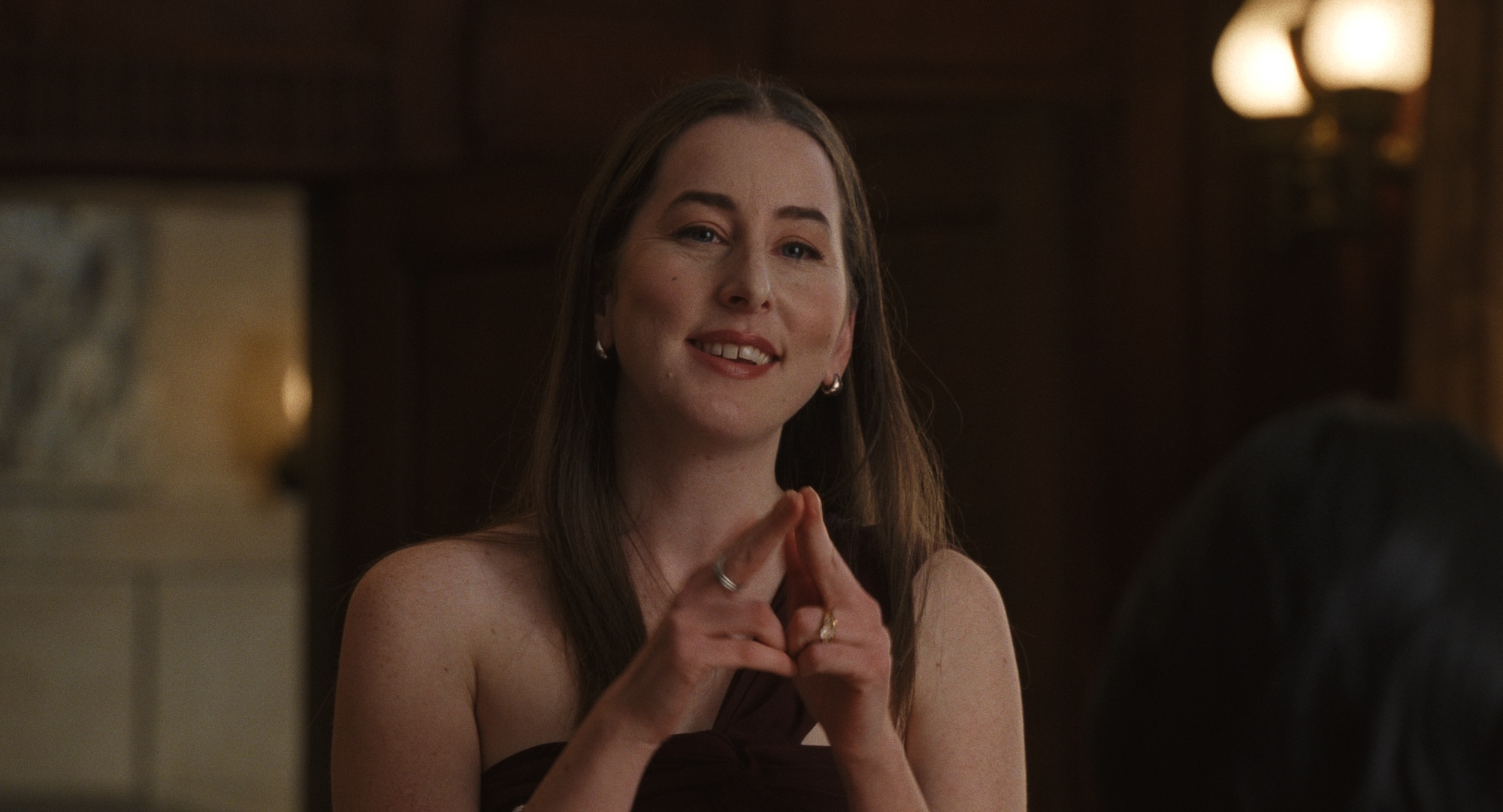
This article contains major spoilers for The Drama.
It’s always a lovely thing when a real, honest word-of-mouth hit like The Drama comes around. In a little over two weeks, the Robert Pattinson and Zendaya-led indie about the most traumatic wedding event this side of Westeros has firmly inserted itself in the pop culture mindscape, with audiences each weekend flocking to cinemas to see what all that drama is about—as well as debate what they would have done if they found themselves at such a ceremony?
The discourse has been so intense around this oblique comedy from writer-director Kristoffer Borgli (or is it a comic-tragedy?) that even someone who was out of the country during its release, like myself, was aware of all those wagging tongues on social media. Yet, much to my eternal appreciation, the nuclear blast-level of a spoiler at the heart of the premise—where we learn what is so bad that it essentially detonates Charlie and Emma’s wedding—has largely been kept under wraps by the folks who saw the movie. Perhaps it is out of a sense of etiquette and decorum usually reserved for a well-heeled wedding party that this secret is being protected. Or perhaps like all the characters in the picture, it is just the sort of thing we’re taught to not mention in polite company.
Whatever the reason, it really is an atomic level catastrophe when Charlie (Pattinson) and Emma (Zendaya) are asked to confess to each other the worst thing they’ve ever done. Actually, scratch that. They’re not asked, they’re pressured, compelled even, by Charlie’s best man Mike (Mamoudou Athie) and Mike’s wife Rachel (Alana Haim). In truth, even Mike seems wary of the idea since he and Rachel never talked again about his own confession of using a college girlfriend as a “human shield” when they were attacked by a stray dog in Mexico. But one senses that, not for the first time, Rachel drags the story out of him all so she can get the juice—that oh, so sweet drama—from the new happy couple.
Charlie’s story is decidedly unsatisfactory with him vaguely suggesting he kinda cyber-bullied some kid when he was 14 or 15. Yet his inability to remember any details calls into question whether the bullying ever happened or if he was just grasping at something to impress the others. After all, this is a man who freely admits in his wedding toast that he only worked up the courage to talk to Emma the first time they met by lying about finishing the same book she was reading in a coffee shop.
Emma’s confession on the other hand? Oh, there was no lie there. Under extreme duress, as well as the good vibes that a third or fourth bottle of wine on date night can unlock, Emma confides that she might’ve, possibly, fantasized about shooting up her high school. Actually… it was more than a fantasy. She almost did it, complete with a plan, a hit list, and the gun itself, which she carried to school that day in her backpack.
It’s such an earth-shattering realization that compounds from a universal cognitive dissonance between the well-coiffed, glamorous effect that Zendaya naturally cultivates and the image of the lonely, alienated teenager with a gun, that characters and audiences alike cannot fully process the information before the dinner, like the film, is left in a chaotic limbo. Rachel quickly suggests in no uncertain terms that Emma is a monster and immediately makes the scene about herself and how she has a cousin who was put in a wheelchair by a shooting. And that high-handed condemnation immediately shuts Emma off before she can talk through why she felt the way she did back then or how she might have changed… She did change, right?!
Indeed, the rest of the movie is her trying to move on from the unwise confession and Charlie stewing on it in the final six days before their wedding, determining whether he in fact is marrying “a psychopath,” as Mike and Rachel call the bride-to-be.
Obviously a lot of the appeal of the movie is from the audience debating whether they could “forgive” Emma for the horrible urges she had 15 years ago. It’s such a big question mark, it sneaks up on us that Charlie’s own neurotic fecklessness becomes an even bigger “drama” as his mind festers until he turns their wedding into a crescendo of cringe-comic nightmare fuel.
And yet, the one element I feel that is really overlooked is the much worse secret that the three “regular” characters—Charlie, Mike, and Rachel—normalize and immediately sweep under the rug, especially after Emma’s admission. While there is plenty of discussion online about the general awfulness of each of them, especially Rachel, what is minimized and overlooked is that she, um… might’ve just low-key admitted to killing a kid. And if she did kill a child (or almost did), why did the context clues of her story make it okay and worthy of no further thought or follow-up while everyone else, including the audiences, spends the rest of the movie Rashomon-ing every gesture or glance Emma ever made?
While Pattinson and Zendaya are both phenomenal in the film, special credit must really go to Alana Haim who tackles with gusto the role of THAT woman. Her realization of Rachel is a distillation of the most “can I speak to your manager?!” ego-centric Karen-ing a cinema screen has ever contained. She is both the instigator, bringing up Mike’s “worst thing,” and the one who throws the pivotal confession into gnawing ambiguity by killing the conversation before Emma can talk about why she outgrew those thoughts. Rachel all but throws the table over and turns the run-up to the wedding into a whole other drama about whether she will attend their event… or tell anyone else there that she thinks the bride is a mass murderer-in-the-making.
What thus gets overlooked is the true heinousness of Rachel’s confession. While she drags these stories out of Mike and Emma like a quack dentist struggling with a pair of crumbling teeth, she virtually throws away what she did. “I locked a kid in a closet once,” she all but scoffs.
Eventually, though, the truth becomes clearer. When she was a teenager, she once went into the woods near a summer home where she met a “slow kid” who, alongside her, investigated an abandoned trailer. She then, for reasons she cannot explain, dared the kid to get inside a closet and immediately locked the door behind him. He made such a commotion screaming, crying, pleading with her to open the door and let him out of the dark that she “freaked out” and just… left him.
When his father came by that night asking about his son, she also wouldn’t tell him where he was. “I didn’t want to get in trouble,” she states matter of factly. It got so bad that the next day, she saw a search party in the woods looking for him. Nonetheless, she thinks this is a funny enough story to laugh about over drinks years later, because as she adds as an afterthought, “They did find him… and for some reason it didn’t come back to me.”
Because of the way Borgli stages the confessions in this scene with a rising sense of horror—again, omitting Charlie’s weak sauce abstention—audiences are not allowed to dwell on Rachel’s story, especially after what Emma lets slip. But there are insidious layers to this, including the fact that there is good reason to second-guess the motivations and contexts of Rachel’s potentially far darker “worst thing.” Unlike Emma, Rachel seems completely oblivious of how fucked up it is what she did.
At its core, the most damningly unspoken thing is Rachel basically left a kid for dead. While nothing justifies the vile thoughts Emma had as a teenager, she technically did not act on them and is now aware they were wrong and a source of shame; a fetishization of guns and violence after being nominally bullied as a friendless kid in a new school. Conversely, the way Rachel selectively suggests both her privilege and her victim’s disabilities—she calls him “slow” and talks about sneaking into a dilapidated trailer like she was a poverty tourist on mini-holiday—says much.
We know from flashbacks that Emma did not come from money. Presumably Charlie and his friends do, with the English fop being well-paid enough in academia to afford a swanky townhouse loft in New York City. Rachel likewise suggests her wealth given how she fetishizes poverty, and as a child even had the impulse to punish it and those who are different from her. She implicitly sees others as beneath her. Hence she locks a possibly disabled child in a closet and out of either fear, or perhaps contempt, leaves him screaming in the dark.
Most crucially, however, is the fact that her story does not add up. If he really was discovered after being locked in a dark space for a day, one would think he would blame the girl who locked him there in a heartbeat. But Rachel shrugs that off. “For some reason, it never came back to me.” Or: she assumes the child was found. There was a search party! Otherwise, like everyone else, she selectively edits the horrible parts of her life until they’re bearable. Normal, even. Out of sight, out of mind. So if he wasn’t found, at least alive, does it really matter? He wasn’t one of us.
I’d suggest that he almost certainly was not discovered alive if she got away with it. And if as an adult Rachel never dwelled on it, she sure as hell was able to compartmentalize it as a child. At the end of the day, The Drama is about the lies we tell, and the truths we obscure and sanitize.
The irony of the film is that Emma never lies to Charlie except when she is helping him cope with his own substantial failures. She tells him his lying is weird on their first date when he admits he never read the book he used as his pick-up line. And, fitfully and with much caution, she candidly reveals the worst thing she ever did. Charlie doesn’t have a real answer for that at the start of the movie. He made up that cyber-bully story on the spot, much as he lied about the book or, later, omitted that he kissed his co-worker Misha (Hailey Gates). Charlie claims to be obsessed with the truth but hides from it constantly.
Emma, on the other hand, only offers the reality, even when she’s aware of its limitations. After Charlie fumbles their meet-cute, she says “want to go again?” and pretends like she didn’t see him screw up the first time. And at the end of the movie, she does the impossible thing Charlie cannot; she looks past the worst thing he ever did, which ends up being a doozy of a wedding disaster, in order to at least find a chance of a future together. If they’re going to build a life around one another, they need to be candid, even when agreeing on the self-deceptions needed to get there.
It’s a level of awareness that completely eludes people like Rachel, who look at the world with a permanent sneer transfixed above their wine glass.
The Drama is in theaters now.
The post The Drama’s Darkest Secret Is the One Nobody Is Talking About appeared first on Den of Geek.