By
By 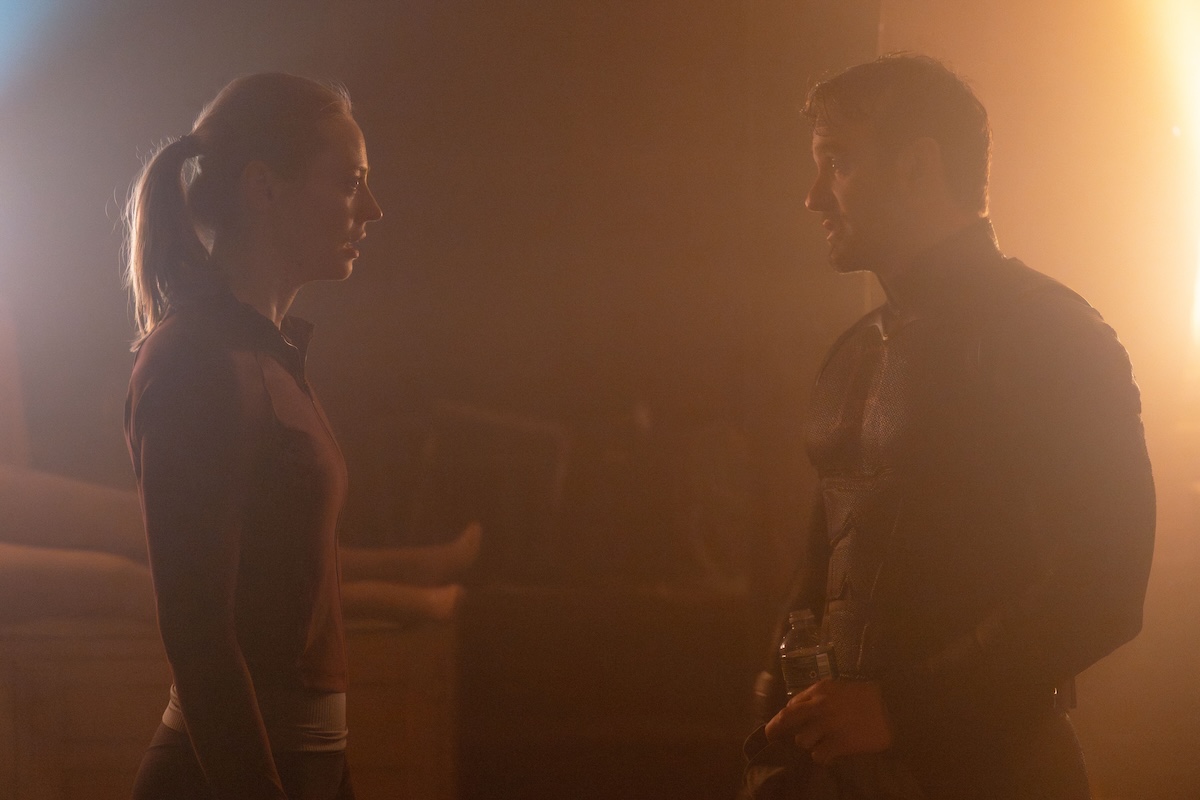
This article contains spoilers for Daredevil: Born Again season 2 episodes 2 and 3.
In perhaps the most thrilling moment of the two latest episodes of Daredevil: Born Again, Kingpin makes Matt Murdock into Daredevil’s victim. On a television address to his city, a city he’s held under siege as he enacts martial law as part of his anti-vigilante legislation, Wilson Fisk claims that Matt Murdock has gone missing, blaming Daredevil for the crime.
The gambit works, and not just because Matt saved Fisk’s life at the end of Born Again‘s first season, when he dove in front of a bullet fired by Bullseye. It also works because Fisk is right on a metaphorical level: Daredevil ruined the life of Matt Murdock. Matt’s endless guilt, his inability to give up his superhero identity—even when his friends and lovers beg him, even when such activities make him an outlaw—has left him unable to be the handsome and successful lawyer he could be.
That tension between superhero and regular guy drives both “Shoot the Moon” and “The Scales & the Sword,” allowing Daredevil: Born Again to be compelling television, even if it’s not quite the superhero spectacle we want it to be.
On one hand, it’s surprising that Born Again still feels like it lives in two different worlds. Even when overstuffed with Punisher, Elektra, and the Hand, the Netflix series always felt like a show about Matt Murdock, lawyer by day and crime fighter by night. However, Born Again was split not just between Murdock and Fisk, the latter of whom only became a more compelling character in the years since the Netflix series ended, but between the world of superheroes, lawyers, and politics.
Most viewers assumed that Born Again‘s fractured nature stemmed from its odd production cycle, in which the original showrunners, who imagined the show as a political and legal thriller, were replaced by current guide Dario Scardapane, who brought superheroics back to the fore. Yet, three episodes into a season that Scardapane built from scratch, no reusing footage from the previous regime, Born Again still remains a show about regular people just as much as it is Daredevil and the Kingpin.
Throughout these episodes, we get glorious fight scenes, shot with fluid style and verve by episode two’s directors Justin Benson and Aaron Moorhead and episode three’s Solvan “Slick” Naim. But we also get strong character beats, most surprisingly evident in the relationship between Daniel Blake, the up-and-comer in the Fisk organization played by Michael Gandolfini, and young journalist BB Urich, played by Genneya Walton.
BB hosts The BB Report, a man-on-the-street news show that provides Born Again with a Greek Chorus, even if it appears to resemble long-form interviews common to nightly news of times past and not the rapid-fire, TikTok-ready segments that someone of BB’s age would make. Worse, BB carried the weight of being the successor to Ben Urich, a longtime staple in the pages of Marvel Comics (you might remember that Joe Pantoliano portrayed the character in the little-loved 2003 movie), perfectly performed by Vondie Curtis-Hall in the Netflix series.
Urich’s death at the hands of the Kingpin left a hole in the Netflix series that BB could not fill, but season two is finding something different to do with her. As we found in the premiere, BB has been forced to produce PR pieces sympathetic to the Fisk campaign, an act that both fills her with guilt and draws the attention of secret internet raconteurs, who produce the counter-program City Without Fear, critiquing BB’s reports via a figure in a ridiculous Fisk mask. By the end of episode two, we learn that BB is the woman behind the Fisk mask, an echo of the classic superhero secret identity motif.
As we see in these two episodes, the BB Report and City Without Fear are less used to describe the state of New York City’s politics and more to explore BB’s internal struggle. In that way, she serves as a foil to Blake, a true believer in Fisk’s policies who doesn’t understand why is good friend BB doesn’t get on board. As Daniel realizes that BB has been leaking material from the Fisk administration to City Without Fear—and as Fisk himself starts to realize that Daniel is the leak within his organization—the political becomes personal quickly.
The friendship allows the two actors to shake off the weight put on them in the previous season and play their characters as just regular people. Gandolfini no longer feels like he’s (completely) in his father’s shadow, and finds an unexpected sweetness to Blake. Daniel can cheer on his boss’s brutality in one scene and then share the kindest, most supportive comment to B. B. in the next.
Likewise, Walton’s no longer forced to be the voice of a new generation with BB, and instead can portray her as a young adult unsure about the future and heartbroken as she sees a genuinely good friend get corrupted by the Fisk machine. When they share a joke a dinner or express concern about the other’s life choices, both Walton and Gandolfini remind us that there are real people affected by the super-battles between Daredevil and Bullseye and Kingpin.
Which is a good thing, because episodes two and three continues to do place-setting work for the primary characters. Bullseye’s still in the wind, dropping by a cathedral to ask about Matt’s mom, Sister Maggie, but he doesn’t do much killing this time around. Fisk bloodies a trainer while prepping for a boxing match/PR stunt, but we know he’s really bulking up to go one-on-one with Daredevil. And Daredevil limits himself to small guerilla-like strikes against Fisk’s forces, small victories that threaten to disappoint the audience as much as they do Karen.
Between the two episodes, the only big action sequence comes at the end of episode three, when Daredevil frees the captives in Fisk’s secret prison with the help of Angela del Toro (Camila Rodriguez). The sequence looks fantastic, giving Jack Duquesne (Tony Dalton) a chance to show off his Swordsman skills and letting Angela debut as the new White Tiger, even if only Matt wears a full costume.
Is any of the action as the climax of an Avengers movie? No, but it’s at least compelling in its own right, fleshing out the world of Daredevil until we finally get the full super-heroics that this season has been teeing up.
More importantly, Born Again continues to do justice his super and civilian characters. Daredevil may be the enemy of Matt Murdock in the eyes of most of Marvel’s New Yorkers, but Born Again has finally figured out how to explore both the super and the human parts of its superhuman world.
Daredevil: Born Again season 2 streams new episodes at 9pm EST every Tuesday on Disney+.
The post Daredevil: Born Again Season 2 Episode 2 and 3 Review – Shoot the Moon, The Scales & The Sword appeared first on Den of Geek.