By
By 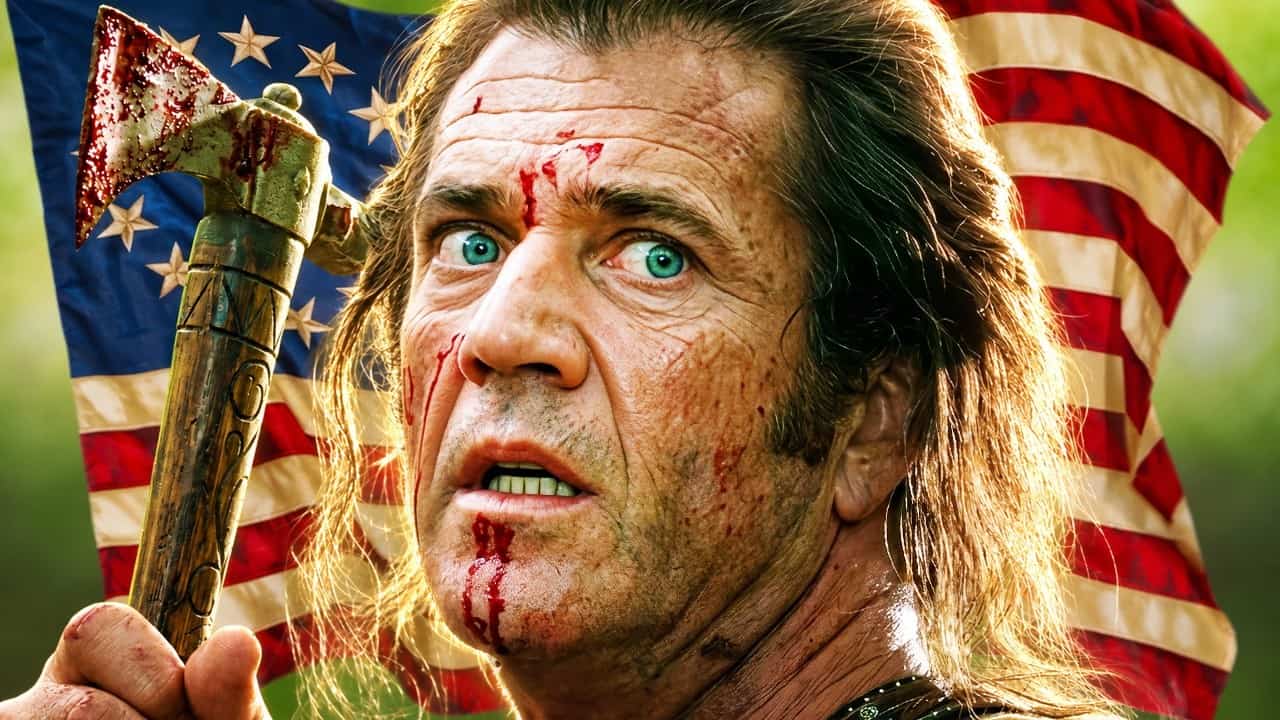
If you’ve long feared that your sins of not knowing what happened to The Patriot would return to visit you, they have. Today, we’re answering a confounding question: How does a movie directed by the guy who made Independence Day, written by the screenwriter of Saving Private Ryan, and packed with an all-star cast somehow fall short at the box office? Especially when the movie kicks ass.
How did a movie this entertaining, heartfelt, violent and emotional about the American Revolution fail to completely dominate the July 4th weekend box office?
We’re going to cover the massive undertaking that was making a blockbuster about America fighting for and winning its independence, complete with all the blockbuster fixings and, well… some historical accuracy. I mean, in its own way.
But most importantly: what happened on that farm with that stupid little boy? This is what happened to The Patriot.
How The Patriot Came Together
After writer Robert Rodat and producer Mark Gordon finished developing Saving Private Ryan, the pair began looking for their next project. They both had an immense interest in the American Revolution, which made plenty of sense for the team behind Saving Private Ryan.
The American Revolution had rarely been covered on this scale in Hollywood and seemed to be begging for an entertaining blockbuster. Rodat’s script went through an astounding seventeen drafts, but the core story wasn’t really about the war itself. It was about family. More specifically, the idea that protecting your family sometimes means being willing to put yourself on the line to protect other people’s families, too. Rodat wanted to tell a story that could resonate with anyone who had ever had to defend their children or their beliefs.
The movie would eventually be directed by Roland Emmerich, the filmmaker behind Independence Day, with Dean Devlin producing alongside Gordon.
Mel Gibson Was Always the Right Choice for Benjamin Martin
The Patriot takes place in 1776 as the American Revolutionary War unfolds across the colonies. Mel Gibson plays Benjamin Martin, a former war hero who wants nothing to do with another conflict after the horrors he experienced during the French and Indian War. The movie establishes his guilt immediately. As Martin locks away his weapons and war decorations, he says, “I have long feared that my sins would return to visit me and the cost is more than I can bear.”
Then we see the life he has built for himself and his seven children on a beautiful farm, where he spends part of his time trying, and failing, to master the art of building chairs. This guy sucks at building chairs.
Martin’s reluctance to fight is at the center of the movie. During the famous vote scene in Williamsburg, Colonel Harry Burwell argues that if their principles demand independence from Britain, then war is the price of achieving it. Martin’s response is essentially that he doesn’t have the luxury of principles. The war won’t be fought on some distant battlefield. It will be fought in front of their homes and children. Unfortunately for Martin, he’s proven right.
The war eventually reaches his farm. His son Gabriel is captured, his home is destroyed, and British Colonel William Tavington murders another of his sons in cold blood. That finally pushes Martin back into the fight.
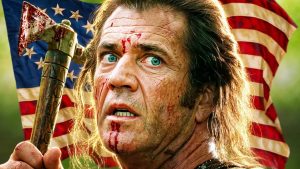
When he learns that his oldest son is going to be hanged as a spy, Martin takes two of his much-too-young sons into the woods and catches up with the British soldiers transporting Gabriel. This is where the cigarette hits the pool of gasoline. Martin and his boys pick off the redcoats from a distance before Martin hits the ground with his tomahawks and tears through the remaining soldiers with pure animalistic rage. Side note: this scene is proof Mel Gibson would have crushed it as Wolverine.
Martin saves his son, but there is no going back. He spends the rest of the movie helping the American cause while suffering even more devastating losses and eventually getting his revenge on the man who murdered two of his children.
Why Mel Gibson Was Perfect for the Role
Columbia Pictures purchased Rodat’s script, with studio chairman Amy Pascal praising the story of a man defending his family as powerful and universal. So who do you cast as a man dealing with immense loss while possessing the ability to turn his pain into violent revenge? Mel Gibson is a pretty solid choice.
Gibson’s filmography had already revolved heavily around family, revenge, and damaged men, from Mad Max and Ransom to Braveheart. Hell, he literally had a movie called Payback, which is awesome, by the way. More importantly, Gibson had an incredible ability to communicate emotion with a single look. From the opening of Lethal Weapon to the dinner table scene in Signs, he could make an audience feel exactly what his character was feeling. For a movie in which the protagonist goes through fear, grief and eventually violent catharsis, there probably wasn’t a better choice.
Rodat reportedly wrote the script with Gibson specifically in mind and even gave Benjamin six, eventually seven, children to match Gibson’s growing family at the time. That doesn’t mean Gibson was the only actor considered. Harrison Ford has said he was offered the role, or at least asked if he was interested, but apparently passed because he felt the movie was too violent and too focused on one man’s revenge rather than the war itself.
Roland Emmerich Takes on the American Revolution
Emmerich may seem like an unusual choice to direct a historical war drama, but he and Rodat quickly proved to be a strong creative match. Emmerich had just come off blockbuster successes such as Independence Day, but he’d never made anything quite like The Patriot. Rodat was reportedly welcomed on set throughout the production, with the filmmakers even referring to his screenplay as “The Book of Rodat.”
Producer Dean Devlin was similarly sold on the script. He began reading it shortly before hosting a party at his house and became so engrossed that he couldn’t put it down despite having a house full of guests. Eventually, around page seventy, he called Emmerich and told him to stop whatever he was doing because he’d found their next movie.
Emmerich was also personally affected by the story. Born in Germany ten years after the end of World War II, he connected with the idea that nobody can completely escape the consequences of a massive war. He has said that reading the script brought him to tears.
Gibson ultimately signed on and praised the screenplay for being a large-scale movie with a genuine human story at its center. The family and emotion were what mattered to him. If those elements worked, he argued, then you could have as many cannon blasts as you wanted because they would actually mean something. And The Patriot certainly has the cannon blasts.
Jason Isaacs Nearly Steals The Patriot
One of the biggest reasons those cannon blasts mean something is Jason Isaacs. Isaacs plays Colonel William Tavington, one of the most hateable movie villains of the era. The role was reportedly turned down by Jude Law, and honestly, no offense to Jude, but it’s difficult to imagine anyone improving on what Isaacs did.
Tavington commits horrible acts and Isaacs seems to enjoy every second of them. There are moments when the camera cuts to his face and he’s practically making a “f*ck you” expression directly at the audience. Not because you’re supposed to root for him, but because you immediately understand that this guy is a genuine son of a bitch who is going to be a problem.
By the final battle, you genuinely wonder whether Benjamin is going to defeat him. Thankfully, Martin pulls the old rope-a-dope, ducks Tavington’s attack and delivers the perfect line: “My sons were better men.” Then he stabs the bastard in the throat and leaves him sitting on a bayonet.
Tavington’s characterization was loosely inspired by British Colonel Banastre Tarleton, who became known as “the Butcher” following the Waxhaws Massacre. However, the movie takes Tarleton’s darkest reputation and turns it up to eleven. The film’s infamous church-burning sequence, for example, has no known historical counterpart in the American Revolution. The movie also takes considerable liberties with the events at Waxhaws.
Even Rodat acknowledged that the battles in The Patriot weren’t intended to be literal recreations of specific historical events. Instead, they were infused with the spirit of real events. In other words, this is a Roland Emmerich blockbuster. We’re not watching for a documentary. We’re watching to see Mel Gibson go wild on some really bad dudes. And to do that, you need some really hateable bad dudes. Isaacs understood the assignment.
He even suggested changes to Tavington’s character, arguing that the villain should never be afraid of Benjamin or cower from him until the very end. The filmmakers agreed.
Heath Ledger Almost Didn’t Play Gabriel
The Patriot also gave a young Heath Ledger one of his early major Hollywood roles as Gabriel, Benjamin’s oldest son. Ledger reportedly felt that he had completely botched his audition and even told the filmmakers he was embarrassed and needed to leave because he was wasting everyone’s time. They called him back anyway. Gibson praised the young actor at the time, saying Ledger had “a hell of a future” and the right heart and spirit for the movie.
Ledger was reportedly nervous when he arrived on set, especially because he hadn’t been in front of a camera for about a year and was suddenly working opposite Gibson. But after a day of shooting, he realized how relaxed Gibson was and settled in.
There was even a point when Emmerich had to defend his decision to cast Ledger. Some members of the production reportedly preferred Ryan Phillippe for the role, so Emmerich called Gibson to ask whether he was comfortable with the choice. Gibson’s response was essentially: You’re the director. Thankfully, Emmerich stuck with Ledger.
The Supporting Cast Was Stacked
The rest of The Patriot is filled with performers who make the sprawling story work. Joely Richardson plays Charlotte Selton, the sister of Benjamin’s late wife and his eventual love interest. Tchéky Karyo brings plenty of personality to the French officer Villeneuve, while Chris Cooper, fresh off American Beauty, delivers another memorable performance. Tom Wilkinson plays General Cornwallis, another British antagonist, although one who has considerably more contempt for Tavington than the audience does.
The cast is one of the movie’s greatest strengths because the enormous story still feels grounded in individual characters. And then, of course, there are those battle scenes.
How The Patriot Was Filmed
Production began in September 1999, with much of the movie filmed in South Carolina. Keeping the production in the region provided access to period-appropriate locations, props, costumes and extras. Around 400 extras were used alongside another 400 reenactors.
The production also built the town of Pembroke from scratch, including its church and tavern. Even the buildings that burn on screen were practical sets.
The Smithsonian collaborated with the production as a historical consultant, helping the filmmakers recreate details ranging from cooking utensils and children’s toys to military equipment. At one point, the production had more than 290 rifles on set.
The actors underwent training in guerrilla combat, horseback riding and weapons handling. Experienced reenactors were also brought in for the larger battle sequences.
That attention to detail is a major reason the movie’s action still works. The cannonballs, explosions, smoke and debris have a physical weight that is difficult to replicate with digital effects. Controlled explosions were used on the battlefields to send black powder, moss and cork into the air when cannons landed. Even Mel Gibson’s tomahawk was specifically designed for his character using elements from seven different styles.
Director of photography Caleb Deschanel and Emmerich also developed a distinctive visual approach, shooting scenes with backlighting and carefully positioning the camera according to the changing daylight. And then there’s John Williams’ score, which earned an Academy Award nomination.
The Patriot‘s $110 Million Box Office Gamble
So, after all that, what happened at the box office? The Patriot arrived in theaters on June 30, 2000, just in time for Independence Day weekend. On paper, it seemed like an obvious recipe for success: Mel Gibson, Roland Emmerich, a $110 million budget, enormous battle sequences and a patriotic American holiday release. Yet the movie opened in second place and came in below expectations.
Ultimately, The Patriot earned around $215 million worldwide against its roughly $110 million production budget. That’s not a catastrophic flop, but it wasn’t the blockbuster performance that the talent, budget and Independence Day release seemed to promise.
There are several possible explanations. The movie runs approximately 165 minutes, which may have worked against it during a busy holiday weekend. The R rating obviously limited its potential family audience. International audiences may also have been less interested in an epic centered on American independence.
But none of those explanations completely solve the mystery. R-rated movies had already demonstrated that they could become enormous hits, and The Patriot had virtually everything you would expect from a major summer blockbuster.
Why Critics Didn’t Fully Embrace The Patriot
Critics were also divided. Reviews generally praised the enormous battle sequences, Deschanel’s cinematography and the performances from Gibson and Ledger. But the movie was criticized for its length, melodrama and historical liberties.
Roger Ebert described the movie as “rousing and entertaining,” while also arguing that it lacked an idea capable of standing up to thoughtful scrutiny. Which is fair, because The Patriot is not really trying to be a history lesson. The movie takes real people, events and ideas from the American Revolution and runs them through the Roland Emmerich blockbuster machine. Benjamin Martin himself is essentially a composite character inspired by multiple figures from the Revolutionary era.
Historians understandably have plenty to criticize, but audiences responded differently. The Patriot currently has an 81% audience score on Rotten Tomatoes, compared with a 61% critics’ score. The movie also received three Academy Award nominations for cinematography, original score and sound. Personally, I think Gibson and Isaacs deserved some recognition, too. But that’s just one man’s opinion.
What Happened to The Patriot?
The simplest answer is that The Patriot wasn’t actually a failure, it just wasn’t the massive blockbuster that its pedigree suggested it should have been. The movie earned roughly twice its production budget worldwide, received three Oscar nominations, developed a strong following on home video and eventually became a favorite among action fans looking for another badass Mel Gibson war movie.
Maybe the running time hurt it. Maybe the R rating kept families away. Maybe the historical liberties turned off some viewers. Maybe the movie simply arrived at a moment when audiences weren’t quite as interested in a three-hour Revolutionary War epic as Hollywood expected. Or maybe the movie was simply too weird a combination to become the cultural juggernaut everyone anticipated.
Whatever the reason, The Patriot has aged into exactly the kind of movie that makes you wonder why it wasn’t a bigger hit in the first place. It’s violent. It’s sentimental. It’s historically questionable. It’s beautifully shot. It’s ridiculously entertaining. Jason Isaacs is an absolute bastard. Heath Ledger is terrific. Mel Gibson has those eyes.
And if you didn’t completely break down when Gabriel dies or when Benjamin’s daughter finally embraces him and begs him to stay, then what are you, Ivan Drago?
Some movies aren’t meant to be historically accurate, they’re meant to be felt. And that’s what happened to The Patriot.
The post What Happened to The Patriot? Mel Gibson’s Underrated Revolutionary War Epic appeared first on JoBlo.