By
By 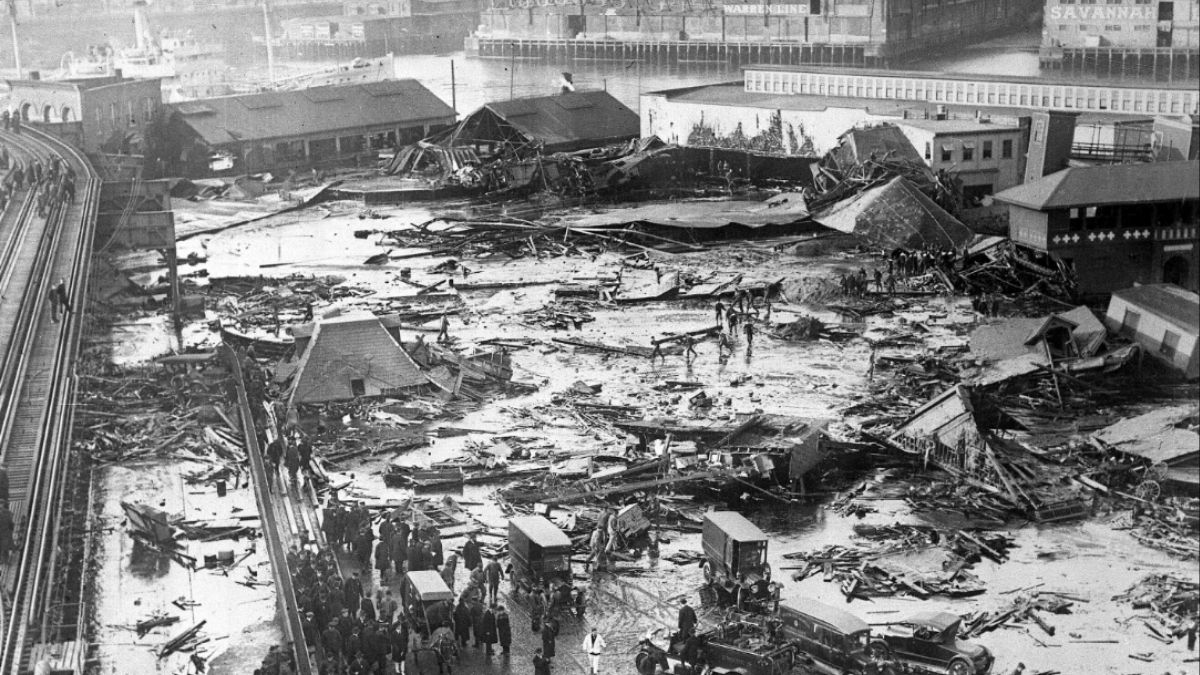
When people say that reality beats fiction, it does not only mean that it can be more cruel or fantastical. They can also mean it can be more outlandish, to the point that historical things happening in fiction can be seen as poor writing. Or at least, too hard to believe.
But these things really did happen, at least according to historical accounts. These aren’t urban legends or exaggerated internet trivia, either. They’re documented events that actually happened, even when the circumstances sound completely ridiculous. From bizarre disasters to astonishing political episodes, these are the moments when history briefly became stranger than fiction.
Wikimedia Commons
The Great Molasses Flood
In 1919, a giant storage tank in Boston burst, releasing about 2.3 million gallons of molasses into the streets. The wave reached roughly 35 mph, killing 21 people and injuring 150.
Unsplash
The London Beer Flood
In 1814, a massive brewery vat ruptured in London, releasing hundreds of thousands of gallons of porter. The resulting wave destroyed nearby buildings and killed eight people, including mourners attending a child’s wake.
Wikimedia Commons
The Army Built Fake Tanks
During World War II, America’s Ghost Army used inflatable tanks, fake radio transmissions, sound effects, and other tricks to convince German forces that entire American formations were somewhere they weren’t. The elaborate deception involved artists, designers, engineers, and radio operators.
Wikimedia Commons
The Allies Sent a Corpse to Fool Hitler
Operation Mincemeat involved disguising a dead man as a British Royal Marines officer and planting fake invasion documents on his body. The corpse was released near Spain in 1943, successfully misleading German planners about the Allied invasion of Sicily.
Unsplash
An Epidemic of Uncontrollable Laughter
In 1962, three girls at a Tanzanian boarding school began laughing uncontrollably. The phenomenon spread to other students and surrounding communities, eventually affecting roughly 1,000 people and forcing multiple schools to close. Researchers classify it as mass psychogenic illness.
Wikimedia Commons
The Erfurt Latrine Disaster
In 1184, approximately 60 nobles attending a gathering in Erfurt died when a wooden floor collapsed beneath them. Many fell through into a cesspit below, where some reportedly drowned in human waste.
Wikimedia Commons
The Dancing Plague of 1518
In Strasbourg, people reportedly began dancing uncontrollably in 1518, with hundreds eventually joining. Authorities even provided musicians and spaces for the dancers, apparently believing more dancing might cure the strange outbreak. Its cause remains disputed.
Wikimedia Commons
The Nika Riots
In 532, chariot-racing factions in Constantinople united against Emperor Justinian, turning sporting rivalry into a massive rebellion. The Nika riots burned much of the city and nearly toppled the government before being brutally suppressed.
Wikimedia Commons
Boston’s Great Fire Was Fought With Explosions
During Boston’s devastating 1872 fire, firefighters and police deliberately blew up buildings with gunpowder in an attempt to create firebreaks. The strategy failed to stop the blaze, which burned for roughly fifteen hours.
Wikimedia Commons
Halifax’s Harbor Exploded
In 1917, the French munitions ship Mont Blanc collided with another vessel in Halifax Harbour and exploded. The blast was equivalent to roughly 2.9 kilotons of TNT, killing nearly 2,000 people and destroying or damaging thousands of buildings.
Unsplash
London’s Great Stink
In the summer of 1858, unusually hot weather intensified the smell of untreated sewage and industrial waste in the River Thames. London’s infamous Great Stink became so intolerable that it helped push authorities toward major sewer reforms.
Wikimedia Commons
Alaska Was Mocked as a Terrible Purchase
When the United States bought Alaska from Russia in 1867 for $7.2 million, critics mocked the territory as “Seward’s Folly” and “Seward’s Icebox.” The supposedly useless purchase later proved extraordinarily valuable after discoveries of gold and oil.
Wikimedia Commons
A Dead Pope Went on Trial
In 897, Pope Stephen VI ordered his predecessor Formosus’s corpse exhumed and put on trial. The dead pope was dressed in papal robes, seated before a court, found guilty, and stripped of his papal honors.
Unsplash
People Thought Their Windshields Were Under Attack
In 1954, thousands of Washington residents suddenly reported mysterious pits appearing in their windshields. Authorities investigated everything from vandals to nuclear fallout before concluding that most damage had simply gone unnoticed until widespread publicity made people look.
The post 14 ‘Hard to Imagine’ Moments from History That Really Did Take Place appeared first on Den of Geek.