By
By 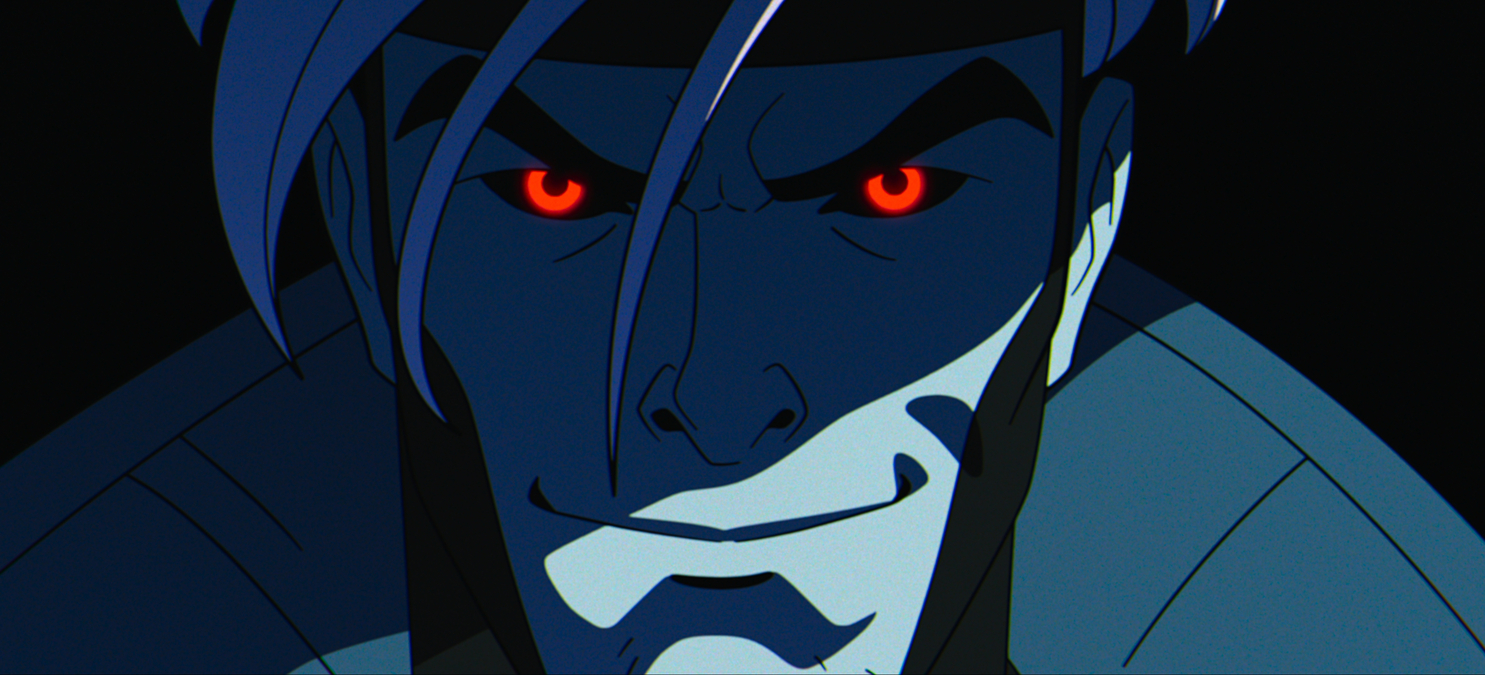
This article contains spoilers for X-Men ’97 season 2 episode 8.
After months of teasing, the penultimate episode of X-Men ’97‘s second season, “Dead Man’s Hand,” finally reunites Remy Lebeau with his beloved Rogue and their fellow X-Men… but not in the way fans would have hoped. As much as Remy appears to retain his pure heart and endless charm behind his new violet facade, the episode finds him pulling sleights of hand and double-crosses that reveal him to be in the thrall of season’s big bad, Apocalypse.
When Gambit reveals his true plan and turns on Rogue, modern viewers of X-Men ’97 are shocked. Ironically, however, those who read Gambit comics in the actual ’90s knew this was coming, because Gambit has always been the biggest traitor among Marvel‘s mighty mutants.
Even Gambit’s first appearances feel like a double-cross. Due to a publishing schedule snafu, Gambit first hit comic book shelves in 1990’s Uncanny X-Men Annual #14, by Chris Claremont and Arthur Adams, the last part of the Days of Future Present crossover. He doesn’t do anything in that issue, which mostly focuses on an adult Franklin Richards and Rachel Summers fighting the hunter from the future Ahab (and, in a strange choice by Adams, a group of thugs modeled on Clarence Boddicker and his gang from Robocop).
Instead, he just hangs around, confusing anyone who hit the comic shop regularly in those days. Gambit first properly appears in Uncanny X-Men #266, released a month later, by Claremont and penciler Mike Collins. In that issue, Storm—temporally reverted back to adolescence—takes cover in a fancy house while running from the Shadow King, the same house where Gambit happens to be lifting fine art. Upon seeing a bunch of adults chasing a teen, Gambit intervenes by using his original power of charging up objects by shooting green lasers from his eyes.
Despite that power set, Gambit arrives mostly as the character we know. He’s endlessly charming and already peppers his speech with French phrases. When Storm informs him that his act of charity has caught him in a larger conspiracy, Gambit takes it in stride, waving away the idea that he’s in great danger by flashing a smirk from his glowing eyes. But even at that point, Gambit was enshrouded in mystery, especially when he officially joined the X-Men. Although willing to stay at Xavier’s and join the fight against the Shadow King, even after the psychic monster’s defeat at the end of the Muir Island Saga, Gambit never revealed to anyone the details of his past.
Behind the scenes, there were two reasons for Gambit’s taciturn nature. First, Wolverine had become a hit in part because we knew so little about his past. Even though much of his backstory remained untold in 1990, especially compared to today, nearly two decades of Wolverine stories had taken away some of the mystery, dulling his cool somewhat. Second, Claremont loved to set up storylines sometimes years in advance, and it was clear that he had a larger narrative in mind for Gambit that wouldn’t be told for a while.
Unfortunately, Claremont had left the franchise mere months after Gambit’s debut. In his place, other writers tried to continue building on Claremont’s model, especially as Gambit grew more popular. Most notably, 1991’s X-Men #8 by Scott Lobdell and Jim Lee sees the first meeting between Gambit and Bishop, who hails from a dark future. Bishop expresses nothing but admiration for the rest of the team, but he gets angry when he realizes that Remy Lebeau has already joined the X-Men. He attacks Gambit, blaming him for turning traitor against the X-Men.
What did Gambit do to earn Bishop’s ire? In the fine tradition of ’90s comics, Lobdell never gets the chance to explain, as he leaves the book before telling that tale. As a result, Gambit’s had a few less-than-honorable moments that could count as the event recorded in Bishop’s history books. One, of course, is the decision to give himself over to Apocalypse and become Death, as discussed next week. Another may be the fact that he stood against Bishop to protect Hope, the first mutant born after the Scarlet Witch wiped out the population—a child that Bishop thought would lead to his horrible future.
But the most obvious reason is Gambit’s participation in the Mutant Massacre, as revealed in Uncanny X-Men #350 (1997), by Steve Seagle, Joe Madureira, and Andy Smith. In that issue, we learn that Gambit had been forced by Mister Sinister to gather the Marauders and lead them to the Morlocks, where they would slaughter runaway mutants in one of the most horrific moments of X-Men history. The revelation severs Gambit from the rest of the team for some time, especially Rogue.
Of course, Gambit is hardly the only mutant to do something awful—just look at Wolverine skewering Rachel Summers, something that comes up in Uncanny X-Men Annual #14. And by now, several members of the Marauders, who actually did the Mutant Massacre, have been accepted onto the X-Men, including Sabretooth and Greycrow. Moreover, Gambit has long since been rehabilitated in the eyes of readers, and is mostly seen now as Rogue’s lovable husband, who happens to have a bit of a naughty streak.
X-Men ’97 gives us a glimpse of that character back when he had more rough edges. Does that make Gambit a more interesting character? The fans will have to decide.
X-Men ’97 streams new episodes every Wednesday on Disney+.
The post X-Men ’97 Reminds Us That Gambit Was Always a Traitor appeared first on Den of Geek.