By
By 
Swiped (2025)
Meet the woman who made the first move.
Long before romance was reduced to a thumb moving left or right, meeting someone online carried the sort of stigma normally reserved for admitting that dial-up internet had ruined the family phone line. Tinder changed that in 2012, turning digital dating into a game of instant attraction, endless options and increasingly tired thumbs. Whitney Wolfe Herd helped build that phenomenon before leaving under deeply unpleasant circumstances and launching Bumble in 2014, where women would make the first move.
A rise involving billion-dollar companies, bruised egos, lawsuits, romance, betrayal and enough workplace toxicity to make an HR department combust was always going to attract Hollywood. Released in 2025, Swiped stars Lily James as Wolfe Herd, with Rachel Lee Goldenberg directing and co-writing alongside Bill Parker and Kim Caramele. It premiered on Hulu in the United States and Disney+ internationally. Wolfe Herd was not involved, did not approve the production and reportedly tried to stop it. For a story about consent, control and who gets to shape a woman’s identity, Swiped reached screens without its subject ever swiping right.
She’s got a plan, a platform and no time for mixed signals.
Whitney Wolfe (Lily James) is an ambitious recent graduate determined to create something meaningful. After crashing a Silicon Valley startup mixer with a discarded access badge and failing to convince a room of wealthy men that her charitable business idea deserves attention, she crosses paths with young entrepreneur Sean Rad (Ben Schnetzer). Impressed by her confidence, Sean brings her into Hatch Labs, where a struggling loyalty program soon gives way to an online dating platform called Matchbox. Whitney sees its potential, helps rename it Tinder and takes it directly to university campuses, using fraternities and sororities to build the user base. The strategy works, the numbers explode and she becomes one of the few women inside a company suddenly defining how a generation meets, flirts and dates.
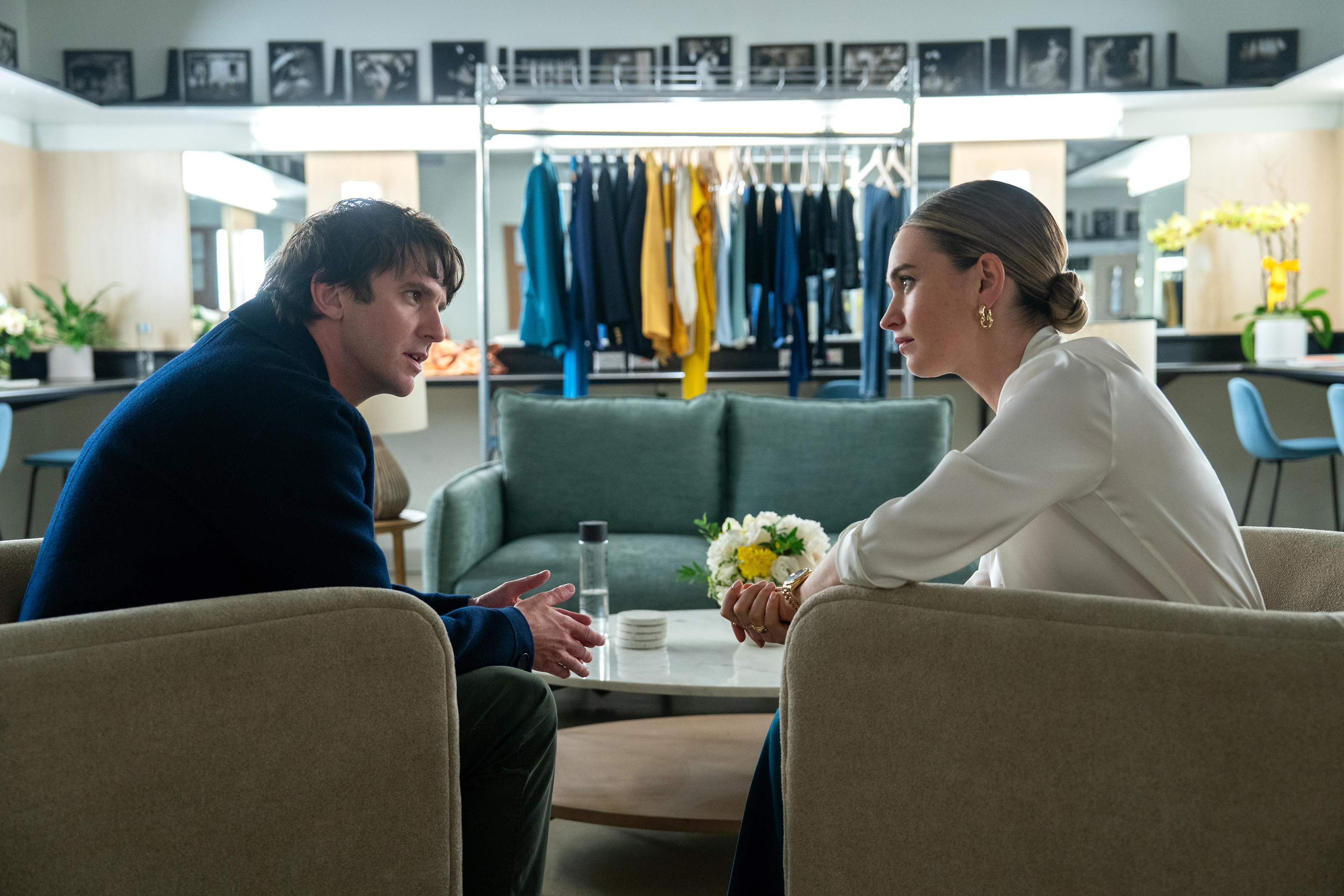
Success also draws Whitney closer to fellow executive Justin Mateen (Jackson White). Their attraction develops into a relationship, but affection gradually gives way to control, resentment and abuse. When she tries to end things, the hostility follows her into the workplace. Her concerns are minimized, her achievements questioned and the men around her protect the company before the person who helped build it. Forced out and restricted by a non-disclosure agreement, Whitney watches her name dragged through the internet while her former colleagues enjoy the success she helped create. A meeting with Badoo founder Andrey Andreev (Dan Stevens) offers another path. She begins developing Bumble, designed to put women in control of the first message, but can a supposedly safer system escape the culture and powerful men financing it?
Technology companies are rarely easy to dramatize. Coding, marketing meetings, user-growth charts and investment negotiations may change the world, but they don’t automatically make gripping screen drama. Goldenberg and her fellow writers keep the business side clear while concentrating on the personalities and power struggles behind it. The result is informative without becoming a lecture, charting the creation of two globally recognized brands while showing why Bumble needed to exist.
She made the first move. Now she’s reading the fine print.
Although the story centers on the woman who founded Bumble, it is hardly aimed only at women. Men don’t need a working knowledge of dating apps to follow it, because the screenplay makes its point through recognizable behavior: ideas ignored until repeated by someone more powerful, legitimate concerns dismissed as emotional overreactions and companies protecting themselves when doing the right thing might threaten their success. The strongest moments are not simply about Whitney overcoming unpleasant men. They show how ambition can persuade otherwise decent people to excuse bad behavior. Sean never needs to become a snarling villain — his instinct to protect Tinder says enough. Whitney is not treated as flawless either. She initially overlooks problems that do not affect her directly, while the women around her challenge an idea of empowerment focused too narrowly on one person’s success.
Goldenberg’s direction is solid throughout. The early sections carry an energetic, playful momentum as Tinder grows from a scrappy idea into a cultural phenomenon. Messages, profile images and rising user numbers are worked in cleanly, while the polished offices contrast effectively with the ugliness developing inside them. When Whitney’s confidence begins to collapse, the digital noise becomes oppressive rather than exciting. The film can feel too tidy, though. Complicated legal disputes, conflicting accounts and years of business history are compressed into a neat rise-fall-comeback structure, and several confrontations provide moral clarity where reality was surely messier. Swiped raises difficult questions but rarely lets them become truly uncomfortable. A sharper version may have examined Whitney, the dating industry and the language of corporate empowerment with greater suspicion.
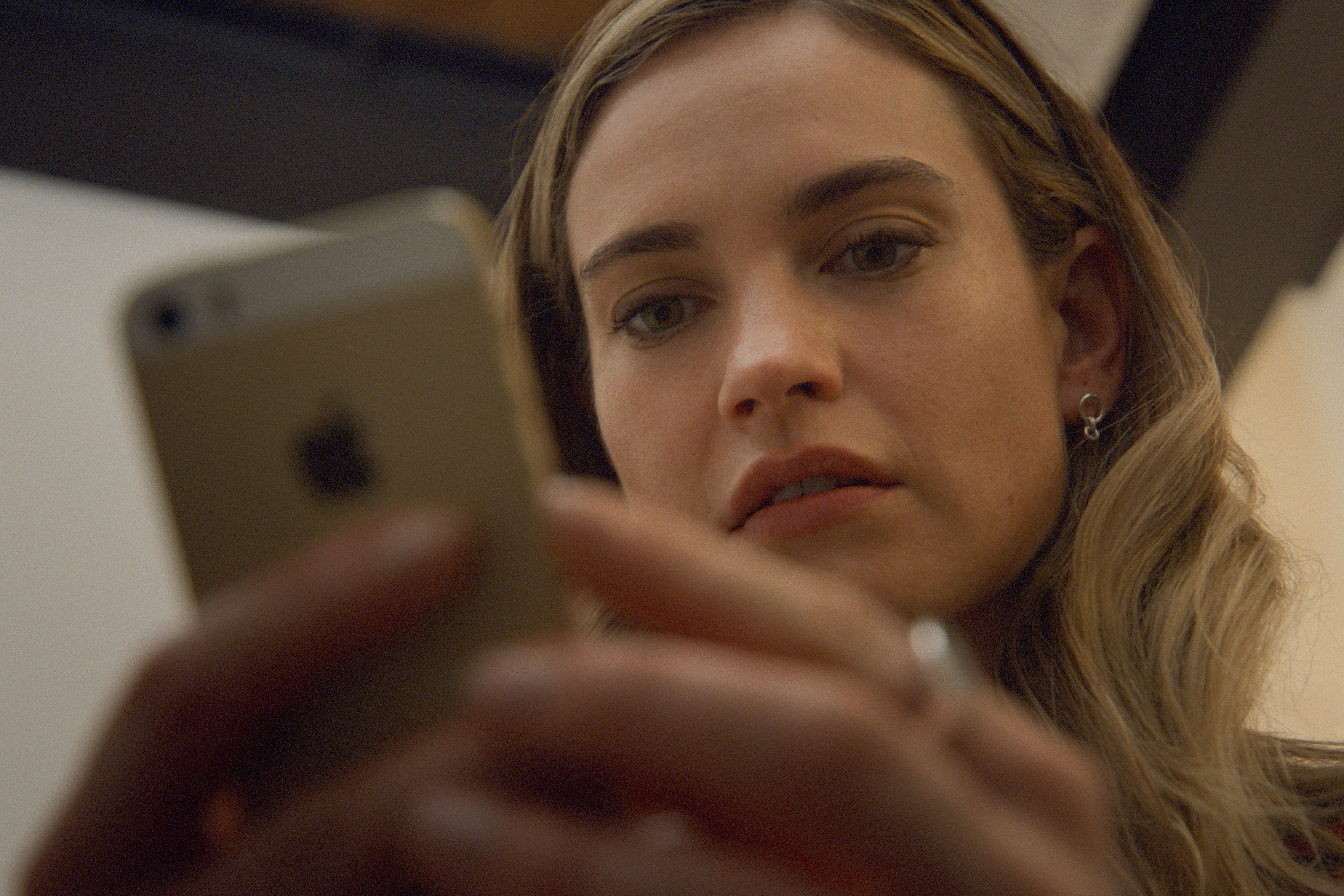
Even so, the screenplay is good, the direction assured and the drama rarely loses momentum. Its greatest asset is Lily James. She makes Whitney driven without seeming calculating and idealistic without becoming naïve, finding the likeable person beneath the headlines. Her Whitney is enthusiastic, persuasive and genuinely excited by the possibility of building something new, which makes her gradual isolation much more effective. James also handles the character’s contradictions quietly, allowing flashes of self-interest, fear and guilt beneath the confident public persona. That warmth gives the boardrooms and branding meetings something they cannot supply on their own: a pulse. Even when the writing smooths over rough edges or rushes through major events, James keeps Whitney emotionally understandable and makes the audience care whether she can reclaim the work, confidence and identity taken from her.
When opportunity leans a little too close.
Beneath its glossy corporate exterior, Swiped is ultimately about ownership: who comes up with an idea, who receives credit for building it and who controls the story when a professional relationship falls apart. It also explores what happens when a woman’s identity and achievements become something powerful men and companies can shape for their own benefit. Bumble is presented as a genuine attempt to make online dating safer and more equal for women, but that goal becomes complicated once investors, profits and expansion enter the picture. Whitney wants to use technology to improve the way people connect, yet she is still working within an industry built around judging strangers in seconds. That contradiction gives the story much of its weight: Bumble may offer women greater control, but it still turns dating and human connection into a business.
Complicity is another important theme. Whitney becomes more aware of misogyny once she experiences it herself, but the screenplay does not pretend that this automatically makes every decision she makes afterwards the right one. Her colleague and friend Tisha (Myha’la) challenges the idea that progress can be measured by one successful woman finding a place within a system that remains unfair to others. Andrey’s involvement creates a similar tension. He gives Whitney the backing and freedom she was denied at Tinder, but his support comes from another powerful male-led company with problems of its own. These ideas are not explored as deeply as they could be, yet they prevent Swiped from becoming a simple celebration of business success. Its broader point is that companies can adopt the language of progress without truly changing how power works, and that argument mostly succeeds because the drama remains accessible, well acted and confidently put together rather than turning into a lecture.
The supporting cast is strong. Jackson White brings enough early charm to Justin Mateen, Whitney’s colleague and eventual partner, to make their relationship believable before jealousy and control take over. He never turns Justin into a cartoon, instead showing how entitlement can hide behind wounded affection. Ben Schnetzer is equally effective as Tinder co-founder Sean Rad, capturing the restless energy of a man who considers himself progressive until taking responsibility could threaten the company. Myha’la brings intelligence, humor and frustration to Tisha, Whitney’s friend and colleague, whose willingness to challenge her keeps the empowerment angle from becoming too self-congratulatory. Dan Stevens nearly steals the picture as eccentric Badoo founder Andrey Andreev, playing him as charming, strange, supportive and faintly threatening, often all at once. He appears to rescue Whitney, but also suggests that escaping one powerful male network can simply lead into another.
Given its subject matter, Swiped is a solid achievement. A biographical drama built around dating apps, startup meetings, legal agreements and corporate ownership could easily have resembled a glossy advertisement with a few uncomfortable text messages attached. Instead, Goldenberg delivers a brisk and engaging account of ambition, exploitation and reinvention, elevated by an excellent Lily James and a strong ensemble. It’s not ruthless enough to expose every contradiction in its success story, nor probing enough to become the definitive account of Whitney Wolfe Herd’s complicated journey. What it offers is a clear, entertaining and thoughtful introduction to the woman who helped alter modern dating before rebuilding the rules in her own image. Swiped may not be a perfect match, but it has enough intelligence, chemistry and heart to earn a confident swipe right.
3.5 / 5 – Great
Reviewed by Dan Cachia (Mr. Movie)