By
By 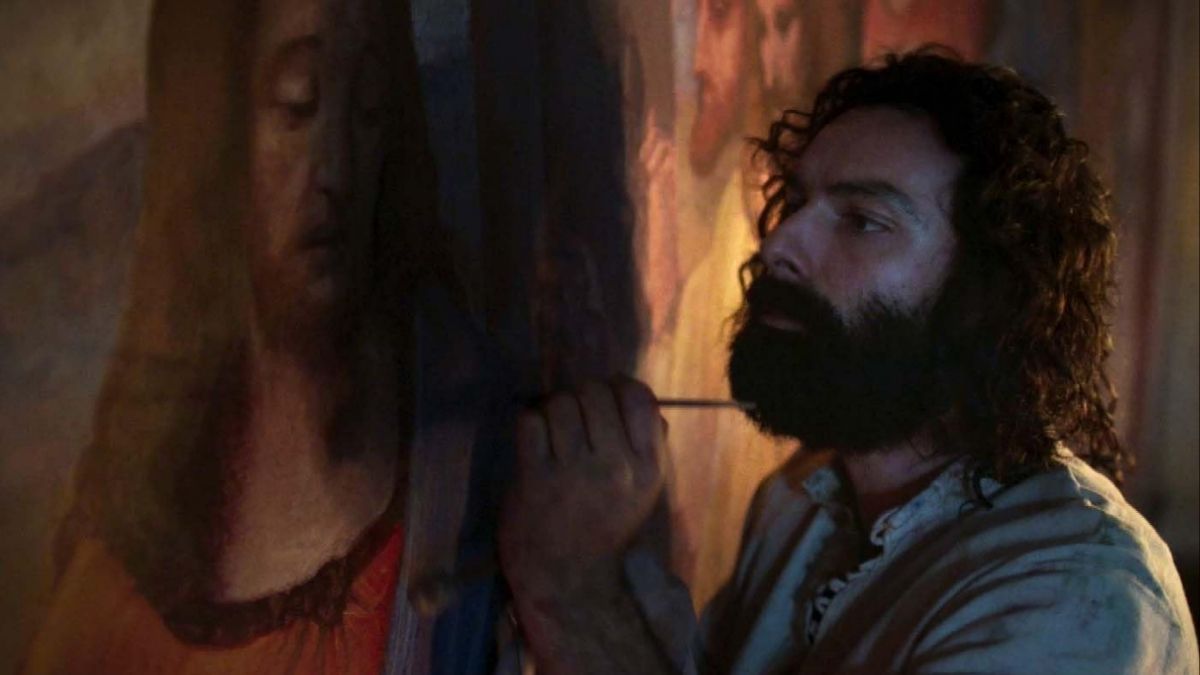
What do we mean when we say that someone was ahead of their time? Simply put, it’s when a person shares ideas that aren’t understood by their peers, and only appreciated many years later. This gap between underappreciated and understanding can take decades or even centuries, hence why we can only talk about historical figures instead of current ones.
This has the potential to mean that, in our current age, there might be people who we don’t understand, only for our descendants to see them as revolutionary. There’s little way for us to have that perspective now, but at least we can see the figures of the past to prepare for the future.
IMDb
Leonardo da Vinci
Centuries before powered flight or armored vehicles existed, Leonardo da Vinci sketched concepts resembling helicopters, parachutes, tanks, and other machines. Many of his designs couldn’t be realized until technology finally caught up hundreds of years later.
IMDb
Susan B. Anthony
Susan B. Anthony devoted most of her adult life to women’s suffrage in the United States. Although she died in 1906, women didn’t gain the constitutional right to vote nationwide until the Nineteenth Amendment was ratified in 1920.
Wikipedia
Alfred Wegener
In 1915, Alfred Wegener proposed that Earth’s continents had once formed a single landmass before drifting apart. His continental drift theory was widely dismissed until plate tectonics provided the evidence decades later.
IMDb
Vincent van Gogh
Vincent van Gogh sold very few paintings during his lifetime and struggled for recognition. Today, his bold use of color and expressive style make him one of history’s most influential and celebrated artists.
IMDb
Sinéad O’Connor
In 1992, Sinéad O’Connor tore up a photograph of Pope John Paul II on live television to protest abuse within the Catholic Church. She faced intense backlash before later revelations validated many of her concerns.
IMDb
Ada Lovelace
Working with Charles Babbage’s proposed Analytical Engine, Ada Lovelace wrote what is widely recognized as the first published computer algorithm. She also envisioned computers handling tasks beyond simple mathematics, an extraordinary insight for the 1840s.
IMDb
Dr. Thomas Dent Mütter
Thomas Dent Mütter revolutionized reconstructive and cosmetic surgery by introducing innovative techniques that improved patient outcomes. He also advocated for cleaner surgical practices before anesthesia and antiseptic methods became standard.
IMDb
Joseph Lister
Joseph Lister transformed surgery by promoting antiseptic techniques based on germ theory. Although initially ridiculed by many contemporaries, his methods dramatically reduced postoperative infections and became a cornerstone of modern medicine.
IMDb
Mustafa Kemal Atatürk
After founding modern Turkey, Mustafa Kemal Atatürk introduced sweeping secular, educational, and legal reforms. His policies expanded women’s rights and modernized the country decades before many neighboring nations pursued similar changes.
IMDb
Charles Babbage
Charles Babbage designed the Analytical Engine during the nineteenth century, envisioning a programmable mechanical computer. Although never completed, its architecture anticipated many concepts found in modern computers more than a century later.
IMDb
Nikola Tesla
Nikola Tesla envisioned wireless communication, remote control, and global transmission of information long before such technologies became practical. Many of his ideas foreshadowed later developments in telecommunications and electrical engineering.
IMDb
Nicolas Appert
In 1809, Nicolas Appert developed airtight food preservation by sealing and heating containers. His breakthrough laid the foundation for modern canning and dramatically improved long-term food storage decades before refrigeration became widespread.
IMDb
Archimedes
Archimedes made groundbreaking discoveries in mathematics, engineering, and physics more than two thousand years ago. His work on buoyancy, levers, and mechanical devices remained foundational for centuries and continues to influence science today.
IMDb
Ignaz Semmelweis
Long before germ theory gained acceptance, Ignaz Semmelweis demonstrated that doctors washing their hands dramatically reduced deaths from childbed fever. Many colleagues rejected his findings, despite the clear evidence supporting his observations.
IMDb
Rachel Carson
Rachel Carson’s 1962 book Silent Spring warned about the environmental dangers of widespread pesticide use, particularly DDT. Initially attacked by chemical companies, her work helped launch the modern environmental movement and reshaped conservation policy.
The post 15 Historical Figures Who Were Decades Ahead of Their Time appeared first on Den of Geek.