By
By 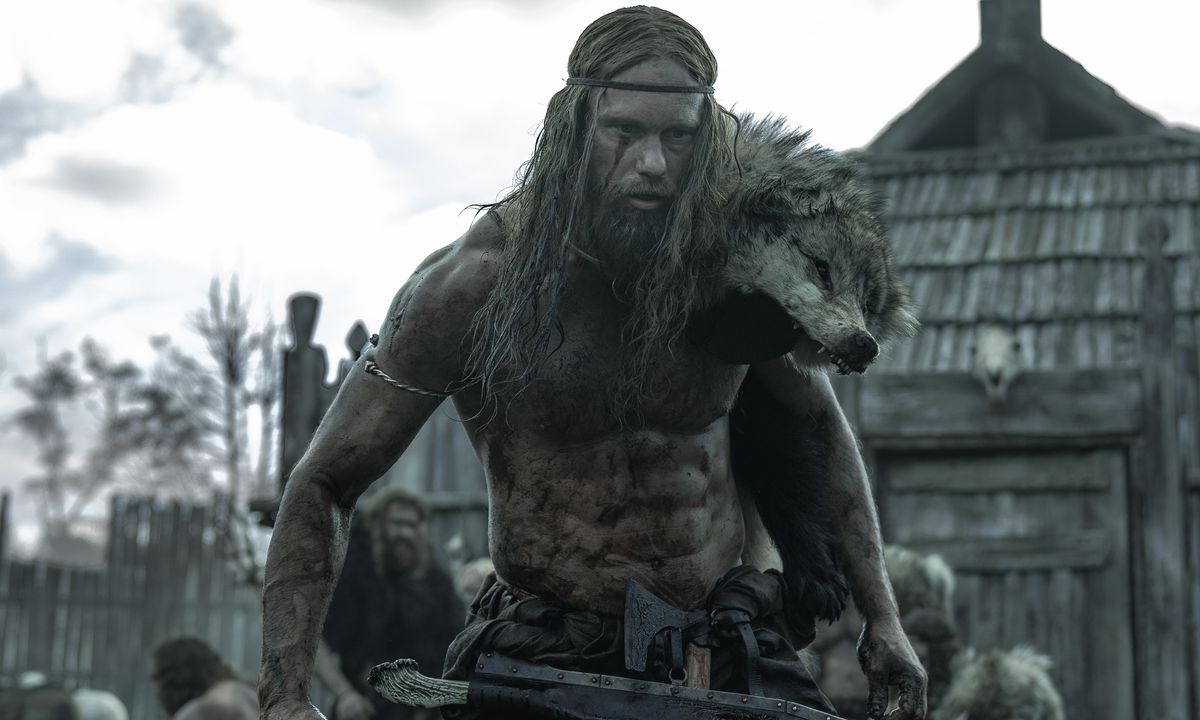
With four features in his filmography, we now have certain expectations for a Robert Eggers film. We want moody visuals, we want excellent performances (especially from Willem Dafoe), and we want people using words that no one has used in 1000 years. What we don’t expect, however, is a sequel. Despite their stylistic similarities, each of Eggers’s four movies take place in different places and time periods, minimizing the potential for connections between them.
One would expect the same to be true of Eggers’s latest film, Werwulf, which stars Aaron Taylor-Johnson as a farmer in 13th century England. But in a recent conversation with Esquire, Eggers revealed that he toyed with the origins of the werewolf myth in a previous film, The Northman. When discussing the origins of legends about humans turning into wolfs, Eggers observed, “If we really want to get into it, we can talk about the Berserkirs [an ancient Norse term for especially ferocious warriors who wore bearskins] and the Úlfhéðnar [another Old Norse word, for “wolf-coats”] that you see in The Northman that come from Viking culture.”
Released in 2022, The Northman starred Alexander Skarsgård as Amleth, a 9th century Viking who sought revenge against his uncle for the murder of his father. A retelling of one of the myths that influenced Shakespeare‘s Hamlet, The Northman featured Eggers’s usual eye for historical detail, especially in his depiction of Viking culture.
An early scene finds young Amleth (Oscar Novak) and his father King Aurvandill (Ethan Hawke) acting like dogs as part of a ceremony held by Heimir the Fool (Dafoe, in a great performance, as expected). After a seven-year time jump, we see Amleth among the ulfhéðinn, performing another ritual to (metaphorically) transform from humans to beast before going into battle.
To be clear, the connections here are thematic and not literal. It would be shocking if Eggers is setting up a time-travel plot, in which Amleth emerges from the volcano where he had his final battle, preserved for hundreds of years, to hang out with Taylor-Johnson’s farmer in Werwulf. Furthermore, it sounds like Eggers plans to do with Werwulf the same thing he did in The Witch, taking literally the records left by the people he’s describing instead of imposing realism upon them.
In other words, there will be werewolfs in Werwulf, not because it is realistic, but because the people of 13th century England believed that some people turned into wolves. Yet, as Eggers points out, even that belief harkens back to the warriors from The Northman, albeit from a different perspective in the Christianized period shown in Werwulf. “In a Christian setting, people who turn into werewolves become evil, and the early associations in the Christian mythology become satanic,” explains Eggers.
While the title tells us that Werwulf will indeed have the antiquated language we love in an Eggers film, it’s still not clear how moody the visuals will be, nor how great Willem Dafoe will be, cast here as a hunter. But if the connections to The Northman are any connection, Eggers will deliver another piece of uniquely weird horror with Werwulf.
Werwulf comes to theaters on December 25, 2026.
The post Robert Eggers Teases Unlikely Connections Between The Northman and Werwulf appeared first on Den of Geek.