By
By 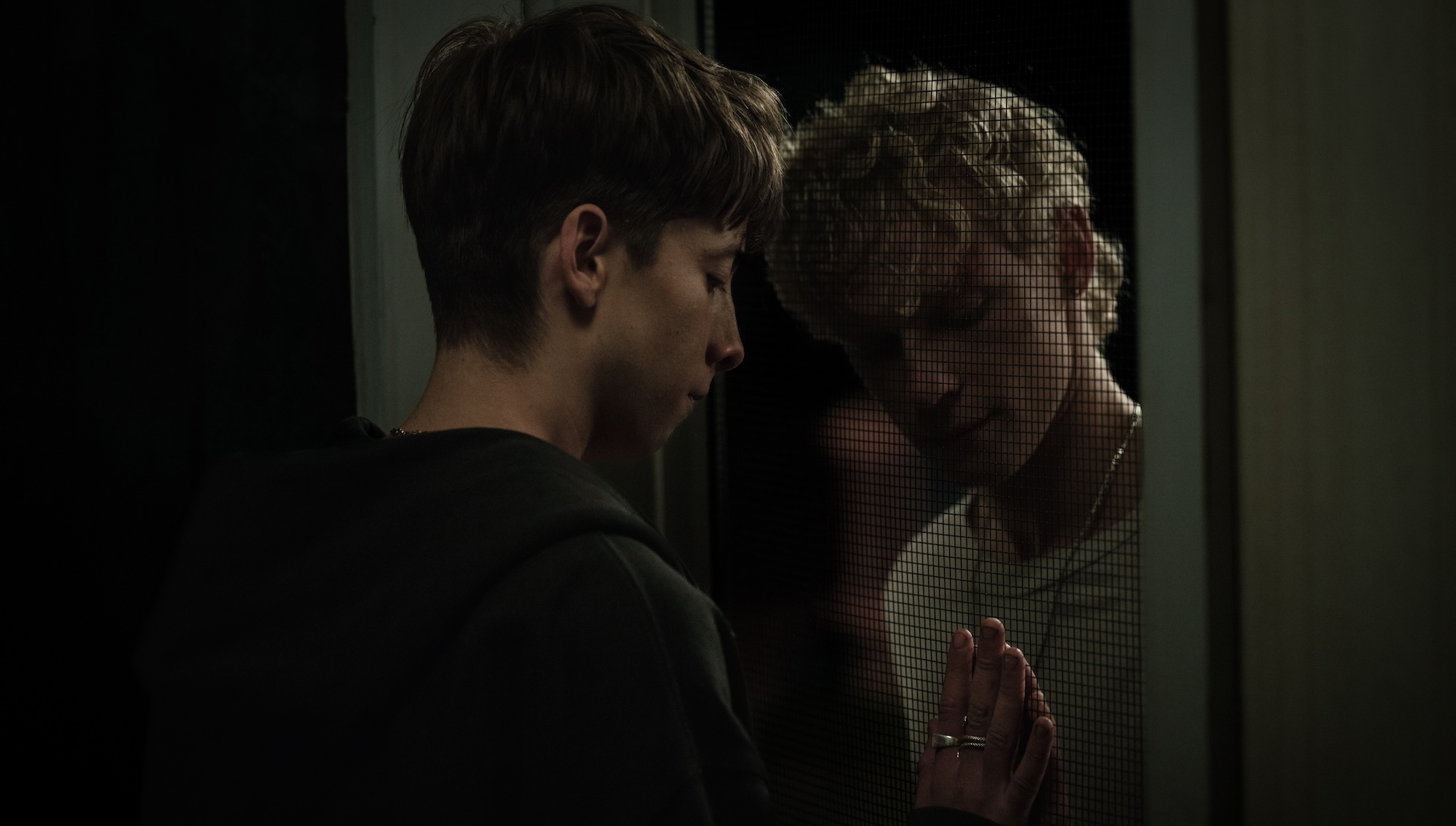
This article contains major Leviticus spoilers.
On the same Friday that first-time feature director Adrian Chiarella’s Leviticus is opening nationwide in the U.S., the Australian filmmaker is having lunch in Los Angeles with someone else in the industry. They’re there to discuss work, presumably some prospects for the future, and maybe the SoCal weather. And yet, as Chiarella recounts a few hours later, the most passionate, driving topic of conversation came down to the end of his new horror film and Mia Wasikowska’s portrait of bad parenting decisions in it.
“They really wanted to get to the heart of that,” Chiarella recounts with a wry smile. If you’ve seen the movie, you’d understand why.
In a summer full of potent, “elevated” horror with heavy subtext, Leviticus might be the heaviest. Here’s a film where deeply religious rural communities in Australia turn to a holy man for guidance. This so-called “deliverance healer” practices a form gay conversion therapy prayer that instead of blessing queer teenagers curses them to be stalked by their own desires. A literal demon (or the like) hunts the children down by taking the form of the person they desire most, attempting to lure them to a horrifyingly brutal death.
For Chiarella, it began in part by researching various different gay conversion therapy practices around the world and looking for a through-line.
“What they all seemed to have in common was there was an element of performative scaring people out of their feelings,” the writer-director explains. “There were cases of exorcisms performed in cultures all around the world on queer teenagers, and I started to think about what are they actually doing? Are they taking something out, as they’re claiming to do, or are they just putting something in? They’re infecting people with a fear of their own feelings and their own desires. That’s really how I came up with the idea of this monster that takes the shape of the person you’re most attracted to.”
That is the devastating hook of Leviticus, but the ending revelation is the final gut-punch. Before that moment, poor Naim (Joe Bird) has lost the ability to trust Ryan (Stacy Clausen), both because half the time he sees Ryan it might be a dream-demon trying to lure him to his death, and the other half of the time… well, it’s complicated. Yet as a teenage kid who’s in way over his head, the one person Naim should be able to turn to is his mother Arlene (Wasikowska). But she also disabused Naim and the audience of her trust when she became the one to drive her son, kicking and screaming, to the deliverance healer.
However, it is only in Wasikowska’s final scene with Bird that the full extent of the betrayal become clear. After refusing to hear any of her son’s laments, she belatedly confides, “It can’t be undone.” What was done to him, she was told, is irreversible. She isn’t apologizing though; as Mom sees it, she won’t be around forever and she thinks her son, like everyone, “needs fear” to stay on the righteous, narrow, and Christian path.
“I want the audience to take what they want from that,” Chiarella tells us. “She knew that she was putting her child at risk, how far she thought she was going, I want the audience to try and attach their own meaning to, depending on their own experiences. It’s why we have that little subplot of the pastor and, and his wife losing their child, and the grief that they were experiencing is just sort of glimpsed.”
Indeed, the helmer spoke at length with actors Ewen Leslie and Edwina Wren about how much the parents of another gay child—a kid who ends up butchered by the demon—knew about their deal with the deliverance preacher before going to him, and who was more supportive of the act. And, of course, he spoke about the level of complicity with Wasikowska.
Says Chiarella, “Those little things are the reason why I went with such experienced and qualified actors to play the adults in the film, because they don’t really get a lot of screen time. We don’t follow them off for their own subplots. They have to bring the weight of all of that in the brief moments that we see them.”
Varying levels of complicity and moral culpability are part and parcel for the horror genre though. As a young Millennial filmmaker, Chiarella grew up inheriting the American horror cinema of the 1980s where the parents are often obstacles, an antagonistic presence in their children’s lives that’s incapable of accepting the ghosts of Freddy Krueger or Jason Voorhees are real.
“Quite often those films were about sex and sexuality, and turning sex into [violence],” he adds. “For most of those films, it was heterosexual sex, but turning it into a transgression that was going to bring doom and curses upon these young characters, that was something I was very aware of, ever since I watched those films as a very young kid.”
It was also something he wished to duplicate in Leviticus, and not only with the parents. The film, indeed, asks a lot of the audience when it comes to sympathizing with Joe Bird’s Naim since this kid also, in a fit of jealousy upon learning his semi-boyfriend Ryan is hooking up with the pastor’s son, tells said pastor about the kiss. In effect, by outing the two other closeted kids in his religious community, Naim helps invite the deliverance healer’s twisted brand of Christianity into the town.
“What I’ve always loved about horror movies is the convention where there’s some transgression committed—don’t feed this thing, don’t cross this land, don’t do this thing that we’re warning you about—and then the transgression is committed and that is what unleashes the curse or the monster or the horrible thing that starts terrorizing the characters. But I really love the horror movies where it’s a little gray who committed the transgression and what that was. So I wanted with this film a sense of, ‘Well, did this happen because of the parents and what they did and what they believe in? Did it happen because Joe’s character went and committed this betrayal? Did it happen because of what Stacy’s character did?’”
To the writer-director, it began with forces far beyond any individual character in his movie. While Chiarella was not raised in a religious household, he had friends and extended family who were, and he has always been deeply aware of Pentecostal and other Christian communities Down Under who might embrace homophobic ideology. And he cites the germ of Leviticus being specifically planted around the time of the Australian Marriage Law Postal Survey, a national survey sent out in 2017 asking every voter if they would support letting same-sex couples marry.
Says Chiarella, “Every single person in the country got to put in their ballot about whether or not same-sex marriage would be legal, and then what that led to was this public debate in the lead up where a lot of homophobic language was being thrown around. So even though we won that vote—I think it was about two-thirds of the country approved of it, and so they did legalize same-sex marriage—in the aftermath of that, there was still all of this language that had been platformed and all of this rhetoric that was still going around.”
For the record, the filmmaker does not consider his film or his personal perspective to be anti-religious. However, by virtue of titling the movie Leviticus, he is calling down a religious text that can be triggering for many in the audience.
“For people in our community, [Leviticus] is a word that carries a lot of weight because of the way it has perhaps been weaponized and communicated,” Chiarella considers. “I think this is a film that’s not so much anti-religion as it is about an interpretation and how people take particular meanings from things and then use them to weaponize those ideas against people.”
The intent of the film is to use horror as a metaphor for literalizing that anxiety. The filmmakers want you to feel as much anxiety and apprehension as relief when Naim and Ryan share a moment on a bus, because like the characters, you’ve been conditioned to think moments of romance or sensuality come coupled with violent pain and anguish.
In Chiarella’s mind, though, he didn’t really know if it worked until he saw it playing at Sundance earlier this year—to such a rapturous reception that indie tastemaker NEON acquired the film for $5 million.
“You can test it out on people you know, but until it’s in an actual theater in front of hundreds, you actually don’t know if the emotion and that sort of gut feeling I’m trying to give everybody actually land,” Chiarella says. “So it was such a relief to play the film at Sundance and just hear those reactions in the first few minutes of the film and just know that it was all landing. That was the bit where I really was able to feel like, ‘Okay, we’ve done something here.’ And then the fact that NEON picked it up, and now it’s opening today on, I think a bit over a few over 1,000 screens, I didn’t really expect it to reach that wide.”
The most rewarding aspect, however, might be how it’s already found a place in the LGBTQ+ cinema landscape. “I certainly didn’t expect all of the fan art and the fan edits and fan fiction to come out of it,” the filmmaker gratefully adds. And particularly seeing the film premiere in Park City, Utah and then play in Austin, Texas for SXSW was illuminating.
Explains Chiarella, “Sundance and South By, they’re held in these regional parts of the U.S., which has been really interesting. You just don’t get industry people going to those festivals, you get people who are from those areas, and local viewer audiences, and a lot of them came forward and spoke about their experiences growing up queer in particular communities, and how the film, shapeshifting demons aside, really spoke to them and their experience. So that was actually really special to know the film was landing with the people I had made it for.”
It’s meant to be an escape from the Arlenes of the world.
Leviticus is playing in theaters now.
The post Leviticus Ending Explained and Unpacked with the Director appeared first on Den of Geek.