By
By 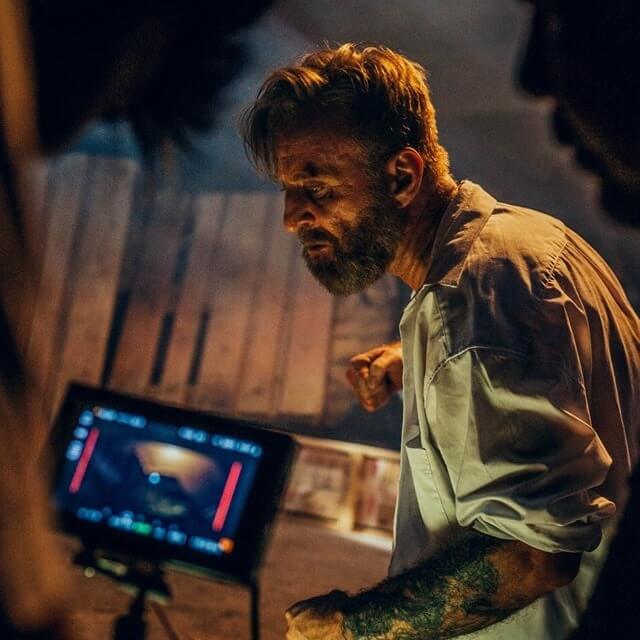
Today we talk with Byron Gibson, a former Muay Thai promoter turned actor, best known for his role in Only God Forgives. His career has taken him from the fight corner to more than 70 film productions worldwide.
You worked as a Thai boxing promoter. What’s the story behind that?
It’s quite an involved story, but here goes. I first got involved in Thai boxing nearly 38 years ago, and I first went to Thailand around 36 years ago. Thailand back then was completely different from what it is today. Muay Thai has become very commercialised and worldwide, but back in those days it was still very old school. Some gyms wouldn’t even let foreigners train there unless you had an introduction or invitation.
Funny enough, the trip opened my eyes because before I went to Thailand, I’d been taught by an instructor back home who mixed Muay Thai with Taekwondo. At the time, I thought it was authentic, but once I arrived in Thailand I realised very quickly what the real deal was. Our group had paid this instructor for training in Thailand, but he never even turned up at the airport and basically we got ripped off. Looking back, it was a blessing in disguise.
I eventually ended up at a legendary camp called Sor Thanikul after meeting an ex-fighter by chance in a bar at the Stable Lodge Hotel in Bangkok. It scared me to death at first. I’d never seen anything like it. The intensity, discipline and conditioning were on another level. These guys lived and breathed Muay Thai every single day.
I also visited other schools around Thailand, including Sor Plernjit Gym, which had South American boxing trainers working there at the time. Their movement, timing and boxing IQ absolutely amazed me. More than anything, though, I became fascinated by the old-school trainers and pad men. I’d sit for hours watching them work. They weren’t just holding pads, they were creating fighters. That’s when I knew I wanted to become a good trainer myself.
Over the next five years, I made numerous trips back and forth to Thailand, training and learning more every time. Eventually, I started teaching Muay Thai in the UK and built up my own franchise of schools before moving into promoting fights.
I partnered with a successful promoter from Birmingham called Steve Logan, and together we started promoting shows in Cambridge. I’m proud to say I was the first person to promote professional Muay Thai shows in Cambridge. We brought over Dutch fighters, experienced Thai boxers and competitors from all over. It was a massive learning curve and financial risk.
Back then there weren’t major sponsors or TV deals like there are today. Most of the time you relied entirely on ticket sales. It was also the start of the rave culture, and I spent many nights driving around clubs, raves and music venues putting fight posters on windscreens and handing out flyers. There was no social media back then — if you wanted people through the door, you had to get out there and do the work yourself.
In the end, I promoted quite a few shows and every single one sold out. We also produced three or four champions, which I’m very proud of. I started sending fighters abroad to places like New York, Australia and across Europe. In fact, during the very early days of cage fighting, before the MMA explosion, I even took a fighter to Brescia in Italy to compete. You could feel something big was developing, even if most people didn’t realise it at the time. Along the way, I met some very colourful characters in the fight game, and those experiences have stayed with me
But life moves on. And in many ways, that whole journey eventually led me into the movie business which became the next chapter of the story.
How did you land your first movie role?
My first movie role happened completely by accident.
At the time, my partner was attending a casting call for a film in Bangkok. We had no idea what the movie was or who was starring in it. I simply went along with her for a bit of moral support and, if I’m honest, because we were planning to get something to eat afterwards at a nearby shopping centre.
While we were at the casting venue, the casting director spotted me and asked if he could take a photograph. I wasn’t interested in the film business at all back then, but I agreed and thought nothing more of it.
About a week or ten days later, I received a phone call asking if I could come in for a casting. I had absolutely no experience and no idea what I was doing. The only role they had left was that of a sex tourist sitting in a Bangkok taxi asking the driver where to go. Friends encouraged me to go along for a laugh, so I did.
I felt completely ridiculous during the audition and never expected to hear anything back. Then, not long afterwards, I got another call saying that Jean-Claude Van Damme wanted me in the film but not for the tourist role. Instead, they wanted me to play a gangster.
That was my introduction to the movie business.
I ended up spending three weeks working on the film, which was called The Eagle Path. In one of my scenes, Jean-Claude Van Damme kicks me in the throat, and the shot even made it into the trailer, which felt like a huge achievement at the time.
I also received some advice that stuck with me. Jean-Claude’s son, Kristopher Van Varenberg, suggested I take up theatre training to gain experience, while Jean-Claude Van Damme encouraged me to continue pursuing work in the film industry.
Looking back, it all started because I went along to a casting call to support my partner and grab some lunch afterwards. Sometimes the opportunities that change your life arrive when you’re not looking for them.
You worked twice with Steven Seagal on The Asian Connection and General Commander. How was it to work with him?
The circumstances were quite different on each one.
The first was The Asian Connection. At the time, my schedule was absolutely packed because I was also working on Brutal: A Taste of Violence with David Belle. In Brutal, I was playing a dodgy fight promoter, and the shooting schedules for both productions ended up overlapping.
As anyone who works in the film business knows, you have to adapt and take opportunities when they come along. I spent around a month working on The Asian Connection, which was a great experience. I was crossing over to shoot scenes for Brutal on some evenings, so there were periods when I was running on very little sleep.
Ironically, despite working on The Asian Connection, I never actually met Steven Seagal during that production. All of my scenes were filmed separately. There was supposed to be a final day where we would have crossed paths, but I couldn’t make it because I was committed to filming Brutal.
I finally met Steven when I worked on General Commander.
People often ask me what he was like, and all I can do is speak from my own experience. I found him to be quite reserved, but he was always respectful towards me, and I got on fine with him. My view is that if you show him respect, he’ll generally show you respect in return.
There’s a lot of hype surrounding Steven Seagal. These days, plenty of people make money from criticising him online because controversy generates views and clicks. But I can only judge a person based on my own interactions with them, and my experience was positive.
One thing that really stood out was that he still clearly knows his craft. If you’re interested in martial arts, combat, weapons, or that whole world, he can talk about it in tremendous detail. He’s extremely knowledgeable, particularly when it comes to weapons and firearms. I was also told that he speaks several different languages, which is impressive in itself.
The thing I remember most, though, is shaking his hand. The man’s grip is like a vice.
So, despite all the stories and opinions you’ll hear, I can honestly say that my personal experience with Steven Seagal was ok. I’ve certainly met far more difficult people in the film industry.
How did you land your role in Hard Target 2?
I landed the role through a casting director who knew about my background in Thai boxing and my experience working corners for fighters.
At the time, I didn’t even realise the film was going to be called Hard Target 2. I honestly thought that was just a working title and that it would eventually be released under a different name. Looking back, I was quite surprised when they kept the title.
The casting director contacted me and asked if I would audition for the role of a trainer working in a fighter’s corner. They specifically wanted someone who had genuine experience rather than somebody simply pretending to be a coach. Because of my years around Thai boxing and fight camps, I was able to bring a level of authenticity to the role.
It wasn’t a huge part, but it was an enjoyable one because it allowed me to combine two worlds that had become a big part of my life—acting and Thai boxing.
One interesting thing about the role was that all of my dialogue was ad-libbed. Rather than sticking rigidly to a script, I was able to speak naturally and react as I would in a real fight environment. Some of those moments ended up being used in the film’s promotional material, including trailers and short promotional clips, which was a nice bonus.
So, in many ways, getting the role came down to experience. The production needed someone who genuinely understood what happens in a fighter’s corner, and my background in Thai boxing helped me secure the part. It was a great example of how skills you’ve developed outside the film industry can sometimes open unexpected doors within it.
You recently appeared in The Warrior’s Gate. How was that experience?
Working on The Warrior’s Gate was a really interesting experience for me. We were filming in the Ningbo region of China, and I was cast as a Viking warrior. I was running around in full armour carrying a huge shield along with a ball-and-mace weapon, so there was a lot of choreography and physical work involved.
What fascinated me most was the scale of the production. We were filming in a bamboo forest in the middle of nowhere, and the atmosphere was incredible. Anyone who’s spent time in a bamboo forest will know there’s something unique about the sound and the environment. The set construction was amazing, and seeing what the production team had built out there really impressed me.
I was working alongside Ron Smoorenburg, who was playing the Black Knight, and there was a great group of performers involved. It was hard work, but it was enjoyable work.
One thing that still makes me laugh was the catering situation during the first few days. For some reason, whether it was a misunderstanding or a mix-up, breakfast consisted of a single boiled egg. That’s it—one boiled egg. Meanwhile, we’re expected to spend the day fighting in heavy armour that weighed a fair few kilos.
People often think working on movies is all red carpets, luxury trailers and glamour. The reality can be very different. After a few days of surviving on one boiled egg, we eventually had to tell production that the stunt performers and actors needed a bit more fuel than that. Thankfully, they sorted it out, and before long we were getting proper breakfasts.
That’s one of the reasons I always laugh when people imagine the film industry is all glitz and glamour. Sometimes you’re standing in a remote bamboo forest wearing armour, exhausted, wondering if another boiled egg is heading your way.
Overall, though, it was a fantastic experience and one I’ll always remember. The locations were incredible, the production was huge, and it gave me another chance to work alongside some very talented people from around the world.
Could you share your experience working on Only God Forgives (2013)?
Working on Only God Forgives was probably one of the most important projects of my career, and landing the role wasn’t straightforward.
When I heard that Nicolas Winding Refn was casting for the film, I was determined to get involved. I’d been a fan of his work, particularly Drive, and I knew this was going to be a unique project. What interested Nicolas was authenticity. He wanted people who could bring real-life experience and believable characters to the screen.
During the casting process, he asked a lot about my background and life experiences. I told him stories about some of the people I’d known and situations I’d witnessed when I was younger. Those experiences helped me shape my character and bring a degree of realism to the role.
In the film, I played one of the gangsters involved in the events that lead to Ryan Gosling’s brother being killed, setting the story in motion. It wasn’t a traditional action role, but it was a very intense and demanding one.
Working alongside Ryan Gosling and Kristin Scott Thomas was a great experience. Ryan struck me as a very humble and approachable guy, despite being one of the biggest stars in the world. The overall quality of the production was incredible. Everything from the cinematography to the attention to detail felt like a major step up from anything I had worked on before.
The torture scenes involving my character were particularly gruelling to film. I spent long days in the make-up chair while the special effects team created the injuries and effects required for the scenes. Some days involved twelve hours of preparation and filming, making it one of the most physically demanding jobs I’d done.
There were also scenes shot that never made it into the final cut. Personally, I’d love to see a director’s cut released one day because some of the material that audiences never saw was incredibly powerful and, frankly, quite shocking.
One of the highlights was Cannes Film Festival. During my torture scene, a number of audience members walked out because they found the film scene too intense too real. As strange as it sounds, that told me we had done our jobs. The film provoked a real emotional response.
What I never expected was the long-term impact the film would have on my career. More than a decade later, I still get recognised and receive work because of my role in Only God Forgives. It opened doors that continue to benefit me today.
Some films come and go, but every now and then you work on one that leaves a lasting impression. For me, Only God Forgives was definitely one of those films.
In 2019, you appeared in Dean Alexandrou’s directorial debut Haphazard. Dean is mostly known for his stunt work, how was the experience working with him as a director?
I’ve worked with Dean on a number of different projects over the years, so by the time HapHazard came along, we already knew each other quite well.
Dean is an exceptional athlete and an incredibly talented action performer. What has always impressed me about him is that he has a very clear vision of what he wants to achieve. He’s one of those people who understands every aspect of filmmaking, whether it’s action design, stunt work, performance, or directing.
My role was relatively small. I played a character called Harold, a gun runner, and I shared scenes with Selena Lo
Working with Dean is always enjoyable because he’s professional, focused, and knows exactly what he’s looking for. Having spent so many years in the stunt and action world, he understands how to get the best out of performers and how to create action that feels authentic.
What many people don’t realise is just how skilled Dean is. He’s one of the old-school action guys who has earned his reputation through years of hard work and experience. His physical abilities are outstanding, but beyond that, he has a genuine understanding of filmmaking as a whole.
Most recently, he worked on the Alien television series, which is a testament to the level he operates at within the industry. It’s great to see someone with his talent getting opportunities on major international productions.
I’ve always believed Dean has the ability to do something really big as a director. He has the vision, the experience, and the work ethic. Hopefully, it’s only a matter of time before a major studio or production company gives him the chance to showcase what he can do on an even larger scale.
Could you talk about the Rise of the Footsoldier franchise starring Craig Fairbrass, and what can audiences expect from the new installment? I believe it’s going to be the seventh movie
The Rise of the Footsoldier franchise has just gone from strength to strength over the years. It’s become one of Britain’s most successful independent crime film series, and it’s been great to be a part of that journey.
My involvement actually came through Craig Fairbrass. I first met Craig around 2013 while we were both working on a Viking-themed project in Malaysia. We stayed in touch over the years, and then an opportunity came up when I was filming a military project in Spain.
As luck would have it, the Rise of the Footsoldier team were due to start filming in Spain shortly afterwards. They heard I was in the area and, following a recommendation, I was offered the role of Ricky in Rise of the Footsoldier: Marbella. Being British and already a fan of the franchise, I jumped at the opportunity.
One thing I particularly enjoyed was being able to bring some of my own ideas to the character. I choreographed the infamous fork scene, which was something I had a lot of fun putting together.
The experience must have gone well because they brought me back for the next film. Working with that team has always been enjoyable because they know exactly what the audience wants from a Footsoldier movie—strong characters, dark humour, violence, and plenty of surprises.
As for the latest instalment, all I can really say is that it’s heading in a much darker direction. Without giving too much away, the tone feels different from some of the previous entries. It’s more brutal, more intense, and it takes the story into places that I don’t think audiences will be expecting.
Could you share any interesting moments from the set of English Dogs in Bangkok, where you worked alongside Ron Smoorenburg?
English Dogs in Bangkok was an interesting project because it’s actually based on a true story. The film follows a steroid dealer who ends up in Bangkok, goes on the run, and eventually finds himself being pursued and arrested by the DEA. The real-life story behind it is fascinating, and there’s currently a documentary in development that will explore those events.
There’s also another documentary in production called The Fists of Fury, which focuses on how the fight scenes were created for English Dogs in Bangkok. That should be released within the next year and will give people a behind-the-scenes look at the action choreography.
We had a lot of fun making the film, but like most indie productions, there were plenty of ups and downs along the way. There were the usual challenges you get with independent filmmaking, but also some unexpected ones.
One of the more unusual situations came during production when the cameraman had to leave and return to his home country. That left us in a difficult position because we still had key action scenes to complete. In the end, I ended up stepping in and filming two of the fight sequences myself, while still performing in them as an actor.
I had some guidance beforehand from the cinematographer Ross Clarkson, who advised me on the type of camera to use and the technical setup. Based on his advice, I purchased the camera myself and went on to shoot the scenes.
Those sequences also involved working closely with Ron Smoorenburg and Mark Stas, and we managed to get through it by adapting on the fly and making the best of a difficult situation.
That kind of thing sums up indie filmmaking for me—you’re constantly problem-solving, adapting, and sometimes even taking on roles you never expected, just to get the job done.
There were also frustrations later in the distribution process, the distribution company were not good or honest, the marketing materials didn’t reflect the cast or the film properly.
Working with people like Ron Smoorenburg is always a pleasure. He’s a true professional and someone I’ve always got on well with, and the same goes for the rest of the team. The story of English Dogs in Bangkok isn’t finished yet either. There are plans a director’s cut and behind-the-scenes material, and I think eventually audiences will get a much fuller picture of what went into making it.
In 2023, you appeared as the character Big Deal in The Siege alongside Daniel Stisen, a Norwegian bodybuilding champion. What was the most challenging part of filming? Could you share your experience on this project?
This project was pretty straightforward, to be honest with you. It was one of those jobs where everything just ran quite smoothly from a production point of view.
The most memorable thing I remember about it wasn’t any major drama or complications—it was actually the conditions. It was absolutely freezing cold throughout the shoot, and we were working in really thick fog most of the time.
We were filming on a pig farm that had been converted into a film studio, which made it quite a unique location. I remember looking out from my hotel room at night and you could barely see more than a few feet in front of you. The fog was so dense it was almost surreal.
It created a very specific atmosphere on set, but at the same time it was tough just dealing with the cold day after day. Once you were on set and working, you got on with it.
I actually got recommended for the project through another producer and director I had previously worked with. I’d worked on a couple of projects with Armand Assante, who played John Gotti and has won multiple awards for his work. We collaborated on two projects, including a gangster franchise called Mr. Mayfair. About a year after that, I got the call to come on board for this film, The Siege.
That recommendation really came out of previous work relationships, which is often how things happen in this industry—one job leads to another if people are happy with what you deliver.
Overall, in terms of production, it was a very smooth and straightforward job. No major issues, just a cold, foggy shoot in a very unusual location.
You recently appeared as Jan in the Netflix series Crooks. What can you tell us about the production and your character?
The production was amazing. Anyone who has worked on a Netflix series will know they operate at a different level in terms of budget, organisation, and overall scale. It really is a cut above most productions, so it was a very interesting and enjoyable experience.
I got the call to play Jan through a casting director I had actually worked with on my very first film. So there was already an established working relationship there, which always helps.
The character of Jan was part of a group originally developed as biker-type enforcers connected to the Black Pagoda bar. As the project evolved, those characters were later adapted into expat gangster types based in Bangkok, which changed the dynamic slightly but worked really well for the story.
I really enjoyed working on the series, particularly working with director Marvin Kren. He had a very clear vision and created a strong, focused atmosphere on set, which made it easy to get into character.
As always, the Thai stunt teams and local crew were outstanding. The level of professionalism and skill they bring to action work is second to none, and it really elevates everything on screen.
One of the highlights for me was a bar fight sequence I did. It was a very physical scene, and the style was more grounded and brutal rather than stylised martial arts, which suits me. It was the kind of work I really enjoy—raw, instinctive, and intense.
Unfortunately, I was only able to work on part of the production due to scheduling conflicts. I had to leave to return to the UK to continue filming Rise of the Footsoldier: Retribution. So the dates overlapped, but the production team were very understanding and managed to work around it.
Overall, it was a great experience and another step up working on a major international platform like Netflix. It’s always good to be part of projects that push you creatively and physically, and this was definitely one of those.
What can audiences expect from Intercept (2026), which may be Daniel Zirilli’s final film?
I actually got a call from Daniel Zirilli during post-production when they were having issues with the shoot in Malta. They were looking for support and asked if I knew any locations or production setups that could help them complete the film.
At the time, I was working in Spain and was familiar with a production base there, so I suggested they could potentially finish parts of the film in that location. That ended up being how I became involved in the final stages of the project.
We shot for around three to four days, in Spain to complete additional scenes and action sequences. It was a fast-paced shoot, and the focus was very much on getting the material they needed to complete the film.
During that time, I ended up wearing two hats—both as an actor and also assisting in an assistant director capacity, helping to keep things moving on set. There were some big action elements involved, including helicopter landings and other large-scale sequences, which made it quite an intense but enjoyable experience.
To be honest, I wasn’t fully across the entire storyline of Intercept, as I came in more towards the end of the production to help complete specific sections. But what I did see was a production that was trying to pull everything together under challenging circumstances, and everyone was working hard to get it finished properly.
Working with Daniel was always a positive experience. He was passionate, focused, and very hands-on with his projects. Sadly, he passed away not long after, and from what I understand, this became his final film.
Overall, it was an interesting and memorable experience—less about the story for me personally, and more about stepping in to help a project reach completion and seeing it through to the end.
Dark Mean City is a video game project you’ve been involved with. What can you tell us about it?
Dark Mean City is still currently in post-production. From what I understand, it’s a Brazilian-developed PlayStation game, and the project is moving through its final stages.
My involvement at this point is still developing. I’ve been told there may be future studio work in London, where they would potentially recreate my likeness digitally for use within the game. At the moment, I’m still waiting for final confirmation on that side of things, so it’s very much a “watch this space” situation.
It’s an interesting area for me because it’s a step into the gaming and motion-capture world, which is something I’ve become more open to over time. It’s a completely different discipline compared to film, but it’s a growing space and a really exciting one creatively.
A few years ago, I also worked with Ubisoft on a project linked to Far Cry, where I played a character described as a corrupt producer. That experience gave me a first taste of how the gaming industry and performance capture world operates, and I really enjoyed it.
What’s appealing about projects like Dark Mean City is the way film and gaming are now merging. As an actor, you’re not just working in traditional cinema anymore—you’re potentially being translated into a digital world where your performance can live in a completely different format.
It’s quite funny when I look back, because I never imagined I would end up anywhere near the gaming industry. But over time, one project has led to another, and now it feels like a natural extension of the work I’ve been doing in film.
It’s definitely a world I’d like to continue exploring going forward.
Brutal: A Taste of Violence is a TV series starring David Belle, the founder of Parkour. How was your experience working on it?
Brutal: A Taste of Violence was actually released around 2016 or 2017. It was a 12-part mini-series, but it didn’t really get the traction or exposure it deserved at the time, which was a shame.
I’m not entirely sure what happened on the distribution or promotion side, but it felt like it was under-marketed despite the quality of the project. It was a very strong production in my opinion.
The series starred David Belle as Axel Chen, and I played Marcus Knox, alongside in a key role. For anyone who is into action cinema, if you can track it down, it’s definitely worth watching. The fight sequences are excellent, and the whole series is shot in a very gritty, grounded style that really suits the material.
David Belle was great to work with—very humble, very professional, and extremely focused. Given his background in parkour and action performance, he brings a very authentic physicality to everything he does.
The project was originally promoted through a sister company of Canal Plus called Studio+, which at the time was pushing a number of international action series. Interestingly, Brutal ended up leading me into a couple of other projects afterwards.
After that, I went on to work in Monaco on a project called Deep, where I played a freediving coach alongside bond girl Caterina Murino. I also worked in South Korea on another series where I reprised the character Marcus Knox in a project called Dragon Race. There was a sense at the time that a franchise was being developed across multiple territories.
For me, Brutal: A Taste of Violence was a standout project. It’s just a shame the marketing didn’t reflect the quality of the series, because I genuinely think audiences worldwide would have responded very strongly to it.
If you look at David Belle’s earlier work, such as District B13 , you can see the same kind of gritty action style running through Brutal. For fans of that genre, it’s definitely one to look out for if you can find it.
You’re currently filming Oliver Stone’s movie White Lie, starring Josh Hartnett. How has that experience been so far?
I can’t go into any details about the project at this stage due to confidentiality agreements.
What I can say is that it’s been a privilege to work with Oliver Stone, and he brings a huge amount of experience and knowledge to set. He’s a director I’ve always respected.
Working alongside Josh Hartnett has also been a very positive experience. He’s professional, focused, and a pleasure to work with.
I’m grateful to be involved in the production and I’m looking forward to seeing how it develops once it’s released.
For me personally, it’s one of those opportunities you don’t hesitate on. To be part of a production led by a director of that calibre is something you simply have to take when it comes along.
You’ve appeared in over 70 projects — which one or two stand out to you the most?
To be honest with you, it’s been a journey, and it’s still very much an ongoing one.
I actually wrote a book about my experiences in the film industry called It Ain’t All Glitz and Glamour, which is available worldwide, including on Amazon and in bookstores such as Barnes & Noble. I wanted to put it down on paper because people often see the film business as glamorous, but the reality is very different. You really have to be in it and committed to understand it.
Like any industry, there are ups and downs. The film world in particular can be extremely demanding, and it’s not always what people imagine from the outside. That’s part of the reason I felt compelled to write about it honestly.
In terms of standout projects, it’s difficult to pick just one or two because every job brings its own experience, its own challenges, and its own set of people. You meet some incredible individuals along the way, and others who are perhaps more difficult, but that’s just part of life and part of the industry.
Every production I’ve worked on has given me a story to tell. I’ve genuinely enjoyed the journey, even the tougher moments, because they all contribute to your growth and experience.
I never set out expecting to end up in the film industry, but that’s where life has taken me, and I’ve embraced it fully. One opportunity has always led to another, and that’s how the path has unfolded.
I’m still very much active in the industry and looking forward to continuing that journey.
And yes, the book really tells the full story—It Ain’t All Glitz and Glamour Part 2 is also in the pipeline, and will be out very soon.
Could you tell us about the Action Movie Mayhem series?
The Action Movie Mayhem series, for me, is something really special because it focuses on the unsung heroes of the film industry—the people who rarely get recognition but are absolutely essential to everything you see on screen.
I’ve always been fascinated by that side of cinema, going back to the old cowboy films where the supporting cast and stunt performers were doing all the real work behind the scenes while making the lead actors look good. That idea has always stayed with me.
With Action Movie Mayhem, I’ve had the opportunity to launch a series that highlights exactly those kinds of people. It forms part of a wider body of work under the “Siam Universe” banner.
The first episode is set in Bangkok, which is where my own film journey began. From there, the plan is to continue the series into other territories, including the UK, the USA, and Europe, depending on where the project leads.
The focus of the series is on the people behind the action—the stunt performers, coordinators, and supporting actors who often go unnoticed but are the backbone of the industry. In Thailand in particular, there’s still a strong tradition where performers do their own action work, which is something quite rare in today’s industry globally.
I’ve also worked with a lot of people in the industry who have an enormous amount of experience, but they never get the opportunity to step into lead roles, or they don’t have access to strong PR representation or management. At the end of the day, the film business is a business, and without that infrastructure, a lot of talented people simply don’t get seen. This project is about trying to tell their stories.
It’s something I feel very strongly about because I genuinely respect these people and what they bring to every production. I want to give them a voice and a platform, because without them, the industry simply doesn’t function.
Episode one has already been completed, and the response from distribution has been very positive. There’s interest in continuing with episodes two and three, which are expected to go into production over the coming months. The hope is that, if the series connects with audiences, it can expand into a wider international release.
Alongside that, the “Siam Universe” is developing as a broader documentary platform that I’m co-producing. It’s designed to explore not just the film industry, but also related worlds such as Muay Thai, underground fight culture, and other aspects of Thai life and culture. It’s still very much in development, so there’s only so much I can say at this stage, but it’s an exciting direction creatively.
There are also early discussions about potentially developing some of these contributors into a larger film project in the future, bringing together some of the most experienced action professionals in the industry.
At its core, Action Movie Mayhem is about giving recognition to the people who make the stars look good. That’s the story I want to tell, and it’s something I feel very strongly about.
What are your top three favourite action films of all time?
Number one, without a doubt, is Enter the Dragon. You just can’t beat it. For me, it’s the greatest martial arts film ever made. It defined the genre and still stands up today.
Number two is First Blood. The original Rambo is a masterpiece in its own right. It’s not just an action film—it has depth, emotion, and a real human story at its core.
And number three is Revenge 2017. I really like that film. It’s raw, stylish, and very intense. It’s one of those modern action films that really pushes the boundaries of the genre and leaves a strong impression.
What are your two favorite fight scenes in film history?
The Hallway fight in Old Boy with the hammer. Its shot well the choreography is great and its all moving.
The fight scene on the bus in Nobody. Its got character and humor.
Which three recent action movies would you recommend watching?
To be honest with you, I’m very, very old school when it comes to action cinema. Not a lot of new stuff has impressed me. So I will pick the old school stuff.
One film I really like is The Hunted, with Tommy Lee Jones and Benicio del Toro. I love the way that film is shot, the tone of it, and the intensity between the characters. It feels grounded and very real in its approach to action.
Of course, First Blood is right up there as well without a doubt. That film isn’t just action—it has real character depth and emotion behind it, which is what makes it stand out.
And then, going further back, Enter the Dragon is still the benchmark for me. It’s iconic, it defined a genre, and it’s still incredibly watchable today.
For me, I’ve always been drawn to that older style of action filmmaking where the characters actually matter. It’s not just about the fights – it’s about who the people are, what they’re fighting for, and the story behind it. That’s what really stays with me.
Disclaimer: The images and videos used in this interview are sourced from other sources and are used for informational and editorial purposes only. All images remain the property of their respective copyright holders.
The post Byron Gibson Interview appeared first on Budomate Magazine.