By
By 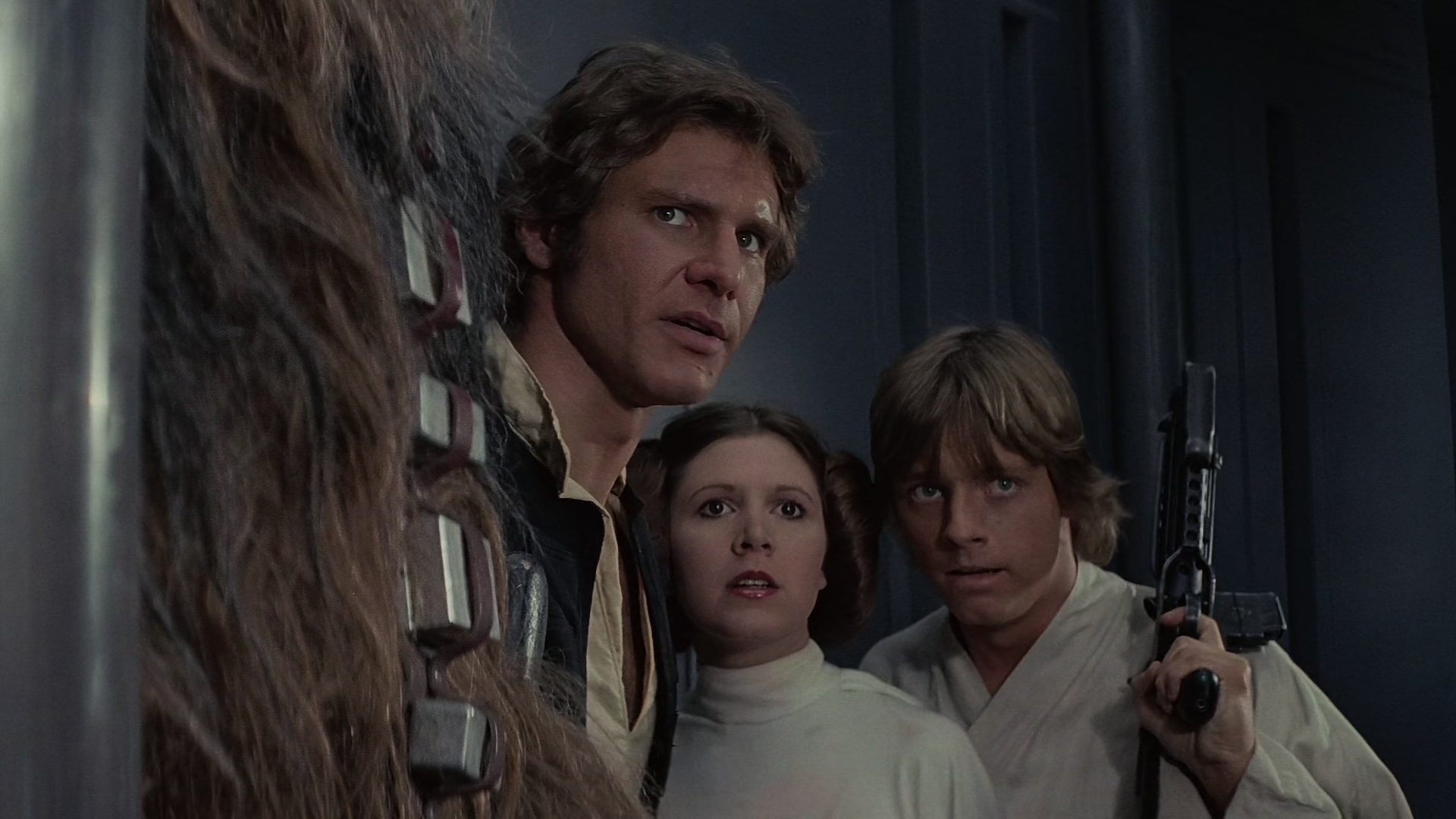
When Marcia Lucas died at the age of 80 last week, she left behind a host of incredible achievements. Most famous among them, her Best Editing Academy Award for 1977’s Star Wars, a vaunted accolade that still doesn’t fully capture the extent of her work on that film. Famously, it was Marcia’s skills that transformed the stuffy and plodding film directed by her then-husband George Lucas into a generational adventure movie.
However, even that addition still fails to capture the breadth of Lucas’s contributions to cinema. Her work in the New Hollywood era continues to influence today’s cinematic landscape.
Born Marcia Griffin, Lucas got her start working for Sandler Film Library in the 1960s where she initially had the job of finding stock footage requested by directors. That job taught Lucas how to think about the way images juxtapose with one another, something she understood so inherently that she quickly rose to the position of assistant editor. From there, she began working under the incredible editor Verna Fields on a documentary about Lyndon Johnson, which led to her moving into feature films.
Fields brought Lucas to help edit Medium Cool, the incredible 1969 political drama directed by Haskell Wexler. The story of a morally-complex cameraman (Robert Forster), Medium Cool blends traditional feature filmmaking with on-the-ground footage shot at the infamous 1968 Democratic National Convention in Chicago. Mixing the two forms, turned the tumultuous real-world images into a compelling cinematic journey.
Lucas met and got engaged to George while working under Fields, which led to her working on 1969’s The Rain People for Francis Ford Coppola‘s first proper New Hollywood movie, after three less-personal genre films, The Rain People stands out for its raw performances from the three leads, played by Shirley Knight, James Caan, and Robert Duvall. Already, Lucas shows an innate understanding of storytelling rhythms in the way she chooses hard cuts in tense scenes between Knight’s dissatisfied housewife and Robert Duvall’s surly cop and chooses to let tender moments between the housewife and Caan’s handicapped football player linger.
Lucas truly came into her own when Fields left George’s second film American Graffiti (1973) to work on What’s Up Doc? (1972), leaving behind footage for Marcia to sort through, alongside the equally esteemed Walter Much. Not only did Marcia succeed in compiling the footage into a generation-defining blockbuster, but she was recognized with a Best Editing Oscar nomination for her efforts.
These projects opened the way for Lucas to become the lead editor on Martin Scorsese‘s 1976 masterpiece, Taxi Driver. The story of a troubled loner who finds meaning through his violent fantasies, Taxi Driver simultaneously asks the audience to understand and be repulsed by protagonist Travis Bickle (Robert De Niro), while also playing with reality and fantasy. Lucas and her co-editors Tom Rolf and Melvin Shapiro, achieved this by employing frantic cuts during tense scenes, letting the camera linger in the aftermath of carnage, and dissolving at key moments to soften Bickle.
Technically impressive as her decisions were, Lucas’s contributions weren’t just matters of math and cutting. She helped shape the story, sometimes emphasizing the human aspects ignored by her male collaborators.
It was her decision to ground the lead characters by using almost the entirety of an improvised scene between Ellen Burstyn and young actor Alfred Lutter in 1974’s Alice Doesn’t Live Here Anymore, a decision that Scorsese supported. She was the one who told George that Obi-Wan Kenobi should die when he and Luke come to the Death Star in Star Wars, establishing the generational tensions that will become the franchise’s key theme. When Raiders of the Lost Ark ended with Indy’s frustrating encounter with bureaucrats, Lucas asked her husband and Steven Spielberg about Marion, adding a timeless romantic beat to the otherwise bummer ending.
Marcia Lucas’ story sensibilities never forgot the human aspect, whether they were on the mean streets of New York or in a galaxy far, far away. She made great movies into masterpieces that stand the test of time.
The post Marcia Lucas: The Unsung Hero of Star Wars and So Much Else appeared first on Den of Geek.