By
By 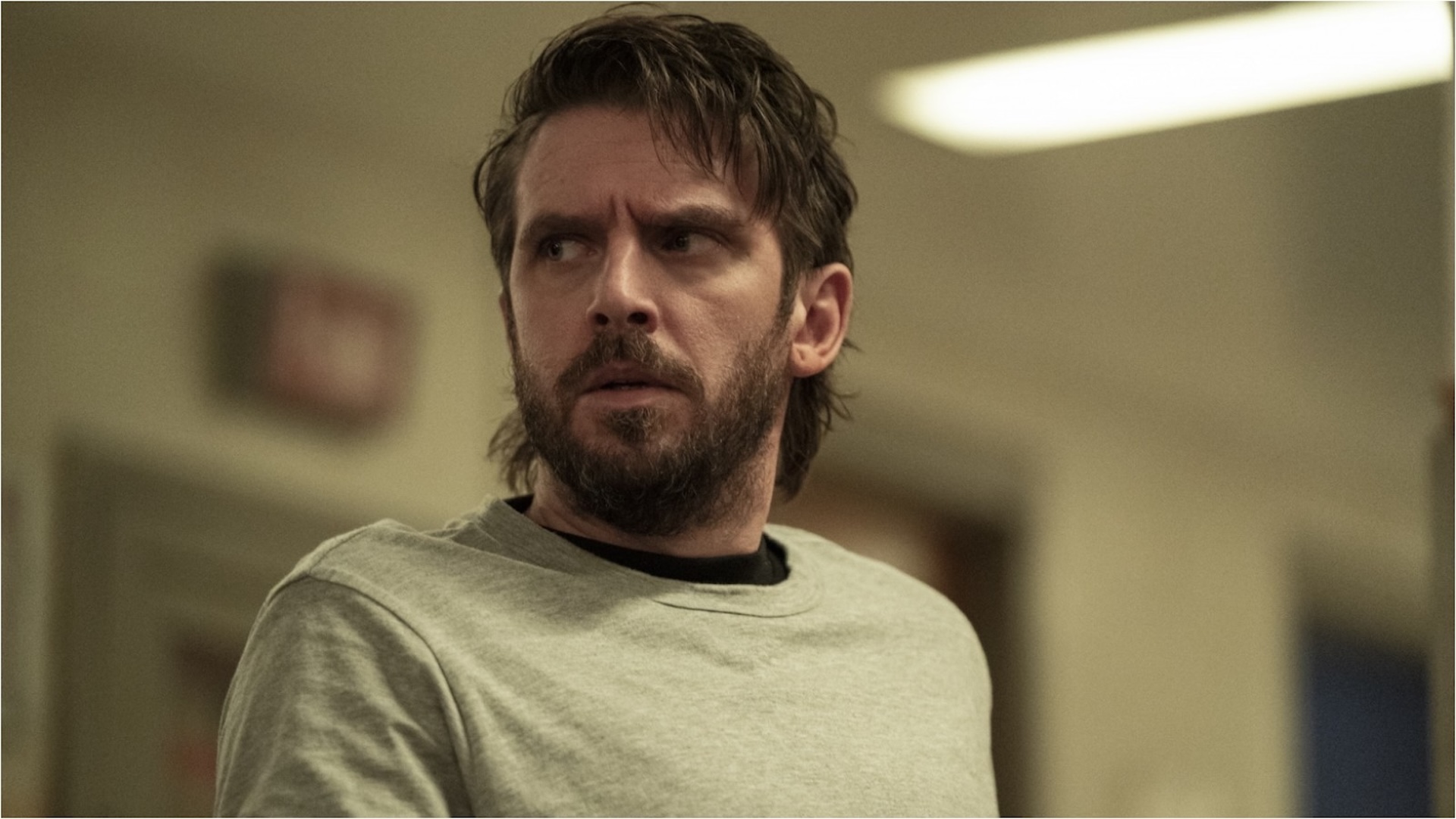
The following contains spoilers for The Terror: Devil in Silver episode 2.
The Terror: Devil in Silver takes place in the confines of the fictional New Hyde Psychiatric Hospital, the sort of dark and oppressive setting that automatically lends itself to questions of reality, truth, and whether viewers can trust what they’re seeing at any given moment. And it’s not like its lead character, the wrongfully admitted Pepper (Dan Stevens), is a poster boy for reliable narrators. But the series is almost shockingly upfront about the fact that not only is there a very real monster at the center of this story, but it’s not the scariest thing at work in this particular hospital.
No, New Hyde is essentially a waking nightmare for the simple reason that it’s a psychiatric hospital in contemporary America. Understaffed, overcrowded, and low on funding, its patients — who are often the most vulnerable and marginalized among us —are left isolated and alone, trapped in a system that fails those both inside and outside of it. Put plainly, it’s the sort of setting that’s perfectly terrifying without the threat of dark or malevolent forces lurking in its halls. And that’s 100% on purpose. The series is based on the novel of the same name by Victor LaValle, a horror author who is known for his socially conscious storytelling and willingness to use monstrous or fantastical elements to explore real-world issues. But, according to LaValle, Devil in Silver, the TV show, is able to explore some of the story’s larger thematic concerns with a bit of a softer touch.
“In the book, there are times when the narrator — really, just me — is saying it all very clearly, right? Maybe it’s a little on the nose even, which is fair. But when you get to see these human beings and start to care about them as human beings, you don’t need to hit that hammer quite so hard,” LaValle tells Den of Geek.
“You’re already seeing and thinking about them [each] as people, who you know have a whole life in them, but after their morning meds or their midday meal, they’re just sitting in a chair, sort of lost. And I don’t have to be told what was lost. I can see what was lost. That’s the beauty of working with actors of this caliber. Their humanity becomes the way to voice that rage and that desperation and that sadness [from the book]. Because I feel like if your heart is open to it, when you see the journey of these characters, you can’t come away from this feeling, ‘Well, sure, things are fine. The system is perfect’.”
As Pepper finds himself increasingly unable to escape the world of New Hyde, Devil in Silver takes the opportunity to highlight many of the most disturbing practices that often go on at such facilities.
“That’s what struck me when I first read the book,” Dan Stevens, who plays Pepper, says when asked about the novel’s focus on the darker aspects of the mental health system. “I’ve done things set in institutions and psychiatric wards before, but the way that this [story] spoke so directly to that, to hear how Vic and Chris [Cantwell, the series’ co-showrunner] were so consciously baking in the social critique to this story was very, very appealing. The fact that we’ve got 122 million Americans who live in a mental healthcare desert, and that there are 329 people for every healthcare provider in this country. That’s not really a healthcare system. That’s a waiting room without a door. There are horrendous, horrendous statistics that I’ve found more haunting than any monster haunting the halls of this story.”
In the end, while some characters fall victim to the malevolent force that’s trapped behind a mysterious silver door, others suffer from a lack of access to basic care. And in the world of the show, it can be hard to tell which is worse.
“Sure, we’ve got a monster roaming the ward and killing people, but then the monster that is the system just does it with paperwork and overmedication and underfunding and willful neglect,” Stevens says. “It’s the same thing. Just one has better PR, I guess.”
It is through his fellow patients that Pepper comes to understand the true horror at work in this facility — not to mention why it’s the kind of location a dark evil might choose to take up residence.
“When you first drop Pepper into that place, he initially sees everyone else as an other or an obstacle to his escape,” Cantwell says. But then he starts to get to know these people one by one: His roommate, Coffee, played by Chinaza Uche. Loochie, who’s been in and out of these places since they were 15. Judith Light’s character, Dorry, who’s the longest living patient at New Hyde and has been there since the ‘60s. It’s all of these different characters that we really tried to build out and humanize.”
For Cantwell and LaValle, the show’s supporting characters needed to feel like three-dimensional people. because it is through them that we experience the real-life horrors at New Hyde that go well beyond the world of the supernatural.
“One thing we focused on was — it’s never really spoken aloud, but they all have real diagnoses. That was important to us, that we didn’t just generalize mental illness,” Cantwell says. “In our minds, they were real neurodivergent people, and [the cast] all researched neurodivergence. They all have individualized diagnoses that they were able to carry forward [in their performances], as well as medication regimens that they were able to incorporate. But they’re all suffering — suffering from things like not enough family support, not enough support from the government, not enough support from the American healthcare system for the medications and treatments they need.”
More importantly, perhaps, is that while Pepper’s relationships with the other New Hyde patients are not only distinct and varied, they represent a rather important moment of personal growth for a character who isn’t initially presented particularly emotionally open or flexible.
“We had such a great cast,” Stevens says when asked about building Pepper’s varied relationships with his fellow New Hyde patients. “Their characters were all different, and they were all so endearing. Contending with the sort of bonkers energy of Judith Light’s Dory was sometimes challenging — not that Judith Light herself is challenging by any stretch, she is a total delight — but I think Pepper’s reaction to what, for all intents and purposes, at first glance is a ‘crazy old lady’ really transitions into something quite moving. Then you have something like his relationship with Loochie, who is played by this fantastic young actor b., who’s fresh out of drama school and brings this intense energy to a beautiful character. And so it was a real spectrum of characters, and every single dynamic was a little bit different. That’s part of the magic of the show.”
New episodes of The Terror: Devil in Silver premiere Thursdays on AMC+ and Shudder, culminating with a finale on June 11.
The post Dan Stevens Talks Depicting the Grim State of Mental Healthcare in The Terror: Devil in Silver appeared first on Den of Geek.