By
By 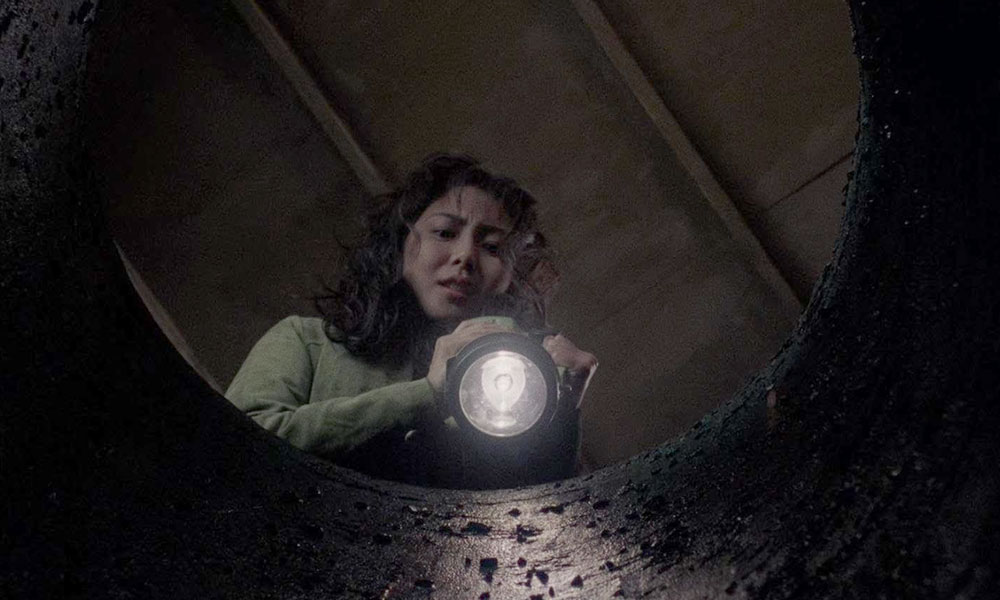
Ringu ensured a segment of American filmmakers didn’t need to think too much in the 2000s. Gore Verbinski and Ehren Kruger showed the way with their Americanized version titled The Ring. A glut of films like The Grudge, Dark Water and The Eye followed.
Why think of an original story when you can copy Japanese homework?
Yet, in the case of Ringu and The Ring, it worked out well…
Ringu
Ringu (1998) was kind of a big deal. Based on a novel by Koji Suzuki (no relation to the motorcycle), it spawned a franchise, and its influenced seeped into Hollywood by pushing horror from slashers to more atmospheric films.
Ringu also turned Hiroyuki Sanada into the go-to Asian guy for American audiences, following in the footsteps of Soon-Tek Oh and James Hong. Alas, it did not do the same for lead actress Nanako Matsushima. She did, however, get to star in an Uber Eats commercial in 2021. That’s pretty good.
Ringu is more supernatural mystery than straight-up horror. The bulk of the movie is spent tracking down the answer as to why people die in seven days after watching a VHS tape that isn’t Biohazard. No gore. No real jump scares. Just a growing sense of creeping dread as the clock winds down for the main characters and their son. Throw in one brilliant simple sting at the end, and credits.
It’s a restrained film, which is not surprising considering the budget: $1.5 million. Disney spends that much just to turn on the coffeemaker during a production meeting.
Ringu is also mostly free of scenes that make the viewer yell at the screen. I only did it once, when they made the 100-pound Asian lady pull buckets of water out of a well via a rope and sans gloves. That’s a job for Ronda Rousey. Although Michelle Rodriguez could also handle it by the power of scowling.
The Ring
Seeing the success of Ringu, Hollywood said, “Sure, we don’t like it when Edward L. Montoro copies our films, but it’s okay for us to do it to Japanese films. They owe us for Pearl Harbor anyway. Get me a music video director to underpay!”
And that’s how we ended up with The Ring (2002)…
Gore Verbinski, Ehren Kruger, Naomi Watts and a creepy David Dorfman teamed up to deliver a solid movie that worked out well for everyone.
Dorfman ended up being admitted to UCLA at age 13 and then Harvard Law School at age 18. He now works in the US House of Representatives. Gore had his moment in the sun as an A-list director. Kruger wrote Top Gun: Maverick. And Naomi Watts got to be this generation’s Fay Wray…or at least Jessica Lange…okay, maybe Joanna Kerns…
Yet, the interesting thing about The Ring is that it is a good example of what guys like Spielberg and Lucas did. They took movies from their youth and amped them up with modern sensibilities, which is what Hollywood basically did with Ringu. They took the same story and made it more satisfying with slight tweaks and certain elements beefed up.
Ringu+
How did The Ring build on Ringu? And where did it work and not work?
First, Hollywood made their version green. It certainly fits the theme of the story. The tint makes everything look damp and covered with a thin film of algae…kind of like a well environment.
Ringu presents a much more natural image. I kind of prefer Ringu’s approach. Its lack of overproduction lets the lurking supernatural element have more power. Every shot in The Ring has a degree of unsettling to it, which dampens the effect.
The Ring also leans more heavily into the “creepy kid” trope. Dorfman is more front and center than the child actor, Rikiya Otaka, in Ringu. Dorfman is presented as a character who perhaps knows more than the main characters. Meanwhile, Rikiya is little more than a plot device. He exists to add desperation to Matsushima and Sanada’s quest because he watched the video and will die, as well.
Dorfman is given the psychic ability of Sanada, too. Sanada’s equivalent in The Ring, Noah Clay, is just a dude with no psychic abilities. These choices make The Ring work smoother narratively. While the psychic aspects of Ringu may make sense to Japanese viewers, they leave Western audiences perplexed. Western psychics contact dead pets and add “fifty dollars please” to the end of their readings. They don’t sense killer ghosts.
The Ring Is What The Postman Does Twice
Ringu is a mellow film. After the opening scene, little action happens beyond Matsushima and Sanada looking concerned.
The Ring adds more urgency to its editing. Plus, it has a horse go crazy and get chopped up by a boat propeller to spice up the dish. This is just one way The Ring jolts viewers to keep them engaged. Another way it does this is by upping the horror aspect of the deaths. Ringu gives the victims basically normal facial expressions. The Ring exaggerates victims’ features to an almost comical level of distortion.
The nefarious video is much more student-film scary in the Hollywood remake. The Ringu video is merely spooky. The Ring video is more gross and shocking.
Preferences can go either way here. I consider it a push. Thinking up a way to present a video so scary it can lead to death is not as easy as it sounds. Both movies took their best stab at it from different directions.
Likewise, performances are a wash. The American performances aren’t better than the Japanese ones and vice versa, but they are different from a culture standpoint. Watts is more pushy, while Matsushima is more demure.
One interesting aspect that came through better in the Japanese version is how the son is neglected due to his mother’s career. Watt’s is a mom doing it all. Matsushima is not. She flat-out leaves her child alone to work more.
These cultural differences are apparent in the male performances, too. Clay is more beta man, and Sanada is more alpha man, up to the point of even slapping his ex-wife.
Put A The Ring On It
The Ring clearly gets the mystery aspect better. It follows a more interesting path. Both Watts and Clay get to be active participants. More mysterious clues are sewn in, such as the horses and the tree. Even the discovery of the well is better. The Ringu characters break into a crawl space. Marbles spilling and collecting in a floor depression are a much better visual way to reveal the well’s presence. Throw in the video tracking trick to discover the lighthouse, and The Ring presents a storyline that invites the viewer to discover the mystery along with the main characters.
The Samara/Sadako character is more fleshed out in The Ring, too. She becomes the center of the experiments rather than the mother. The experiments are even shown. Plus, her origin in The Ring is better realized, even as it is still mostly left to the imagination.
Ringu hints that Sadako has a father from the sea with its “frolic in brine, goblins be thine” couplet, which borders on Lovecraftian. The Ring makes Samara’s origin a bit more…evil, perhaps? She is the product of an infertile couple who did…something…to remedy their situation. It is not spelt out, but it is clearly not something good. This leads to Brian Cox taking a bath with all of his home’s electrical products.
Finally, the famous killer-ghost-from-the-TV gag is better in The Ring. Ringu did what it could. Plus, it was first to the punch. Obviously, the Hollywood remake is going to do better with more money, resources, a crib sheet and a visual director like Gore. Samara emerging from the TV is a solid capstone to The Ring. I especially like the way she distorts and moves like a flickering TV signal.
Yet, Ringu trumps The Ring on the outro. Watts and Dorfman making a copy to give to someone is a great ending to be sure. It is clear and ambiguous at the same time. A deleted scene shows they would give the copy to a convicted murderer. It’s good they deleted that. We don’t specifically need to know that information. The Ringu outro is more chilling, however. It shows Matsushima on her way to make her own father watch the video.
Perhaps, she is such a bad parent because she learned it from him…
No Matter Who Wins…We Win
Ringu and The Ring are cases where you can’t really go wrong with either one. They both have merits and are examples of how remakes can work, even if the original film is fine in and of itself. Obviously, the process works best when the original and remake are products of different cultures (or times) and not simply reboots from the same studio that has no idea what else to make.
Another fun aspect of both films is how well they combine the traditional ghost story with modern tech. The process of transferring thought to film is known as thoughtography. This phenomenon has been remarkably unexplored by cinema. Believe it or not, it was first done in 1903 in a short film from Georges Méliès titled The Spiritualist Photographer. It was also done in 1948 with Portrait of Jennie. Then thoughtography mostly sat unused until Ringu picked it up again and ran with it in a most entertaining way.
Hollywood should take note of the lessons taught by Ringu/The Ring, but they probably won’t. If they insist on remakes, there are plenty of options out there that offer good material rather than retreads. Alas, Hollywood is stuck in its own ring…as it swirls down the toilet.
The post Retro Review: RINGU & THE RING appeared first on Last Movie Outpost.