By
By 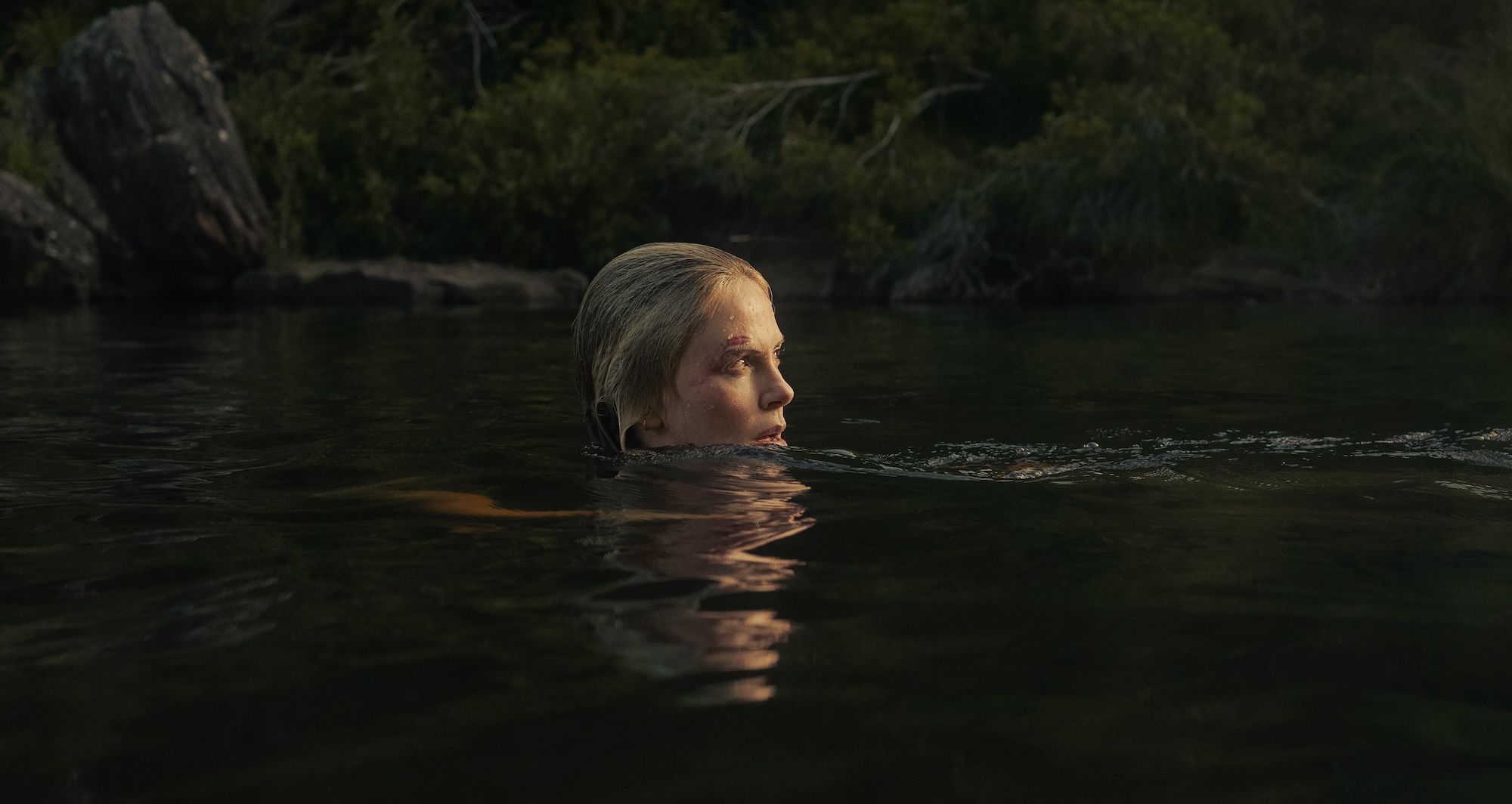
Icelandic filmmaker Baltasar Kormákur does not set out to make tourism destination films any more than he seeks to specifically tell stories of man, or woman, versus nature.
It just seems to work out that way for him and the audience who watches along with a serious fear of missing out.
As the filmmaker sheepishly confides to us, after his harrowing dramatization of the 1996 Mount Everest climbing disaster, Everest, came to theaters in 2015, interest in the Sagarmatha mountain spiked: “Even with all those people dying there, I actually infused the interest in Everest in the world,” the director says with a hint of mystification. “There was more traveling there the year after.”
So it seems likely to go again with Kormákur’s latest wanderlust adventure with elements of life-or-death stakes debuting on Netflix this weekend, the Charlize Theron-led Apex. Both a story of survival as as a cat-and-mouse game between killer and prey, Apex has a lot going for it, not least of all is the breathtaking vistas that it’s largely set in along some of Australia’s most remote and picturesque waterways.
The film is the story of Sasha (Theron), a woman overcoming grief and perhaps a sense of guilt after losing her partner Tommy (Erica Bana) in a freak climbing accident at the beginning of the movie. And on paper, it’s that story of sorrow crossed with the psychological thriller. After all, she meets in those Aussie wilds a fellow outdoors proponent, Ben (Taron Egerton). Alas, he’s also a chap who has read The Most Dangerous Game one too many times, and he has the crossbow to prove it. It’s theoretically lurid adventure story stuff, but in Kormákur’s eye, it’s also an unlikely travelogue guide to the extreme sport scene around the globe.
“I felt Yosemite is maybe a little bit overused, so I wasn’t as interested in that,” Kormákur says of the film’s original setting when the screenplay by Jeremy Robbins first came his way. Initially set entirely in the U.S., beginning with a climbing accident in Yosemite National Park and then transferred to a fictional American river, Apex at one time could’ve looked quite different. However, as a former climber himself, and a director with a firm timetable he could squeeze the film into Theron’s schedule, Kormákur found himself pulled instinctually to the Land Down Under.
“There’s a uniqueness of its nature,” Kormákur muses, “I love that. Also I felt that [you gain a lot] when you cast Eric Bana as the lover, and that she was going through her grief by going to a country that she is not at home in.” Finally, though, it just made sense with the time of the year. “It was informed by the fact that we had to shoot this during the winter months and we couldn’t do that in a cold place. So we needed to find something in the Southern Hemisphere.”
Initially, there was talk of trying to pass Australia off as parts of the North American landscape, but ultimately the production leaned into the loneliness of Sasha being a stranger in a strange land, especially when she realizes she’s alone with a killer.
It adds to the story but also the extremity of the shoot. Theron did many of her own stunts in the film, including jumping off a waterfall in vivid wide-shot, as well as plenty of the rafting. The director also insists almost all of the climbing seen in the film is Theron. But by Kormákur’s own admission, he’s a bit past the days where he does everything he asks his lead actors to do; “I used to be that guy, let’s put it that way, and I would do that, but she wasn’t asking me.” Nonetheless, the movie itself became an extreme sport in its own right for the people making it.
“When I was scouting, I did some of the swimming because we’re going to places we couldn’t get to anywhere else,” the director explains. “And at the end of the day, we had the whole crew swimming with us to locations, because there is no other way to get there.”
Indeed, there was a particularly isolated cavern in which Ben corners Sasha at one point, and the only way in or out was through. And under. This was achieved by dropping some supplies by helicopter and limiting the rest of the crew to only 40 people. Still those 40, plus Theron and Egerton, had just one way to get to work.
“When you have the crew and the actors doing that, then the hardest part is done, because everyone is now like, ‘Oh let’s get this done,’ because they’re already in it so deep. They’re getting raw and real.”
Kormákur suggests he doesn’t go out looking for dire adventure stories like Everest or Apex. He’s in fact offered many scripts in this milieu that he turns down. But every once in a while, one especially triggers the imagination when it goes beneath the surface, and into those deep, cavernous places of the mind.
“I could see the metaphor for what it could be,” he says of Apex, “a punishing journey of going through purgatory after doing something that you feel you can’t get over, and you blame yourself for in a way. And I think we go to the deepest places.”
The metaphor and meaning of the film changed organically once Theron, Egerton, and the director were all onboard. The desire wasn’t just to move from the U.S. to Australia, but to strip the characters to a nigh primordial place.
“I felt the [lonely grief] was enough to keep us interested in who she is,” Kormákur says. “Whether she’s a lawyer or a doctor did not necessarily inform how she’s going to react to this situation. So there was a choice of not indulging too much in that. That was also what Charlize was adamant about, she didn’t want to start getting deeply into backstory. She wanted to keep it forward, moving.”
That momentum led to a vision that is both more intimate and global. Which again belies the digital tourism of it all.
“That’s what brought us to the Troll Wall [mountain] in Norway,” Kormákur posits about the film’s dramatic opening. “I wanted to get the contrast of the two different places, because these people who live this kind of life and do this kind of thing, they’re all over the world. There are no borders in their experiences. They’re in Germany, they’re in Pakistan, and you know, they’re in the most crazy places doing this. So I wanted to give you a little bit of a feeling of that.”
Even in stories of life or death, you need to give audiences an idea for their own next (hopefully) safer adventure.
Apex is playing now on Netflix.
The post Why Netflix’s New Charlize Theron Movie Is Going to Make You Yearn for an Australian Holiday appeared first on Den of Geek.