By
By 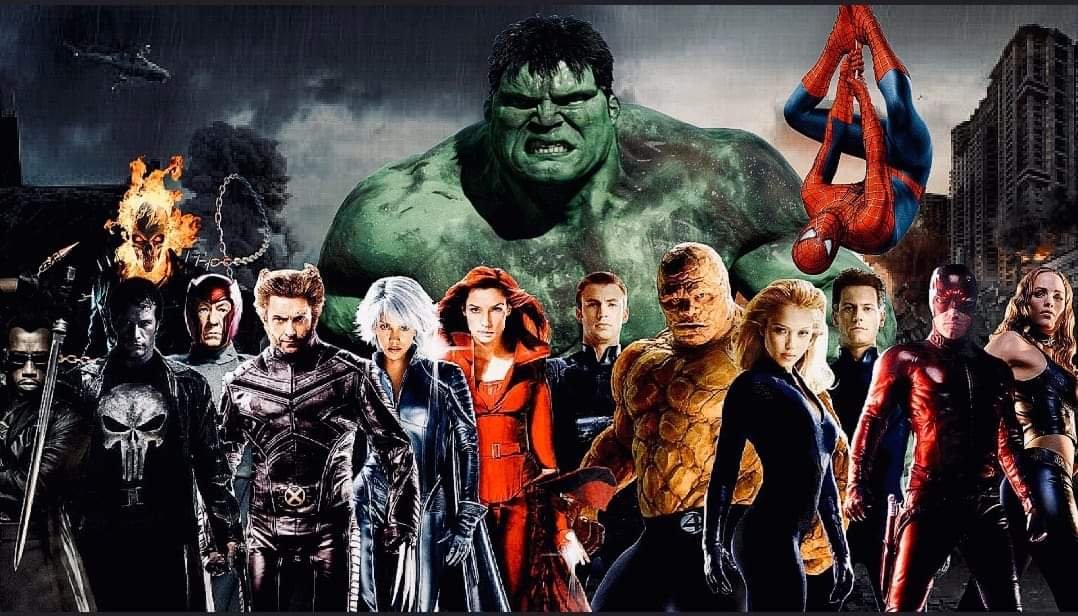
Flickchart’s Countdown to Doomsday returns! We’re reviewing every era of Marvel cinema each as we head towards Avengers: Doomsday and the biggest multiverse mashup of Marvel movies. We track the history, the heroes, the thrills, and more, and see who might make the cut to join against Doctor Doom! The latest Doctor Doom, anyway.
We left off Marvel’s story in a great place. After decades of faltering efforts, the late ’90s and early ’00s brought Marvel to the big time. Marvel Studios was founded and money was raining in as they tapped the potential of their best properties, with successful Spider-Man and X-Men franchises leading the way. Even their sole failure made some cash. Looking to the future, key figures like David Maisel and Kevin Feige saw the potential to go further than simply licensing characters to self-contained franchises. They wanted to get bigger and bolder.
Yet, while the seeds were being planted for Marvel Studios to step up, the other studios were in a feeding frenzy. Eager to keep the money train rolling and cash in on the rights they obtained, a flurry of films were rushed into development.
Would Marvel keep the cultural cache they had built, or were things about to get troubled? Join as we tackle the middle 2000s, a time where seven Marvel movies came out in four years.
Era Three: Milking the Marvel Cow
By the summer of 2004, Marvel was starting to look unstoppable. Spider-Man 2 was busting box-office records and competing against the strongest pop-culture franchises. Marvel’s deals had separated many of its characters to different studios, but it was making more money and strong relationships were being built. Stan Lee was turning his cameos into an expected re-occurrence, and even B- and C-list characters like Elektra had movies in development.
Yet with success comes pride. And with pride comes the fall. While there was plenty of money to be made, and indeed box-office grosses continued to burn bright throughout this era, the middle ’00s saw critical success take a nosedive. The reasons for this are varied and something we’ll examine throughout this article, but there’s no denying this batch of movies is lacking by comparison. The highest Rotten Tomatoes score of these seven movies is 62%, with four of them below 30%. Say what you will about whether this score matters, but it does reflect some kind of marked change in what was going on.
Flickchart’s new Flickscore system is even harsher on this era, with Flickscores ranging from 69 to 7!
Either way, the end of 2007 left Marvel feeling shakier. There was a growing feeling among fans that authenticity to source material was being disregarded to the detriment of overall quality. Whether this would spur a turn in a different direction is something future eras will have to answer, and indeed, this era ends on a major change. But we’ll get to that soon.
Blade: Trinity (2004)
Just six years earlier, Blade kicked off the modern superhero blockbuster. While it walked so the X-Men and Spider-Man could run and web-swing, it still served an essential role in the fabric of Marvel’s success by building confidence in superhero films. Blade II raked in even more money, solidifying the Blade franchise alongside the big boys.
Then, Blade: Trinity happened.
As mentioned in the last article, writer and producer David S. Goyer shepherded this trilogy into existence with Wesley Snipes and planned it as a trilogy early on. Before Blade II even released, New Line gave the go-ahead for a third film with Goyer again writing and producing. Despite Guillermo del Toro doing well with the second entry, he declined the director’s chair to pursue the Hellboy franchise. Goyer and New Line next turned to Oliver Hirschbiegel of all people to direct, but he turned it down to make Downfall.
Struggling to find a director, Goyer sought advice from Stephen Norrington and Del Toro. With their encouragement, he forged a deal with New Line to direct himself after making his directorial debut in 2002. It made sense to maintain a singular vision and ensure continuity.
But not everyone was happy. By now, the stories of this movie’s troubled production are widespread and largely center on the star: Wesley Snipes. Snipes disputes others’ accounts of the production, claiming complaints arose from friction that occurred after he became an executive producer and exerted his rightful authority. But most other accounts seem aligned on Snipes causing problems.
Snipes’s conflicts mostly centered on two people: Goyer and Ryan Reynolds. Despite Goyer and Snipes working together since the beginning, Snipes was apparently not happy with him taking the director’s chair. Nor did he like Goyer’s script.
Reynolds, meanwhile, had been cast as Hannibal King, the most comedic character in the franchise to date. Reynolds brought his typical brand of humor, which rubbed Snipes the wrong way. Their falling out during production was widely known and lasted until Deadpool & Wolverine.
Without diving too deep into rumors and hearsay, Snipes’s behavior was reportedly quite outlandish. He allegedly attempted to choke Goyer, spat slurs at Reynolds, smoked weed every day while refusing to leave his trailer, and would only communicate with the use of assistants. Regardless of how much of it is true, Goyer stated the production was “the most personally and professionally difficult and painful thing I’ve ever been through.”
To be fair, the final product may justify Snipes’s anger, if not behavior. Studio interference resulted in a notable mood shift for the third movie. Goyer’s original script was supposed to be a darker, dystopian work before New Line allegedly forced Dracula into the film and fought against the more somber tone. Considering they originally wanted the first film to be a spoof, it seems they finally got their way. One would think greater success would give more freedom to the filmmakers, but the potential of greater profit often raises the stakes for studios and causes them to start sticking their fingers in the sauce. Snipes eventually sued the studio for decreasing his screen time in favor of Reynolds and Jessica Biel.
While production was often described as a miserable experience for most, there were a few positive notes. The film notably cast wrestler Triple H, making him the first WWE wrestler to be featured in a comic-book film, the start of a trend. (X-Men‘s Tyler Mane was a professional wrestler in Canada.) Goyer was resistant at first but wound up expanding his role after enjoying his comic timing. Blade: Trinity also sported a rather notable cast in retrospect with actors like Parker Posey, John Michael Higgins, Patton Oswalt, and James Remar filling out the ranks.
But Blade: Trinity eventually released in December 2004 to a critical thrashing. Even Roger Ebert, who had been positive on the first two, lambasted its failure and descent into terrible action and bad comedy. Goyer himself looked back with regret on the final product.
This didn’t stop it from grossing $132 million worldwide. Certainly not a phenomenal figure, and a drop-off from Blade II, but not a failure. Still, it was enough to kill momentum on further movies in this sub-franchise. The production had burnt out most of the team, and the creative partnership died. A single season of a TV show was produced, not starring Snipes, before being cancelled. There were inklings of desire to do a spinoff series following Deacon Frost, as well as an Underworld crossover, but both sputtered out and the rights reverted to Marvel in 2012. By this point, the Marvel Cinematic Universe was taking off.
Marvel has been trying since 2013 to get a new Blade film off the ground. Perhaps it’s the curse of Snipes and this production, as that attempt has been a production hell of its own. Despite starting it all, the character has been stuck in limbo.
Likelihood of Doomsday Connection: Small
Of course, as previously discussed, Snipes’s Blade did finally return in Deadpool & Wolverine. Seemingly past his feud with Reynolds, they worked together and got along fine when there was a clear pecking order on tonal priorities. As stated before, we think Snipes’s Blade has a decent chance of coming back again. As for anyone else in this movie, Reynolds is probably going to be playing Deadpool in Doomsday, so he won’t be playing Hannibal King again. No one else has a remote chance of showing up.
As 2005 opened up, Marvel Studios was spending most of the year wheeling and dealing. With the studio convinced of president David Maisel’s vision to self-finance, Marvel was hard at work trying to make a deal. Though Blade: Trinity wasn’t burning it up at the box-office, perhaps having Elektra out at the same time would chum the waters.
Unfortunately, Elektra was another troubled production. While not as dramatic as Blade: Trinity‘s, it had its own problem. Namely: no one involved wanted to make it.
There was an attempt to make an Elektra film prior to the ’00s with none other than New Line buying the rights in the late ’80s. Frank Miller, Elektra’s creator, was hired to pen a script directed by Oliver Stone and starring Gabrielle Reece. As intriguing as this creative team was, production fell through and the rights were sold to Fox.
After Daredevil‘s financial success, Elektra was forced into quick production and became the epitome of what happens when money is prioritized over art. Director Rob Bowman was hired on the fly and knew he was going to be working on a crunch as production had to finish before Jennifer Garner returned to filming Alias. Garner didn’t even want to do the movie as she, like most, seemed soured after Daredevil‘s production problems. But she was contractually obligated.
To be fair to Bowman, he at least seemed motivated to give it his best shot. He envisioned a smaller, character-focused film given his small budget, and he tried to craft a darker, more mature work. But Fox wanted a PG-13 rating, which Bowman claimed required him to chop the movie apart from his original cut, staking the claim that only twelve frames of film remained after editing. This should be taken with a grain of salt, as his Director’s Cut on the home release only added three minutes of runtime and nobody credits it as a significant improvement on the theatrical version.
The lack of passion translated to audience response. Elektra opened up in January 2005, and everyone quickly caught on to how bad it was. Critics ravaged it, with even Garner reportedly calling it “awful.” It fell off 69% in its second weekend and finished with a mere $56.6 million worldwide gross, the lowest since Howard the Duck.
While Marvel’s ’00s failures to date were just bumps in the road, there was no silver lining to this one. Even Marvel had to cop to its failure, with Avi Arad telling investors in March 2005 that rushing the movie to release was a big mistake that they wouldn’t repeat. Many blame the movie’s failure, alongside that of Catwoman, for setting back female-led superhero films, as another one wouldn’t be made for over a decade. This isn’t hypothetical either, as an email in the infamous Sony leak from Ike Perlmutter cited the movie’s failure as a reason not to make female-led superhero films.
Strangely, the female part got blamed rather than the rushed production and money-seeking behavior.
Likelihood of Doomsday Connection: Small
Despite the infamous failure, Garner returned as Elektra in Deadpool & Wolverine. Indeed, that movie’s cameos seemed focused on redeeming the unfortunate legacy of certain Marvel characters. That said, we think Garner’s appearance there likely decreases her chance of a Doomsday appearance. That film gave her the proper sendoff and this Elektra isn’t popular enough to take a place in the big leagues.
Fantastic Four (2005)
The light of Spider-Man 2‘s triumph was starting to feel dim by mid 2005. Despite the box-office records, two critical failures and now Marvel’s first unmitigated bomb since Howard the Duck clouded the sun of their success. As Marvel Studios attempted to get favorable terms for self-financing, this certainly didn’t help.
But Marvel’s flagship characters had been their greatest successes, and now at long last, a big-budget film for their first ever superhero team was arriving. Surely, this would turn things back around?
When we last left the First Family, Avi Arad had bought the film negative for the 1994 version from Roger Corman to ensure the brand wasn’t damaged. Well, despite it taking eleven years, Marvel hadn’t let sleeping dogs lie.
In 1995, Marvel sold the rights to Fox and hired Chris Columbus to write and direct; he is someone Marvel kept coming back to as a possible director, though he has not directed a Marvel film to date. Columbus began working with frequent Marvel screenwriter Michael France, but Columbus was fired after he insisted that the film’s visual design pull directly from Jack Kirby’s art. Once again, the studios rejected comic accuracy for what they thought would sell.
Fox cycled through a few directors and writers in the late ’90s, but none of these pairings worked out. Because of this, Fox and producer Bernd Eichinger, who still maintained his portion of the rights, negotiated a rights extension with Marvel. Following the extension, they hired Raja Gosnell to direct, but Gosnell soon dropped out to direct Scooby-Doo (with a script by another big name to come in Marvel).
Then, Peyton Reed signed on and seemed poised to strike onto the superhero scene. Yet after cycling through multiple sets of writers, Reed dropped out due to Fox not meshing with his vision. Of course, Reed would eventually get to direct some superhero movies down the road and bring in planned elements for this film.
Sean Astin of all people was considered to direct next, and Astin went as far as to start approaching potential actors, but Fox ultimately passed on him, finally turning to Tim Story based on the strength of his original cut of Taxi. Story was a comics fan and worked with Mark Frost (who Reed had brought on) to refine France’s earlier screenplay. However, following the successful release of The Incredibles, Story had further rewrites done by Simon Kinberg, apparently due to massive similarities in both film’s stories.
For casting, an extensive auditioning process was done to find the right actors. Mads Mikkelsen auditioned for Mr. Fantastic, but the part went to Ioan Gruffudd. Mikkelsen later described the process as humiliating, though would appear in a Marvel movie down the line. Andrew Walker auditioned for Human Torch, though Chris Evans won the role, starting what would become an extensive career in the Marvel world.
Several women were considered for Invisible Woman such as Christina Aguilera and Cameron Diaz, though Jessica Alba wound up landing the role. As for Doctor Doom, none other than Robert Downey Jr. was initially considered. While Julian McMahon beat him, Downey is now set to play the part in Doomsday. For The Thing, though, Michael Chiklis seemed to be everyone’s first choice. It was Chiklis who insisted on playing the character entirely practically, resulting in a detailed bodysuit being made.
With a cast, filming was underway and finally a big-screen version of Marvel’s seminal team would arrive. During filming, another attempt to spark the idea of an interconnected universe was made. In a scene with Mr. Fantastic, an effects shot was made where Reed’s face morphed into Hugh Jackman‘s Wolverine. This wound up cut for unknown reasons, and the dream of a Marvel cinematic universe remained elusive.
Perhaps this is for the best. If Fox had made the connected universe first, it might not have turned out as well. At least Fantastic Four didn’t, from a critical standpoint. Critics ripped it apart after its July 2005 release, with many finding it a tonal mess, lacking in plot, and featuring subpar performances. With Spider-Man 2, as well as Batman Begins and even The Incredibles, critics noted the bar had been raised for superhero films and this clearly failed to cross it. That said, the movie still made plenty at the box-office, finishing with a $330.6 million gross and garnering a sequel.
By this time, despite Elektra‘s bump in the road, Marvel Studios was nearing the endgame of its legacy-shifting deal. Finding a partner in Merrill-Lynch, Marvel worked out a $525-million loan to produce ten films over eight years, collateralized by the rights to ten of its characters. Its dream of self-producing was nearing, though it came with risk, as failure meant losing the rights to even more of its characters which would likely mean the end of any connected universe dream.
The last sticking point was finding a distributor. Despite trying to work with Universal, negotiations were stalling, leaving Marvel to turn to Paramount Studios. This long delay also led to Merrill trying to back out on the deal.
But shrewd business negotiations (and maybe Fantastic Four‘s box office numbers) let everything work out. In September 2005, Marvel publicly announced its financing agreement with Merrill, with Paramount onboard as a marketer and distributor. The industry raised eyebrows over a company like this self-financing and making its own movies. Could it work?
Marvel thought so, and promoted David Maisel to CEO of the newly-named Marvel Entertainment, the owner company of Marvel Studios. Michael A. Helfant would serve as the new president and COO. With the deals made, the question was which movie to make first? Interestingly, that same month, Marvel got the rights back to the character that would start it all. But more on that later.
Likelihood of Doomsday Connection: Small-Medium
This universe actually had an MCU connection already with Evans reprising his role as Johnny Storm in Deadpool & Wolverine. Because of this, we don’t see it as super likely to get further connections, especially with Evans already returning as Captain America. McMahon’s recent passing also means his Doctor Doom probably won’t be coming around. That said, we think there is a small chance Gruffudd’s Mr. Fantastic could feature, due to this character already having a history of multiversal appearances in the comics.
As 2006 opened, Marvel was enduring two critical duds back-to-back, though it still made money thanks to Fantastic Four. Perhaps the funk could be shook off with the only movie on the calendar for the year: a third X-Men movie. After the success of X2, it seemed inevitable that there would be a trilogy.
Yet production was not all sunshine and rainbows. Bryan Singer, director of the first two films, left to go work on Superman Returns and took his X2 writers and editor with him. With the cast only signed for two movies, everyone’s deals had to be renegotiated as well. The result? Chaos, and James Marsden also essentially leaving the film to go work on Superman Returns. While he is in the early part of the movie, Fox killed his character off, thanks to Marsden’s decision and his frustrations about a lack of screentime in prior movies.
Because Hugh Jackman was the franchise’s face, he managed to get director approval into his contract and pushed for Darren Aronofsky to direct. Aronofsky turned it down, the first of many who would, mostly due to scheduling issues. Big names such as Joss Whedon, Zack Snyder, Guillermo del Toro, and Peter Berg were all among those unsuccessfully pursued. Undeterred, Fox set a release date and a filming schedule with plans to incorporate a recent Whedon X-Men storyline into the script despite Whedon not directing.
Matthew Vaughn initially won the job and hired notable cast members such as Kelsey Grammer as Hank “The Beast” McCoy and Vinnie Jones as Juggernaut. But he too eventually had to leave the project, though he would get to direct an X-Men film down the line. While initially citing family issues, he later revealed in 2023 that he had quit because Fox executives were putting unrealistic deadlines on production and had apparently lured Halle Berry in with a fake script, continuing a streak of mistreating her in this franchise. Vaughn’s lasting casting touch, though, might have been Channing Tatum as Gambit. The character was cut from the film, starting a series of failed attempts by Tatum to play the character that would eventually pay off in 2023.
After all of this mess, Fox finally hired Brett Ratner after he missed on the opportunity to direct the first film. Ratner had no knowledge of the comics and thus relied on his writers to tell an accurate story. Speaking of, the writers in question were Simon Kinberg (fresh off of writing the last two Marvel films) and Zak Penn. Kinberg was keen on adapting the Phoenix Saga, something Singer had wanted to do in the prior movie, and sought a way to combine that story arc with Whedon’s “Gifted” plot. Early results were reportedly poor, leading to Vaughn doing vast uncredited rewrites.
Even after these rewrites, Fox fought hard to remove the Phoenix storyline as they felt it would take the series away from the political metaphors it had used previously. For once, studio executives might have been right, and the final compromised results left Jean Grey with little to do in the film’s second half.
This harried writing and production process had other consequences. Ratner was apparently forced to start post-production simultaneous with filming due to the tight deadlines. Ratner also eventually interfered in the writing process, resulting in the Golden Gate Bridge scene getting shuffled to the end of the movie.
Even while Marvel Studios was in the beginning stages of producing its own film universe, Fox was already seeing the value of expanding their sub-franchise through spin-offs. This put limitations on the writers for which mutants they could use. Additionally, Alan Cumming‘s Nightcrawler was so minimized that the writers ended up cutting the character entirely due to the complicated makeup process.
With all of this mess swirling, X-Men: The Last Stand finally escaped to theaters in May 2006. From a monetary standpoint, Marvel breathed a sigh of relief. It finished its box-office run as the highest-grossing of the franchise with $460 million worldwide, but it fared the poorest critically of the trilogy. Many praised the small aspects of the Phoenix Saga it captured, and Ebert gave the film a thumbs up. Yet it was widely derided as a narrative mess and a step down from the intelligence of the prior movies. Many felt the sloppy way it killed off certain characters ill served their legacies and meant the loss of the heart of the series.
Since then, the writers and Ratner have all admitted regret about the final product. Kinberg would attempt to adapt the Phoenix Saga over a decade later, Singer would eventually direct another X-Men film that retconned many of this film’s choices, and Vaughn commented that the film he storyboarded was completely lost. Though not necessarily planned as a trilogy-ender, the critical reception was enough that a direct sequel never occurred. The box office was enough that Fox kept producing X-Men movies, but their direction with the IP changed after this movie.
While the third X-Men movie was arguably a muted success for Marvel, it didn’t slow down where things were heading. With Marvel Studios having its financing in hand, it started gathering its IP back. It couldn’t get the mega-franchises, but characters like Hulk, Thor, and Black Widow all returned under their control throughout 2006. With enough of their rights back, Marvel Studios now had a real shot of doing something that could stand alongside the X-Men and Spider-Man.
Just what would that be? A series of successful films? Or something larger?
The fight over how many movies they would do, how often they came out, and what the future of Marvel Studios would look like wound up changing the face of Marvel leadership. With executives taking various sides, a seismic change occurred when co-founder Avi Arad left after decades with the company, while Ike Perlmutter backed David Maisel’s vision. As 2007 rolled in, Helfant was also forced out, leading to Maisel being named chairman of Marvel and Kevin Feige being named president of production. With Feige in charge, his long-brewing vision could at last start to take shape.
Likelihood of Doomsday Connection: High
We already spoke at length in our last article about the returning Fox X-Men characters. But one specific to this film is Grammer’s Beast, who already returned in the post-credits of The Marvels. He is set to reprise his role in Doomsday, so some small part of what originated in this film will live on.
Ghost Rider (2007)
Before Feige’s vision could be enacted, there were a few more films that would release throughout 2007, perhaps cementing that something needed to change. Ghost Rider rolled out in February 2007, though it is perhaps the one film of this era that cannot be described as a quick cash grab. Marvel started trying to develop a Ghost Rider movie as early as the ’90s, though as was the case throughout that era, most of these projects struggled to get off the ground. Jonathan Hensleigh, a name that has popped up more than a few times by now, was attached to do a treatment.
David S. Goyer wrote a script and production was set to proceed in 2001 with Jon Voight producing and Johnny Depp in the lead role. That version stalled over funding issues. Dimension Films eventually stepped up to co-finance, and with more money on the table, Stephen Norrington was set to direct. Avi Arad pulled in Eric Bana to play Ghost Rider, though as described in the last article, he lost the part and would play Hulk instead. Nicolas Cage eventually found out about the movie, and as a big fan of the character he pushed to play the lead, but further delays resulted in him walking out as well as Norrington.
It seemed like the Ghost Rider might never ride until Columbia Pictures got dollar signs in their eyes after Spider-Man‘s success. They leapt onto the rights and had Shane Salerno rewrite Goyer’s script. Despite the stink of Daredevil and Elektra, Columbia hired Mark Steven Johnson based on his experience in superhero films, as well as his apparent passion for the character. He had originally approached Arad about directing a Ghost Rider movie when he was hired for Daredevil. Johnson promptly did his own rewrites and reeled Cage back in as the lead. Cage envisioned an R-Rated film, and jockeying over content continued to delay production.
Finally a workable script was finished, but only after Columbia interfered plenty. Johnson originally wanted Scarecrow as the lead villain, but the studio feared audiences would be confused with the DC character and forced him to change it to Blackheart. He also acquiesced to Columbia’s desire to get the content set at PG-13. Johnson cast Wes Bentley as Blackheart due to Bentley’s friendship with Colin Farrell, whom Johnson had worked with on Daredevil.
Filming started in Australia and Peter Fonda was cast as Mephisto, one of Marvel’s Devil-like characters and a key part of Ghost Rider’s origin, a month after filming started. Cage sought to make a deep mark on the character, though his eccentrics as an actor left something different than depth in the performance. This was a movie that required extensive post-production and effects work due to the lead superhero constantly having a flaming skull and other elaborate transformations.
Despite the years of work and Columbia trying to give time for the movie to be done right, Ghost Rider‘s release was met with universal derision. Many found it silly, over-wrought, and too conventional in its origin story. Cage’s performance was ridiculous enough to earn him a Razzie nomination. Still, it did pretty well at the box office, setting a record for the highest President’s Day-weekend release. It was also Cage’s highest-grossing release at the time. It finished with a $228 million worldwide gross, enough to earn a sequel despite the negative response.
Likelihood of Doomsday Connection: Medium
While neither this film nor the sequel (spoilers!) were well-received, we think there is a decent shot Nic Cage’s Ghost Rider makes a comeback for Doomsday. He was potentially in line to return for Deadpool & Wolverine, but that didn’t come through. With Feige looking to create the ultimate send-off, Cage’s take on the character is an important part of Marvel history, for better or worse.
Spider-Man 3 (2007)
While Columbia’s other attempt to get into the superhero world turned out less than spectacularly, they still had a third Spidey film lined up to hopefully save the day. The writing process had started almost immediately after the second movie released with Alvin Sargent hired as screenwriter as well as Sam Raimi and his brother Ivan working on the story. The Raimis conceived of the theme that Peter was an imperfect hero, seeking to introduce Sandman as the lead villain and the true killer of Uncle Ben to push Peter’s moral compass and challenge his ability to forgive.
Then Avi Arad came knocking. He hadn’t yet been ousted from Marvel at the time of the writing, and he started complaining that Raimi was inserting his favorite villains in the movies over what the fans preferred. The last major Spidey villain that was yet to be used was Venom, whom Raimi didn’t care for as a character lacking humanity. But Arad pressured Raimi and eventually convinced him to use the character. Then another producer pushed to include Gwen Stacy. Raimi had also already planned to include the Vulture and was looking to wrap up the arc of Harry Osborn (James Franco) as the New Goblin.
As one can guess, this was creating such a jam-packed film that Sargent initially wanted to split the script into two movies. But he couldn’t figure out a way to do it and instead they had to jettison Vulture to get the movie down to a somewhat more reasonable number of characters. Still, it made for a crazy shoot with Raimi shuffling between seven sets and the cinematographer having to shoot a multitude of night scenes with three different dark-colored characters. Extensive effects work also required shooting the major FX scenes early in production to allow sufficient time for the work to be done right. This was part of a growing trend in Hollywood where almost every blockbuster was starting to be an effects-laden superhero film.
Still, Raimi noted that production was eased by the familiarity everyone had with each other. As the third film with most of the same crew and cast, there was a working camaraderie that aided the shoot. Raimi and his brother were pushing Peter into some darker (and goofier) places that required pushing Tobey Maguire out of his comfort zone, which they were able to work through.
After all of this extensive work, Spider-Man 3 eventually released in May 2007. On the one hand, the film was a smash success at the box-office. It was the third-highest grossing film of 2007, the highest-grossing of the trilogy, and set multiple weekend records and other sub-records. It finished with $890.9 million worldwide, continuing to show the juggernaut power the genre had accumulated throughout the 2000s.
On the other hand, it had the most mixed critical reaction of the trilogy. While some critics were still quite positive, most derided it as an over-stuffed mess that lost the humanity of the first two films. Ebert shared in the criticism of it having too many villains and subplots, with pacing another common critique across reviews. As Raimi would later admit, he found the production process “very painful” and wasn’t happy with the way the movie had gotten away from him. Arad later apologized for pushing Raimi to include Venom and agreed that trying to jam in too many characters was the wrong approach.
While many awards societies nominated the movie, Raimi saw the fourth film as an opportunity to redeem himself and go out on a high note. Its financial success immediately put a fourth movie into production, and Raimi sought to bring different writers and approaches to the creative process. Sony also started planning a Venom spin-off. During this process, there were even talks of doing an entire new trilogy. Early reports suggested the villains would be Dylan Baker‘s Curt Connors finally becoming the Lizard after two films of development, and the Vulture coming back in as well, with Anne Hathaway potentially playing Black Cat (an ironic casting given who she would end up playing in a Batman movie).
Unfortunately, it wasn’t meant to be. While Raimi was given more creative freedom, Sony was still enforcing strict deadlines and demanded a 2011 release. Eventually, Raimi felt he was being rushed and falling into a repeat of the Spider-Man 3 process. Without creative integrity, it wasn’t worth it to him, and he dropped out.
Sony ended up cancelling the project, and so ended the Raimi trilogy. Despite all of the financial success, Sony decided to reboot the property. At this point, Marvel Studios was having success of their own and Sony needed to find a way to compete in the 2010s. Raimi’s old-fashioned goofiness wasn’t what they wanted. They needed something more sleek and modern and moody. More on that in a future article.
Likelihood of Doomsday Connection: Medium
As already discussed last article, we think Tobey Maguire is a strong candidate to return for Doomsday. But as for the rest of the cast, we continue to believe none of them will be pulled back. Thomas Haden Church did reprise Sandman in Spider-Man: No Way Home, though only as a voice performance.
Fantastic Four: Rise of the Silver Surfer (2007)
As has been the running theme for most of this article, financial success will usually overcome critical failure. With Fantastic Four making plenty of money, Fox rehired Tim Story and Mark Frost to make the sequel as well as bringing on additional screenwriter Don Payne. They planned the ambitious goal of adapting “The Galactus Saga” and including the Silver Surfer, which would conveniently let Fox set up a spin-off movie as long ago planned.
Yet with the desire to strike while the iron was hot, production was rushed, and they were still working on Galactus’s design as late as March 2007. Story had brought in an entirely new production team to create a more “mature” look, perhaps feeling the heat of the criticism that the first film looked too cartoonish. But this redesign only further slowed the process.
Fox was doing all it could to build hype for the film. Lawrence Fishburne was cast to voice The Silver Surfer, which made instant headlines, and Fox also let it be known Andre Braugher was part of the cast. As it turned out, Fox wanted Braugher to play none other than Nick Fury, but they didn’t own the rights and by this point, Marvel Studios wasn’t leasing out any other characters, especially not one they had big plans for. Doug Jones was shocked to learn about Fishburne’s casting as the physical actor playing the Surfer, as it meant he would be dubbed over a second time in a comic book film.
Arad was reportedly very hands-on during filming despite no longer being an upper-level executive at Marvel. He apparently had a special fondness for the Fantastic Four, which perhaps explains why he canned the 1994 version twenty years earlier. The effects team tried to create cutting-edge special effects with the time they had to bring iconic looks like the Silver Surfer and Fantasticar to life. Weta did most of the effects work, having become one of the leading names in the industry by this point.
Despite no news of major production strife, Fantastic Four: Rise of the Silver Surfer perhaps just suffered from the confined schedule and lack of talent. It released in June 2007 to a critical drubbing. Most felt it was confusing and lacked fun, with one critic stating it made Spider-Man 3 look good by comparison. The closest thing to a positive review was that it improved on the first movie. Comic fans lambasted its approach to Galactus, saying that turning the giant purple space god into a cloud felt like a complete deviation from what the character should be.
The movie had a moderately successful opening weekend, but it took major drops in its second and third weekend. At last, the chickens had come home to roost. It finished with a decent $301.9 million worldwide, but this was enough to shake Fox’s confidence about continuing the franchise. While Story and others were fine with going forward, Fox put the brakes on doing more in the immediate future and stayed focused on expanding its X-Men property. And thus, another franchise came to an end.
Likelihood of Doomsday Connection: Small
As we discussed above, we think these versions are mostly left in the past. As to this incarnation of Galactus and the Silver Surfer, since the latest Fantastic Four movie just did its own take on these characters, we think these will be left behind, especially with most hating this version of Galactus.
It had just been three short years since the slam-dunk success of Spider-Man 2 and seven movies had come out. While financial successes were still happening, the mystique of Marvel’s glorious burst onto the big-screen was fading. Seven straight movies and not a single one had received critical success or even close to it. Most were mixed at best with some downright stinkers in there.
This era of Marvel certainly represented a downturn. While it wasn’t as bad as the early decades of failed starts, after all there were now successes to build from, it left many wondering if perhaps Marvel superhero films were just a fad. Just as Marvel seemed to have a leg up, Batman Begins released reminding of the staying power of a superstar superhero like Batman. Perhaps Spider-Man and the X-Men were to be Marvel’s pinnacle. After all, there had been a Hulk, Elektra, Daredevil, and Punisher movie and not a single one was seen as an unmitigated success.
Additionally, the frustration over a lack of comic fidelity was increasing. While tolerable at first with the X-Men films, Rise of the Silver Surfer was demonstrative of just how far from the source material the movies were getting. A space cloud? Really? Plus, with all of the rights split apart at various studios and any push for a crossover being shut down, it seemed truly replicating the shared universe of the comics was never going to happen.
As 2008 arrived, perhaps Marvel fans would just have to resign themselves to the reality that the best they could get were some occasional high-quality comic-book films mixed in with plenty of mediocre material. True, Marvel Studios was now self-producing but their first announced title was Iron Man.
Some C-lister better known as part of The Avengers? It looked like Marvel Studios’s venture was doomed from the start.
Or was it?
Ranking Era Three
Back to the doldrums here. A few of these aren’t entirely bad, but this is not the best bunch of movies to rank. Let’s see how they stack up though!
#7: Elektra (Flickscore 12)
Elektra is unfortunately a truly horrendous film. One can feel the lack of enthusiasm dripping from every aspect of it. From Garner’s stale performance, the paltry paper-thin script, and vague facsimiles of the comic-book characters that made it into the movie, Elektra is an unmitigated failure. Nor does it even have the fun ’00s soundtrack that helped prop up Daredevil.
There are the vague outlines of something better here. Elektra finding humanity in mentoring a young hopeful girl, themes of revenge and generational pain, and some occasionally neat camera tricks and movements. But like many of the bad comic-book films, Elektra never resolved its tone issues. Both too self-serious and too goofy at the same time, especially with the Typhoid Mary character and the banal main villain, Elektra shambles about until its lame conclusion.
#6: Ghost Rider (Flickscore 13)
Speaking of tonal problems, Ghost Rider has the worst of this entire era. Coupled with some shockingly bad dialogue, Ghost Rider is one relentlessly cringey moment after the other. It often feels like watching a bad TV-movie. While the effects for Ghost Rider aren’t half bad, he’s written in such an awkward way that there is no menace attached to one of the darker superheroes in Marvel.
This also continues the villain problem from Elektra. Wes Bentley’s Blackheart is amazingly forgettable with no real motivations. Bentley’s main acting choice is scowling and speaking in a slightly deeper voice. His servants, fallen angels with elemental powers, are also super bland, and yet manage to have something more distinctive going for them The saving grace in this department is Peter Fonda as Mephisto, i.e. the Devil. He does bring a presence to his role, even if there is a major cheese-factor.
This movie does manage to have one or two decent moments. Ghost Rider riding alongside Carter Slade (notably played by Sam Elliott, the first actor to star in two Marvel movies that weren’t direct sequels) across the desert is a nice vibes-filled scene and the simple brutality with which Ghost Rider dispatches most of the thugs is something differentiating from other superhero films to date. The famed Penance Stare is also well-represented and the basic tragedy of Johnny Blaze’s backstory brings the faintest echoes of human emotion.
But the bad writing still ultimately dooms this movie. The editing and plotting is sloppy as can be with the film haphazardly vacillating between scenes and moments with little connective tissue. The lack of care overall is evident, a shame for a director who allegedly loved this character.
#5: Fantastic Four (Flickscore 7)
The cheeseball earnestness of this film does suit the source material in a certain sense. The Fantastic Four are a campy team in some respect and with fun larger-than-life performances from Chiklis, Evans, and Gruffudd, Fantastic Four has a certain fun camp factor. The movie remembers to have the team save people too, with the best action scene being the four learning to use their powers and work together to rescue pedestrians on a bridge.
If only that translated to a solid script. This is the third movie in a row with almost no plot, feeling more like a collection of scenes than a strong singular narrative. The film rushes through its opening third, quickly giving the team powers and then having little of consequence happen afterwards. McMahon is either miscast, or at least misplays Doom, another character reduced from his comic-book form into a bland corporate CEO-type villain with little of the gravitas required.
Likewise, Alba seems a bit lost in her role as the adhesive female force that holds the Fantastic Four together. She’s played more like a jilted lover than her own strong independent character, perhaps more a fault of the script than Alba. Once Doom blandly recreates the arc of Green Goblin in the first Spider-Man, the movie stumbles into a final battle with little pomp. While not as outright awful as the two proceeding works, Fantastic Four is still a dud overall.
#4: Fantastic Four: Rise of the Silver Surfer (Flickscore 12)
Rise of the Silver Surfer somewhat improves on the first film in the plot department. While struggling to put together three acts and scenes that feel like they matter, there are at least slightly better character arcs and moments in this. McMahon’s Doom feels included out of obligation sadly and doesn’t do much though.
The goofy comedy of the middle part of the movie still leaves it treading water narratively, if the hijinks of Human Torch constantly swapping powers with the rest of the team does lead to some good moments occasionally. But the humor of this is still more awkward than truly funny, with an especially dumb scene of Mr. Fantastic breakdancing at a club with his powers.
The biggest crime comes in the form of reducing Galactus to bland space dust. While perhaps they were concerned about being able to render a large purple man in a way that would be taken seriously (and fair point given the tonal problems in both movies), the better choice would have been to go with a different villain entirely. This way just feels anticlimactic, which is especially disappointing in context of a somewhat decent take on the Silver Surfer. The best scenes of this film come in Sue interacting with Norinn Radd and teaching him to find his humanity (of a kind) again.
Despite having one of the cuter Stan Lee cameos, and having Andre Braugher chomp it up in a fun role, Rise of the Silver Surfer is still a stilted mess of a movie.
#3: Blade: Trinity (Flickscore 58)
There’s a good argument for Blade: Trinity being worse than the Fantastic Four duo. It’s of kin with all four movies below it on this list with the tonal flaws. Awkward comedy combined with overly dramatic plotting is just a bad formula that ran throughout this set of movies. And the comedy here was often quite horrible, especially in context of a bloody horror action movie. Ryan Reynolds has a very particular schtick that can work if done right, but as used here, is super grating.
Plus, like the others, Blade: Trinity struggles to have a competent plot. There is a somewhat better three-act structure here, likely the product of Goyer being an at least decent screenwriter most of the time, but the beats and act turns are still rather thin. It bizarrely makes the choice of having Dracula be a reluctant villain, then with pivoting motivation, creating narrative whiplash. And while one can appreciate trying to do something different with an iconic movie character in his own right, this version of Dracula is simply lacking menace and feels quite bland. All the more so once he transforms to a giant CGI monster in the third act.
The redeeming grace of this besides better technical competency than the preceding movies is Snipes continuing to be standout as Blade. Regardless of how angry he was during production, he at least brings it on-camera. Granted, his role is indeed reduced and he feels sidelined in his own film at times. But Snipes just had an “it” factor that raises the quality of what is otherwise a pretty bad work.
#2: X-Men: The Last Stand (Flickscore 69)
The first of the only two passable movies from this era is the trilogy ender for the X-Men. The Last Stand bears all the signs of the production problems earlier described. It’s mishmash of plotting resulted in an overstuffed work that doesn’t give sufficient weight to anything happening. The Shakespearean tragedy that is the Phoenix Saga in the comics is reduced to a half-baked version with Jean Grey indeed simply standing around for half the movie and her vast psychic powers reduced to dissolving people into CGI dust (suck it Thanos!).
But with a cast three movies deep into the process, the acting at least brings it most of the time. For every goofy moment of Vinnie Jones shouting as the Juggernaut, there is Stewart and McKellan trading verbal blows or Famke Janssen tearfully asking Jackman’s Wolverine to end her life. While Anna Paquin’s Rogue was much reduced from the first movie, she still has a decent little arc in this and does her best. Ellen (now Elliott) Page is also a welcome new addition as beloved X-Woman Shadowcat. It’s also neat to finally see an iconic comics element like the Danger Room.
It lacks in the excellent action scenes like X2 and brings a shallower approach to its themes than before. It tries to do too much with too little. But there is enough to lift The Last Stand above most of this era, even if we all wish this era of X-Men had a better send-off. Indeed, they would get a better one to come, even if not a direct sequel, and Doomsday may well give this iteration of the property a true goodbye.
#1: Spider-Man 3 (Flickscore 63)
There is plenty to criticize about Spider-Man 3. Indeed, the choice to have three villains was a massive mistake with none of them given sufficient time to develop properly. And in order to resolve the narrative gluttony, the script’s solution is sidelining each villain with nothing to do for large chunks of screentime. Sandman simply disappears from the movie for awhile and Harry is given amnesia to delay resolution of his story. The final act occurs only because Sandman and Venom randomly find each other in an alley.
The aforementioned tonal problems also sneak into this movie. Topher Grace was not a strong choice for Eddie Brock/Venom, feeling more goofy than scary once he gets the symbiote. And speaking of goofy, Raimi’s much maligned and now memed choice to have Maguire’s Peter start wearing all black and dance speaks for itself. The jazz club scene is still uncomfortable to watch, even if that is somewhat part of the point.
Still, despite all of the problems, the core thematic ideas that Raimi had come through in many scenes. Seeing Peter truly hurt MJ, falling into self-obsession, anger, and revenge against Sandman as the true killer of Uncle Ben, bring some real emotional weight. Having the symbiote present to amplify those feelings wasn’t an entirely wrong narrative choice and Maguire is actually quite competent at bringing a malice to his performance of Peter Parker. As always, scenes between him and Rosemary Harris’s Aunt May are standout in exploring the thematic concepts of the movie.
And for a final time, Raimi brings an ending scene strong on the emotion and surprisingly melancholic. The movie ends on the hope that forgiveness of multiple kinds can be found and that Peter will be able to weather his way through his storms. But it doesn’t bring a contrived happy conclusion either, and the last shot of the trilogy winds up carrying some uncertainty, just as the second movie did.
That seems a perfect way to end things in this era. Both of the main Marvel trilogies to date came to an awkward conclusion with many bumps, if having elements of something better. There was hope for more, but could that hope be realized? Stay tuned for next time and find out!
Marvel Chart
Spider-Man 2 (2004)
X2: X-Men United (2003)
Spider-Man (2002)
X-Men (2000)
Blade (1998)
Spider-Man 3 (2007)
X-Men: The Last Stand (2007)
The Punisher (2004)
Hulk (2003)
Blade II (2002)
Daredevil (2003)
Blade: Trinity (2004)
Fantastic Four (1994)
Fantastic Four: Rise of the Silver Surfer (2007)
Fantastic Four (2005)
The Punisher (1989)
Ghost Rider (2007)
Howard the Duck (1986)
Captain America (1990)
Elektra (2005)