By
By 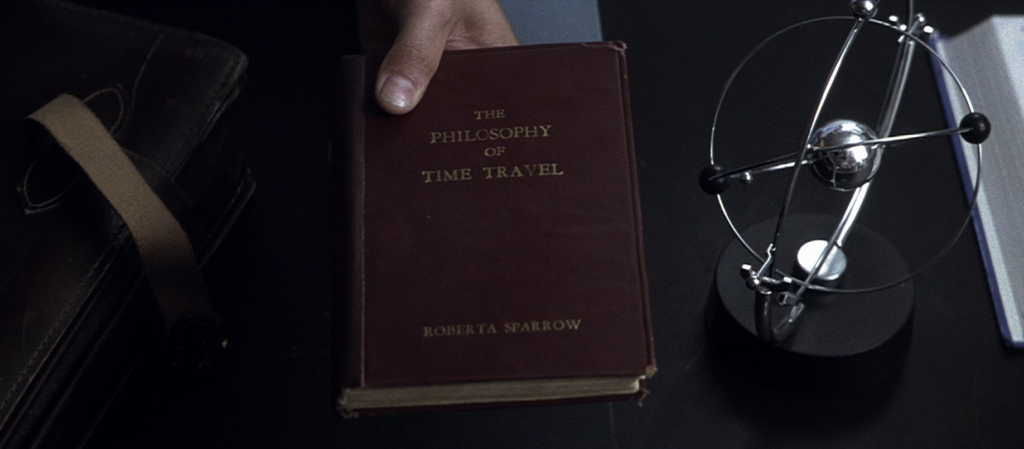
Donnie Darko (2001) ends by killing the young man it has spent most of its running time keeping alive. A jet engine falls into Donnie’s bedroom, apparently restoring the world after twenty-eight days of increasing disorder. The return to this moment makes his death seem necessary. It does not, however, establish that he freely chooses it. Richard Kelly places a familiar account of heroic sacrifice inside a narrative that repeatedly undermines its protagonist’s control.
Saving others and willingly sacrificing oneself are not the same achievement. Donnie’s death may have beneficial consequences even if he cannot prevent it. Whether he deserves moral credit for those consequences depends on his relationship to what happens. The ending of Donnie Darko suggests that a predetermined action can still express genuine care, but it also raises a more troubling possibility: what appears to be a sacrifice may be the successful manipulation of someone whose suffering makes him useful.
The film begins its central mystery on October 2, 1988, when Frank, a figure in a grotesque rabbit costume, draws Donnie out of his bedroom before an engine crashes through the ceiling. Frank tells him that the world will end in twenty-eight days. Donnie’s survival therefore becomes a reprieve with a deadline. During the intervening weeks, his relationship with Gretchen Ross develops alongside encounters with Frank that increasingly direct his behavior.
Donnie Darko (2001)
By the end of this period, Gretchen has been run over, and Donnie has shot Frank, the costumed young man whose car struck her. An engine separates from a plane carrying Donnie’s mother and younger sister and passes into the vortex above the town. Time runs backward. Donnie is once again in bed on the original night, but this time he remains there and dies beneath the falling engine. The catastrophe involving Gretchen and Frank has been undone, while Donnie’s family confronts a different loss (Kelly, 2001).
The director’s cut, released in 2004, offers a framework for understanding these events through passages from the fictional Philosophy of Time Travel. Much of the story takes place in an unstable Tangent Universe. Donnie occupies the role of the Living Receiver, charged with returning a metal Artifact, the jet engine, to the Primary Universe before the unstable reality collapses disastrously. This account explains his role in preventing catastrophe. The requirement to return the engine does not, by itself, establish that he must knowingly remain beneath it. Sending the Artifact back and consenting to death remain distinct questions (Kelly, 2004).
These additional explanations should not erase the uncertainty of the theatrical version. Kelly has said that the director’s cut was intended to coexist with the original, rather than replace it with a definitive solution (Brandman, 2017). The more detailed account makes the machinery of Donnie’s predicament easier to follow. It cannot settle the ethical question simply by assigning him a function. Knowing what someone is required to accomplish tells us very little about whether that person accepts the requirement.
It is also important to distinguish determinism from fatalism. Causal determinism holds that the state of the world, together with its laws, fixes what follows. Fatalism, in the relevant sense, treats an outcome as unavoidable regardless of what anyone does. Under determinism, a person’s deliberation can still help bring about an event; it is part of the causal process rather than an irrelevant interruption (Hoefer, 2023). A narrative in which the future reaches into the past does not automatically establish either position. It does, however, make the uncertainty about Donnie’s freedom visible.
Donnie Darko (2001)
The liquid paths that extend from people’s bodies give this uncertainty a physical form. Donnie sees movement anticipated before it occurs, as though the body were following a route already laid out. In his conversation with his science teacher, he considers whether someone could recognize a prescribed path and choose to remain within it (Kelly, 2001). Recognition would then change the person’s relationship to the action without changing its outcome. What looks like obedience from outside might be an act the person understands and endorses.
Yet the film has already taught us to distrust explanations that make human behavior too simple. Jim Cunningham’s self-help doctrine reduces experience to a division between fear and love. Donnie objects because the exercise excludes the complexity of the situations it claims to explain. It would be strange to accept this objection and then describe the ending as nothing more than Donnie overcoming fear and choosing love. Fear can accompany a generous action. Love can also become the means by which someone is controlled.
From the perspective of the principle of utility, preventing the destruction of other lives gives Donnie’s intervention an obvious moral importance. Nevertheless, even John Stuart Mill distinguishes the assessment of an action from the assessment of the person performing it. In Utilitarianism, a rescue can be right whether it proceeds from duty or the hope of payment, although those motives affect our judgment of the rescuer. Mill also refuses to treat sacrifice as good merely because someone suffers a loss. Its value must concern the good it serves (Mill, 1863/1879).
Applied to Donnie Darko, this distinction prevents a desirable outcome from becoming sufficient evidence of heroism. If Donnie were moved through the entire sequence without understanding what he was doing, the surviving world would still benefit. That benefit would not show that he had offered his life for it. A person can be sacrificed without making a sacrifice. The difference is particularly important in a film whose apparent savior receives so much of his guidance through commands he does not initially understand.
The idea that we give our lives meaning through our choices seems to require some authority over those choices. But must that authority include the possibility of doing something else? Harry Frankfurt challenges this assumption in his 1969 essay, “Alternate Possibilities and Moral Responsibility.” He asks us to consider a person whose action is guaranteed by an observer prepared to intervene if necessary. The person acts for his own reasons, however, so the observer never intervenes. Frankfurt argues that the unavailable alternative need not remove responsibility when its absence plays no part in producing the action (Frankfurt, 1969).
Donnie Darko (2001)
The relevance to Donnie is not that Frankfurt has proved his death voluntary. It is that inevitability alone cannot complete the argument against his responsibility. Suppose Donnie understands what returning the engine will accomplish and accepts the personal cost because he wants Gretchen to live. His concern would help explain what he does, even if the narrative admits no different ending. To dismiss that concern solely because the outcome was fixed would overlook the very motive for which we might otherwise admire him.
This possibility is consistent with compatibilism, the view that determinism need not exclude freedom or moral responsibility. Some compatibilist accounts locate the relevant control in acting through one’s own capacities for judgment, including the ability to respond to reasons. They do not require a person to stand outside every cause that shaped them. On this reading, a fixed future would not establish that Donnie lacks free will in the first place. Such accounts face difficult objections involving manipulation, however, since an action can appear to express someone’s wishes even when those wishes have been arranged by another power (McKenna & Coates, 2024).
Frank makes this objection especially difficult to avoid. Unlike Frankfurt’s observer, he does intervene. He summons Donnie and instructs him to carry out destructive acts. His knowledge gives him an advantage that Donnie cannot match. Moreover, the driver Donnie kills is the person whose wounded appearance has already haunted him. The apparent guide belongs to the chain of events he helps produce. Donnie is not simply choosing while an unused mechanism guarantees the result; the mechanism has entered his experience and helped organize it.
The fictional book makes this pressure explicit through the “Ensurance Trap.” Its account describes the Manipulated Dead arranging circumstances that leave the Living Receiver with no choice but to return the Artifact (Kelly, 2004). The language does not clarify whether resistance is physically impossible or whether the circumstances make refusal intolerable. Either way, it complicates the image of a freely consenting hero. When the people Donnie cares about become the reason he must complete his task, affection and coercion are difficult to separate.
That does not mean every influence upon him destroys his agency. Learning that someone will be harmed can provide a genuine reason to act, even when the information comes from an untrustworthy source. The question is whether Donnie comes to understand and accept that reason, or whether his capacity to judge is being bypassed. His emotional distress cannot answer this question on its own. Vulnerability does not make a person incapable of choice, but it gives us reason to examine carefully the conditions under which apparent consent is obtained.
Donnie Darko (2001)
Donnie’s laughter in bed is the strongest invitation to read the ending as acceptance. The scene has a calmness unlike the fear surrounding many of his encounters with Frank. It is possible to understand this change as recognition: he has grasped what happened and no longer resists the outcome. Yet an expression is not a complete statement of knowledge. The film does not establish exactly what Donnie remembers at this moment, or how clearly he understands the engine’s imminent return. Acceptance remains a persuasive interpretation, not an observable fact equivalent to the crash itself.
The distinction changes what we can claim about his death. If he knowingly accepts it for the sake of others, the ending permits a form of sacrifice that does not depend on an open future. If his understanding is absent, the same event becomes the destruction of a person who has been made instrumental to everyone else’s survival. Neither interpretation makes the ending meaningless. They locate its meaning differently: one emphasizes the care expressed by Donnie, while the other exposes the cost imposed upon him.
Kelly’s final scenes refuse to resolve that difference through public recognition. Gretchen approaches the Darko house and learns that a boy has died. Asked whether she knew him, she says that she did not. She and Donnie’s mother exchange a wave. The relationship that occupied so much of the film is unavailable to the people who lived it, apart from whatever uncertain residue the gesture suggests. The audience remembers what Gretchen cannot consciously recover.
This gives the ending an emotional significance that does not require a verdict on free will. We have seen Donnie’s life intersect with another person’s, and the restoration of time cannot remove that experience from the film we watched. Gretchen’s continued existence has value, but so does the relationship that no longer belongs to her history. The narrative preserves the value of something its reconstructed world has lost. Donnie’s death is therefore neither a simple victory nor an empty cancellation of everything that preceded it.
Donnie Darko (2001)
The family’s grief also resists the claim that a successful cosmic outcome justifies every part of the process. The ending does not present Donnie’s parents as people who should be grateful that their son fulfilled his assignment. Their loss remains a loss. Even if an intelligence has arranged events to preserve the world, its power would not establish its moral authority. Explaining why Donnie dies is not the same as showing that anyone was entitled to require his death.
To treat his final usefulness as the sole measure of a meaningful life would also diminish the person the film has asked us to understand. Donnie has value before the engine falls. His relationship with Gretchen has value before it becomes relevant to the resolution of a temporal crisis. If those things counted only because they prepared him to die, the interpretation would reproduce the instrumental logic it should be questioning.
Sacrifice can therefore mean something without the freedom to produce a different outcome, provided that the act still belongs to the person who performs it. But where that ownership is missing, the language of sacrifice can conceal the fact that someone has been used. Donnie Darko leaves enough uncertainty about its protagonist’s final understanding to sustain both the hope and the objection. Its ending is moving because Donnie may accept a terrible cost out of concern for others. It remains disturbing because saving the world does not tell us whether the world ever allowed him to refuse.
References
Brandman, J. (2017, March 23). 15 years later, ‘Donnie Darko’ director Richard Kelly wants fans to keep digging. Observer.
Frankfurt, H. G. (1969). Alternate possibilities and moral responsibility. The Journal of Philosophy, 66(23), 829-839.
Hoefer, C. (2023, September 21). Causal determinism. The Stanford Encyclopedia of Philosophy.
Kelly, R. (Director). (2001). Donnie Darko [Film]. Flower Films.
Kelly, R. (Director). (2004). Donnie Darko: The director’s cut [Film]. Flower Films.
McKenna, M., & Coates, D. J. (2024, April 16). Compatibilism. The Stanford Encyclopedia of Philosophy.
Mill, J. S. (1879). Utilitarianism (7th ed.). Longmans, Green, and Co. (Original work published 1863)
The post Donnie Darko: Does Sacrifice Mean Anything Without Free Will? appeared first on Philosophy in Film.