By
By 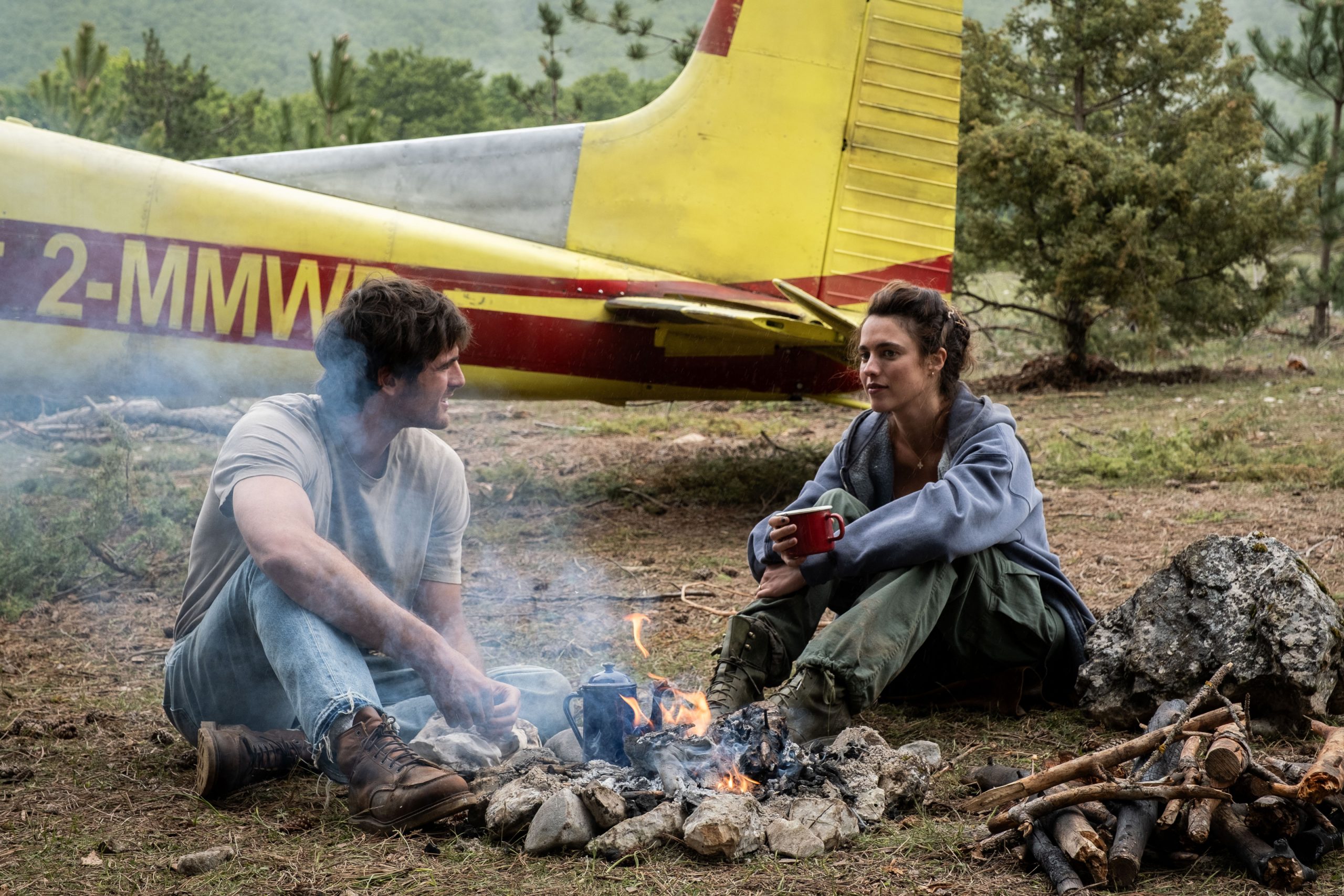
The Dog Stars (2026)
At the end of the world, no one survives alone.
Peter Heller’s The Dog Stars has taken the scenic route to the screen. Published in 2012, the acclaimed post-apocalyptic novel had its rights snapped up not long afterwards, only to spend years taxiing around development without ever quite leaving the runway. Things finally accelerated when The Revenant screenwriter Mark L. Smith turned Heller’s story into a screenplay that found its way to Ridley Scott, who apparently needed only around 30 pages before deciding he wanted in. Paul Mescal was initially circling the lead after working with Scott on Gladiator II, but scheduling conflicts with Sam Mendes’ Beatles projects opened the door for Jacob Elordi instead. Fourteen years after the book first arrived, The Dog Stars finally gets airborne. Unfortunately, there are long stretches where it could use considerably more thrust.
It’s 2035, and a catastrophic flu pandemic has done a fairly thorough job of clearing out humanity. Cities have crumbled, communities have disappeared and the few survivors left are either attempting to rebuild something resembling civilization or becoming the kind of heavily armed lunatics that tend to appear whenever society collapses in these stories.
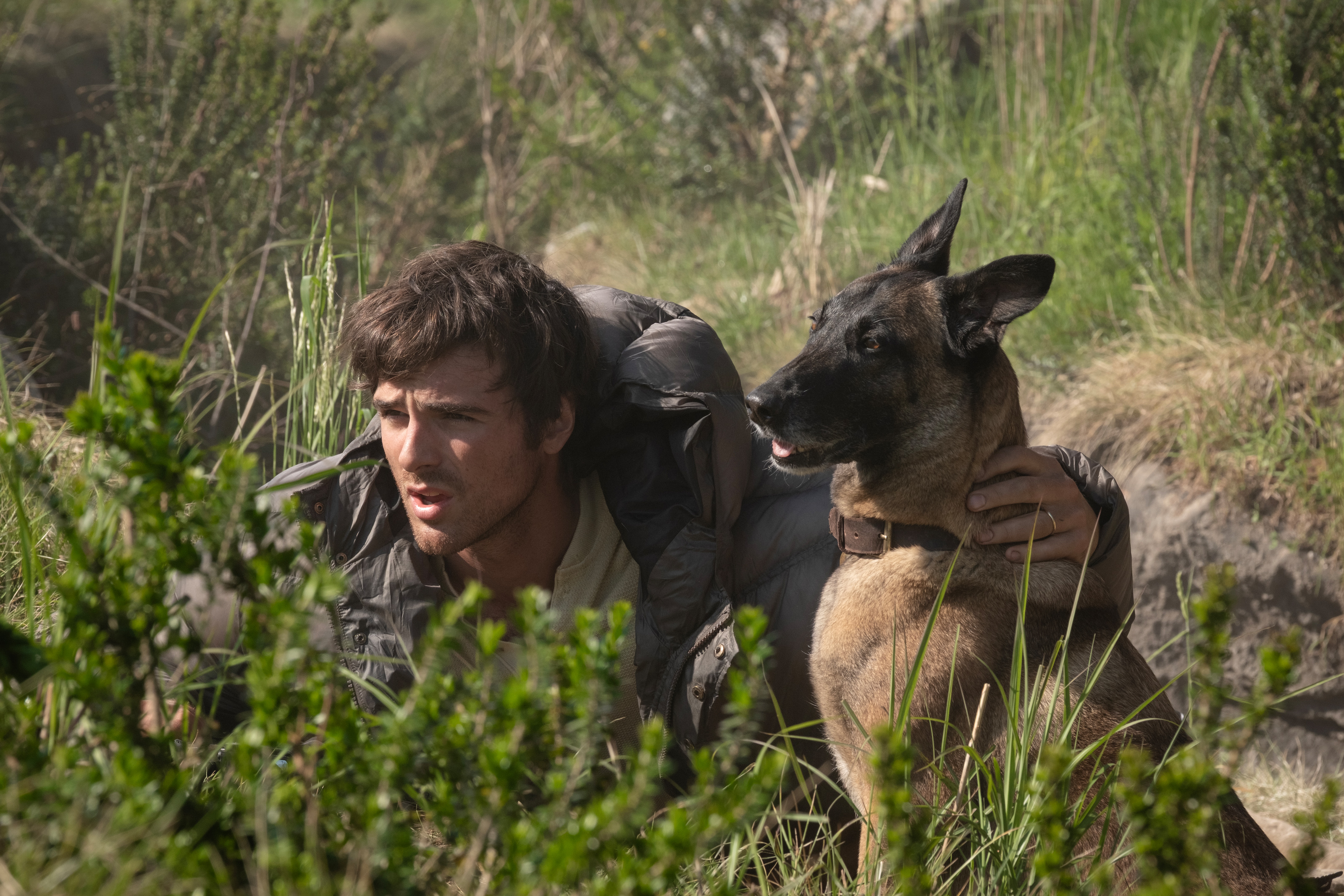
Hig (Jacob Elordi) belongs mostly to the first group. A mechanic and pilot before everything went wrong, he now lives at an abandoned Colorado airfield with his dog Jasper and Bangley (Josh Brolin), an ex-Marine whose preferred approach to meeting strangers generally involves spotting them through a rifle scope. It is an odd little partnership. Hig still believes compassion might have some value, while Bangley thinks ammunition has substantially more. Hig flies an old Cessna on supply runs, including visits to a nearby Mennonite community led by Aaron (Benedict Wong), while occasionally returning to the ruins of his former life and the memories of the wife he lost.
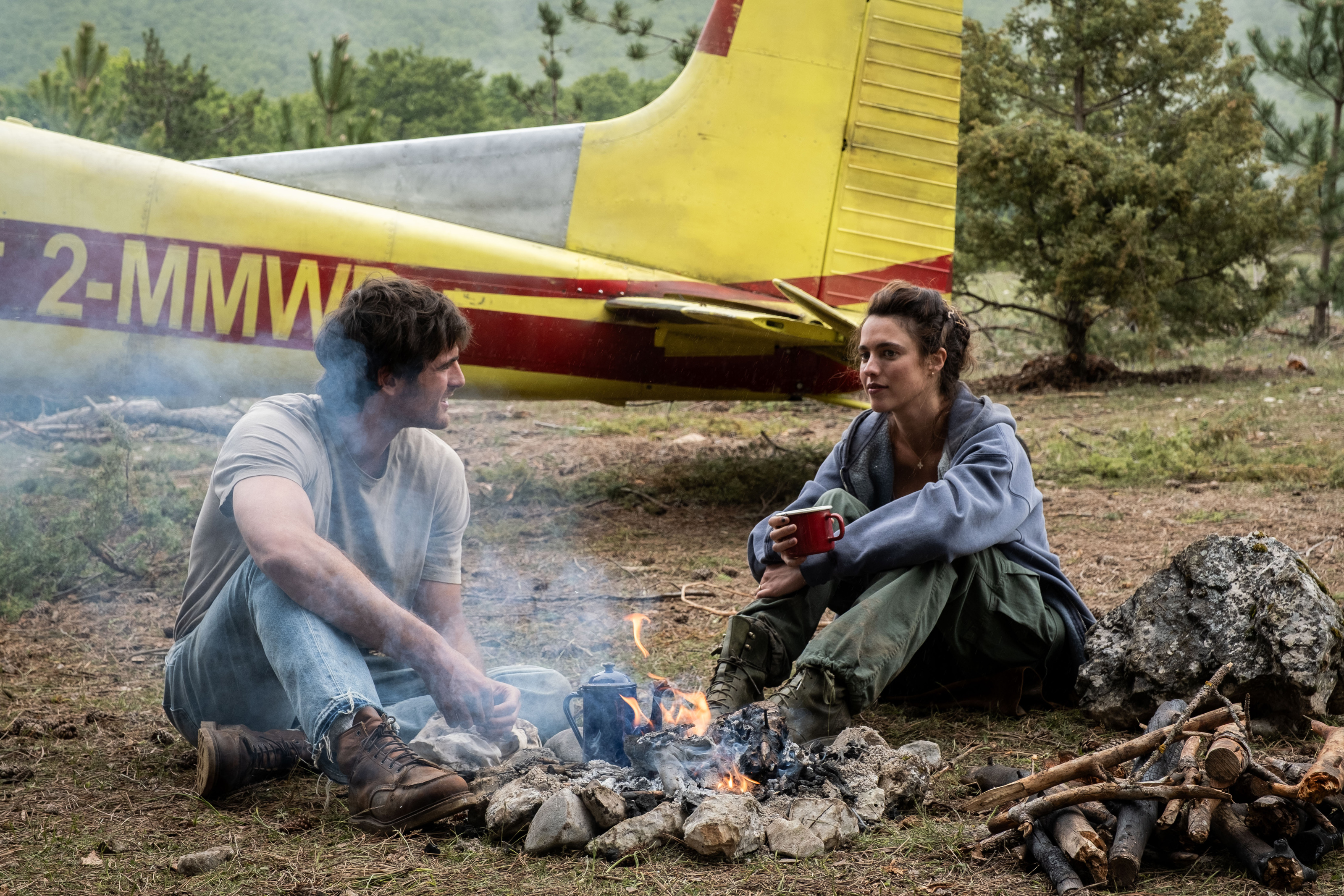
Then a faint radio transmission from Grand Junction offers something increasingly rare: possibility. Hig decides to push beyond the safe range of his aircraft in search of whoever might be broadcasting, a journey that eventually brings him to Cima (Margaret Qualley), a young woman carrying plenty of grief of her own, and her deeply suspicious father, Pops (Guy Pearce). Scavengers, gunfire, tentative romance and conversations about everything humanity has lost fill the road ahead, all set against enough spectacular countryside to make the apocalypse look oddly attractive. Yet for all those ingredients, surprisingly little seems to happen for long stretches.
A quiet post-apocalyptic story is hardly a bad idea. In fact, removing the endless zombies, explosions and mutant cannibals should theoretically allow more room for character, atmosphere and the emotional strangeness of living after almost everyone else is gone. The Dog Stars certainly wants that. The trouble is that quiet and compelling are not automatically the same thing. At almost two hours, it frequently feels lethargic rather than contemplative. Hig flies somewhere. Hig sits somewhere. Hig remembers something. Hig talks to somebody. There will occasionally be gunfire, violence or a threatening group appearing over the horizon, but these moments are separated by long stretches where very little develops dramatically. There is melancholy everywhere, yet surprisingly little urgency.
That sluggishness quickly becomes one of the biggest problems. None of the individual ingredients are particularly poor; they simply fail to build much momentum. Even a buffalo stampede, hostile marauders and the occasional burst of brutal action struggle to shake the feeling that the story is gently passing time until the next chapter begins. And “chapter” is probably the right word, because the structure feels strangely episodic. There is the Hig-and-Bangley section at the airfield, followed by Hig’s journey, then the Cima and Pops section, another threat, another location. Each stretch introduces a slightly different dynamic before moving on, making the whole thing feel more like a collection of loosely connected post-apocalyptic episodes than one steadily developing narrative.
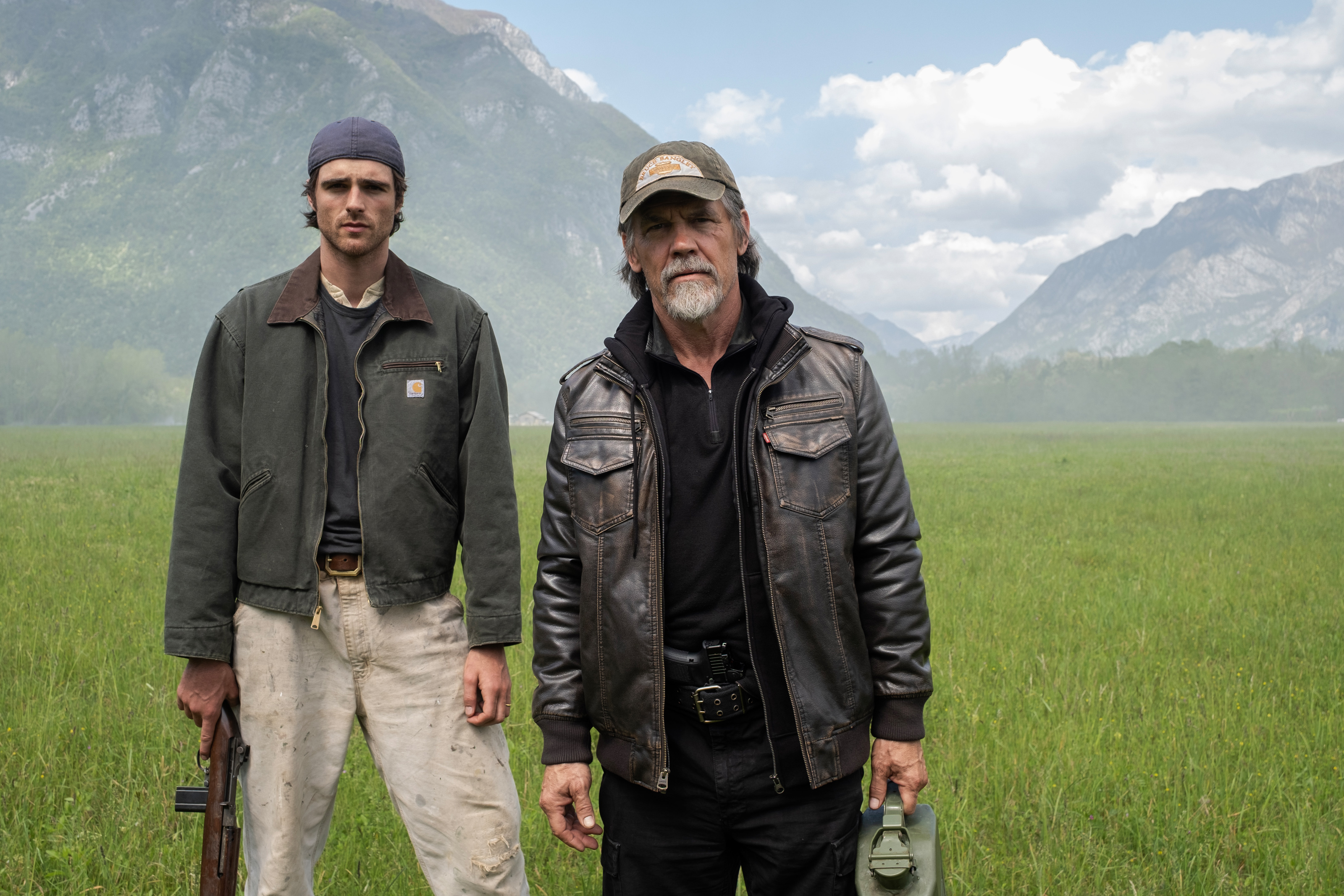
Apocalypse’s least welcoming committee.
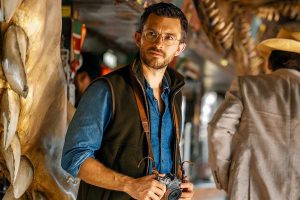
The strangest example comes late in the journey when we reach Grand Junction Airport. Suddenly, Allison Janney appears. And suddenly, somebody seems to have changed the channel. Janney plays Darlene, an eccentric, immaculately styled flight-attendant figure presiding over a bizarre airport community seemingly trapped somewhere between retro airline glamour, cocktail hour and the world’s least reassuring holiday resort. Grand Junction itself comes from Peter Heller’s novel, but Darlene and much of this strange retro-airport detour are inventions of the adaptation, which perhaps explains why the whole thing feels so disconnected from everything around it. It is stylized, weird and considerably more energetic than much of what surrounds it. For a brief period, The Dog Stars becomes something darker, stranger and almost camp. Then it moves on. The sequence is entertaining largely because something finally feels unpredictable, but it also highlights the structural problem. Rather than naturally growing from everything before it, Grand Junction feels like a particularly odd episode dropped into the final act.
Ridley Scott’s direction is perfectly fine. That may sound like faint praise for the man behind Alien (1979), Blade Runner (1982), Gladiator (2000) and The Martian (2015), but there is still an effortless professionalism to the way Scott constructs a world and moves through large environments. At 88, the fact that he continues knocking out productions of this scale with apparent ease is impressive by itself. There are several handsome aerial sequences as Hig’s little aircraft cuts across mountains and valleys, while Erik Messerschmidt’s cinematography makes the expansive landscape look suitably beautiful and lonely. Scott also remains comfortable handling violence when it arrives. A handful of encounters have real physicality, and the wider environments communicate isolation more effectively than the screenplay often does.
Visually, there is little to complain about. The problem is that Scott can make emptiness look terrific without necessarily making emptiness interesting. The screenplay keeps reaching towards themes of grief, loneliness, survival and the importance of maintaining some form of human connection when humanity itself has almost vanished. Hig and Bangley represent two obvious responses to catastrophe: one still searching for goodness, the other assuming that survival requires shutting everyone else out. Hig’s relationship with Cima similarly explores whether two people shaped by enormous loss can allow themselves to want something again, while his encounters with other survivors repeatedly test whether connection is still worth the risk. Yet these ideas remain frustratingly broad. Grief, hope and compassion all matter here, but they are stated more often than they are genuinely felt. Very little goes much deeper. The themes are easy to identify. The emotional impact is considerably hazier.
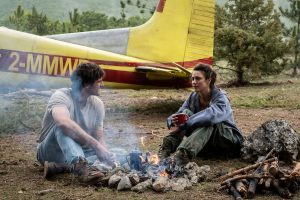
Finding warmth where they can.
The cast does much of the heavy lifting. Jacob Elordi gives Hig a suitably bruised, subdued quality, playing the grief quietly even if the character’s passivity often leaves him with little to do beyond stare into the middle distance. Josh Brolin has far more fun as Bangley, the hardened ex-Marine sharing the airfield with Hig, and easily emerges as the standout. Gruff, paranoid and permanently prepared to shoot something, Brolin gives the story a welcome jolt of personality whenever he appears. Margaret Qualley is good value as always as Cima, the young widow Hig meets on his journey, bringing warmth and vulnerability to a fairly thin role, while Guy Pearce is reliably solid as her fiercely protective father, Pops. Benedict Wong makes a brief but welcome appearance as Aaron, leader of the Mennonite community Hig supplies, while Jasper the dog adds a little extra heart to Hig’s otherwise bleak existence.
There is nothing disastrous about The Dog Stars. It looks great, Scott’s direction remains assured and the cast — particularly Brolin — gives the material more life than the sluggish plotting often allows. There are worthwhile ideas about grief, hope and finding reasons to keep going after the world has fallen apart, but they rarely land with the emotional weight intended. Ultimately, “fine” keeps winning. Fine direction, fine performances, fine ideas and a handful of memorable moments surrounded by long stretches of very little. For all its searching for hope among the stars, The Dog Stars never quite shines brightly enough.
2.5 / 5 – Alright
Reviewed by Dan Cachia (Mr. Movie)
The Dog Stars is distributed by 20th Century Fox Australia