By
By 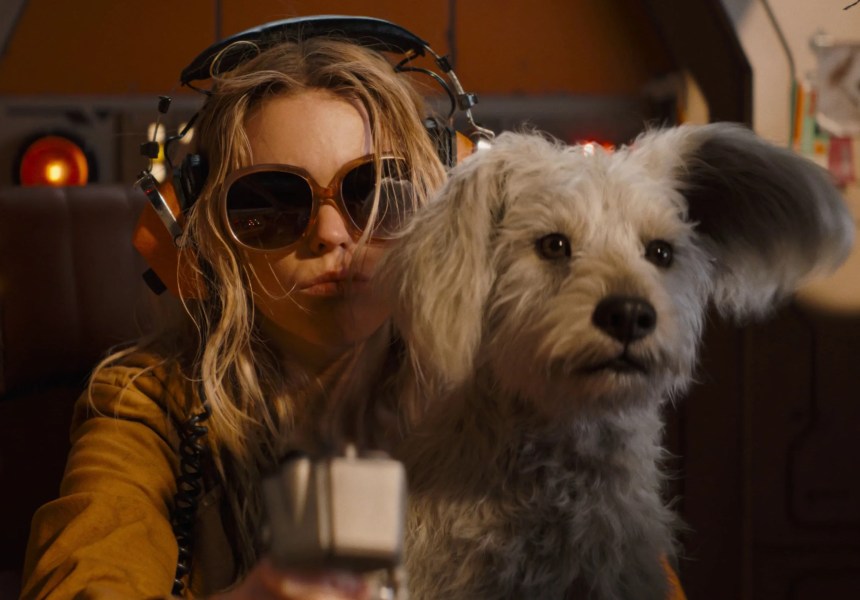
A COSMIC MISFIRE FOR THE NEW DCU
In 2025, Warner Bros. Pictures released Superman, a reboot of the iconic DC superhero and the first theatrical film in James Gunn’s newly established DC Universe, better known as the DCU. Written and directed by Gunn, the film starred David Corenswet, Rachel Brosnahan, Nicholas Hoult, and Edi Gathegi. It followed Clark Kent, also known as Kal-El and Superman, as he faced the unintended consequences of intervening in an international conflict secretly orchestrated by billionaire Lex Luthor. Released on July 11, 2025, Superman received mostly positive reviews from critics, with many praising its fun, earnest spirit, colorful comic-book flair, and the performances of its principal cast members, particularly Corenswet, Brosnahan, and Hoult. However, some felt that the movie was overstuffed with characters, ideas, and competing storylines. The film ultimately became the tenth-highest-grossing movie of 2025, earning more than $618 million worldwide against a reported production budget of $225 million. Now, one year later, Warner Bros. Pictures and director Craig Gillespie present the next theatrical installment in Gunn’s DCU with Supergirl. Does this sophomore entry continue the promising beginnings of this newly established cinematic universe with another exciting superhero adventure, or does it stumble into a downhill slump through a derivative and messy feature?
THE STORY
In the far reaches of outer space, Kara Zor-El (Milly Alcock) is living entirely on her own terms, embracing a carefree existence filled with drinking, partying, and avoiding responsibility. Her only constant companion is her loyal canine friend, Krypto. Her reckless lifestyle draws concern from her cousin, Kal-El, also known as Clark Kent and Superman (David Corenswet), who has found both his place and purpose protecting the people of Earth. During the week of her twenty-third birthday, Kara crosses paths with Ruthye Marye Knoll (Eve Ridley), a determined young girl seeking revenge against Krem of the Yellow Hills (Matthias Schoenaerts), the ruthless space-pirate brigand responsible for slaughtering her family. Armed with a powerful sword forged by her late father, Ruthye searches the cosmos for a warrior capable of helping her carry out her mission. Kara initially wants nothing to do with Ruthye’s quest. However, after a violent encounter with Krem leaves Krypto poisoned and with only three days to live, the mission suddenly becomes personal. Reluctantly agreeing to help Ruthye, Kara sets out across the cosmos to hunt down Krem and retrieve the antidote before time runs out. Their journey soon becomes a dangerous intergalactic adventure as Kara attempts to protect Ruthye from those seeking to capture her, battles marauders and outlaws, and encounters the unpredictable bounty hunter Lobo (Jason Momoa). At the same time, the voyage forces Kara to confront painful memories from her past that she has spent years trying to bury.
THE GOOD / THE BAD
I do have to say that I was not the biggest fan of 2025’s Superman. I am not saying that the movie was deplorable or anything of that nature, but, to me, it was not the definitive DC superhero film that some have made it out to be. I can certainly understand why so many people enjoyed it. It offered a fresh approach to the classic Man of Steel character, especially following the more serious and grounded interpretation found in 2013’s Man of Steel and the increasingly uneven narrative continuity of the DCEU.
The movie embraced a more comic-book-friendly atmosphere, bringing a sillier, more colorful, and larger-than-life energy to the proceedings, along with many familiar elements that felt as though they had been pulled directly from the source material. Perhaps the most interesting aspect of Superman was the way it essentially skipped the traditional origin-story framework. Rather than beginning at the start of Clark Kent’s journey, the story unfolded within an already established world populated by metahumans and costumed heroes. While the film still took time to reference Superman’s history and upbringing, those elements were not treated as the central focus, which was honestly a breath of fresh air. I also thought David Corenswet did a pretty good job in the dual role of Clark Kent and Superman, bringing a sincere and likable quality to both sides of the character. That being said, I felt the movie began to lose momentum after its first act, gradually becoming more chaotic than cohesive. A combination of problems emerged throughout its runtime, including narrative clutter, an uneven tonal balance, and the cumbersome effort of trying to establish a new cinematic universe while distancing itself, sometimes too forcefully, from what came before. For me, the film never struck the same cinematic chord as 2013’s Man of Steel, which I still consider the stronger interpretation of the classic superhero character. That film carried a greater sense of scale, weight, and emotional grandeur that Gunn’s more colorful and energetic approach never fully replicated.
Overall, 2025’s Superman stands as the first leap of faith in a much larger journey. It may stumble and fall during its earliest steps, but it still dares to reforge a comic-book legend, not through steel alone, but through humanity, color, and heart.
This brings me back around to Supergirl, the second theatrical film in the newly established DCU. When James Gunn first announced his plans for this new cinematic universe of DC superheroes, one of the earliest projects revealed was a solo film centered on Kara Zor-El.
As I have mentioned several times before, I am much more of a Marvel fan than a DC fan, so I am not particularly well versed in Kara’s extensive history within the comics. Because of that, I was not exactly “super hyped” to see the movie. In fact, I was initially a little disappointed by the announcement because I genuinely enjoyed Sasha Calle’s portrayal of Kara Zor-El in 2023’s The Flash and had hoped that she might receive another opportunity to play the character within the new DCU. Sadly, that was not the case. That being said, I do like Milly Alcock as an actress, especially after loving her performance as the younger Rhaenyra Targaryen in House of the Dragon, so I was interested in seeing what she would bring to the role of Supergirl. Her brief cameo-like appearance at the end of 2025’s Superman also gave audiences a small taste of Alcock’s interpretation of Kara and the type of personality she would carry into her own solo film.
Soon enough, the movie’s marketing campaign began to ramp up, and the trailers looked promising. Nothing about them completely “wowed” me, but they generated enough interest to make me curious about how the finished film would ultimately come together. I eventually saw Supergirl during its opening weekend, although my work schedule meant that I had to wait until I could find enough free time to make it to the theater. Now, with all of that out of the way, I am finally ready to share my thoughts on the film. And what did I think of it? Well, I found Supergirl to be somewhere between okay and “meh.” Despite offering a fun solo adventure for the character, along with likable performances from Alcock and Momoa, the film ultimately becomes a rather generic and run-of-the-mill superhero endeavor. It contains occasional moments of brilliance, but the overall experience feels hollow, formulaic, and strangely lacking in emotional weight. It is not a deplorable film by any means, but I found myself thinking that 2025’s Superman, a movie I already have mixed feelings about, was the far superior picture. And that is not a good sign.
Supergirl is directed by Craig Gillespie, whose previous filmmaking credits include Lars and the Real Girl, The Finest Hours, and Cruella. Given his extensive track record across both film and television, Gillespie seemed like a capable choice to helm a project of this scale. In that regard, he does partially succeed in creating something that marches to the beat of its own drum. With James Gunn seeking to bring something fresh to the superhero genre through his new DCU, Gillespie approaches Supergirl with an energetic style that feels heavily influenced by Gunn’s Guardians of the Galaxy films. While that comparison can be viewed as both a strength and a weakness, the positive qualities do have some merit. For starters, the approach helps make the movie feel fun and entertaining, creating several lighthearted and breezy moments throughout the experience. There is also a great deal of humor woven into the story, much of which stems from Kara’s personality and her blunt, carefree attitude. For the most part, the comedy works and adds another layer to the film’s overall tone.
Gillespie also gives Supergirl a healthy dose of action and visual flair throughout the picture. Some of the sequences can feel somewhat generic, but the movie still possesses enough energy and imagination to leave an impression during several key moments. Watching Kara battle ruthless aliens, vicious marauders, and other dangerous beings across the cosmos is undeniably fun, delivering the kind of grand superhero spectacle that audiences, including myself, have come to expect from a summer blockbuster. However, the movie is not solely composed of playful humor and slick action sequences. Gillespie also explores several darker themes within the story, including Ruthye’s quest for justice, Kara’s buried trauma, and the desperate race to save Krypto’s life. The latter proves especially effective, particularly for animal lovers. Gillespie takes time to establish the bond between Kara and Krypto, presenting a relationship that can easily resonate with anyone who has shared a close connection with a canine companion. Their bond genuinely tugs at the heartstrings and ultimately serves as one of the film’s strongest emotional anchors. This emotional weight also extends to Kara herself, who feels adrift and unable to find a place she can truly call home. Although this character arc is somewhat conventional, Gillespie connects it back to Argo City, the final surviving fragment of Krypton, as well as the people Kara lost there. Her memories of the city, combined with the burden of being its sole survivor, give the character a deeper sense of grief, isolation, and emotional displacement.
Another positive aspect is that the movie never feels excessively bloated or burdened by too much unnecessary filler. The story maintains a clear objective and generally stays focused on Kara’s journey to find Krem and retrieve the antidote for Krypto. There are still a few slower and less engaging moments that do not work as well, which I will discuss later, but Gillespie largely keeps the narrative focused on its central mission.
From a visual standpoint, Supergirl largely meets the expected industry standards for a modern superhero blockbuster. That is not to say that anything presented on-screen looks bad or poorly constructed, but the movie rarely pushes the boundaries of either the superhero genre or large-scale studio filmmaking. The various cosmic worlds are visually appealing and populated with plenty of imaginative details, characters, and creatures. At times, however, some of these locations can feel muddled or somewhat generic in their design. Still, I have always enjoyed outer-space adventures, so I appreciated that the movie did not confine itself to a single planet. The science-fiction angle gives the film a broader cosmic scope, supported by an assortment of alien designs, visual effects, environmental textures, and otherworldly settings.
Credit should therefore be given to the film’s behind-the-scenes creative team, including Neil Lamont (production designer), Lee Sandales (set decorator), Michael Mooney and Anna B. Sheppard (costume designers), as well as the hair, makeup, and art-direction departments. Their combined efforts help make the film’s many worlds feel believable, colorful, and visually engaging. Likewise, Rob Hardy’s cinematography is roughly on par with what one would expect from a major tentpole production. Nothing about the camerawork is particularly groundbreaking, but it remains polished and effective, using dynamic angles, lighting, and shadows to give several sequences a strong cinematic quality. Lastly, the musical score by Claudia Sarne is fairly solid. It is neither revolutionary nor especially memorable, but it gets the job done and hits the right emotional beats, ranging from rousing superhero themes to softer, more character-driven moments. The soundtrack also features several licensed songs throughout the film, once again drawing comparisons to James Gunn’s Guardians of the Galaxy movies. These musical selections help reinforce Kara’s rebellious, wayward, and somewhat “girl-boss” attitude, even if the approach occasionally feels a little too familiar.
Unfortunately, Supergirl is far from the stellar film that many fans and moviegoers may have been expecting, with several glaring problems emerging throughout its production and presentation. How so? For starters, the movie does not do enough with its own premise, nor does it establish a distinct identity within the modern superhero landscape. In many ways, Supergirl borrows heavily from other science-fiction and outer-space properties. There are traces of Star Wars, Star Trek, Borderlands, Guardians of the Galaxy, the larger MCU, and even Predator: Badlands scattered throughout its visual language, tone, and narrative construction.
There is nothing inherently wrong with drawing inspiration from successful projects, especially when those influences have proven effective in the past. The problem is that Supergirl never fully reshapes those familiar ingredients into something original. It rarely feels like its own creation and instead comes across as a patchwork of borrowed science-fiction aesthetics, recognizable visual cues, and well-worn genre conventions. The movie also leans heavily on familiar superhero tropes and clichés. That is somewhat understandable given how saturated the blockbuster market has become with comic-book adaptations, but Supergirl never manages to rise above those conventions or distinguish itself through its own merits. As a result, much of the film feels derivative, formulaic, and overly familiar.
Naturally, this criticism extends to both Gillespie’s direction and the handling of the screenplay. While I have already praised Gillespie for several aspects of the film, the overall experience still feels clunky and generic. The director never attempts to reinvent or dramatically reframe the character in the same way he did with Cruella. Kara has the potential to be an interesting and deeply layered protagonist, but the film often presents her in a surprisingly bland manner, despite Milly Alcock doing her best to make the character feel more dynamic. Rather than pushing the material in a fresh direction, Gillespie seems content to shape Supergirl into something resembling Guardians of the Galaxy. However, the movie lacks the charisma, personality, tonal balance, and self-awareness that made those films so beloved by both casual audiences and longtime Marvel fans. To me, it is disappointing that Gillespie did not push for something more daring or creative. The entire production feels like a missed opportunity, with the director simply coasting through material that demanded a much stronger identity.
The screenplay, written by Jeremy Slater and Ana Nogueira, creates even more problems. Supergirl frequently relies on convenience and convention rather than developing a layered and emotionally substantial story. The script possesses the basic bones of a solid narrative, including an intriguing central journey and potentially compelling characters, but it lacks the connective tissue needed to bring those elements fully to life. As a result, much of what is presented feels lackadaisical and, once again, derivative. Several characters are written poorly and come across as wooden, the plotting often feels messy and hastily assembled, and the overall progression can feel strangely stagnant despite the constant movement from one location to another.
The dialogue can also become painfully cheesy and excessively goofy, reinforcing the sense that neither the screenplay nor Gillespie’s direction fully understands what type of movie it wants to be. Is it a sincere superhero drama? A Guardians of the Galaxy imitation? A sweeping science-fiction adventure? The answer is somehow all of those things and none of them at the same time. Rather than blending those influences into a cohesive whole, Supergirl becomes trapped between them, desperately pulling ideas from other projects while never breathing enough new life into its own material.
For me, all of these problems come to a head during the third act, which delivers the most predictable, boring, and formulaic conclusion one might expect from a movie like this. The climax feels flat and derivative, with a weakly presented final conflict, clunky dialogue, and an overall execution that gradually loses whatever momentum the film had left. By the time it was over, my immediate reaction was simply, “That’s it?” The ending lacks the triumphant sense of closure, emotional payoff, and larger-than-life superhero spectacle that the story had been building toward. Rather than delivering an exciting and satisfying final battle, the movie settles for an underwhelming and undercooked confrontation that never feels particularly original, thrilling, or meaningful. For a film about a character capable of soaring across the stars, Supergirl ends with a climax that barely manages to get off the ground. Such a disappointment.
The cast of Supergirl is relatively small, which works in the movie’s favor by giving its principal players enough time to share the spotlight. Unfortunately, the characters themselves are written in a rather derivative and formulaic manner, resulting in several generic superhero archetypes. Some of the actors help elevate their respective roles, but only to a certain extent.
Leading the charge is Milly Alcock, who takes on the central role of Kara Zor-El, also known as Supergirl. Best known for her work in Upright, Sirens, and House of the Dragon, Alcock is still a relatively unfamiliar presence to mainstream moviegoers, having only appeared in a handful of prominent roles. In that sense, her casting feels somewhat similar to David Corenswet’s selection as Superman. To her credit, I think Alcock does a pretty decent job portraying Kara. She confidently carries the film as its lead, delivering the comedic material with good timing while also bringing a more serious sense of gravitas when certain scenes demand it. The character is also interesting because she is presented as a more wayward and rebellious superhero rather than a traditionally stoic or morally polished one. This gives Kara a slightly different personality and allows her emotional journey throughout the film to feel rewarding and reasonably earned.
That being said, Kara is written in a fairly straightforward manner, without much mystery, nuance, or complexity beneath the surface. She has a tragic backstory, carries emotional trauma, and follows a predictable character arc, checking off many of the familiar requirements found in superhero storytelling. While I appreciate and enjoy the antihero qualities of Kara’s personality, that aspect of the character also becomes somewhat repetitive as the movie progresses. Overall, I still prefer Sasha Calle’s interpretation of Kara from 2023’s The Flash over Milly Alcock’s version. However, given the direction of this new cinematic universe and the particular approach the filmmakers wanted to take with Supergirl, I think Alcock does a good job with the material she is given. I am interested to see how both the actress and the character continue to grow in future DCU installments.
Perhaps the supporting character who fares the best in the movie is Lobo, an alien mercenary / bounty hunter from the planet Czarnia, who is played by actor Jason Momoa (Game of Thrones and The Minecraft Movie). Having already been part of the previous cinematic universe for DC superheroes, Momoa feels the most comfortable and the most “in line” with the overall thematic tone required for this new cinematic universe. Momoa has a commanding screen presence and knows exactly how to dial into the role, portraying Lobo with the right combination of gruff attitude, chaotic energy, and silliness. The character himself is rather superfluous to the movie and could have been replaced by a completely different figure without drastically changing the outcome of the plot. Even so, I think Momoa is perfectly cast as Lobo, and his involvement in Supergirl feels natural while helping elevate the film whenever he appears on-screen.
The character who fares the worst in the movie is its primary antagonist, Krem of the Yellow Hills, the leader of the Brigands, who is played by actor Matthias Schoenaerts (The Danish Girl and Red Sparrow). Why? Well, the character is incredibly flat and derivative, which prevents him from leaving any lasting impression as the “big bad” of Supergirl. Don’t get me wrong, Schoenaerts is a good actor, especially in several of his other projects. However, his involvement in this movie feels half-baked, resulting in a rather weak and forgettable villain. Krem’s goals are, of course, suitably nefarious, with the character operating as both a space-pirate marauder and a human-trafficking smuggler. Unfortunately, all of this is presented in a bland / vanilla manner, with very little depth or menace behind his actions. His final confrontation with Kara also ends up feeling limp and pretty “meh,” offering little in the way of tension, excitement, or emotional payoff. It also does not help that Schoenaerts seems to overact in the role, making Krem come across as more of a goofy villain than a genuinely vicious one, which I believe was the intended direction for the character. Thus, Krem (both as a character and through the performance itself) is utterly forgettable and ultimately proves to be a disappointing letdown.
Falling somewhere between those two “best and worst” characters in Supergirl is Ruthye Marye Knoll, a young girl who enlists Kara’s help to avenge the murder of her family at the hands of Krem. She is played by actress Eve Ridley (Little Baby Bum: Music Time and 3 Body Problem). I think the character is fine and largely fits the stereotypical sidekick / kid-like role that many superhero movies call for. However, Ruthye is written in a rather bland manner. She is capable and determined, but there is not a great deal of growth or meaningful development given to her throughout the story. It also does not help that Ridley delivers a fairly muted performance. She does not overact, nor does she underplay the character. Instead, her portrayal remains consistently even-keeled. Yet, at the same time, she often comes across as monotone and uninteresting, which does not bring much additional personality to Ruthye. As a result, both the character and the performance are rather forgettable.
Making their return from 2025’s Superman are Kal-El / Clark Kent (Superman), once again played by actor David Corenswet (Twisters and The Politician), and Krypto, the Kryptonian super-dog whose owner is Kara. Corenswet continues to feel perfectly suited to the role of Kara’s cousin, with their scenes together showcasing a believable dynamic between family members with noticeably different personalities. Although he is used sparingly, seeing Corenswet’s Kal-El / Superman provides a welcome sense of continuity and feels appropriately handled within the feature.
As for Krypto, he functions more as a plot device in Supergirl and actually received more screen time in Superman. Still, his involvement in this movie, while limited, remains important, especially in relation to Kara’s upbringing, her current emotional state, and the strong bond she shares with him as his owner. Despite his reduced presence, it was still great to see Krypto once again.
The rest of the cast, including actor Ferdinand Kingsley (Silo and Reacher) and actress Emily Piggford (Malory Towers and The Umbrella Academy) as Ruthye’s parents Elias and Deliah Knolls, actor Bruce Lennox (making his debut) as Ruthye’s brother Emond Knolls, actor Diarmaid Murtaugh (Vikings and Outlander) as Krem’s Brigands’ second-in-command Drom Baxton, actress Clara Rosager (Morbius and Misbehaviour), Heather Agyepong (The Power and Joy) as Alice Hewkin (The Amateur and The Brother’s Sun) as the unnamed Sklarian Raiders, actor Seth Rogen (Steve Jobs and The Fablemans) as a small unnamed alien that encounters Kara on a space bus, and actor David Krumholtz (Oppenheimer and Springsteen: Deliver Me from Nowhere) and actress Emily Beecham (Into the Badlands and Hail, Caesar!) as Kara’s parents Zor-El and Alura-El, make up the minor supporting characters in the movie. While some have large screen time than others, I think all of these acting talents perform well within the capacity of their particular small characters in the film.
FINAL THOUGHTS
Supergirl is a mildly entertaining yet disappointingly conventional superhero adventure that never fully rises to the potential of its central character or cosmic premise. Director Craig Gillespie brings enough energy, humor, action, and visual flair to keep the movie moving at a decent pace, while Milly Alcock proves herself to be a capable and likable lead as Kara Zor-El. Jason Momoa also steals several moments as Lobo, bringing the right amount of gruff charm, absurdity, and larger-than-life presence to the role. The emotional connection between Kara and Krypto provides the film with its most heartfelt element, while Kara’s lingering memories of her past offer glimpses of the deeper and more meaningful story that the movie could have explored. Unfortunately, those positive qualities are surrounded by a formulaic narrative, thinly written characters, uneven humor, and an overwhelming sense of familiarity. Rather than forging its own identity within the new DCU, Supergirl borrows heavily from Guardians of the Galaxy, Star Wars, and countless other science-fiction and superhero projects without reshaping those influences into something fresh or distinctive. The screenplay possesses the basic foundations of a compelling intergalactic adventure, yet it lacks the emotional substance, character development, and narrative confidence needed to bring those ideas fully to life. Personally, the movie was pretty “meh” to me. It had all the right ingredients for a solid superhero film, but it squanders its potential and ultimately creates something rather bland and derivative. In an age when superhero fatigue has become increasingly noticeable among moviegoers and studios are searching for new ways to draw audiences toward their major comic-book tentpoles, Supergirl simply does not fit the bill. This solo outing rarely feels as bold, strange, emotional, or memorable as it should. Thus, my recommendation for the movie would be an uninterested “skip it.” There simply is not enough here to warrant rushing out to see it, and I imagine that many viewers will find themselves gradually losing interest as the story progresses. It is not really worth the hype. With Alcock’s Kara expected to appear again in future DCU installments, it will be interesting to see what the filmmakers ultimately do with the character and whether they can provide her with stronger material moving forward. In the end, Supergirl may soar across the cosmos, but the film itself rarely reaches any meaningful heights. What should have been a vibrant, emotionally charged, and distinctive introduction to Kara Zor-El instead becomes a generic and derivative superhero adventure that is content to follow familiar flight paths rather than charting one of its own. It is watchable, occasionally enjoyable, and certainly not without merit, but it ultimately gets lost in space. For the second theatrical chapter in James Gunn’s newly established DCU, that is a rather disappointing trajectory.
2.9 Out of 5 (Skip It)
The Official Website for Supergirl Link: HERE
Released On: June 26th, 2026
Reviewed On: August 19th, 2026
Supergirl is 108 minutes long and is rated PG-13 for sequences of strong violence, action, language, and smoking
The post Supergirl (2026) Review appeared first on Jason’s Movie Blog.