By
By Man of War takes the classic men-on-a-mission formula and moves it into a fictionalized Eastern European conflict, following former operator Michael Connor as he enters a dangerous war zone to rescue his niece and the children trapped with her. The premise is straightforward, but director William Kaufman understands exactly where this kind of movie should put its energy: on the operators, the weapons, the tactics, and the firefights.
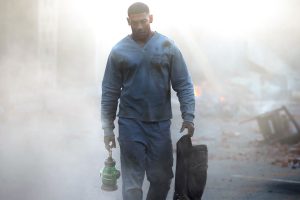
LaMonica Garrett plays Michael, a former soldier whose quiet determination becomes the driving force of the story. After receiving a desperate call from his niece Riley, he immediately begins looking for a way into the conflict zone. Garrett does not play Michael as an unstoppable superhero, instead giving him the restrained physicality of a man who has spent years dealing with violence and knows exactly what he is capable of doing.
Andrew Howard provides a strong counterbalance as Dany, Michael’s Eastern European guide who becomes his partner during the rescue mission. Howard brings more energy and personality to the film, creating a believable partnership between two men who approach combat from very different perspectives. Daniel Bernhardt takes the villain role as Konlev, a ruthless commander who holds Riley captive. Bernhardt knows how to play this kind of antagonist, giving the character enough menace to keep the rescue mission moving forward.
Linds Edwards also deserves attention as Bunny, the leader of a group of mercenaries who initially have their own objectives but eventually become connected to Michael’s mission. Jason Patric appears as Charlie, an old contact who helps Michael find a way into the war zone, although the movie wisely keeps the focus on the men actually carrying out the operation.
Director William Kaufman has built a career around action films including The Channel, Daylight’s End, One in the Chamber, Jarhead 3: The Siege, and The Marine 5: Battleground. His greatest strength has always been tactical action, particularly gunfights that feel organized rather than chaotic. Man of War once again demonstrates why Kaufman stands out among low-budget action filmmakers.
The camera work is one of the movie’s biggest strengths because Kaufman understands that good action does not require constant camera shaking or rapid editing. He establishes where the characters are positioned, allows us to understand their objectives, and then lets the firefights develop naturally. Weapons have weight, movement has purpose, and characters use their surroundings rather than simply standing in the open and exchanging gunfire.
The extended climax is where Man of War really delivers. Michael, Dany, and the mercenaries infiltrate a building, locate their targets, fight their way through enemy positions, and then continue the battle outside as more opponents arrive. The sequence reportedly took only four days to shoot, which makes its scale and complexity particularly impressive. There is no dependence on endless digital effects to manufacture excitement, with practical action and carefully staged gunplay doing most of the work.
The story remains simple, but that is not necessarily a weakness. Man of War knows it is a tactical action movie and does not spend unnecessary time trying to become something else. The Eastern European setting provides an appropriate backdrop for the mission, while the characters remain focused on survival and completing their objectives.
For fans of tactical military thrillers and old-school direct-to-video action, Man of War is an easy recommendation. William Kaufman once again demonstrates that precise choreography, practical gunplay, strong camera placement, and disciplined editing can create more convincing action than a blockbuster budget ever could.