By
By 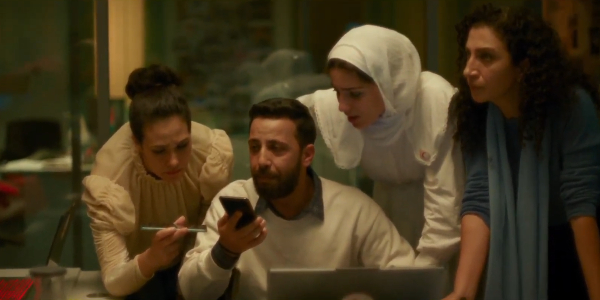
On January 29, 2024, a 5-year-old Palestinian girl named Hind Rami Iyad Rajab was killed by the Israeli Defense Forces in Gaza alongside six of her family members. They had been escaping Gaza City when a tank shelled their vehicle, leaving only Hind and a cousin alive. Hind’s cousin called the humanitarian organization the Palestine Red Crescent Society, which organizes ambulances in the region, and she and Hind talked to volunteers for hours while they scrambled to secure an ambulance route. Hind’s cousin died first, succumbing to her injuries, then Hind died a few hours later, before an ambulance was able to reach her.
The deaths of Hind Rajab and her family are gut-wrenching and tragic, the kind of unimaginable cruelty that shakes your faith in humanity. Israel killed a little girl and her family. Soldiers fired 355 bullets into the family car and waited around until everyone inside died. And they killed the two volunteer ambulance drivers who eventually showed up to try to save them.
What kind of world do we live in where this violence is normal? Where this violence is acceptable? Where this 5-year-old girl’s life does not matter to anyone in a position of power?
Hind Rajab’s story is only one of tens of thousands. Israel has killed over 73,000 Palestinians, including over 20,000 children, since October 2023.
Now, though, thanks to award-winning Tunisian director Kaouther Ben Hania, Hind’s story has become known the world over, the most famous story of a Palestinian killed by the Israeli state. Her final hours are brought to life from the perspective of the Red Crescent workers in the film The Voice of Hind Rajab, which uses audio from Hind’s real emergency call alongside dramatic reenactments within the Red Crescent offices.
It might seem misguided to dwell on the fact that The Voice of Hind Rajab uses the child’s actual voice in what’s otherwise a fictional film. It might seem like I’m wasting time on liberal handwringing over lofty ideas like ethics while Benjamin Netanyahu’s government continues slaughtering Palestinians every day. And yeah! Maybe I am!
But nearly every single review of The Voice of Hind Rajab mentions the complex ethical dilemma of using the actual audio from Hind’s phone call. Like it or not, this metatextual ethical quagmire is inseparable from discussion of the film itself.
Why did Kaouther Ben Hania make this decision? Is this choice, to use recordings of a real dead girl in a movie without her explicit permission, a breach of ethics? How does the director respond to accusations that her use of Hind’s voice is unethical? And finally, does the film — and the use of Hind’s real phone call — actually help to further the cause of a free Palestine?
“The Voice of Hind Rajab” (2025) – source: Willa
Why Did Kaouther Ben Hania Use Hind’s Real Voice?
Before we dive into the ethical debate, it’s important to establish why the director used Hind’s real voice. What drew her to the story, and why tell it in this way?
The impetus for the film came during the awards season for Four Daughters, a 2023 docudrama that earned Ben Hania major arthouse kudos and wound up nominated for Best Documentary at the 2024 Academy Awards. The filmmaker was about to go into pre-production on a 10-year passion project when she first heard the heartbreaking story of Hind Rajab on social media, courtesy of the Red Crescent. At once, she reached out to the Red Crescent and requested to hear the full tape.
That full 70-minute recording, which comprises about two-thirds of the screenplay for The Voice of Hind Rajab, is a tragic and perfect microcosm of Israel’s ongoing genocide in Gaza: The IDF used violent force to murder civilians on their own land for no reason other than that they’re Palestinians, then they stood by and waited while a 5-year-old girl slowly bled to death, and they also murdered the two volunteer ambulance drivers who tried to rescue her. The story foregrounds the well-documented brutality of the IDF, the senselessness of state-sanctioned Israeli violence, the bureaucratic red tape enforced by Israel to keep Palestinian authorities paralyzed in the face of occupation, and the helplessness of those authorities to protect their own citizens. It’s easy to see why Ben Hania was so attracted to the idea of making a film about this.
With her subject in hand, Ben Hania began working on the screenplay, consumed by questions of how to depict the death of Hind Rajab. Her solution was to essentially turn the film into a single-location chamber drama, unfolding entirely at the Red Crescent offices. This way, she resists making a “spectacle” of Hind’s martyrdom at the hands of the IDF, as she told Naked Politics. “I wanted to honor her voice and to let her be remembered,” she said.
“The Voice of Hind Rajab” (2025) – source: Willa
Because so much of the drama is rooted in Hind Rajab’s phone call, Ben Hania decided against casting an actress to play the part. She did not want to cast the role, develop mise-en-scène for the destroyed car, or film the death scene. She decided instead that she had to use the recordings of the real Hind Rajab — this way, Ben Hania allows the girl to speak for herself. Hind is the best witness to her story, after all. Furthermore, using the real voice buttresses the film’s focus on individual action, witnessing, and responsibility — the audience becomes useless spectators to Hind Rajab’s inevitable death, just as the Red Crescent workers were.
At this point, it’s prudent to mention that Hind is not the only person playing themselves — in a bid to maintain as much realism as possible, the other calls to the Red Crescent volunteers are also taken from archival recordings.
The Case Against Using Hind Rajab’s Real Voice
Allegations that the film is unethical in its use of Hind Rajab’s voice come primarily from leftwing film critics, who already decry Israel’s genocide in Gaza but who view popular art about the occupation and genocide, such as The Voice of Hind Rajab, with skepticism. (Rightwing pro-Israel journalists attack the film for very different reasons, such as perceived inaccuracies in the reported account of Hind Rajab’s death or the fact that the film doesn’t mention Hamas.)
Reviews at the time of the film’s release identified the potential for controversy but couldn’t quite pin down the details. In Guy Lodge’s review in Variety, he writes that he’s “less certain” about “what is gained by making this aural artifact the impetus of a fictionalized work incorporating elements of both melodrama and high-stakes, single-location thriller.” Pete Bradshaw, writing in The Guardian, cites Lodge’s review and echoes him: “Others have wondered if there is not something questionable or exploitative in presenting this authentic shattering recording in a Hollywoodised suspense drama, getting actors to cry and rage alongside a kind of docufictional hologram, almost instructing the audience in how they too should be responding.” Neither critic outright calls this unethical, however.
Making a much more impassioned argument is curator and film critic Joseph Fahim, writing for Al-Bustan News. One of the most critical voices about the film, Fahim attacks it as a work that unnecessarily flattens Hind Rajab into a symbol for Palestinian suffering rather than a character in her own right and assets that the blunt filmmaking leaving little room for nuance or interpretation.
True, Hind is not a character in this film — she is an instrument, a tool, used by the narrative to make and argue a point. We do not learn anything about Hind besides what she reveals about herself in her phone call with Red Crescent, and we never see her directly.
Another detractor, critic and programmer Parthyush Parasuraman, writes for Frontline that “There is something structurally unsound about the film. It uses Hind’s voice recording throughout but is ultimately a chamber piece, set entirely in the rescue centre where the staff are trying to organise her safety, filling the gaps with their anxieties, anger, and frustration. … It displaces her urgency with their impatience and replaces Hind’s anxiety with that of the workers, all of whom can only express themselves in shrill gasps punctuating repetitive outbursts.”
“The Voice of Hind Rajab” (2025) – source: Willa
And still, there’s Mohammad Aquib, writing for Middle East Monitor, who writes with palpable frustration about the “rituals of conscience” of modern humanitarian cinema. He argues that The Voice of Hind Rajab functions more as “tokenism wrapped in enabling aesthetics” than true activism and worries that it will only coddle and commodify films about Palestinian suffering and normalize it rather than lead to meaningful change.
These critics each make distinct and different points against the film: that Hind Rajab is a symbol rather than a character, that there’s a disconnect between the setting and Hind Rajab’s suffering, and that the film is merely a hollow and tokenistic problem movie du jour that seeks only to provide comfort to wealthy white filmgoers.
I’d like to offer a different devil’s advocate opinion, one informed by a year of studying Islamic State propaganda for my graduate dissertation. The use of Hind Rajab’s real phone call might be unnecessarily exploitative, subjecting audiences to the trauma of listening to a real little girl die over the course of 90 minutes while actors on-screen yell and shout and cry. The whole concept of the film relies on every viewer having the same shocked, angry reaction to this material, but there are also some audiences who will be irrevocably traumatized by it. (If you’re unsure about that, try listening to real 9-1-1 calls on YouTube. You won’t be able to sleep at night.)
Furthermore, without the explicit permission of Hind Rajab, the whole exercise seems as though Ben Hania is using a little girl’s real voice to score easy pathos with an audience. And yes, her unglamorous filmmaking, which favors shaky-cam closeups and messy blocking, only serves to highlight the frantic characters and emotional devastation. It’s all a bit obvious, isn’t it?
No matter how Ben Hania approached it, the idea of using the audio of a real little girl’s call to emergency responders is a choice that could blow up in the filmmakers’ faces. Is this no different from the new Nuremberg drama using actual images of concentration camp victims, or a sci-fi movie using real footage of the Beirut port explosion for its special effects? The argument could be made — and has been made — that this dishonors Hind Rajab’s life by manipulating her death for the sake of emotional impact and film awards.
Why Kaouther Ben Hania Is Right, Actually
What’s most interesting to me about the ethical dilemma of The Voice of Hind Rajab, in a meta-journalistic way, is that very few of the critics who acknowledge the sticky ethics of the film seem to have let it affect their reviews. Bradshaw, who spends the most words of any film critic for a major publication addressing the ethical concerns, still gave the film 4 out of 5 stars.
In fact, Bradshaw continues by saying, “There is a reckless, ruthless kind of provocative brilliance in what Ben Hania is doing. Is it in bad taste? Problematic? Well, in a world where directors busy themselves and us with made-up stories about made-up people, Ben Hania is at least grabbing one of the most relevant issues of our time with both hands and finding a way to thrust it under our noses.”
He argues that a time of blunt dishonesty must be met by blunt honesty, and he has a point. Media literacy has sunk so low that concepts like ethics and subtlety might as well be ancient Greek. We live in a world where more people get their news from their Instagram feeds than from actual newspapers, where school kids have been regularly found lacking in basic reading comprehension and critical thinking skills. Adults, too, are incredibly stressed under a capitalist system that demands their every waking moment be commodified and made efficient. Who has time for subtlety anymore? Has subtlety itself become overrated?
In response to these allegations of exploitation, Ben Hania has some choice words. In her Screen Daily interview, the director responds to critics of the film’s ethics, which feels directed at me specifically: “What does [ethics] mean? … Does it mean, don’t speak about what happened in Gaza? Don’t speak about what happened to Hind? Because if you do, it’s exploitative? Her mother is part of the movie and I would not have even begun to make the film without her approval. [Using the recordings] was about honoring her voice and remembering her. What’s morally questionable is what happened to this little girl.”
Hind Rajab’s destroyed family car in “The Voice of Hind Rajab” (2025) – source: Willa
The director worked closely with Hind Rajab’s mother, Wesam Hamada, to create an emotionally honest and responsible work that honored Hind’s memory. Ben Hania told Filmmaker magazine that Hind’s mother hasn’t yet seen the film. She can’t — it’s far too painful. “We did four or five screenings with Q&As in Doha,” she said. “In every Q&A she arrived at the end, when the credits rolled, to meet the audience. For her, meeting people is like sharing the grief. She told me, ‘It gives me a lot of courage. It’s like a funeral of my daughter, but on a big scale, so for me it’s very important.’”
At one of those Q&As, Hamada spoke, saying, “My message is more than just words. It is the pain of a mother who lost her daughter, then found in the outpouring of love for her a message from God. I understood that my mission is to carry the voice of Gaza’s children to the world. The children who live in the heart of war, in the dark, in deprivation of their most basic rights, of their dreams that are torn before they bloom.”
Not only did Ben Hania proceed with all the proper ethical guardrails in place, but she also chose to tell the story in a manner that respects Hind Rajab’s life and legacy and allows us to both love and mourn her in equal measure. Were Hind’s story the sole focus of the film, perhaps it would read as more obviously exploitative. But that isn’t the case.
The script focuses primarily on the inner workings of the Red Crescent: on the complex negotiations that must take place between the organization, the Red Cross, and the Israeli military to guarantee safe passage for its ambulance drivers; on the organization’s standard practices for dealing with victims like Hind; and on the psychological toll this work takes on the people on the other end of the phone.
Ben Hania said, in an interview with John Horn for the Academy of Motion Pictures Arts and Sciences, that she wanted to make a film that both brought Hind’s story to audiences worldwide and shine a light on the work that the Red Crescent does.
Destroyed ambulance in “The Voice of Hind Rajab” (2025) – source: Willa
By foregrounding the volunteers, The Voice of Hind Rajab asserts itself as a film about witnessing atrocities and being powerless to stop them. It’s a film about you. It’s a film about me. It’s a film about everybody who has ever seen an Instagram reel, a TikTok video, a documentary, or a news clip about what’s happening in Gaza.
The Red Crescent workers are overcome with rage, hate, and sadness, crying and yelling and blaming each other and making rash decisions, all while their supervisor, Mahdi (Amer Hlehel), tries to orchestrate a rescue mission. The characters’ frustration and anger mirrors Ben Hania’s own. Discussing the genesis of the film, the director told BBC News, “I was really angry, I was sad, I felt helpless, and I hate it when I feel helpless. I asked myself this basic question, what can I do? I’m a filmmaker, so I can do movies. … We started working on The Voice of Hind Rajab that way to not feel helpless, to not accept, to bear witness. Because not doing it, for me, was being complicit in a way.”
“In a way, it’s a movie about us also, about our helplessness,” she told Naked Politics. “Their position of listening to this girl, doing everything in their power to save her, and being forbidden, being denied. Their helplessness, anger and sadness is an echo for us around the world.”
Some critics’ ire likely sprung from a misunderstanding about the film’s distribution. Spike Lee, Alfonso Cuarón, Jonathan Glazer, Michael Moore, Brad Pitt, Rooney Mara, and Joaquin Phoenix are all listed as executive producers, leading some to believe that they bought or even developed the film in a cynical bid to cash in on easy liberal guilt and win an Oscar or two, perhaps making themselves feel or look better in the process.
The reality is much more complicated. Ben Hania has said in multiple interviews that she reached out to them, not the other way around, working with producers Nadim Cheikhrouha, Odessa Rae, and James Wilson to secure powerful producing partners. The bigger the names, the more screens The Voice of Hind Rajab had the potential to play on. From the conceptual stage onward, Ben Hania’s sole focus with the film seems to have been how to make sure as many people see it as possible.
As for the critics who wish the film had just been a documentary instead, there’s already an Al Jazeera documentary that investigates Hind Rajab’s murder. Additionally, core to the documentary format is the investigative process, the presentation of facts and arguments, and the due diligence of exploring both sides of a given conflict. But in making Hind Rajab, Ben Hania is saying there is no “both sides” of a genocide. She already begins with the understanding that what the state of Israel did — and continues to do to people across Gaza and the West Bank — is irrefutable. She does not waste time with an investigation. She wanted instead to create a film that was much more confrontational and more immediate.
“The Voice of Hind Rajab” (2025) – source: Willa
“I was thinking that doing a pure documentary is a way to explain, again, what happened, an event in the past,” she told John Horn. “And I was doing this movie and Hind Rajabs were dying every day, so I needed to go back to this moment and do something better than explaining. Because at some point, explaining doesn’t do the job, which cinema can do in a perfect way, which is to feel, to have empathy.”
Fiction films can also attain cultural immortality in a way that documentaries often do not. Were this made as a straightforward nonfiction film, it would have gotten lost in the shuffle with the hundreds of other true crime docs that get produced and forgotten about every year. But as a drama that attempts to deal with Israeli violence against Palestinians head-on, it uses the format of a morality play to bring dimension and recognizable stakes to the genocide. Through Hind Rajab, the film also introduces a human face to the tragedy. With its strong symbols and complex moral framework, The Voice of Hind Rajab is a film that has the potential to live forever.
Does the Film Further the Cause of a Free Palestine?
In some ways, this column would not exist were it not for The Voice of Hind Rajab. My wife and I saw the film in January 2025 when it released in the U.K. When it ended, we sat there, shellshocked, unable to speak, much less get up and leave the cinema. When the employees came in to clean and we regained control over our legs, we went, as we often do, to the Five Guys across the street to discuss the film over burgers, fries, and milkshakes. But we had nothing to say to each other. We sat there in awed silence, completely incapable of synthesizing our thoughts on the film to the other person.
Eventually, we began talking about the cinematography, the performances, the choice to pull the viewer out of the film by showing them the artifice, and finally we came to the ethics of the film. We talked for an hour about whether or not Ben Hania made the right choice in how she told Hind Rajab’s story. But really, it’s not for us to say. I’m not sure Palestine Cinema Dispatch would exist were it not for that evening spent in a burger shop discussing The Voice of Hind Rajab, and even if it did, there would be very little for me to discuss month after month were it not for emotional and challenging works such as this film.
The only opinions that matter in the ethical debate over The Voice of Hind Rajab are those of Hind’s mother, who approves of the film and is grateful for its existence, and the people of Palestine more broadly. I believe the film has inspired and will continue to inspire people to care more deeply about the people of Palestine, send people into the streets to protest for a real ceasefire, and invigorate people to contact their representatives, write letters, donate money, and participate in community events to help Palestinians.
“The Voice of Hind Rajab” (2025) – source: Willa
It’s just a shame that The Voice of Hind Rajab is such a difficult film to discuss as art. As long as Israel commits genocide in Gaza and the West Bank, The Voice of Hind Rajab cannot be discussed as an artistic accomplishment, only as a work of resistance. One small piece of an enormous movement. Its filmmakers and audiences are acutely aware of its place in the larger discourse, as evidenced by the record-shattering 23-minute standing ovation it received at the Venice International Film Festival and the chants of “free Palestine” that followed. It’s a shame that critics cannot fully dig into and analyze Hind Rajab’s quality as art for some time, since Ben Hania’s film is as effective a single-location moral thriller as its forerunner from nearly 70 years ago, 12 Angry Men. Both films essentially deal with the significance of a single life, and both deal with the tribulations of a broken justice system and the unfortunate men who need to work within them to try to save a life. Like Henry Fonda sinking a switchblade into the table, The Voice of Hind Rajab is Ben Hania declaring that one dead little girl is too many, that the killing has to end.
I will leave you with one final anecdote — Muslims celebrate a period called Muharram, meant to commemorate the love and grief they have about the martyrdom of Imam Hussain. Muslims remember the death of Hussain to remember the injustice and abuse of power that accompanied it, and out of a desire to not let such unjust violence become normalized. The Voice of Hind Rajab is a conduit for all the love and grief for the children of Gaza, a way for Muslims and non-Muslims alike to share in the collective trauma of a nation of starving families, and a reminder that the crimes of Israel should never, and will never, become normalized. It’s a reminder to live with your love and grief together and to keep fighting, every day, for a free Palestine.
If you’ve made it this far, thanks for reading! I was originally intending to discuss the ethics of The Voice of Hind Rajab back in April, and it proved such an unwieldy topic that it got pushed back and back and back. I’m going to try to send out some bonus articles over the next few months to make up for the past two months I’ve been on holiday, so keep an eye out for those!
If you’re reading this column and would like to share your perspectives on the work I cover, or if you’re Palestinian and want to open a dialogue, my email is listed below. This column is also available to read on my Substack, which you can subscribe to here.
Contact me at clement@filminquiry.com
Does content like this matter to you?
Become a Member and support film journalism. Unlock access to all of Film Inquiry`s great articles. Join a community of like-minded readers who are passionate about cinema – get access to our private members Network, give back to independent filmmakers, and more.