By
By 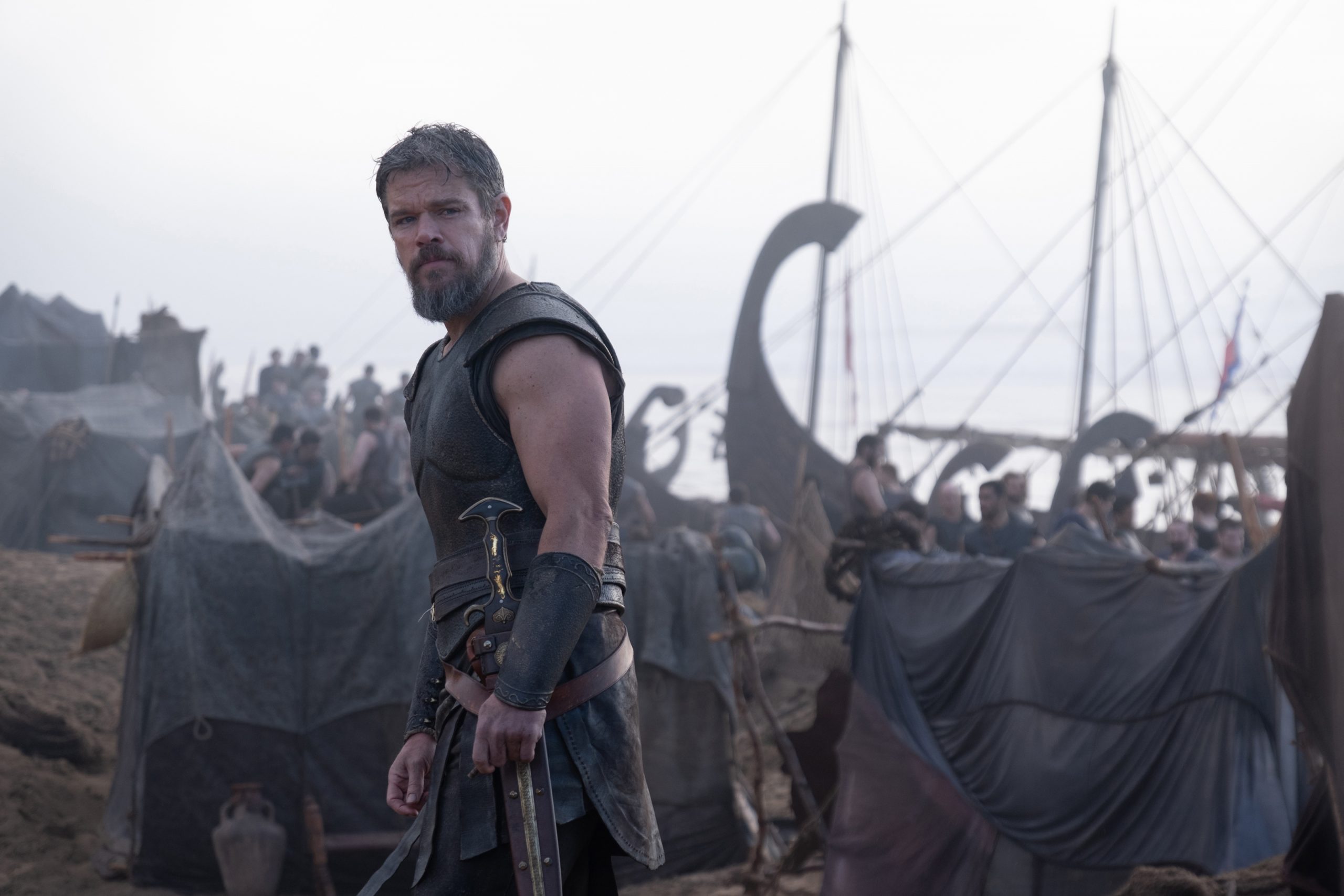
The Odyssey (2026)
Defy the Gods.
After conquering Gotham, dreams, space, time, war and the atomic bomb, Christopher Nolan has taken on something even larger: one of the foundational stories of Western civilization. Attributed to Homer and composed around the seventh or eighth century BC, The Odyssey has survived for almost 3,000 years. It is arguably the foundational epic of Western literature — a story of gods and monsters, fathers and sons, war and homecoming that has influenced almost every journey narrative that followed.
Nolan had reportedly been thinking about this world for more than two decades, having once been in talks to direct Troy (2004). The success of Oppenheimer (2023) finally gave him the opportunity to approach Homer’s epic with the full force of a major studio production — quite a leap of faith, even for a director who has spent much of his career making the impossible look practical.
Despite the fantastical elements of Homer’s story — and they are certainly present — Nolan’s The Odyssey is more interested in realism. Gods interfere, giants hunt sailors and impossible creatures emerge from the darkness, but everything carries a physical weight, as though these events occurred in a time when the unexplained was simply accepted as divine. The approach separates this adaptation from the colorful sword-and-sandal adventures and effects-heavy fantasy versions that came before it. Nolan does not remove the mythology. He drags it into the mud, throws seawater over it and asks what these creatures would feel like to frightened men stranded far from home.
With that said, this is still appropriately epic.
The story follows Odysseus (Matt Damon), King of Ithaca and one of the Greek army’s most cunning strategists. After spending ten years fighting at Troy and devising the wooden horse that finally brings the war to an end, Odysseus begins what should be a straightforward voyage home to his wife Penelope (Anne Hathaway) and son Telemachus (Tom Holland). It does not go according to plan. Odysseus and his men become trapped in a seemingly endless journey across hostile seas, moving from island to island as storms, monsters, temptation and their own increasingly desperate decisions steadily whittle down the crew. Years into the voyage, Odysseus finds himself stranded on the island of the mysterious nymph Calypso (Charlize Theron), still longing to complete the journey home.
Meanwhile, two decades after Odysseus left Ithaca, Telemachus searches for the father he has never truly known. Penelope is surrounded by suitors hoping to claim her hand and kingdom, led by the arrogant Antinous (Robert Pattinson), who has become increasingly comfortable treating Odysseus’ palace as his own. As Odysseus fights his way back, Penelope attempts to hold together a kingdom that assumes its king will never return.
Twenty years and still no ‘On my way’ text.
Written and directed by Nolan, The Odyssey unfolds in his typically nonlinear style rather than following a simple chronological path. It jumps backwards, forwards and sideways, sometimes presenting stories within stories as characters recount events that then unfold in extended flashbacks. Homer’s poem already begins in medias res, with Odysseus absent from its opening books, but Nolan fractures the structure even further. It takes some getting used to.
The opening section throws names, kingdoms, relationships and several points in time at the audience while trusting them to keep rowing. Nolan does not always make it easy, and the structure occasionally feels unnecessarily complicated. However, once the timelines lock together and the rhythm becomes clear, The Odyssey becomes far more immersive. The storytelling stops feeling like a puzzle placed over Homer and starts to reflect the way Odysseus remembers his journey — not as one clean voyage, but as traumas, mistakes, victories and nightmares that refuse to remain in the past.
The Odyssey features some of the best sequences Nolan has ever mounted. The strongest are the episodic island encounters, where each new shore appears to offer safety, food or shelter before something deeply wrong emerges from the landscape. These passages play less like traditional fantasy adventure and more like contained horror or survival stories. The confrontation with the Cyclops Polyphemus (Bill Irwin) turns the famous mythological episode into a claustrophobic creature feature. Being trapped inside a cave with a one-eyed giant who eats human beings does not feel magical. It feels like pure terror. Darkness hides the creature’s scale, while every movement carries enormous weight. The Laestrygonians — Homer’s race of cannibalistic giants — are reimagined as towering, armored figures stalking Odysseus and his crew through a pine forest. The sequence has the scale of fantasy but the mechanics of a survival nightmare, with men fleeing creatures capable of crossing enormous distances in only a few steps.
The face of a man reconsidering the scenic route.
Then there’s Circe’s island. Samantha Morton’s Circe brings an unsettling calm to the story, and Nolan uses her section to venture into folk horror and grotesque body horror in a way he never has before. A transformation sequence is not treated as a flash of light followed by an easy visual effect. Flesh appears to be physically manipulated and reworked, turning a familiar piece of mythology into something sickening, tactile and astonishingly realized. Nolan has created frightening images before, but rarely anything this organic or revolting. It is amazing. These encounters are not merely visual attractions. Each one tests Odysseus and his men in a different way, challenging their intelligence while exposing their pride, vulnerability and appetite. The monsters may be fantastical, but the weaknesses they uncover are painfully human.
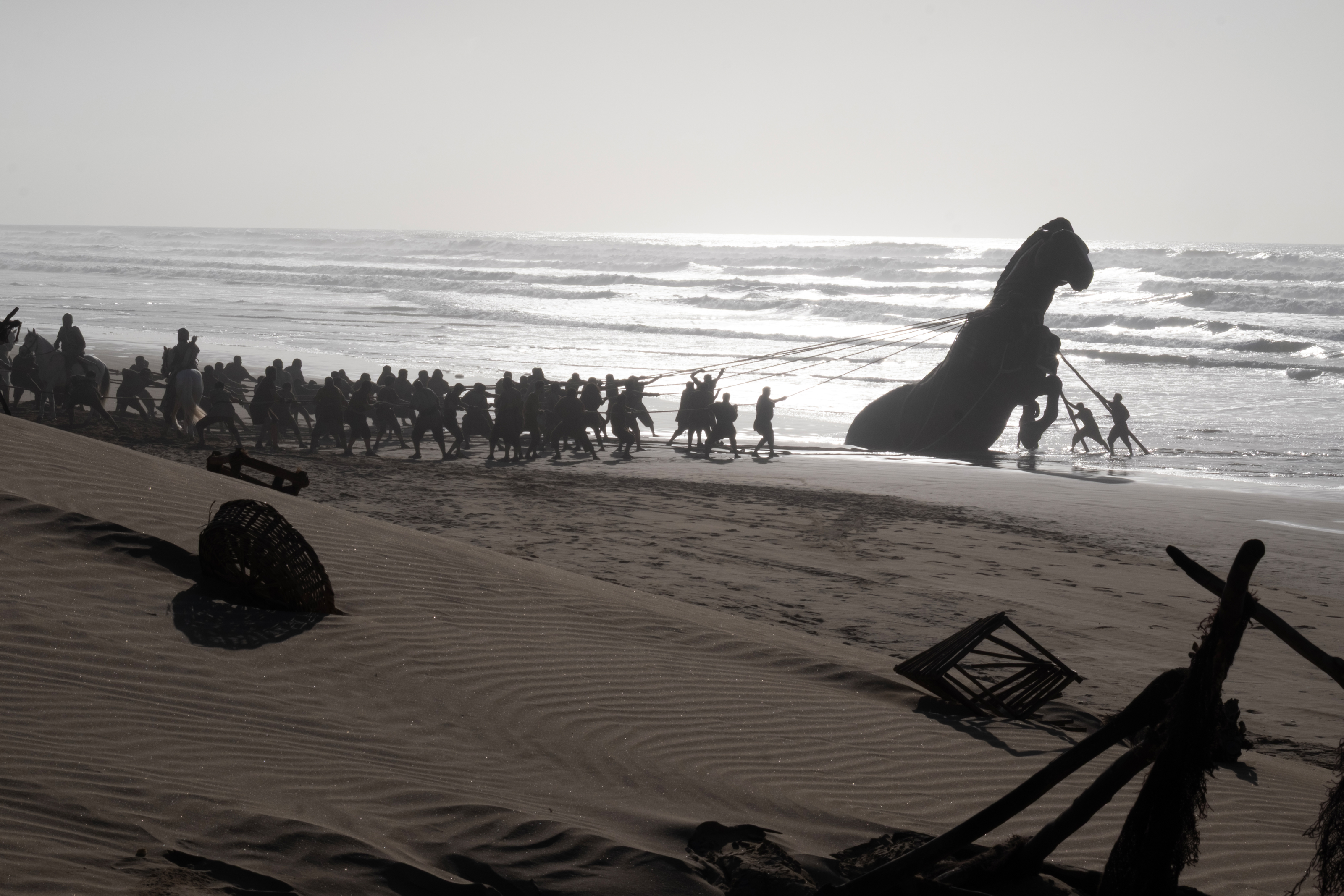
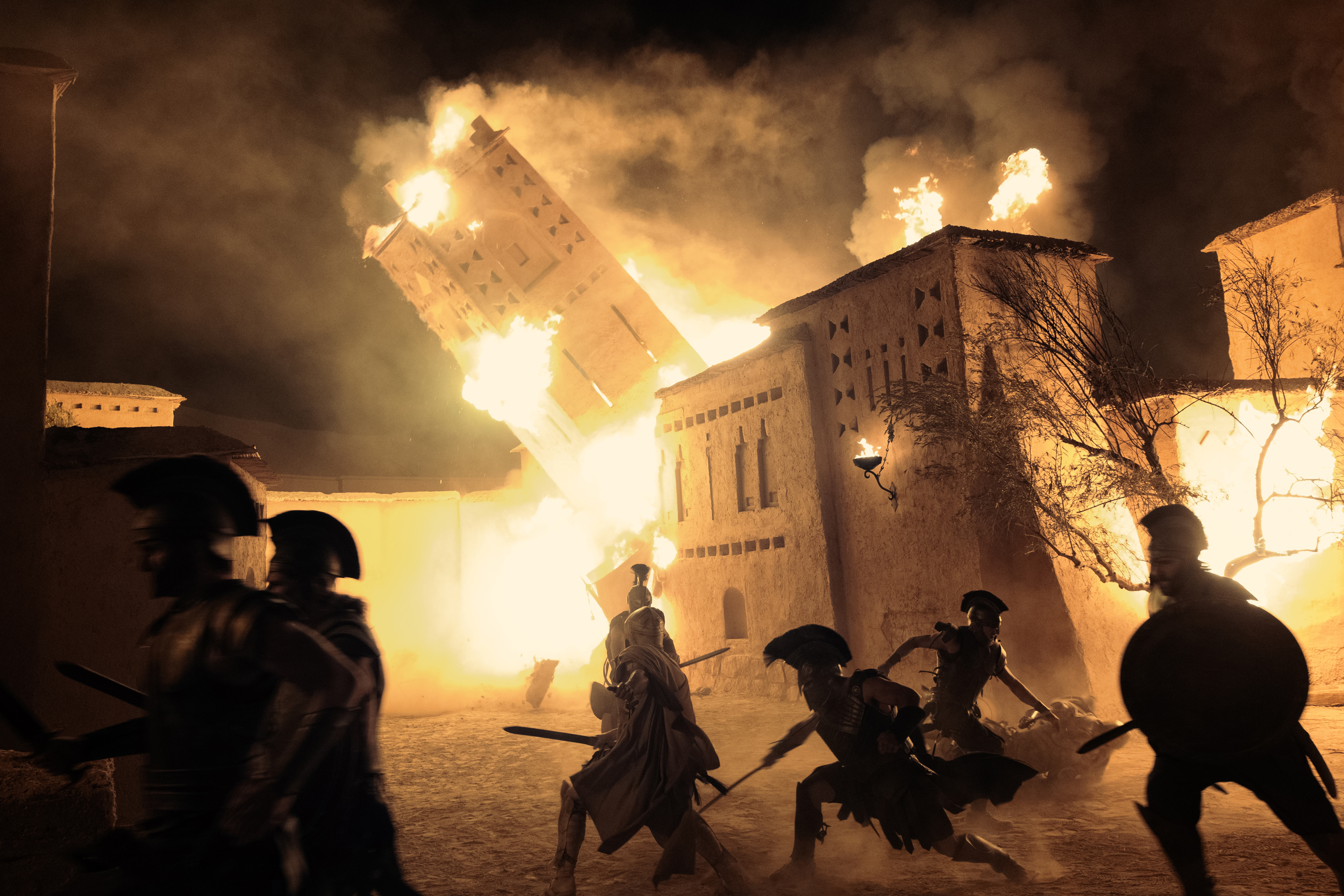
Even the fall of Troy and the Trojan Horse sequence is breathtaking. Nolan transforms the famous deception into a tense infiltration operation, placing the audience inside the horse with soldiers who must remain silent, cramped together in darkness and filth while waiting for the exact moment to strike. When Troy finally falls, there is little heroic about it. Buildings burn, civilians run through the streets and the Greek victory becomes less a moment of triumph than the beginning of the guilt Odysseus will carry across the sea. The horse may end the war, but it also opens the door to everything that follows.
After so much movement between islands, memories and parallel journeys, everything crescendos into a gripping third act. The separated characters, timelines and unresolved loyalties come together neatly, delivering the payoff the story has been sailing towards. It’s violent and emotionally satisfying without becoming a simple celebration of Odysseus reclaiming what belongs to him. By the time he reaches Ithaca, the question is no longer whether he can make it home, but whether the man who returns is still capable of living there.
Well, that escalated historically.
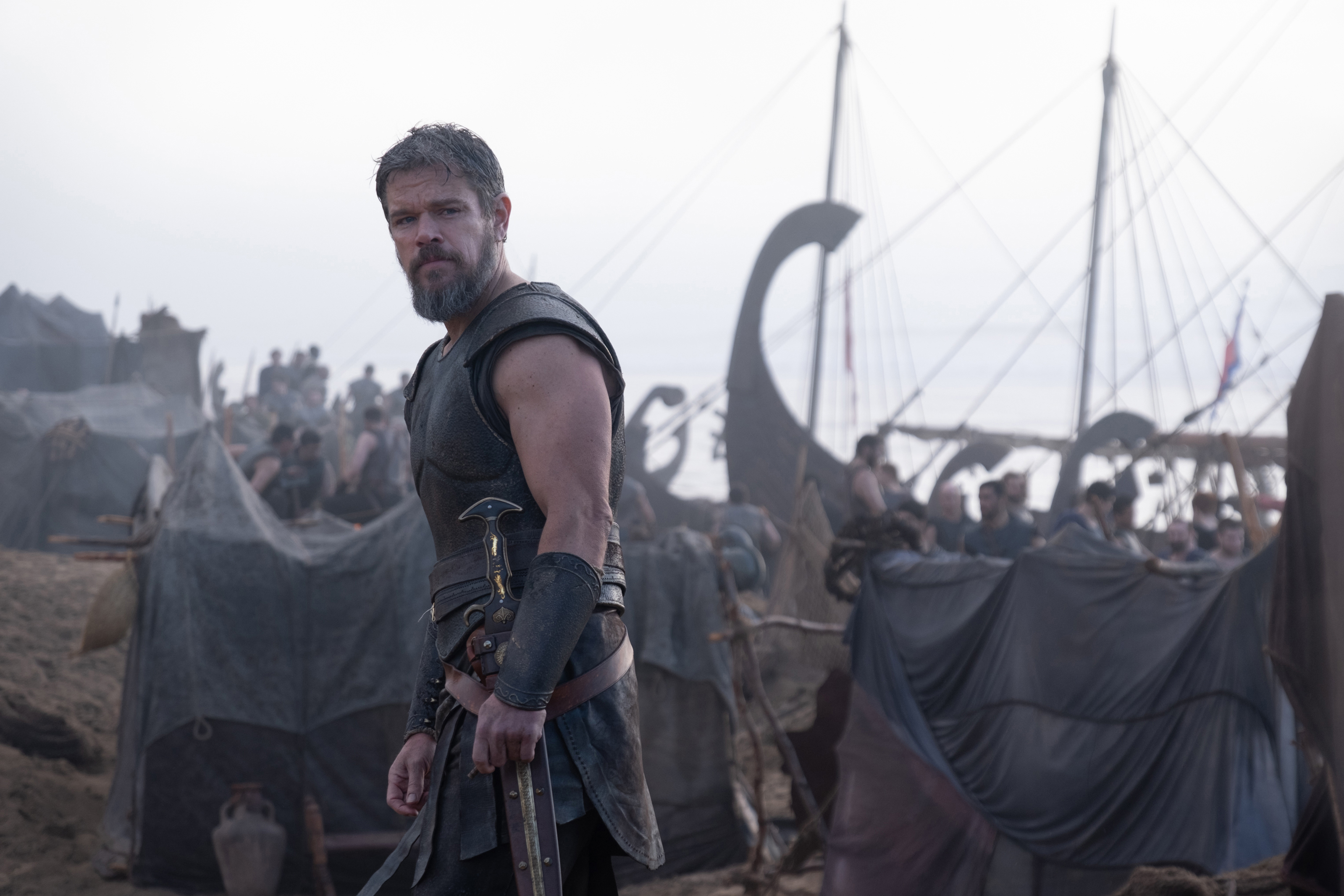
The production itself is enormous. Nolan and cinematographer Hoyte van Hoytema shot the entire picture using IMAX film cameras while avoiding green screens wherever possible. The Trojan Horse was constructed, full-sized ships were taken onto open water and the cast worked across practical locations. That physicality is visible in every frame. Ships rock and vanish behind waves, armor carries weight and clothing becomes soaked, stained and stuck to bodies. Everyone is wet, dirty and frequently exhausted. The ancient world has rarely looked this uncomfortable.
Van Hoytema’s cinematography captures both the scale and texture of the journey, from tiny ships surrounded by endless water to men reduced to specks beneath impossible creatures. It is equally effective in confined spaces, particularly inside the suffocating Trojan Horse and the darkness of Polyphemus’ cave. Seen in IMAX 70mm, as Nolan clearly intended, the scale alone makes the format well worth seeking out. The image feels enormous without becoming empty, while Ludwig Göransson’s immersive score surrounds the action with pounding percussion and choral voices. It occasionally threatens to overpower the dialogue, because Nolan remains Nolan, but gives the journey an elemental force.
Ellen Mirojnick’s costumes balance recognizable Greek imagery with Nolan’s harsher approach. Benny Safdie’s Agamemnon, for instance, is wrapped in imposing armor and an enormous crested helmet that makes him resemble a walking monument to warfare. It should be excessive. It somehow works.
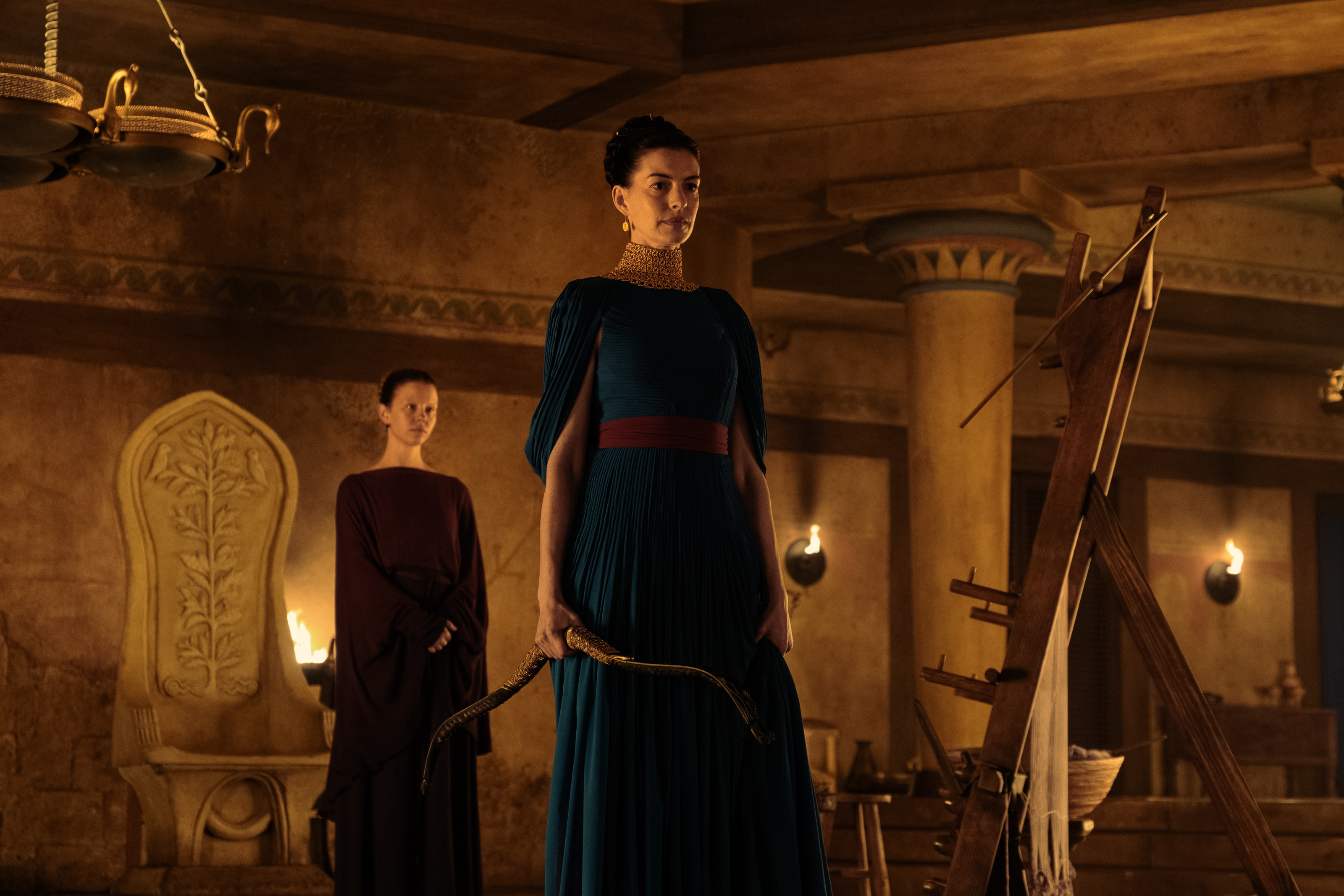
This may be Nolan’s strongest and most focused collection of roles for women. Penelope, Athena, Circe, Calypso, Helen and Clytemnestra are not interchangeable love interests or distant symbols, but figures who each hold a different kind of authority over Odysseus and the world he is attempting to navigate. Anne Hathaway is especially good as Penelope, giving her patience, intelligence and quiet control. She is not merely waiting at home for the hero to return, but fighting her own war through language, ritual and strategy. Lupita Nyong’o also makes an impression in the dual roles of Helen and her twin sister Clytemnestra, presenting two women affected by Troy in very different ways.
Athena offers wisdom. Odysseus offers complications.
The performances are generally solid, led by Matt Damon as Odysseus. He is intelligent, stubborn and dangerously impressed by his own cleverness, while carrying the growing weight of every man lost along the way. Tom Holland is good as Telemachus, capturing the insecurity of a young man raised beneath an absent father’s legend. Robert Pattinson is great as the sniveling Antinous, an entitled suitor who behaves as though Odysseus’ palace already belongs to him.
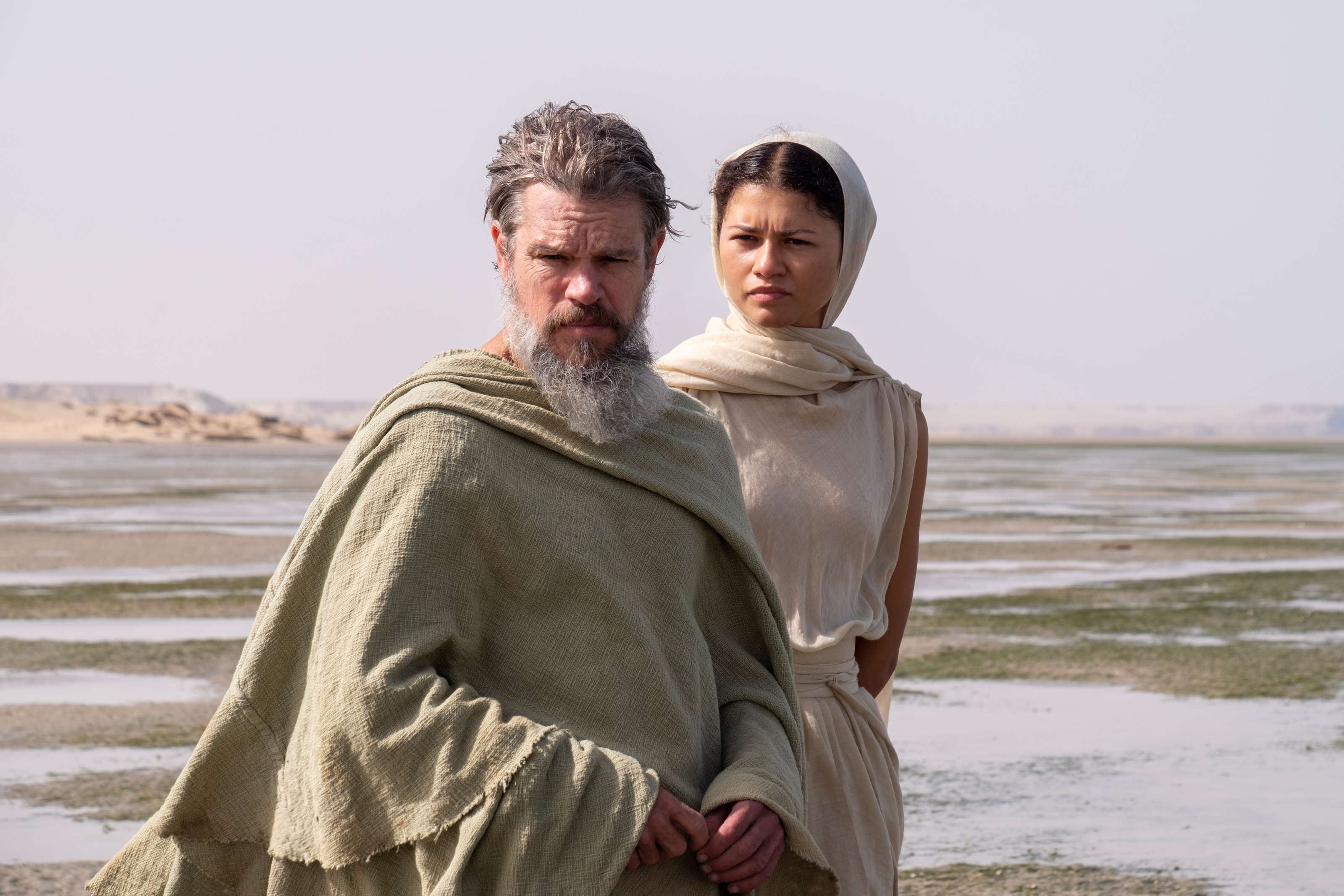
However, it’s the supporting players who stand out most. Zendaya brings a watchful, otherworldly presence to Athena, the goddess of wisdom and Odysseus’ divine protector. Used sparingly, she appears more like a confidante guiding events than a conventional god descending from the heavens, which suits the grounded approach. John Leguizamo brings warmth to Eumaeus, Odysseus’ faithful servant and swineherd, whose decency contrasts with the opportunists occupying Ithaca. Himesh Patel is likeable as Eurylochus, Odysseus’ second-in-command and the voice of a crew unsure whether their leader’s intelligence is saving them or finding more elaborate ways to place them in danger. Jon Bernthal also makes a strong impression as Menelaus, King of Sparta and husband of Helen, giving the warrior a battered intensity that suggests another man who survived Troy without escaping it.
Thematically, The Odyssey feels closely connected to Oppenheimer. Both center on brilliant men whose ingenuity helps bring a long war to an end, only to leave them confronting the moral and human consequences of what they created. Oppenheimer builds the atomic bomb. Odysseus devises the Trojan Horse. Their solutions work, but victory does not provide either man with peace. Odysseus is not haunted because he failed at Troy. He is haunted because he succeeded.
The journey home becomes an examination of war’s aftermath rather than a collection of obstacles between Odysseus and Ithaca. His crew carry the habits of soldiers into every new land, taking what they need and responding to uncertainty with violence. Even when the war has ended, they remain trapped inside it. Nolan examines men who become useful during conflict, then discover the qualities that helped them survive may make ordinary life impossible. Like Oppenheimer, this is ultimately about responsibility, guilt and whether intelligence can excuse the destruction it enables.
One does not simply string Odysseus’ bow.
At 172 minutes, The Odyssey is very long, and that length is occasionally felt. The pace begins to drag around the start of the third act, just as the cumulative weight of islands, flashbacks, prophecies and political maneuvering begins settling in. However, there is something appropriate about the exhaustion. The story is supposed to feel like an actual journey. By the final part of the voyage, the audience has spent enough time at sea to understand why home has become less a destination than an obsession.
The scope and size of The Odyssey can be felt in every crashing wave, burning city and demented creature. Nolan has created a massive, immersive epic worthy of the largest screen available without allowing the spectacle to swallow the damaged man at its center. It’s beautifully constructed and filled with genuine grandeur — a very good production with moments of greatness and sequences unlike anything Nolan has previously attempted. After spending his career bending time, space and reality, Nolan has turned towards the oldest cinematic question of all: how far can a man travel before he no longer recognizes the person returning home?
The Odyssey takes the long way back, but Nolan makes almost every mile worth traveling.
4.5 / 5 – Highly Recommended
Reviewed by Dan Cachia (Mr. Movie)
The Odyssey is distributed by Universal Pictures Australia