By
By 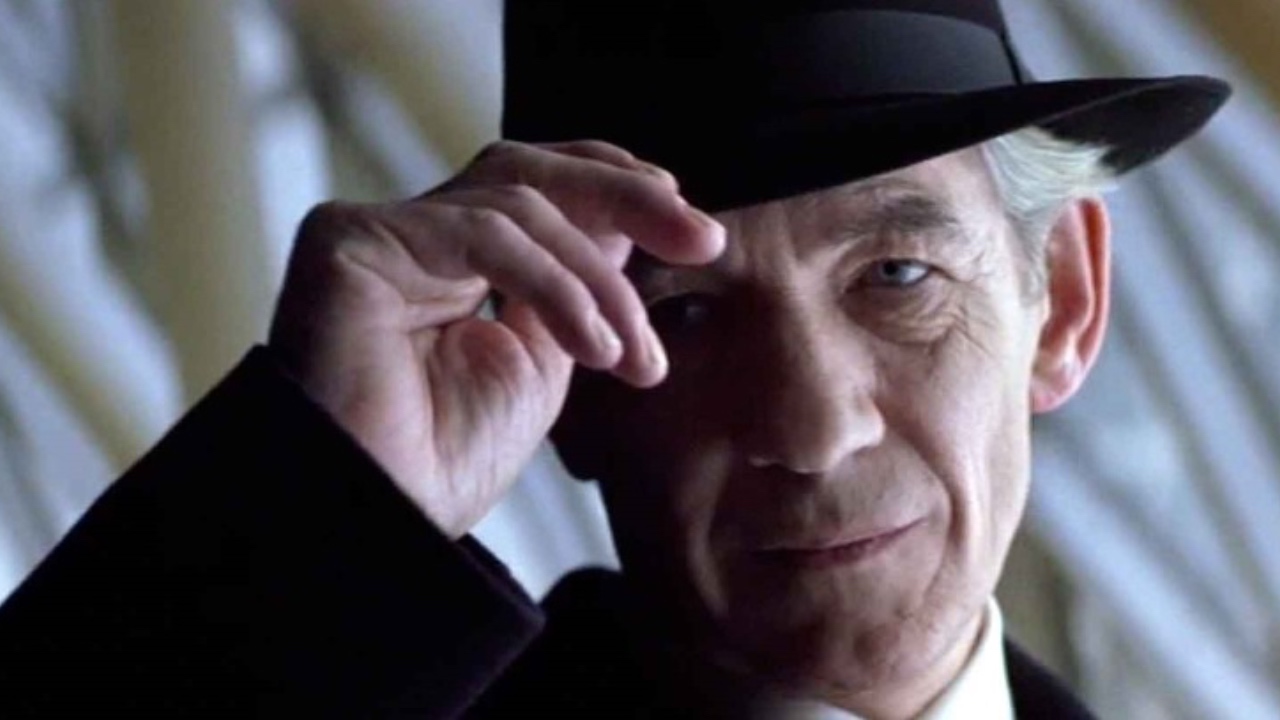
“We are the future, Charles. Not them.” When Ian McKellen delivered this line in 2000’s X-Men, he did so as Erik Lehnsherr a.k.a. Magneto. By “we,” he meant mutants, people who develop incredible powers at puberty; by “them,” he meant the rest of humanity. But the phrase may very well also refer to a different change happening in the world, one way more successful than any of the plots that Magneto hatched with his Brotherhood of Evil Mutants.
Along with 1998’s Blade, 2002’s Spider-Man, and 2005’s Batman Begins, X-Men helped pave the way for the era of superhero domination, best represented by the success of the Marvel Cinematic Universe. At the same time, McKellen also brought his significant gravitas to Gandalf the Grey in the Lord of the Rings franchise, aiding that trilogy’s eventual victory at the 2004 Academy Awards. Thus, in the early 2000s, nerds were the future, not the average moviegoer. And thanks to McKellen’s committed work in both series, nerd culture didn’t just become popular—it became respectable.
[Editor’s Note: Ian McKellen is fine. This is not a eulogy. We were just thinking about how awesome he was in X-Men and Lord of the Rings and wanted to write about it.]
Of course, both X-Men and Lord of the Rings had their rabid fans before 2000. Although they initially received a mixed reception when released in the mid-1950s, the Lord of the Rings novels exploded in popularity among fantasy fans in the 1960s, and directly contributed to the growth of the genre. “Frodo Lives!” appeared in graffiti across the U.S. and Led Zeppelin sang about Gollum in “Ramble On,” but most considered the story too dense for general consumption—a point seemingly confirmed by the visually-stunning but narratively messy Ralph Bakshi animated features.
Likewise, the X-Men were the most popular franchise in comics by the time writer Chris Claremont completed his 17-year run in 1991, turning a C-tier Marvel property into a sensation. Claremont’s work was known for its denseness, from the florid prose he stuffed into caption boxes to his soap operatic plots about clones, time-travel, and aliens, many of which unfolded over years of ongoing stories. The X-Men popped up in cartoons and video games, but never got so much as a proper TV show.
In both cases, the movie adaptations worked, in part, because they streamlined the narratives and cut out some of the weirdest stuff. Gone were Tom Bombadil and (most of) the songs from Lord of the Rings. The X-Men wore black leather instead of yellow spandex, and the short, hairy, Canadian Wolverine was played by the tall, handsome Australian Hugh Jackman. There was a sense that as much as these movies loved their source material, there were parts deemed too goofy, too embarrassing for wider public.
Not so with McKellen’s performance. In Lord of the Rings, McKellen had to glue hair to his face and don a false nose. He had to pretend that he towered over his cast mates and deliver phrases like “Fool of a Took!” as if his life depended on it. In X-Men, McKellen wore a goofy helmet and had to address people who called themselves Sabretooth and Toad as if those were normal names that anyone could have.
Yet, he did it, fully embodying the humanity of both over-the-top characters. McKellen found realism in explicitly unrealistic worlds, whether it be the affection that Gandalf has for Frodo or the bond between Magneto and Xavier. Even better are the scenes in which McKellen got to unleash his gravitas. McKellen’s voice booms when Gandalf stares down the Balrog and bellows, “You shall not pass!” He may have been an actor on a set, delivering his lines to a stand in for a digital effect, but no one doubted that the words he muttered were a spell summoning deep magics, that his commands would cause the elements to stop. We have no problem suspending disbelief as Magneto floats across an expanse while his plastic cell collapses, because McKellen has such power when he mocks the guards for not killing him earlier.
Nerds watching these scenes recognize McKellen as the wizard and supervillain they’ve loved for years. But for the larger viewing audience, these scenes played as high drama, just as powerful as the Shakespeare works that McKellen had done on stage. Thanks to McKellen’s commitment, Lord of the Rings and X-Men weren’t just a novelty that briefly captured the public’s attention. They were art, worthy of elevating the form, moving to the future of cinema.
The post Ian McKellen Single-Handedly Elevated Nerd Culture in the 2000s appeared first on Den of Geek.