By
By 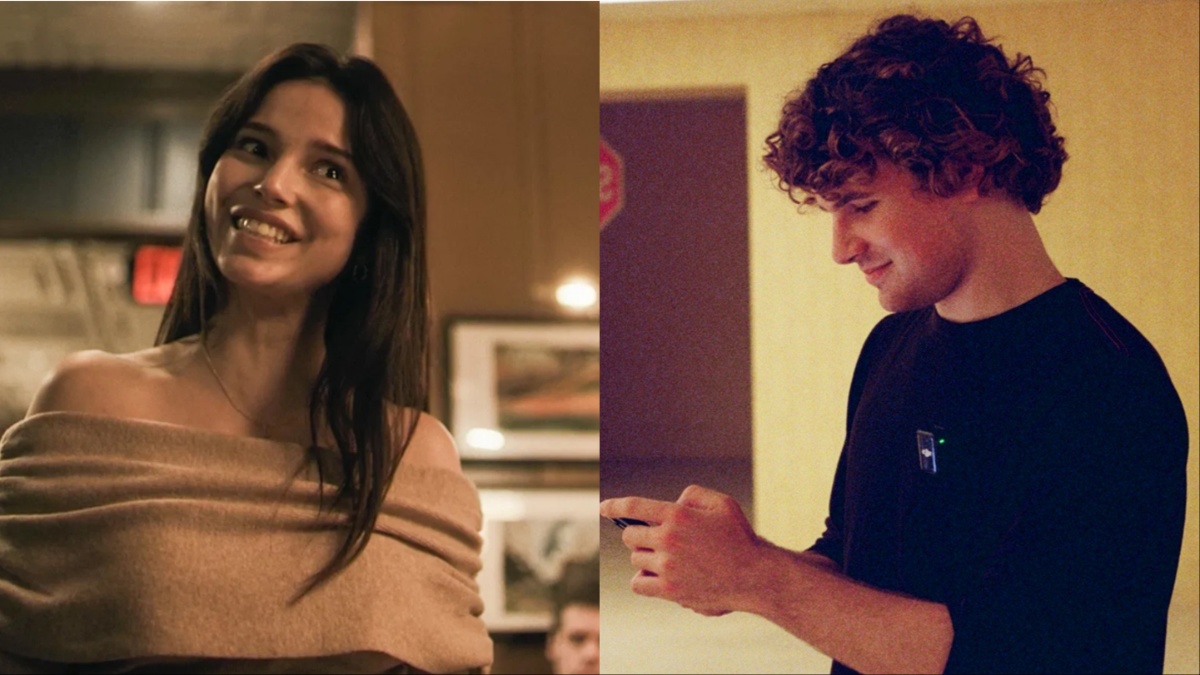
In the winter of 1970, Danny Selznick, the son of storied Hollywood producer David O. Selznick, held a dinner party in his father’s house. Here in an abode paid for by movies like Gone with the Wind and Alfred Hitchcock’s Rebecca, the last vestiges of old Hollywood fine-dined with the first shaggy personalities of New Hollywood. This was crystallized when Dennis Hopper, flush off the success of Easy Rider from a few months earlier, went up to George Cukor and pushed his finger hard in the old man’s chest.
Taunting the guy who directed everyone from Katharine Hepburn to Audrey Hepburn, and in films that included The Philadelphia Story and My Fair Lady, Hopper drunkenly enthused, “We’re going to bury you. We’re gonna take over. You’re finished.”
For more than a decade, I’ve thought about this anecdote. So have many other critics and cinephiles who’ve mused about how the modern age of the IP franchise movie—sometimes reduced to just “Marvel” or “Star Wars” by cynics—will eventually, and generationally, give way in the same manner that New Hollywood ushered out their parents’ ideas of entertainment: namely musicals and Westerns. While I still am not quite ready to say that paradigm shift is fully here and the golden age of superhero movies and endless sequels, prequels, and “shared universes” is about to abruptly end… it finally seems like that screw is turning in that direction. And this weekend especially crystallized that with one of the most remarkable box office stories I’ve seen in my lifetime.
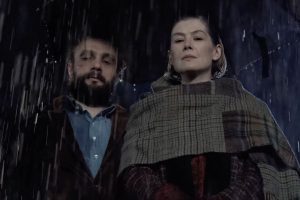
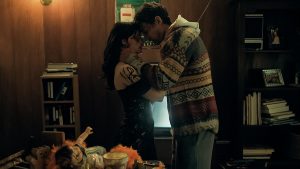
Backrooms, a new film from Kane Parsons, a 20-year-old YouTube content creator, just opened at number one at the box office with an astounding $81 million across its first three days. Just as impressive, Curry Barker’s Obsession saw its weekend gross go up for the second weekend in a row, grossing $26.4 million in its third weekend after earning $24 million in its second, and what was a surprise $17.2 million in its first. Barker is, for the record, only 26. For a little more context, it’s also gone up by 30 percent each Friday it’s played in wide release. The last wide release to do that outside of the Christmas holiday season was another New Hollywood movie: Jaws, 51 years ago.
Both films are horror, and at least Parsons comes in with a built-in audience due to Backrooms being an expansion on a YouTube series he started several years ago. But even while playing in that “lane,” cumulatively their success seems to be making a huge statement, especially since there is a new Disney Star Wars movie in theaters this weekend, and it dropped 69 percent in its second weekend… below Backrooms and below Obsession in its third weekend. The $750,000-budgeted Obsession also cost literally less than one percent of The Mandalorian and Grogu’s budget.
Neither Parsons nor Barker are the first Gen-Z YouTuber to make the jump to theatrical. Just this past January, Mark Fischbach, known as “Markiplier” to his YouTube subscribers, independently released his $3 million-budgeted Iron Lung to theaters. About a month earlier, he revealed the film’s release would only be in about 60 independent theaters across the U.S. unless his fans could persuade and encourage their local theater chains to screen the film. It opened on more than 3,000 screens and grossed $17.8 million in its first three days, presaging a run that topped $50 million worldwide.
This highly independent grassroots phenomenon is an extreme example of what’s occurring, but it is all the same informative about the shifting tastes and influences of filmmakers, audiences, and an entertainment industry that’s struggling to catch up. Increasingly, the next crop of Gen Z filmmakers appear to be arriving to theaters straight from YouTube and the accompanying interwebs.
Launched over 20 years ago in 2005, YouTube has been around long enough for an entire generation of young adults to not remember a world without it—or for that matter Twitch, Instagram, and soon enough TikTok. This means the next generation of talent has been shaped and educated on the visual language of the internet. Despite this reality, Hollywood has been reluctant to look at content creators as potential feature filmmakers.
Indeed, while enjoying wide releases this month courtesy of Focus Features and A24, respectively, Obsession and Backrooms are still both indies. In fact, Obsession was the classic micro-budgeted horror discovered at a festival—in this case the Toronto International Film Festival—that triggered an overnight bidding war. Now its box office trajectory is in the rarefied company of The Blair Witch Project and the first Paranormal Activity. Even so, it is technically writer-director Barker’s second feature after he released his first film, Milk & Serial, straight to YouTube.
Meanwhile before Obsession and Backrooms, Danny and Michael Philippou might be marked as the pioneering statesmen of YouTube-to-horror darlings at the ripe old age of 33. The Aussie twin wunderkinds went by RackaRacka on their socials until their debut feature Talk to Me blew the roof off Sundance in 2023, leading to a fruitful relationship with A24, which also produced and distributed the pair’s Bring Her Back last year.
Cumulatively, many of the first Gen Z voices to make major headway in the film industry this decade are springing up in horror, much in the same way Millennial mavens like Robert Eggers, Ari Aster, and Jordan Peele rose up in the exact same genre during the 2010s. However, that era still was going through the same established pathways developed in the 1990s: make some shorts, build connections, and premiere at Sundance (even Peele’s studio-backed Get Out launched in Park City to grow word-of-mouth ahead of the Comedy Central star’s hard pivot to genre filmmaking).
While the Philippous and Barker went a similar route, Parsons is coming straight from YouTube to the biggest opening in A24’s history. And even Barker seems a bit ambivalent about the old ways, despite Obsession’s TIFF success. Recently talking to NBC News, Barker said, “We’re finally getting to the point where people are like, ‘OK, fine, I’ll put my film on YouTube.’ Versus when I was in film school, that was kind of like a last resort. People didn’t want to put their stuff on YouTube. They wanted to go the festival route.”
After this month, that could change as studios are finally encouraged to look at YouTube as a potential training ground for new talent, much the same way music videos proved to be something of a farm league for young talent in the 1980s and ‘90s, nurturing future Hollywood staples like David Fincher, Michael Bay, and Spike Jonze. Or, perhaps, as a generational wellspring for an entirely different sensibility. Think Dennis Hopper circa 1970, as well as Robert Altman, Robert Redford, Warren Beatty, Francis Ford Coppola, William Friedkin, Martin Scorsese, Brian De Palma, and, ironically enough, Steven Spielberg and George Lucas.
Then again, one has to wonder if this is itself only a stop-gap between the present and a larger future. Right now, in this generation, getting the distributive support of a prestige indie label like A24 or Focus Features, or a major studio like Universal and other interested parties—such as the unnamed suitor who allegedly made Barker a cool $10 million offer last week for his next original project, no script required—is critical to finding a large and financially lucrative audience who can still be best made aware of a film via traditional marketing and publicity.
But like the previous resistance to YouTubers, that could swiftly evolve in the coming years as more audiences and filmmakers get as comfortable as Barker did on his first film, and just say “screw it,” before uploading straight to the web. Interesting times, nay?
The post The Age of the YouTube Filmmaker Is Here After Backrooms and Obsession’s Triumph appeared first on Den of Geek.