By
By 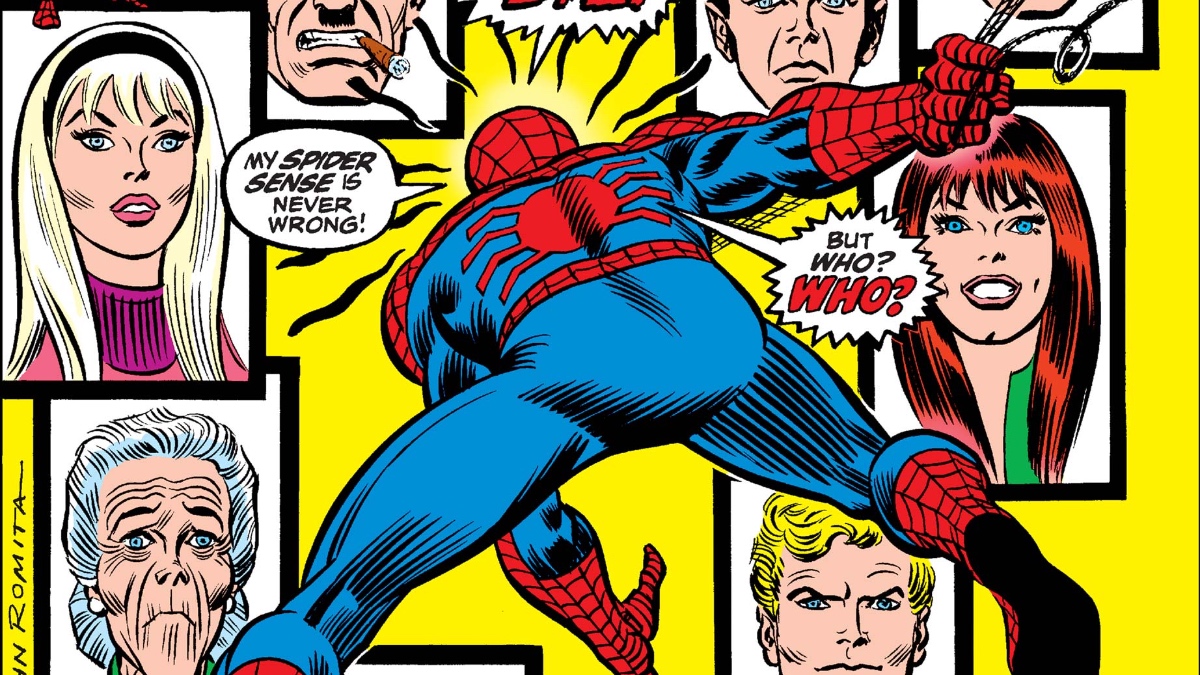
“Someone close to me is about to die!” shouts Spidey on the cover of 1973’s Amazing Spider-Man #121. Even those who have never cracked open that issue know that the death in question doesn’t come for J. Jonah Jameson, Mary Jane Watson, Aunt May, or any of the other faces adorning that cover. It comes for Gwen Stacy, Peter Parker’s longtime girlfriend.
Someone just as close to Spidey has also died. Writer Gerry Conway has passed away at the age of 73, leaving behind a legacy that includes co-creating the Punisher, Robin Jason Todd, Carol Danvers, and many others, as well as tons of great comics. But Conway’s greatest, and most complicated, contribution to pop culture might be writing “The Night Gwen Stacy Died.”
Spider-Man’s Last Stand
Conway broke into the comics industry in 1968 at the age of 16, initially working on horror and Western comics for DC before moving over to Marvel a few years later. He took over Amazing Spider-Man in 1972, writing the series from issue #111 through #149 in 1972, picking up from Stan Lee. It was there that he would make his greatest contribution to the character, writing the two-part story that saw the death of Peter Parker’s innocent girlfriend.
Revisiting Amazing Spider-Man #121 and 122 today, it’s amazing how modern they feel. The first issue opens with Harry Osborn suffering from LSD poisoning, while Peter suffers from a virus (thanks to an adventure in Canada in previous issues) that leaves him disoriented. Likewise, Norman Osborn had completely forgotten his activities as the Green Goblin… that is, until the sight of his son begging for help causes him to crack, and the Goblin identity comes to the fore, thirsting for vengeance against Peter Parker.
That revenge occurs at the end of issue #121. Goblin, his knowledge of Spidey’s secret identity restored with the rest of his memory, throws Gwen Stacy off the George Washington Bridge (well, penciler Gil Kane drew the Brooklyn Bridge, but the dialogue identifies it as George Washington). In desperation, Spidey shoots a web to catch her, and manages to grab her ankle. But the inertia from the fall is too much, and Gwen’s neck breaks. Issue #122, “The Goblin’s Last Stand” traces the fall-out, in which Spider-Man seeks his own revenge, eventually battling Green Goblin to the death—a death that comes when our hero leaps out of the way of the Goblin Glider and lets it slam into his foe.
These scenes have been recreated time and again, in homages and films and television shows, so much that we might lose sight of the brilliance of the storytelling. From his conception, Spider-Man has been the hero overburdened by great responsibility. Even if some of co-creator Steve Ditko‘s objectivist philosophy turned Peter into an ungenerous possessor of great power, Spider-Man has always felt like his abilities complicated his life instead of turning him into a conquering hero.
From Silver to Bronze to Today
Such inner-conflicts are the calling card of the Marvel Heroes. When Stan Lee combined the melodramatic dialogue he developed while writing teen romance comics with the mythic monsters that Jack Kirby created throughout the 1950s, something special happened. Against the paragons of DC Comics, the Thing, Hulk, and Iron Man were heroes with feet of clay, people for whom having power was not all fantasy.
“The Night Gwen Stacy Died” and “The Goblin’s Last Stand” took it one step further. The story does indeed show how having superpowers has complicated Peter’s personal life, estranging him from best pal Harry even before Gwen’s death. However, the story goes on to suggest that Peter is misusing his power. After all, it’s ultimately him, not the Green Goblin, who kills Gwen. And it is not him who kills the Goblin, who died by his own hand. Moreover, Peter very nearly beats Goblin to death, coming so close to crossing a line that he cannot help but pause and check himself.
By the end of these two issues, Conway and his co-creators have pushed Spider-Man to the brink and stripped away part of his life. It would not be the last time. Throughout the 1990s, Spider-Man, like all of his fellow superheroes, would get grim and gritty. Spidey would be buried alive in “Kraven’s Last Hunt,” turned into an animal-like being in “Torment,” and lose his identity in the Clone Saga, all while dealing with nasty mirror images such as Venom and Carnage. Instead of the bright-colored explorers in the Fantastic Four or the shining Avengers, Spider-Man would rub shoulders with the likes of the Punisher, Wolverine, and Ghost Rider, angry anti-heroes who represented the darker side of superheroism.
To be sure, the deconstructions of the 1980s supercharged this change in tone. There would be no Authority, Ultimates, or Identity Crisis without Watchmen or The Dark Knight Returns. But there would be no Watchmen or The Dark Knight Returns without “The Night Gwen Stacy Died.”
The Second Life of Gwen Stacy
Is that a good thing? In addition to being one of the few superhero characters who actually manages to stay dead—a title she now only shares with Uncle Ben, since Jason Todd, Bucky Barnes, and the Flash Barry Allen have left the grave—Gwen is one of the more famous examples of “fridging.” Based on the murder of Kyle Rayner’s girlfriend in Green Lantern #54 (1994), writer Gail Simone coined the term to describe the trope of killing a female character in order to motivate a male.
Had Gwen’s story ended with Amazing Spider-Man #121, then she would be little more than a famous dead woman. But in recent years, Gwen has been rediscovered and rehabilitated, known to most superhero fans as Spider-Gwen, a plucky hero in her own right (who also carries guilt for failing to save her partner, Peter Parker).
Among the many good things that Spider-Gwen has given us, it also allows us to revisit Amazing Spider-Man #121 and 122 with less of the nasty cultural baggage, and allow us to see it for the incredible piece of writing that it is.
Gerry Conway had an impossible task when assigned to write the worst moment in a superheroes life. He succeeded by telling a story that’s dramatic, tragic, and—despite all the masks and powers involved—is ultimately human.
The post Spider-Man: How Gwen Stacy’s Death Changed Comics Forever appeared first on Den of Geek.