By
By 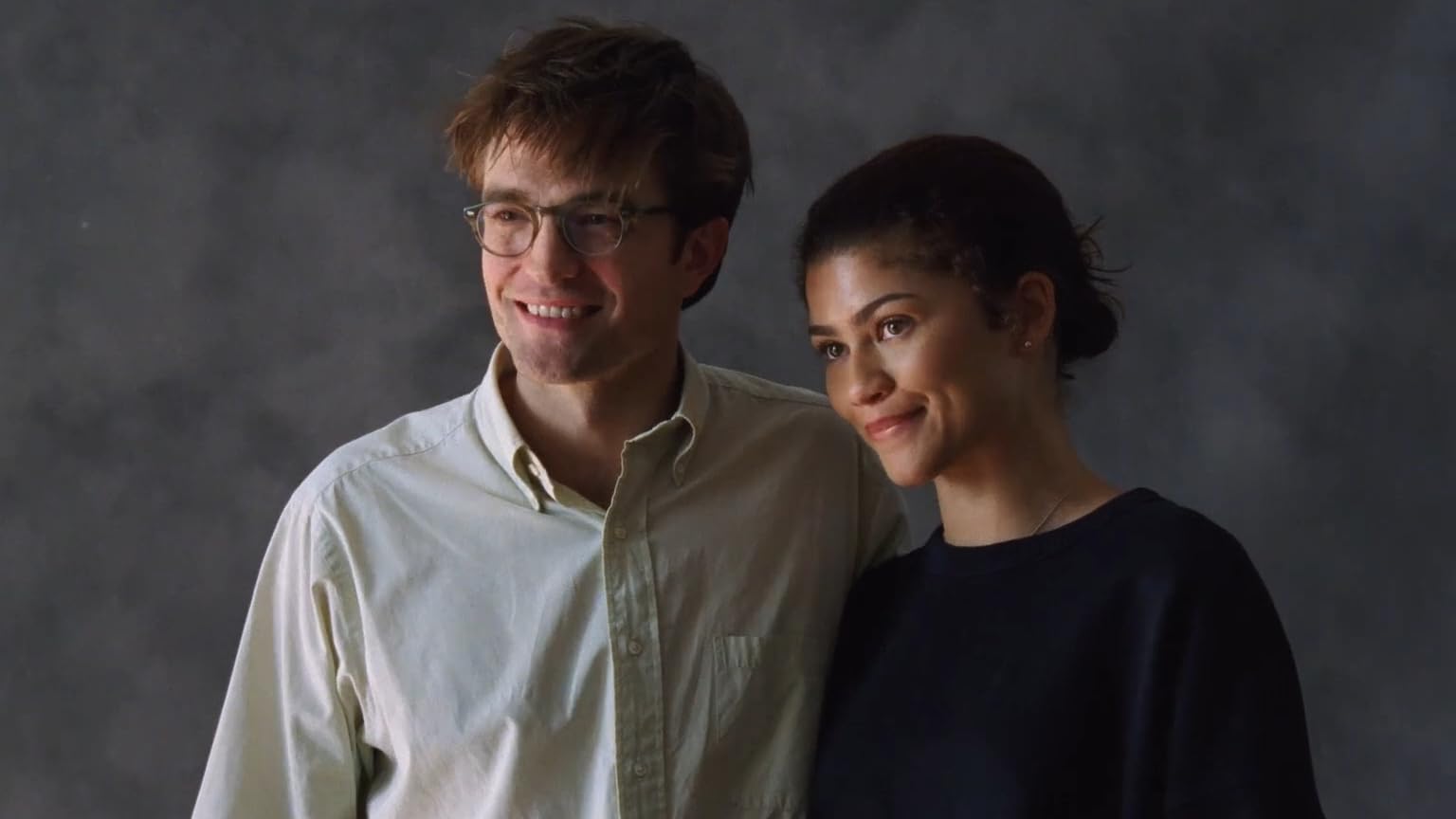
With The Drama, Norwegian director Kristoffer Borgli continues his fascination with the fragile absurdities of identity and relationships, following up his sleeper hit Dream Scenario (2023) with something both more romantic and more quietly unsettling.
The film centers on Emma (Zendaya) and Charlie (Robert Pattinson) in the days leading up to their wedding. It opens with a wonderful meet-cute as Charlie spots Emma reading alone in a coffee shop, but Borgli quickly fractures that familiarity. What follows is not a linear love story, but a mosaic: moments from the past, present, and imagined realities intercut and reframed, testing not just the relationship, but the characters’ ability to withstand the weight of intimacy itself.
Formally, The Drama is alive in a genre that often isn’t. The editing and cinematography inject a restless dynamism, constantly shifting perspective and tone. Scenes don’t just progress, they echo, contradict, and reinterpret each other, creating a feeling that love is not a story we move through, but one we rewrite as we negotiate one another.
Borgli cleverly stages the film within the recognizable framework of a romantic comedy, the aforementioned meet-cute, first date, eccentric friends, screwball beats, but plays every note slightly off-key. The humor is sharp, but tinged with melancholy; the absurdity lands, but leaves a bruise. It’s a film that indulges in the mechanics of the rom-com while toying with it.
Pattinson’s Charlie feels like a distant cousin of a Woody Allen protagonist—neurotic, self-conscious, and emotionally evasive, but freed from Allen’s incessant autobiography. His anxieties read less as performative quirk and more as genuine self-sabotage, giving the character a surprising emotional arc beneath the irony.
Zendaya, meanwhile, is the film’s emotional center. She gives Emma a layered interiority, balancing independence with vulnerability. This is a woman who does not need Charlie, but wants a connection with him, and fears what his absence might reveal about her. Zendaya communicates this tension with remarkable control, often through silence: a glance, a pause, a shift in posture.
What emerges is a fascinating tonal blend, rom-com structure, dark comedy sensibility, and the observational bite of a comedy of manners. The film is at once humane and ridiculous, grounded and hyperbolic, tender and cruel. It resists easy catharsis, instead lingering in the uncomfortable truth that love is as much about projection and fear as it is about connection. I don’t know what the future holds for Emma and Charlie. The Drama doesn’t resolve love it observes it, distorts it, and honors its complexity.