By
By 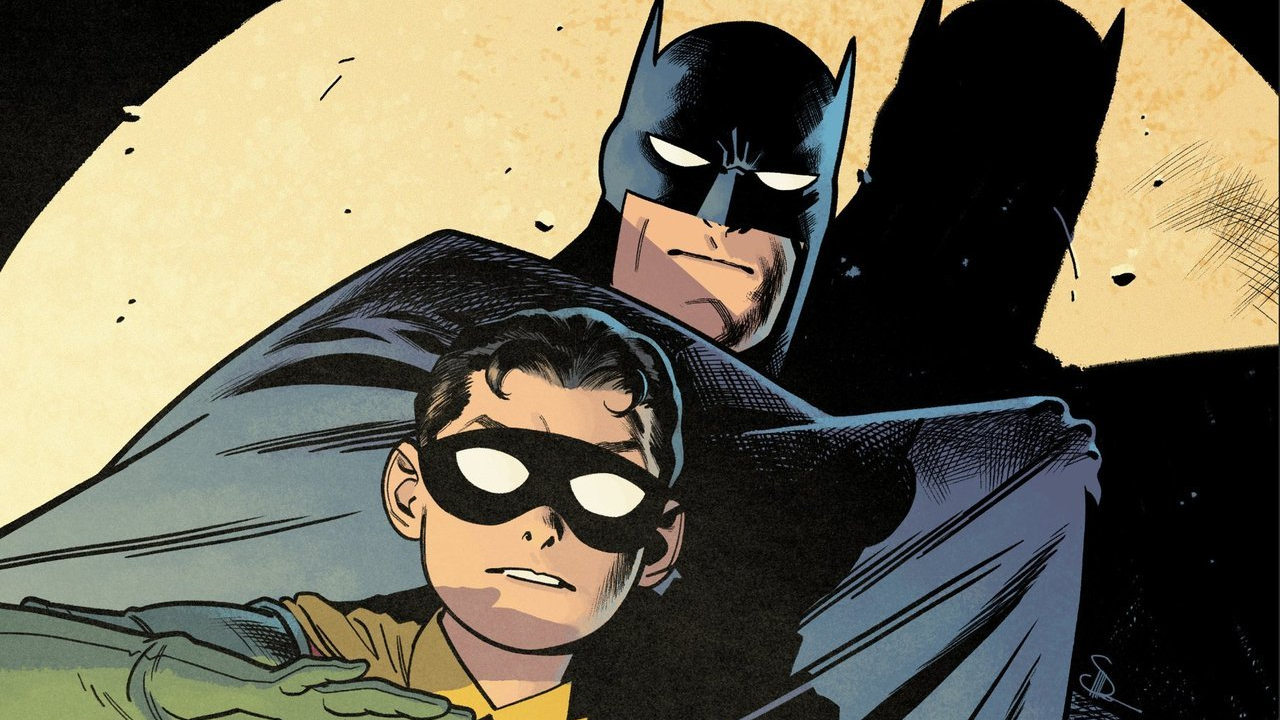
In 1938, Superman arrived in Action Comics #1 to bring costumed superheroes into the world. Superman spawned a host of imitators. But the next great innovation to the genre came in 1940, when Detective Comics #48 introduced Batman’s sidekick Robin. Designed to appeal to younger readers, Robin changed superhero comics forever, making a minor in a bright costume just as much a part of the genre as capes and cowls.
Since then, the title of Robin has passed from teen to teen, and the nature of the teen sidekick has evolved along with it. Even though some creators have tried to forever do away with the trope, whether its Stan Lee killing Bucky Barnes off-panel in 1964 or Garth Ennis making every icky subtext into stomach-churning text in The Boys. But they always fail, proving that teen sidekicks are an intractable part of the genre.
So let’s look at some of the best teens in tights that comic books have given us. Before we do, however, we do need to note that we’re talking about teenage sidekicks only here, no adult sidekicks. That does mean we can skip the unfortunate trend of pairing a white hero with an infantilized person of color (e.g., Tom Kalmaku, Wong, and the utterly reprehensible Steamboat), but it also means that Doiby Dickles, Woozy Winks, and the Tick‘s pal Arthur won’t make the list.
Robin
It all begins and ends with Dick Grayson. After the mafia killed his trapeze artist family, Dick was taken in by Bruce Wayne, who helped channel the boy’s thirst for vengeance and taught him to become Robin, the Boy Wonder. Dick has long-since grown up to become Nightwing, ceding the title to others, including Jason Todd, Tim Drake, Stephanie Brown, and, currently, Damian Wayne. Varied as the different Robins are, they all continue to set the standard, lightening up the main hero’s adventures while opening up new storytelling possibilities.
Bucky
Bucky Barnes makes this list less because he’s a good character and more because he’s important. Before any Sebastian Stan fans start leaving angry comments because of the first part of that sentence, keep in mind that the teen sidekick Bucky was exactly that in Captain America Comics from the 1940s, an annoying brat who needled Steve Rogers into taking him into war. No one cried when his off-panel death was revealed in Avengers #4 (1964), and everyone was shocked when he came back as the Winter Soldier, an actually interesting character, in 2004. Still, Bucky is second only to Robin when it comes to recognizable teen sidekicks, so he has to make the list.
Toro
Pre-Winter Soldier Bucky may have sucked, but Marvel did have one great Golden Age sidekick in the form of Toro, the partner to the original Human Torch. The son of the lab assistants who helped create the first Human Torch (an android who lit on fire and predates the Fantastic Four‘s Johnny Storm), Toro also gained the ability to create flame after a freak accident. He and Human Torch joined Captain America, Bucky, and Namor in the Invaders to fight the Axis powers. However, unlike most teen sidekicks, he happily retired after the war ended, going on to enjoy a civilian life.
Speedy
Because he was originally little more than Batman with a Robin Hood skin, Green Arrow got his teen sidekick Speedy in the Golden Age for no good reason. However, because Speedy stayed with Green Arrow into the Silver and Bronze Ages, Roy Harper matured alongside his mentor Oliver Queen. Speedy was famously revealed as a drug addict in 1971’s Green Lantern/Green Arrow #85, part of a move to make superheroes grittier and more realistic, and he’s made plenty of other boneheaded mistakes since (remember his first costume as Arsenal?). However, whether he’s called Speedy, Arsenal, or Red Arrow, Roy is a hero who never stays down, and always keeps trying to do the right thing.
Captain Marvel Jr.
The dirty secret many DC Comics fans have to accept is that many of the things we love about Superman and other Golden Age heroes actually originated with Fawcett Comics, who published the adventures of Captain Marvel, known today as Shazam. In the pages of Whiz Comics, Captain Marvel fought outrageous villains and gained a host of allies, including Captain Marvel Jr. Introduced in 1941’s Whiz Comics #25, Captain Marvel Jr. is Freddy Freeman, a disabled newspaper boy who nearly dies at the hands of Captain Nazi. To save his life, Captain Marvel cedes some of his power, allowing Freddy to become the teen Captain Marvel Jr. and fight alongside the adult Captain Marvel, despite the fact that the latter is more or less the same age when in his civilian guise as young Billy Batson.
Sandy, the Golden Boy
Few characters have been reimagined as wildly as Sandman, who initially was introduced as a fedora-wearing sleuth in the Green Hornet model, and then became a costumed superhero for a while. That transition toward traditional superhero continued with 1941’s Adventure Comics #69, the story that debuted Sandy Hawkins, a.k.a. Sandy, the Golden Boy. Sandy is pure Golden Age goofiness, a little kid who loves the Sandman and saved his allowance to buy a costume like that of his hero. When he finds Sandman fighting a giant bee, Sandy leaps into battle, and immediately becomes part of the crime-fighting duo, and eventually takes his mentor’s place as an adult.
The Newsboy Legion
Whatever the shortcomings of Bucky Barnes, his creators Joe Simon and Jack Kirby made up for it with the underrated Newsboy Legion, whom they debuted in Star-Spangled Comics #7 (1942). Like he did with the Thing, Kirby drew from his hard-scrabbled childhood on the streets of New York City when creating the Newsboy Legion, a group of orphan kids who fight alongside the costumed avenger known as the Guardian. The Legion get even better when Kirby revives them as part of the New Gods storyline from the 1970s, later revealing the kids to be rebellious clones of the now-grown original Newsboy Legion.
Rick Jones
Despite the fact that he excelled at writing teen melodrama, Stan Lee hated sidekicks. Yet, he couldn’t help but create a teen companion to basically all of the 1960s Marvel heroes. In Incredible Hulk #1 (1962), Bruce Banner runs into a gamma bomb testing site after finding a teenager joyriding in the area, resulting in his exposure to the radiation that makes him into the Hulk. That teen is Rick Jones, who spends a few years paling around with Hulk, later becomes the new Bucky for Captain America, and even serves as the human host for the Genis-Vell Captain Marvel. As much as he was intended to be a rejoinder to Robin’s ilk, Rick Jones ended up being an update on the concept, a young person who gets to live the dream of hanging around with superheroes.
Kid Flash
Wally West lives the dream of every teen sidekick. From his first appearance in 1959’s The Flash #110, by John Broome and Carmine Infantino, through the end of Crisis on Infinite Earths in 1986, Wally was Kid Flash, a teen who had an accident similar to that of his uncle, Barry Allen, and also gained superspeed. However, when Barry died in the Crisis, Wally got to move up to the big leagues, continuing a maturation story that has turned him into easily one of the best characters in the DCU. Since Wally became Flash, a few others have taken on the Kid Flash mantle, but it has never worked as well. Bart Allen, Barry’s grandson from the future, works best as the non-affiliated Impulse, and Ace West, an alternate reality Wally based on Keiynan Lonsdale from the Arrowverse, has not yet found his own voice.
Kid Miracleman
Johnny Bates a.k.a. Kid Miracleman began life in 1955 as Kid Marvelman, the young sidekick of a Captain Marvel rip-off called Marvelman. Like Marvelman and Captain Marvel (and Captain Marvel Jr.), Kid Miracleman gained powers when he shouted the magic word. Marvelman long fell dormant until 1982, when Alan Moore revived the heroes, now called Miracleman and Kid Miracleman, for one of his first superhero deconstructions.
In Moore’s telling, Kid Miracleman decided to stop reverting to human form at age 13, and went through puberty and young adulthood in the body of a powerful grown man. That experience warped his sensibility, turning him into an unstoppable killer who can only be thwarted by the original Miracleman. It’s a dark, depressing story, but Kid Miracleman’s tale shows that the teen sidekick concept can be taken in different ways.
Cheeks the Toy Wonder
Talk to most people about superhero deconstructions of the 1980s, and they’ll bring up bleak and serious works by the likes of Alan Moore and Frank Miller. Yet, there was space for lighthearted explorations too, as demonstrated by the two Ambush Bug miniseries by Keith Giffen. Like Deadpool would do later and worse, Ambush Bug, the teleporter born Irwin Schwab, knows he’s in a comic book and understands ridiculous comic book tropes. However, rather than get snarky about them, he embraces them, and even gets his own sidekick in 1985’s Ambush Bug #1. Cheeks the Toy Wonder might just be a doll that someone left in a dumpster, but to Ambush Bug, he’s got the heart of a hero.
Jubilee
As we’ve seen, Marvel heroes don’t really lend themselves to teen sidekicks. That’s especially true of the X-Men, who are often young adults themselves. However, with the introduction of 13-year-old Kitty Pryde, writers soon realized that Wolverine pairs well with a young girl. Shortly after Kitty left the team, Wolverine gained his best sidekick, Jubilation Lee or, simply, Jubilee. A spunky mall rat with the power to create bright lights, Jubilee pairs perfectly with the sullen Wolverine, reminding readers that Logan is the best at what he does, and what he does is be a supportive big brother to young women.
The Brat Pack
Strangely, comedic superhero satires of the ’80s and ’90s tended to veer away from the teen sidekick mode, as seen by The Tick‘s Arthur, a grown accountant in a moth suit, or Johnny Wingless, who was blown up and reduced to a tongue in a jar carried around by his mentor Crazy Blue Rocket. Cynical satires went all in on teen sidekicks and took them to the most unpleasant lengths imaginable, as demonstrated by Rick Veitch’s 1991 series The Brat Pack.
The Brat Pack follows an idealistic altar boy called Cody, who becomes the new Chippy, sidekick to Midnight Mink, after his predecessor and other sidekicks are murdered in response to a call in poll (a reference to the infamous stunt that DC pulled with the Jason Todd Robin). Cody’s idealism does not pay off, as he is subjected to every possible humiliation, resulting in a stomach-churning comic that makes Garth Ennis seem both tame and late with The Boys.
Rocket
In 1993, Milestone Media signed a distribution deal with DC Comics and launched a new universe focused on Black superheroes, including young every man Static (star of the Static Shock cartoon series), the Superman-analogue Icon, and his teen sidekick, Rocket. Created by Dwayne McDuffie and Denys Cowan wasn’t just a youngster there to learn from her older partner. Instead, Raquel Ervin was a single mom who took seriously her responsibilities to her child and her community. Rocket not only brought levity to her adventures with Icon, but she also urged the older hero—an alien who took on the likeness of a Black man upon arriving on Earth, but refused to deal with the political state of the world—to fight against oppression.
Wonder Girl
Keen readers will recognize that this list unfolds more-or-less chronologically according to first appearance, and may point out that the first Wonder Girl story published in 1947. However, that was a story about Wonder Woman as a teen, much like Superboy stories about young Superman; only a mix-up with the creation of the Teen Titans led to Wonder Girl being treated like a separate character, and dozens of revamps followed. No, here, we’re referring to Cassie Sandsmark, the awkward teen who first appeared in 1996’s Wonder Woman #105. The daughter of a museum curator, Cassie used ancient artifacts to aid Wonder Woman. The act of bravery earned Cassie real superpowers, allowing her to become Wonder Girl, a key member of Young Justice and the Teen Titans.
Amadeus Cho
By 2005, Rick Jones had grown up. He may have still been bonded to Captain Marvel, but he wasn’t in any position to hang around with the Hulk. Enter Amadeus Cho, the seventh-smartest person on Earth, created by Greg Pak and Takeshi Miyazawa. A brilliant but snotty teenager, Amadeus feels indebted to Hulk after Green Genes saves him from the jealous sixth-smartest man in the world, Pythagoras Dupree. Cho has since tried to pay back that debt time and again, first assembling heroes to come to Hulk’s aid, then helping Hercules fill in the gap left by the missing Hulk, and even becoming a gamma-radiated hero himself.
Misfit
Neither Batgirl, Black Canary, or Huntress are sidekicks to Batman or Green Arrow. But they so closely attached to those other heroes that a sidekick sounds like an awkward fit. And yet, when Gail Simone and Paulo Siqueira introduced Charlotte Gage-Radcliffe in Birds of Prey #96 (2006), she fit in immediately. Well, not to the Birds of Prey, who begged Charlie not to put on a homemade Batgirl costume and fight crime as Misfit. But every time she growls “DAARRRRKKK VENNNGEANCE,” we’re glad Misfit doesn’t follow the older heroes’ rules.
Kid Omni-Man
Invincible is a celebration of all things superhero, so it should have come as no shock when Oliver, half-brother to protagonist Mark Grayson and son of Nolan Grayson, decides to become his father’s sidekick and adopts the wonderfully ostentatious name Kid Omin-Man in 2008’s Invincible #52. As a punk little brother, Kid Omni-Man forces Mark to wrestle with his relationship to their father in new and interesting ways. And as Oliver matures, he becomes a formidable hero in his own right… at least until he runs into some jaw-dropping adversity (no spoilers for the animated series).
Scout
Several teen girls have been sidekicks to Wolverine, but Laura Kinney a.k.a. X-23 isn’t one of them. Indeed, Laura is now also Wolverine, and thus, has room for a sidekick herself. And she gets that sidekick with Gabby, who, like Laura, is a clone of Logan. Thanks to the help of her sister clones, Gabby had a slightly less awful life than Laura or Logan, and thus has a sunnier attitude. Between that attitude, her imperviousness to physical pain, and, of course, her claws (one per hand), Gabby makes for an ideal sidekick to Laura, first with the codename Honey Badger and currently Scout.
The post The Best Teen Sidekicks in Comic Book History appeared first on Den of Geek.