By
By 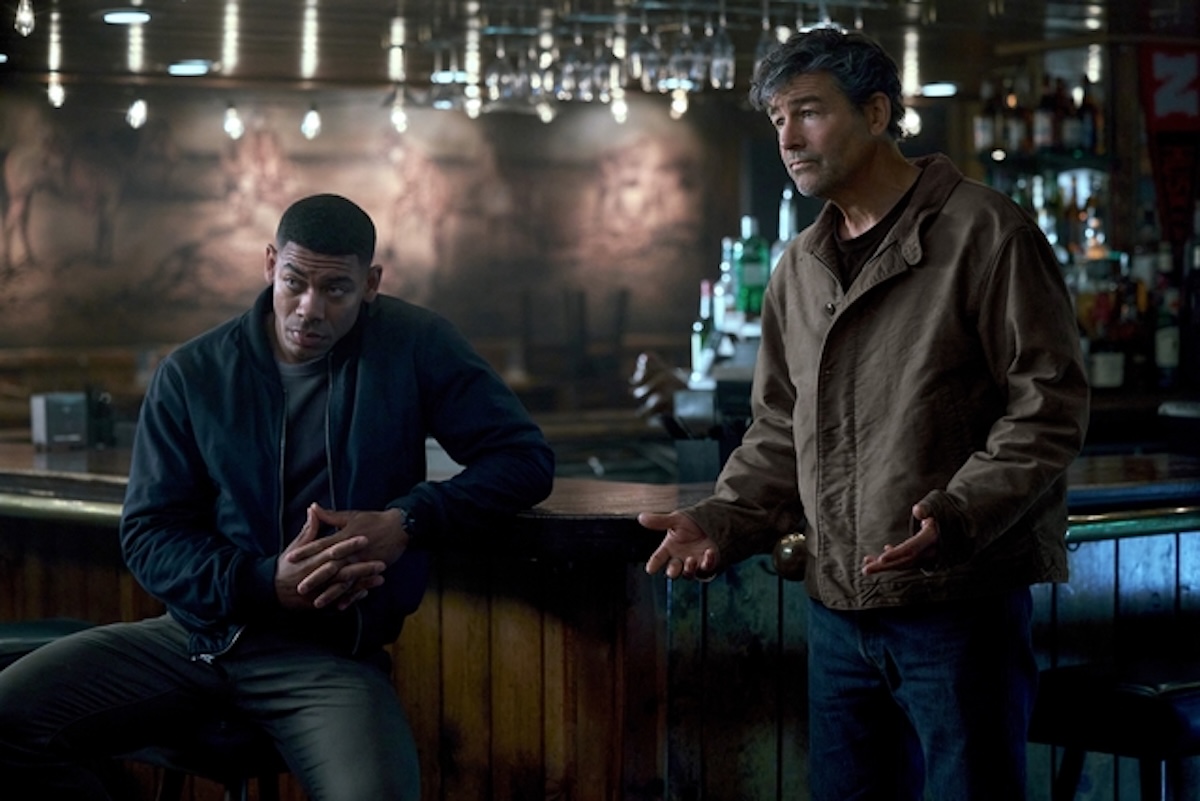
Damon Lindelof has done it again. He’s made the nerds mad. This time, it’s not because Lost ended in purgatory or because he remixed Watchmen or because of, well, everything in Prometheus. It’s because he said that Green Lantern was a stupid name. Those comments would have irritated Green Lantern fans regardless, but it especially stung because Lindelof is co-creator, along with Chris Mundy and fellow controversy-magnet Tom King, of the HBO Max series Lanterns. The comments drew the ire of many, not least of which was Grant Morrison, who took to their Substack to decry this “jockish dismissal of superhero conventions.”
Lindelof has already issued a mea culpa on his Instagram, admitting his comments were a joke on a comedy podcast and assuring everyone that he’s a huge fan of Hal Jordan. But here’s the thing: he was right. And here’s the other thing: Morrison’s right, too. Superheroes are inherently silly, and that silliness will only be magnified when trying to appeal to larger audiences.
In Comic Book Day…
Here’s the Green Lantern concept in a nutshell:
Millenia ago, an alien from the planet Maltus introduced evil into reality by witnessing the dawn of creation. To right this wrong, a subset of Maltusians designated themselves the Guardians of the Universe, tried and failed various ways of doing good before finally establishing the Green Lantern Corps. Members of the Green Lantern Corps, chosen for their honesty and bravery, are equipped with a lantern-shaped power battery and a ring, which they must recharge on the battery every solar cycle (read: 24 hours). The rings allow them to create whatever they can will, but initially and sometimes still do not work on anything yellow.
Of the 3600 space sectors patrolled by the Corps, Earth is in Sector 2814, where it is primarily guarded by Hal Jordan, but also by Guy Gardner, John Stewart, and a whole lot of other humans. The main bad guy looks like the Devil and/or David Niven and is called Sinestro. Other Lanterns include a squirrel, a mathematical equation, and a cannibal. Also, Hal Jordan went crazy one time and committed cosmic genocide, he dated a 13-year-old for a while, and, worst of all, was once played by Ryan Reynolds in a movie.
That’s a lot to swallow, at least for anyone not all the way bought in. But comic book fans are mostly bought in (Garth Ennis, who came up with the character “Dogwelder” as a bet to make a name dumber than Green Lantern, doesn’t count because he hates all superheroes who aren’t Superman). While the Green Lantern series struggled in sales from the 60s through the 80s, becoming a backup in The Flash for a while and later becoming a book co-led by Green Arrow, it has been a consistent favorite with multiple spin-offs since 1990. Green Lantern is a foundational concept in the DC Universe, something no respectable adaptation of the universe can go without.
In Mainstream Light…
But for everyone else, Green Lantern is a bit of a tough sell. Sure, mass audiences can accept that getting exposed to radiation gives you spider-powers or the ability to turn into a green monster instead of cancer, and sure, we can accept that an alien with nearly unlimited power would care for other people because he was raised in Kansas, but all of those properties have long existed in the wider imagination. They’re baked into our pop culture. Outside of the hippy song “Sunshine Superman” and Justice League cartoons, Green Lantern can’t say the same.
Thus, the team behind Lanterns is faced with an unenviable dilemma. How can they take a concept that has resonated with so many comic book fans for so long and make it appeal to mass audiences, audiences who don’t want to pour through dense lore in order to understand the main story?
Lanterns appears to be borrowing a page from other adaptations, hiring good-looking and well-known stars to play the part, and—as the MCU taught us—keeping those handsome mugs as unobscured as possible. But it also appears to be going even further, stripping all things green from the costumes, settings, and even the title.
No Weirdness Will Be in Sight
Whether or not it will work remains to be seen, but the whole Lanterns debacle underscores a truth that comic book fans must face. Our favorite hobby is weird. Our favorite characters are weird. And in many cases, that weirdness is exactly what we love about them.
However, weirdness is, by definition, outside of the mainstream. So we’re left with two options. We can take a lot of the weirdness out to make the concept appeal to larger audiences, which is what Lanterns appears to be doing. But what are we left with? Green Lantern fans are clearly irritated that, besides the cocky twinkle in Kyle Chandler’s eye and the seriousness brought by Aaron Pierre, the show seems to have nothing to do with the Hal Jordan and John Stewart they love.
The other option is to do what most people running DC adaptations have done: ignore Green Lantern. Stick to concepts that better match established tropes, and don’t even try to mess with the space police.
We cannot say if either option is better than the other. But if the James Gunn DCU, which just gave us a Superman who says “What the hey?” after being healed by his robots and which made an A-lister out of Peacemaker, cannot do it, then maybe no one can. And no amount of jokes or apologies from Damon Lindelof will change that.
Lanterns comes to HBO Max in 2026.
The post Green Lantern: The Damon Lindelof and Grant Morrison Dispute Reveals the Problem With Comic Book Adaptations appeared first on Den of Geek.