By
By 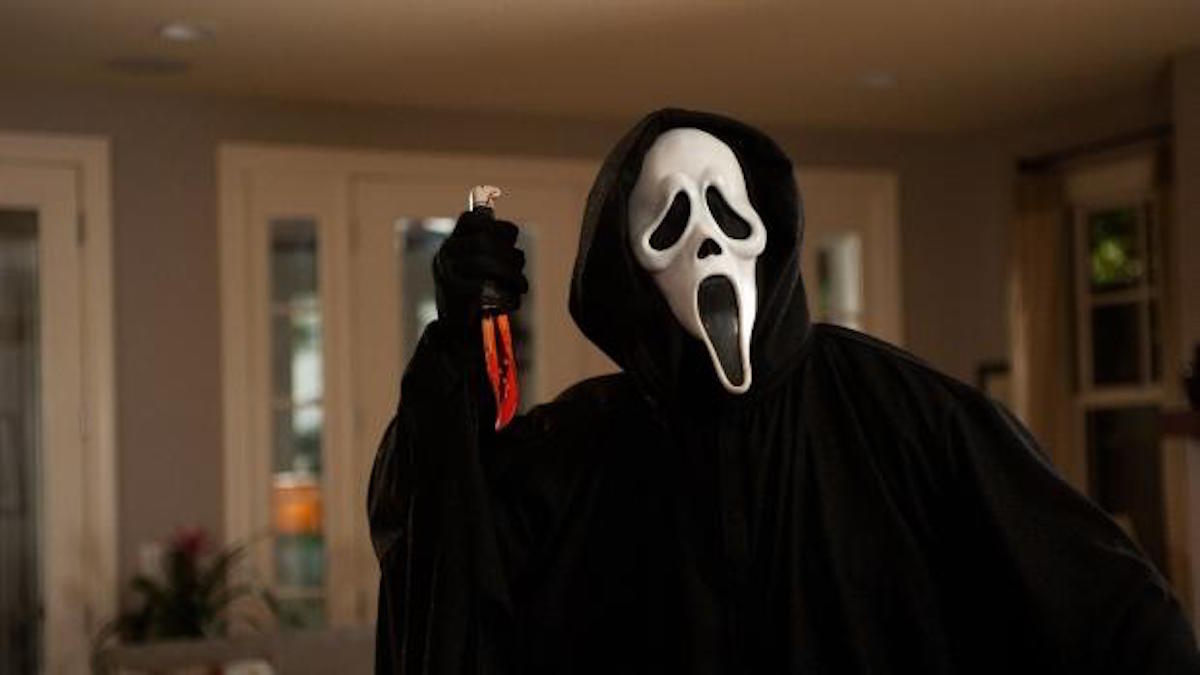
Every year, as spooky season sets in, people go looking for scary movies to watch. For cinema fans, this is a golden opportunity, a chance to get your movie-agnostic friends to actually sit through something with subtitles or a film in black and white, so we rush to recommend oddities like Carnival of Souls or Tokyo Gore Police. But sometimes, our friends don’t want deep cuts or hidden gems. Sometimes, they just want good ol’, meat-and-potatoes horror.
And horror doesn’t get more basic than with the slasher. The pleasure of the slasher movie comes in its simplicity: we’ve got a killer with a knife or some other sharp instrument, and they’re going to chase around a bunch of dumb teens or adults. The plots are easy to follow, the kill scenes clearly staged, and they almost always deliver on something to scream about. But that doesn’t mean that all slashers are the same. In fact, you might even say that these 10 entries are a cut above the rest.
Psycho (1960)
It all starts with Hitchcock. Despite what some might think today, Alfred Hitchcock was more interested in secrets and tension, not outright horror. Films such as Strangers on a Train and South by Southwest certainly dealt with murder, desire, and terror, but they rarely appeared literally on screen, instead sublimated through stories about double-crosses and normal people getting swept up in conspiracies. All of that is part of what made Psycho so remarkable, that Hitchcock devoted his massive talent to a nasty little movie about a mentally-disturbed killer.
Shot in black and white to offset expenses for studios shy of the lurid subject matter, Psycho set the standard that giallo (Italian murder mysteries) and slashers would later follow. Psycho gave us a mentally-disturbed killer who couldn’t get past an event from his past. Psycho gave us the sexual energy that would be central to so many slashers, opening with unmarried Janet Leigh and John Gavin dressing after a tryst. And Psycho, of course, gave us a killer who uses a knife to slash at victims.
The Texas Chainsaw Massacre (1974)
In its very first minutes, The Texas Chainsaw Massacre takes pains to establish itself as a true story. With photography flashes popping and voice-over from an uncredited John Larroquette promising that we’re about to see a true story, director Tobe Hooper and his co-writer Kim Henkel promise that we’re going to see something stomach-churning, shocking, and utterly real.
Well, two out of three ain’t bad. The story of hippie teens who foolishly investigate a house that belongs to the cannibal Sawyer family does certainly have its shocking and stomach-churning moments. Even if fast-editing keeps us from actually witnessing the hooks and saws entering bodies (fun fact: the irritating Franklin, played by Paul A. Partain, is the only person actually killed by a chainsaw in The Texas Chainsaw Massacre), we certainly feel like we’re witnessing something unholy on screen. So visceral are the shocks that it takes several rewatches to realize just how funny the movie is, with its ridiculous family shenanigans and Leatherface’s (Gunnar Hansen) final frustrated dance.
Halloween (1978)
If Debra Hill had never given her then-boyfriend John Carpenter a script she’d written called The Babysitter Murders, then this list would not exist. Obviously, Psycho, Peeping Tom, Black Christmas, and a host of gialli would still have happened. But it took Halloween—or, more accurately, the gobs of box office money that Halloween made from a low budget—to make the slasher into a proper subgenre.
Given the low quality (complimentary) of so many of the slashers that followed, we sometimes forget just how technically excellent Halloween is. Carpenter has never been so precise with his camera movements, especially the POV shots that make us feel as if we’re truly watching through Michael Meyers’s emotionless black eyes. Further, Carpenter has an ideal cast to work with, including Jamie Lee Curtis as the perfect good girl turned final girl and Donald Pleasence at just the right manic pitch to play the driven Dr. Loomis.
My Bloody Valentine (1981)
With Psycho and Halloween, and even The Texas Chainsaw Massacre, this list has mostly focused on high-quality, well-made films. But most slashers are utter trash, and we love them all the more for it. The ideal slasher has a killer with a gimmick, a group of distinctive victims, and lots of inventive kill sequences. Everything else is just details.
The Canadian slasher My Bloody Valentine, directed by George Mihalka from a screenplay by John Beaird, delivers on all three of those requirements with perfection. Set in a small mining town, 20 years after an accident claimed the life of laborer Harry Warden, My Bloody Valentine sees a killer wearing a gas mask and carrying a pic-axe start slaughtering citizens in the lead-up to the annual Valentine’s Day Dance. The killer, who may or may not be Harry Warden back from the dead, tears out the hearts of his victims and sends them as Valentine presents, at least when he’s not shoving elderly women into industrial-strength clothes dryers. It’s that type of nastiness that makes My Bloody Valentine stand out in a glut of masked-killer movies.
Sleepaway Camp (1983)
As the excellent Teenage Sex and Death at Camp Miasma reminds us, slashers have a long history of, let’s call it, problematic gender politics. Even though Psycho grinds to a halt to tell us that Norman Bates isn’t trans, imitators too often equated gender dysphoria with psychosis. Yet, rarely did they do so with the same enthusiasm as Sleepaway Camp, which ends by revealing that the killer Angela is actually a boy by showing a naked young man wearing a mask of Angela’s actor Felissa Rose.
That unhinged excess not only pushes Sleepaway Camp beyond any moral boundaries and places it among the best slashers ever made. Written and directed by Robert Hiltzik, Sleepaway Camp feels like a movie made by aliens who only learned about humanity by watching other slashers. Nothing in the story makes sense, from the gender-swapping origin to the teeny-tiny shorts worn by the campers to the adult staff openly leering at kids. However, each kill is so inventive (you’ll never look at a curling iron in the same way), and the special effects are so effective, that Sleepaway Camp can only be enjoyed on its own inexplicable terms.
Friday the 13th: The Final Chapter (1984)
Friday the 13th was initially the most successful of the Halloween rip-offs, as director Sean S. Cunningham only hired Victor Miller to write a script about a holiday-based killing spree after he saw the returns on John Carpenter’s movie. Yet, it took three whole films for the franchise to figure out what it was, with Jason Voorhees not even getting his distinctive hockey mask until halfway through the third entry. Once it establishes its identity, Friday the 13th achieved slasher greatness with its fourth film, The Final Chapter, written by Barney Cohen and directed by Joseph Zito.
The Final Chapter is more lean and efficient than any other film in the franchise. It does not bother with a whodunnit or any homages, instead focusing on single mom Tracy Jarvis (Joan Freeman) who brings her daughter Trish (Kimberly Beck) and precious, special-effects wizard son Tommy (Corey Feldman) to a cabin at Crystal Lake. At the same time, a group of teens visit, including Crispin Glover at his most unnerving, unwittingly summoning Jason. What follows is a masterpiece of kills and gore, culminating with a climax that operates as a love-letter to special effects master Tom Savini.
A Nightmare on Elm Street (1984)
By 1984, the slasher had only been around for about six years, but the subgenre was already in desperate need of innovation. Enter Wes Craven, who started out by reinterpreting Ingmar Bergman’s The Virgin Spring through a slasher lens for his 1972 debut, The Last House on the Left. Inspired by a news clip about a man who died because he refused to go to sleep, Craven came up with a new kind of slasher, a killer who haunts victims in their dreams.
Played with delicious cruelty by Robert Englund, Freddy Krueger wasn’t like other slasher killers, a victim of a prank gone wrong or some other mishap. Killed by the parents of children he murdered, an act of vigilante justice, Freddy returns to prey on their teens. The supernatural trappings allow for more imaginative set-pieces—best of all, Tina’s (Amanda Wyss) bloody end while being dragged onto the ceiling—and a compelling final girl in Nancy Thompson (Heather Langenkamp). By introducing dream logic, A Nightmare on Elm Street broke the rules of the slasher and gave the subgenre a whole new life.
Slumber Party Massacre II (1987)
If A Nightmare on Elm Street advanced the slasher by creating new killers and scenarios, the Slumber Party Massacre franchise found new ground by deconstructing the tropes, specifically in terms of gender. Each of the three films in the trilogy explore the dynamics between the killer and the final girl, drawing attention to the way that the movies punish women for embracing any of their desires. Moreover, each of the entries does this unpacking without forgetting to be a solid horror movie, especially Slumber Party Massacre II, written and directed by Deborah Brock.
Slumber Party Massacre II sticks to the basic slasher sequel plot. After surviving the events of the first movie, Courtney Bates (Crystal Bernard) tries to celebrate her senior year of high school by hosting a party for her closest friends and their boyfriends. But the revelry gets interrupted by the appearance of a supernatural rockabilly guitarist called the Driller Killer (Atanas Ilitch, brother of a true horror for Detroit sports fans, Chris Ilitch). As expected, the Driller Killer starts murdering the party-goers, usually by stabbing them with his drill-tipped guitar. But Brock lets the kill scenes go on a little too long, lets the Driller Killer vamp for the camera with a little too much glee, forcing the audience to feel the discomfort of the events on screen.
Scream (1996)
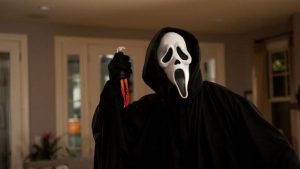
A Nightmare on Elm Street may have reinvigorated slashers in 1984. But by the mid-’90s, even that franchise had devolved into obvious self-parody. So leave it Wes Craven to come in and save the subgenre again with the groundbreaking Scream. Directed by Craven and written by Kevin Williamson, Scream knows that slasher tropes have become obvious, and uses the audience’s knowledge against them for a movie that’s always scary, no matter how much it winks at the camera.
Neve Campbell stars as Sidney Prescott, a teen trying to move on with her life in Woodsboro, California, after the murder of her actress mother, Maureen. But when a killer known as Ghostface starts murdering her friends, and doing so while referencing slashers of the past, Sydney must try to break the script to stay alive. For as much as Scream is renowned for its self-referential qualities, particularly when Randy Meeks (Jamie Kennedy) proclaims the rules of slashers for his friends and the audience, Craven never forgets to make an actually scary movie, proving that slashers can be smart and fun at the same time.
The Strangers (2008)
As this list shows, the best slashers work by being fast, cheap, and mean. The quicker they can deliver their tasteless shocks, the better. Yet, with 2008’s The Strangers, writer and director Bryan Bertino finds that slowing things down can be even scarier. Of course, The Strangers has to move slowly because it really only has two characters to terrorize, lovers James (Scott Speedman) and Kristen (Liv Tyler). Returning to his secluded childhood home after some friends’ wedding, James had hoped that he and Kristen would spend a romantic evening together, assuming that she would accept his proposal of marriage.
But as their awkward energy makes immediately clear, Kristen has turned down the proposal, forcing the two to ask some tough questions that they’d rather avoid. And avoid them they will, because their attempt to get through the night gets interrupted by frequent knocks on the door, strangers asking for “Tamara.” Eventually, these strangers don masks and make their way into the house, quietly playing mental games on the pair until they start the physical torture. The Strangers has easily the lowest body count of the movies on this list, but it proves that slashers can be terrifying, even without a lot of slashing involved.
The post The 10 Best Slasher Movies Ever Made appeared first on Den of Geek.