By
By 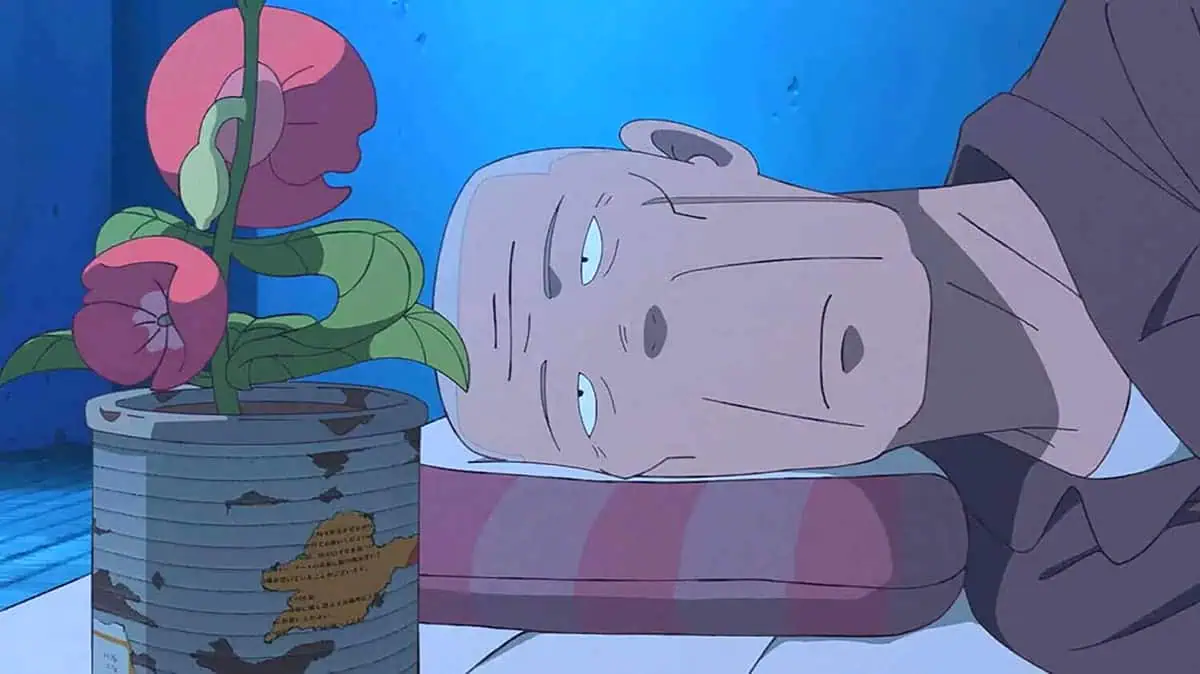
PLOT: Former yakuza Akutsu is serving life in prison after a middling career in the underworld. On the night he lies dying in his cell, he reminisces with his only companion, a smart-mouthed flower growing out of a can, about the choices that brought him here, the woman he loved, and a child he would give everything to protect.
REVIEW: Sometimes, people who spend a portion of their lives causing pain will give anything to walk away. They pine for a quiet life among loved ones, or with no one at all, watching the sun rise and set on the days they have left to contemplate their actions. When Akutsu invites Nana, a pregnant woman he met at a local bar who needs help, into his home, his life takes on a new meaning. Together, Akutsu and Nana share meals, polite conversation, and separate beds. Akutsu loves Nana, but refuses to tell her, because the life of someone married to a yakuza, even one in hiding, is no life at all.
When most people think about anime, they envision loud characters with big personalities, sarcastic talking stuffies, and world-ending displays of power. They forget that anime can be muted, dramatic, and emotional in ways that leave you feeling wistful and warm. Baku Kinoshita’s The Last Blossom is the type of film that asks you to be honest with yourself about things you’re not proud of. If you’re able, the film wants you to think about life’s greatest joys and losses, then contemplate what you could have done if given the chance to go back and right your most egregious wrongs. Sometimes, the honest answer is that you wouldn’t change much, because your actions meant the world to someone else, and in the end, that’s all that truly matters.
Kaoru Kobayashi/Junki Tozuka (Akutsu) and Hikari Mitsushima/Yoshiko Miyazaki (Nana) bring an incredible amount of emotional depth to The Last Blossom. Their performances are powerful, affecting, and sincere in equal parts. I could feel Akutsu’s love for Nana deepening with every evening they shared, and Nana’s impatience as she waited to hear Akutsu whisper the words she longed to hear. They’re like two ships passing in the night, with Nana’s son, Kensuke, as the anchor that binds them together.
When Kensuke falls ill and needs expensive surgery to survive, Akutsu decides to step up and help save the light of Nana’s life. Unfortunately, Akutsu’s plan is a dangerous one, and in his time as a yakuza, he knows that trust is fragile, and if anything can go wrong, it usually does. The act that lands Akutsu in jail feels like a violent shove in an otherwise serene and somewhat cozy crime drama, adding spice to an already potent serving of heartache.
Beyond Akutsu’s chemistry with Nana is his relationship with a foul-mouthed balsam flower that keeps him company as he dies in his jail cell. Thanks to the flower’s ability to regrow, it’s survived for decades while watching the drama between Akutsu and Nana play out. Almost like a mushroom’s mycelium network, the flower taps into other parts of the world, following its friends through good times and bad. When Akutsu confesses to the flower, it listens, but also bestows harsh truths and hopes upon his dying friend like an empathetic harbinger of death.
Ultimately, The Last Blossom is a quiet meditation on found family, regret, and redemption. The film trades fast-paced bombast for a touching tale about repenting for a life of violence by trading one life for another. Akutsu’s sacrifice is one of several factors that make him a noble figure. If only he could have opened his heart and made better decisions before going to extremes to let the people he loved know the true depths of his affection.
The post The Last Blossom Review: Love and Penance in the Shadow of the Yakuza appeared first on JoBlo.