By
By 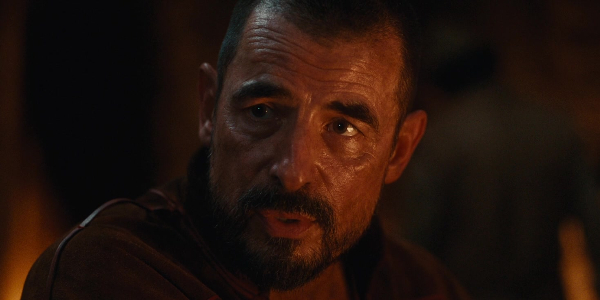
You probably know the story of William Tell, the archer who shot an apple off his son’s head. That Swiss folk story got the big-screen treatment back in 2024, and it’s a massive European co-production with an all-star cast and written by someone who watched way too much Game of Thrones. (Take a shot every time someone says “bend the knee” and you’ll be in an ambulance before the credits roll.)
William Tell’s story is an anti-authoritarian narrative of peasant revolt against the Holy Roman Empire in the early 14th century. If you’ve ever wondered why there are so few film versions of the story, all you need to do is read his Wikipedia page, which is so dense with historical context that one might need a degree in Swiss history to even understand it. But the general idea is that the peasants hated their Austrian rulers in the House of Habsburg, who drove them into poverty, and inspired by the heroics of William Tell, some of the aggrieved communities formed a confederacy that would become the foundation of modern Switzerland.
“William Tell” (2025) – source: Samuel Goldwyn Films
William Tell, The Swiss Samurai
Based specifically on Friedrich Schiller’s source play from 1804, this big-screen version of the legend plays like a samurai epic in the Swiss Alps. Claes Bang plays William Tell as a huntsman and former Crusade fighter unwittingly conscripted into a revolution. The unexpectedly busy plot shoots across many locations and core characters, suggesting that the story might have made a better TV series than a film, but it begins with a guy stabbing an Austrian tax collector to death in a bathtub and snowballs into a horseback escape and an epic crossing of Lake Lucerne, all before the end of the first reel.
With the tax collector dead, the insulted Austrians install a ruthless commander to bring the region to heel and punish those responsible: Albrecht Gessler (Connor Swindells). The Joker to William Tell’s Batman, Gessler immediately sets about terrorizing the canton of Schwyz trying to find the traitors. It eventually leads to the fateful apple shot, where Gessler forces Tell to shoot an apple from his son’s head or be imprisoned.
“William Tell” (2025) – source: Samuel Goldwyn Films
At the same time, the B-story concerns Bertha (Ellie Bamber), a noblewoman who is pledged to Gessler but ends up joining the resistance against him. We also regularly check in with Rudenz (Jonah Hauer-King), heir to the Swiss House of Attinghausen, as he too sides with the revolutionaries.
So stuffed to the gills is William Tell that the crossbowman often sinks into the background of his own story. Claes Bang cuts a formidable figure as the folk hero, but the script doesn’t really care about him. Instead, we get four main characters, each the star of their own historical drama, each one giving “Channel 4 costume drama” vibes. The script doesn’t have the good sense to stick to the simple stuff that works, instead trying to spin this folk story into a historical epic with nonstop political intrigue and shock character deaths. Every scene set in court feels like useless wheel-spinning, interesting only to a specific Swiss audience interested in seeing events from 700 years ago captured faithfully on the screen, and they speak to director Nick Hamm’s inability to marry the tale of William Tell with any meaningful 21st-century substance.
“William Tell” (2025) – source: Samuel Goldwyn Films
Camerawork is handsome but only just — shots often rove around the scenery, showing off the immense budget and the authentic location shooting, but they lack purpose and artistry. The Switzerland scenery is beautiful, sure, and the whole production looks fantastic — aside from some poorly integrated CG backgrounds, the production design superbly captures all the historical period details you could hope for from a William Tell film, albeit without the specificity or design philosophy that makes the work of filmmakers like Robert Eggers so compelling.
Impressively Bad Editing
Director Nick Hamm, a man equally known for low-budget dramas as stage plays and British prestige TV, and his cinematographer, Jamie D. Ramsay, are clearly more comfortable shooting for television than for the cinema, as shots often have shoddy composition and little to no narrative drive. It’s all so pedestrian. William Tell sits at a table and drinks ale? Fine, we’ll do it as a wide shot so we can see everyone. A man is stabbed to death in a bath? Sure, let’s do an overhead shot so we can see the knife plunge into him, but then let’s intercut 12 different shots as the two men wrestle in the tub. It doesn’t help matters that every third shot is perfectly perfunctory — William Tell cuts around the way that television does, so desperate to hold your attention that it forgets to also tell a satisfying and compelling story at the same time.
“William Tell” (2025) – source: Samuel Goldwyn Films
The editing throughout William Tell is flat-out incorrect to an impressive degree — most shots are either too short or too long, scenes are intercut with little rhyme or reason, and the action scenes are some of the least compelling since Arnold Schwarzenegger spent the 1980s mowing down anonymous goons. The good habits that helped editor Yan Miles in his work on Sherlock and The Crown turn sour and chunky when applied to film, and in William Tell, he regularly intercuts several scenes in different locations with little rhyme or reason, sacrificing emotional logic for storytelling efficiency.
Action scenes chug by in a flurry of ill-timed cuts. Action editing is particularly challenging, since if you cut a shot too short, you miss the impact of a hit, but if you let it go for too long, the milliseconds after a stunt is performed risk giving the game away. It’s obvious when a stab or a kick didn’t really make contact with an Austrian soldier, for instance, just as the audience will feel robbed of satisfaction if you cut away the instant we see a dude impaled on a sword.
“William Tell” (2025) – source: Samuel Goldwyn Films
Most curiously of all, the film edits around Claes Bang’s performance wherever it can. Even in the scenes where William Tell is front and center, Hamm and Miles cut to other characters constantly, undermining Tell’s agency and primacy in his own story so that we can get reaction shots of whoever else happens to be around. As a result, we watch Tell’s life unfold for two hours but can hardly describe his character or psychology.
Bang suffers through a dreadful, rote script that gives him little to do besides kill, grunt, and smolder. One late scene in which he’s meant to be giving an incendiary revolutionary speech only underlines this hollow portrayal: Bang clumsily traipses through his delivery, emphasizing words seemingly at random as though he’s been handed the lines the morning of and is still chewing on them. He drops his voice to a hoarse whisper for the most important lines, despite addressing a crowd of around 30 people outdoors. Did everyone in the back hear him say that they’re all probably gonna die? In the right hands, Bang is a phenomenal craftsperson, effortlessly able to convey cruel menace in films like Robert Eggers’ The Northman. Here, however, he’s utterly lost.
Give Connor Swindells An Award Or Something
Thankfully, Bang’s costars are far more watchable. The edit seems particularly enamored with the villains, namely the enforcer Stussi (Jake Dunn) and Swindells’ wonderfully hateable Gessler, and it’s easy to see why. Sporting snow-white hair and full, sky-blue eyes, Dunn is a loathable henchman, the perfect mutt to accompany Gessler on his reign of terror.
Swindells is the real star attraction here, though, channeling a mix of cockiness, sadism, treachery, and lechery that would make his Barbie character run and hide in a bush. Whether he’s in a banquet hall or a tent on the hills, Swindells makes a meal of the scenery every chance he gets. Even when he’s nonverbal — usually grunting, seething, or roaring in frustration — his remarkable performance suggests that Gessler’s attempts to bring the Swiss to heel are part of some kind of masculine domination ritual for him and that Tell’s interference in Gessler’s plans is not just a challenge to Austrian rule, but a challenge to Gessler’s manhood itself. It’s all part of a larger-than-life performance that understands that every hero narrative is only as compelling as its villain.
“William Tell” (2025) – source: Samuel Goldwyn Films
Rafe Spall and Amar Chadha-Patel are endearing presences as two of Tell’s chief co-conspirators, giving sturdy and charismatic performances in a film where most of the supporting cast seem to have been chosen at random by spinning the Wheel of Hollywood B-Listers. Golshifteh Farahani plays Tell’s wife, delivering some rousing but perfunctory speeches and doing little else relevant to the plot. Her Palestinian backstory might be interesting in the hands of a filmmaker who knows what to do with it, but here she mostly just stares in horror at the crimes of the Austrian tyrants and occasionally gives a big speech to bring the men-folk in line. Ben Kingsley is here too, playing the one-eyed Albert of Habsburg as an Emperor Sidious type who pulls the strings from afar. Jonathan Pryce collects a paycheck, God bless him, as Attinghausen, who says a few portentous lines before dropping dead.
Some Brief Notes on Historical Accuracy
For a movie in which a dude is stabbed in the balls in a bathtub, William Tell also seems to put a lot of cache in its historical accuracy, which makes it all the more damning when it gets stuff wrong. I don’t mean to be pedantic here, but the story goes to a dozen different towns and villages and yet is supposed to take place over the course of only three days. And there’s a dramatic flashback where a crossbow bolt fired from 2 meters away pierces chainmail TWICE, going clean through a Templar soldier, so I guess we’re just not really supposed to be paying attention to any kind of realism.
“William Tell” (2025) – source: Samuel Goldwyn Films
As long as we’re picking faults with the historical accuracy, the sigil shown constantly throughout the film is an eagle against a yellow background, which is the symbol of Germany during the Holy Roman Empire but not the double-headed eagle of the House of Habsburg, the chief villains of William Tell, so I’m a little confused why they didn’t just go with the double-headed eagle. And for a period film set in the 14th century, there are lots of characters wearing red-dyed clothing, which would have been inordinately expensive and far out of reach for a Swiss peasant in that time.
The inconsistencies unfortunately evince a production that bit off more than it could chew. Maybe it could have been a good adaptation of the William Tell story, and maybe it could have been a good historical epic about the peasant revolt under Habsburg rule, but doing both at the same time? And tacking on a ridiculous tease for a sequel? It’s all too much for any film to accomplish, let alone one with a $45 million budget that’s full of CG arrows and that struggles immensely to show anything on a grand scale. The aspirations of not just historical accuracy, but historical verisimilitude, show that William Tell is desperate to be taken seriously — which would be easier if one got the sense it had anything in it worth taking seriously.
Conclusion
William Tell is neither bold enough to be memorable nor bad enough to be an admirable failure. The few action scenes are dull and poorly edited, and the dialogue in the serious dramatic sections is as vacant and characterless as it is intensely earnest, without the slightest trace of self-awareness. The scene where William Tell shoots the apple from his son’s head is layered so thick with serious drama that you feel secondhand embarrassment for everyone involved.
Of course, there’s no actual historic record that William Tell ever existed. He’s a folk hero. A figure the Swiss invented to represent lofty ideas like resistance to tyranny and the rallying of the common people. The film uses Tell to reinforce the importance of community, of banding together with your fellow men and women to overthrow usurpers and fight for fair taxation and the right to not starve to death. The real William Tell, the film purports, is quite literally the friends we made along the way.
William Tell is now streaming on Hulu and available to rent on all major platforms.
Does content like this matter to you?
Become a Member and support film journalism. Unlock access to all of Film Inquiry`s great articles. Join a community of like-minded readers who are passionate about cinema – get access to our private members Network, give back to independent filmmakers, and more.