By
By 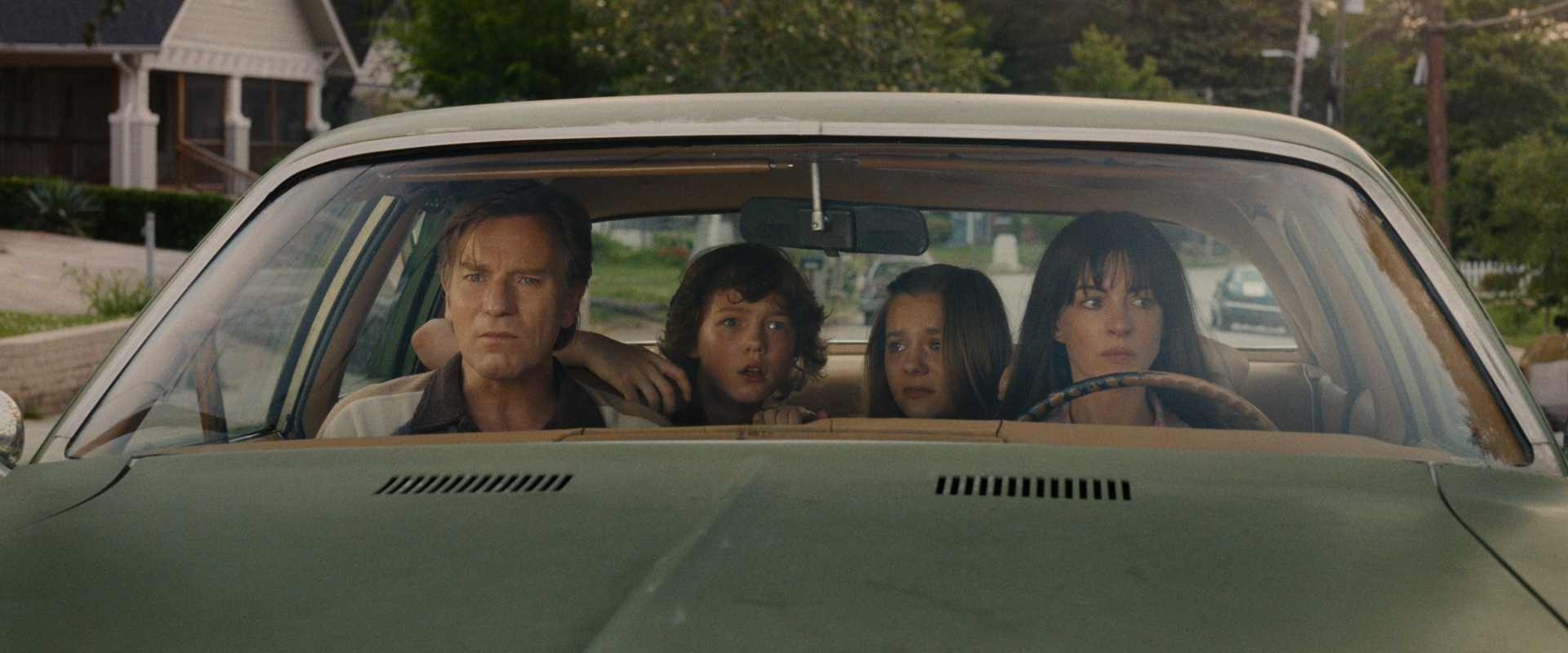
The End of Oak Street (2026)
Where goes the neighborhood.
There’s something wonderfully full-circle about David Robert Mitchell making a dinosaur adventure set in American suburbia. He began with the hazy teenage streets of The Myth of the American Sleepover (2010), turned those same kinds of neighborhoods into something quietly terrifying with It Follows (2014), then disappeared into the strange conspiratorial sprawl of Under the Silver Lake (2018). Now, eight years later, he has returned with his biggest production yet. Originally developed under the title Flowervale Street, The End of Oak Street takes Mitchell’s fascination with ordinary places and throws several million years of prehistoric trouble into the backyard. With J.J. Abrams producing, there’s also an unmistakable Spielberg/Amblin flavor running through it, one that sits comfortably alongside influences ranging from The Twilight Zone and Poltergeist (1982) to The Valley of Gwangi (1969) and M. Night Shyamalan’s Signs (2002). It’s an appealing mixture: suburban unease, family drama, science-fiction mystery and the kind of slightly dangerous adventure that once happily terrified children between mouthfuls of popcorn.
Set in 1982, the story centers on the Platts, a family whose picture-perfect suburban existence is already showing cracks. Denise (Anne Hathaway) spends her nights secretly writing a novel while questioning the life she has built. Her husband Greg (Ewan McGregor), meanwhile, has lost his job and is secretly delivering pizzas, too ashamed to tell Denise that he can no longer provide for the family as he once did. Their children, Audrey (Maisy Stella) and Brian (Christian Convery), are more aware of the tension than their parents realize. Then Oak Street starts behaving strangely. The temperature rises, unfamiliar vegetation appears, something enormous leaves an equally enormous deposit on a neighbor’s lawn, and a mysterious light hangs over the area. Before long, the Platts discover their neighborhood has somehow been displaced into a prehistoric world, and marital problems take a back seat to the considerably more pressing issue of not being eaten.
Mitchell, who also wrote the screenplay, really starts having fun with the premise once the dinosaurs arrive, breathing some much-needed new life into prehistoric creatures on the big screen. In fact, this is easily the best dinosaur outing since 2015’s Jurassic World. Part of that comes down to how willing Mitchell is to let these creatures be frightening again. There’s real tension here, some terrific shocks and a surprising amount of blood, with several attacks pushing the limits of the film’s PG-13 rating. It recalls an older kind of family entertainment, when the likes of Poltergeist scared the crap out of audiences and Gremlins (1984) took a gleefully nasty bite out of Christmas.
The film also has a refreshingly matter-of-fact approach to the dinos themselves. They aren’t majestic theme-park attractions waiting for somebody to gaze at them in awe; they’re animals. They hunt, eat, mate and relieve themselves. Yes, there is dinosaur poop. An extraordinary amount of it. There are dinosaurs shitting and, in one of the more unexpected additions to the genre, dinosaurs having sex. It’s funny without feeling like parody and strangely helps sell the idea that these are creatures existing in their own ecosystem rather than monsters that have arrived specifically to chase the cast.
They look fantastic too. Industrial Light & Magic handles the visual effects, and the creatures have a rougher, more naturalistic appearance than the familiar designs of the Jurassic series. Feathers are prominent, several species have a more avian quality to their movement and appearance, while scars, damaged skin and small physical imperfections stop them looking overly pristine. Mitchell and his team clearly wanted to embrace the increasingly bird-like understanding of dinosaurs rather than simply recreating the designs that have dominated screens since 1993. The result is familiar enough to immediately register, but different enough to give these creatures an identity of their own.
Nobody said surviving suburbia would be easy.
For all the spectacle, this still feels like a David Robert Mitchell picture. Suburbia has always been fertile ground for him. The Myth of the American Sleepover found mystery and possibility hiding in its streets, while It Follows made similar spaces feel unnervingly exposed, as though something could emerge at the far end of the road and simply keep walking towards you. Here, Mitchell takes that unease and blows it up to blockbuster scale. There is something inherently uncanny and frightening about seeing an enormous prehistoric animal moving past fences, driveways and split-level homes, and he understands how to exploit that clash.
Working again with cinematographer Michael Gioulakis, Mitchell gives the picture a strong visual identity rather than simply pointing the camera at expensive effects. There’s a real sense of unease to the way he frames suburbia, with dinosaurs disappearing behind fences and lurking around houses, particularly the smaller, feathered raptors that scurry about like oversized, extremely unfriendly birds. He even makes use of split-diopter photography during a conversation between the Platts, keeping foreground and background subjects simultaneously sharp. It’s a technique closely associated with Brian De Palma, whom Mitchell has cited as an influence.
The action is just as assured. Mitchell understands anticipation, geography and, most importantly, when to let an attack really explode. The encounters build rather than simply becoming walls of digital noise, with an earlier Spinosaurus sequence delivering one of the first major bursts of prehistoric chaos before the extended Allosaurus confrontation raises the stakes even further. Tense, physical and wonderfully frantic, it makes full use of the houses and surrounding streets before Anne Hathaway eventually gets to introduce the beast to a shotgun.
Oak Street’s new residents aren’t particularly friendly.
That leads into the only real issue. The final act asks the audience to accept a few developments that don’t hold up particularly well under scrutiny, leaving some fairly obvious plot holes behind. Yet those leaps also help Mitchell reach a strange but satisfying conclusion, one that feels very much in the spirit of Steven Spielberg’s 1980s anthology series Amazing Stories — more interested in wonder, emotion and a memorable final image than tying every piece of logic into a neat bow. Certain characters also make decisions that could generously be described as questionable. Then again, what exactly is the correct response when a dinosaur appears outside the house? People panic. People make dumb choices. Most would probably do considerably worse.
The emotional logic holds together even when the science-fiction logic gets wobbly. Mitchell is ultimately using the prehistoric trip to strip away the Platts’ carefully maintained suburban life. Denise is unhappy, Greg is ashamed of his failures, the children have their own secrets, and everybody has become stuck playing a version of themselves they think the others expect. Oak Street initially represents the comfortable American ideal — house, family, neighbors, stability — but that surface has been cracking long before the dinosaurs arrive. Survival forces them to stop maintaining appearances and actually deal with one another. It isn’t particularly subtle, but it doesn’t need to be. This is a story about a family on the verge of breaking apart, discovering that sticking together suddenly has very literal consequences.
The performances give that material more weight than expected. Anne Hathaway, who is having quite the year, is excellent as Denise. She gives the character enough frustration and sadness to make her dissatisfaction believable without turning her into somebody the audience dislikes, then shifts convincingly into protective survival mode once everything falls apart. Ewan McGregor is equally likeable as Greg, bringing warmth to a man desperately trying to pretend everything is under control. He’s funny without playing the character as an idiot and particularly good at letting Greg’s anxiety and mounting pressure show through. He also gets one particularly memorable moment involving a sledgehammer — a scene that earned applause at my screening.
The kids are alright. For now.
Maisy Stella and Christian Convery are both strong as the Platts’ kids, Audrey and Brian. Stella continues to impress after My Old Ass (2024), bringing an easy naturalism to Audrey, while Convery gives Brian an enjoyable mix of teenage bravado and sheer terror. They actually feel like siblings rather than two young characters dropped into the story simply to create extra peril. P.J. Byrne is also well cast as irritable neighbor Mel Jacobs, while the family dog, Starbuck, gets a memorable little scene of his own.
The End of Oak Street is bloody, tense, funny, occasionally shocking and enormously entertaining. More importantly, it has the heart that made those early Amblin adventures work, happily frightening kids while giving adults just as much to enjoy and still finding room for a genuine family story among the teeth, feathers and enormous piles of prehistoric shit. And, frankly, any picture that pauses long enough to let Steve Winwood’s ‘Valerie’ rip gets a few extra points in my book. After years of increasingly disappointing dinosaur blockbusters, this is exactly the jolt they needed. Oak Street may have reached its end, but dinosaurs have finally found a new way forward.
4 / 5 – Recommended
Reviewed by Dan Cachia (Mr. Movie)
The End of Oak Street is distributed by Warner Bros. Australia