By
By 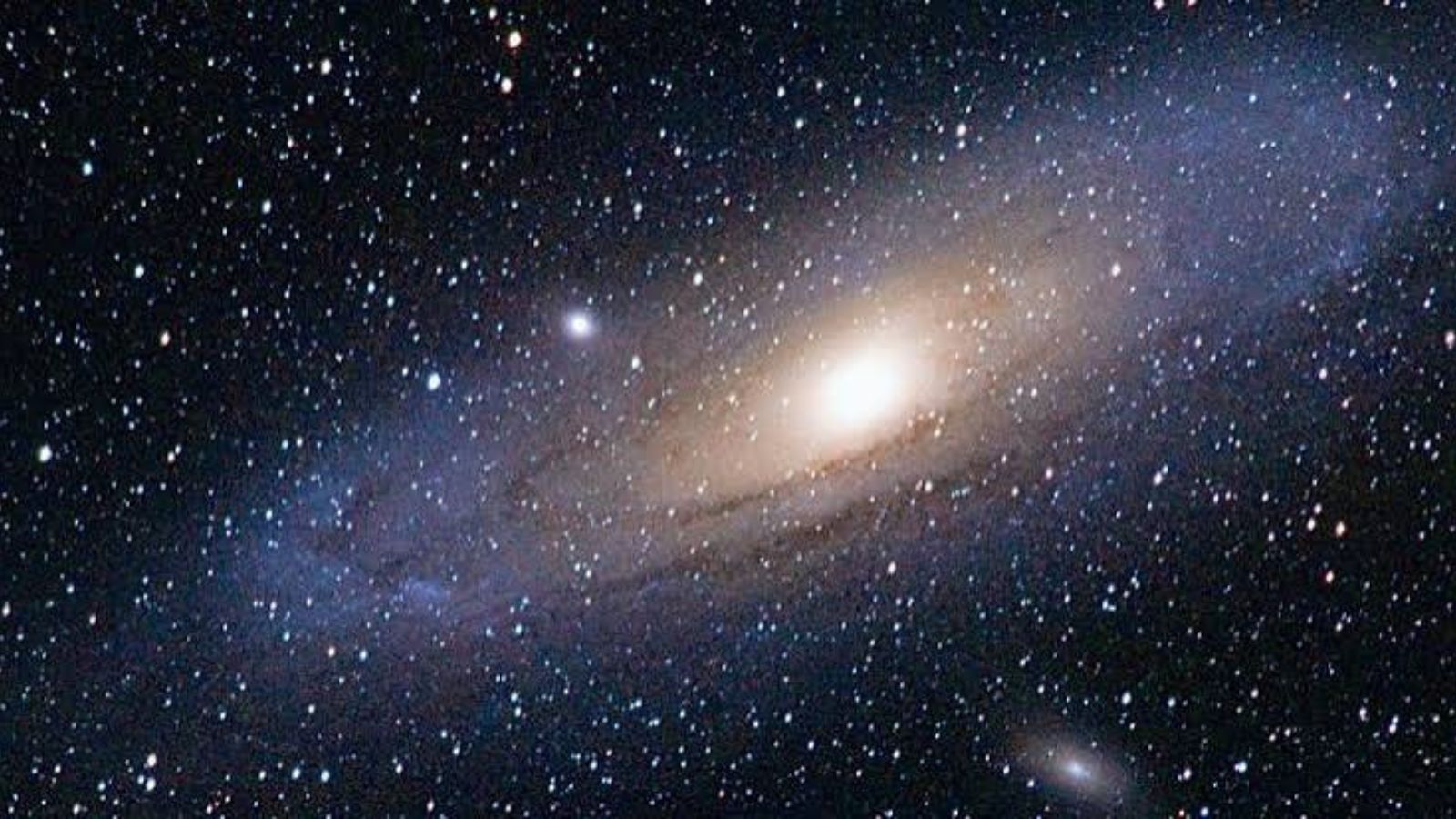
Space has a talent for making even the wildest science fiction ideas seem surprisingly reasonable. There are stars that behave in ways we can barely imagine, planets with bizarre weather, enormous objects that make Earth look microscopic, and phenomena that challenge our understanding of how the universe works. The best part is that these are not theories invented for a movie. They are real things that scientists have observed, measured, or have strong evidence for. If you enjoy the strange corners of astronomy, these facts offer a reminder that the universe is considerably weirder than anything Hollywood could invent.
Space
A Day on Venus Is Longer Than a Year
Venus takes about 243 Earth days to rotate once on its axis, but it only takes about 225 Earth days to orbit the Sun. That means a single Venusian day lasts longer than its entire trip around the Sun.
Space
There Is a Planet Where It May Rain Glass
Scientists believe the atmosphere of HD 189733b contains silicate particles that could condense into glass. With winds reaching thousands of miles per hour, the resulting sideways rain would make this distant world an especially unpleasant place to visit.
Neutron Stars Are Incredibly Dense
A neutron star packs an enormous amount of mass into an object only about the size of a city. A teaspoon of neutron star material would weigh billions of tons on Earth, illustrating just how extreme these stellar remnants really are.
ZME Science
There Is a Giant Water Reservoir in Space
Astronomers discovered an enormous cloud of water vapor surrounding a quasar roughly 12 billion light years away. The reservoir contains an estimated 140 trillion times as much water as all of Earth’s oceans combined.
Wikipedia
Saturn Could Float in Water
Saturn is mostly made of hydrogen and helium and has an average density lower than that of water. If an enormous enough bathtub existed, Saturn would theoretically float in it, although building the bathtub would be the difficult part.
Wikipedia
The Sun Contains Almost All the Mass in the Solar System
The Sun accounts for roughly 99.8 percent of the total mass of the Solar System. Everything else, including all eight planets, moons, asteroids, and comets, makes up only a tiny fraction of the remaining mass.
There Are More Stars Than Grains of Sand on Earth
Astronomers estimate that the observable universe contains hundreds of billions of galaxies, each with enormous numbers of stars. The resulting total is so vast that it exceeds the estimated number of grains of sand on all of Earth’s beaches.
WON
A Black Hole Can Bend Time
According to Einstein’s theory of general relativity, extremely strong gravity affects the passage of time. Near a black hole, an outside observer would see time passing differently for an object approaching the event horizon.
Wikipedia
Olympus Mons Is Almost Three Times as Tall as Everest
Mars is home to Olympus Mons, the largest known volcano in the Solar System. It rises roughly 22 kilometers above the surrounding plains, making Mount Everest look surprisingly modest by comparison.
Space
Space Is Not Completely Silent
Sound cannot travel through the vacuum of space because there is no atmosphere to carry the pressure waves. However, spacecraft and instruments can detect electromagnetic and plasma waves that scientists can convert into audio frequencies.
KENS 5
Uranus Rotates Almost on Its Side
Uranus has an axial tilt of roughly 98 degrees, meaning the planet essentially rotates with its side facing the Sun. This unusual orientation produces extreme seasonal changes that can last for decades.
Science
The Universe Is Getting Bigger
The universe has been expanding since the Big Bang, and distant galaxies are generally moving away from one another as space itself expands. The farther away a galaxy is, the faster it appears to be receding from us.
The post 12 Far Out Facts About Space, if You’re Into That Kind of Thing appeared first on Den of Geek.