By
By 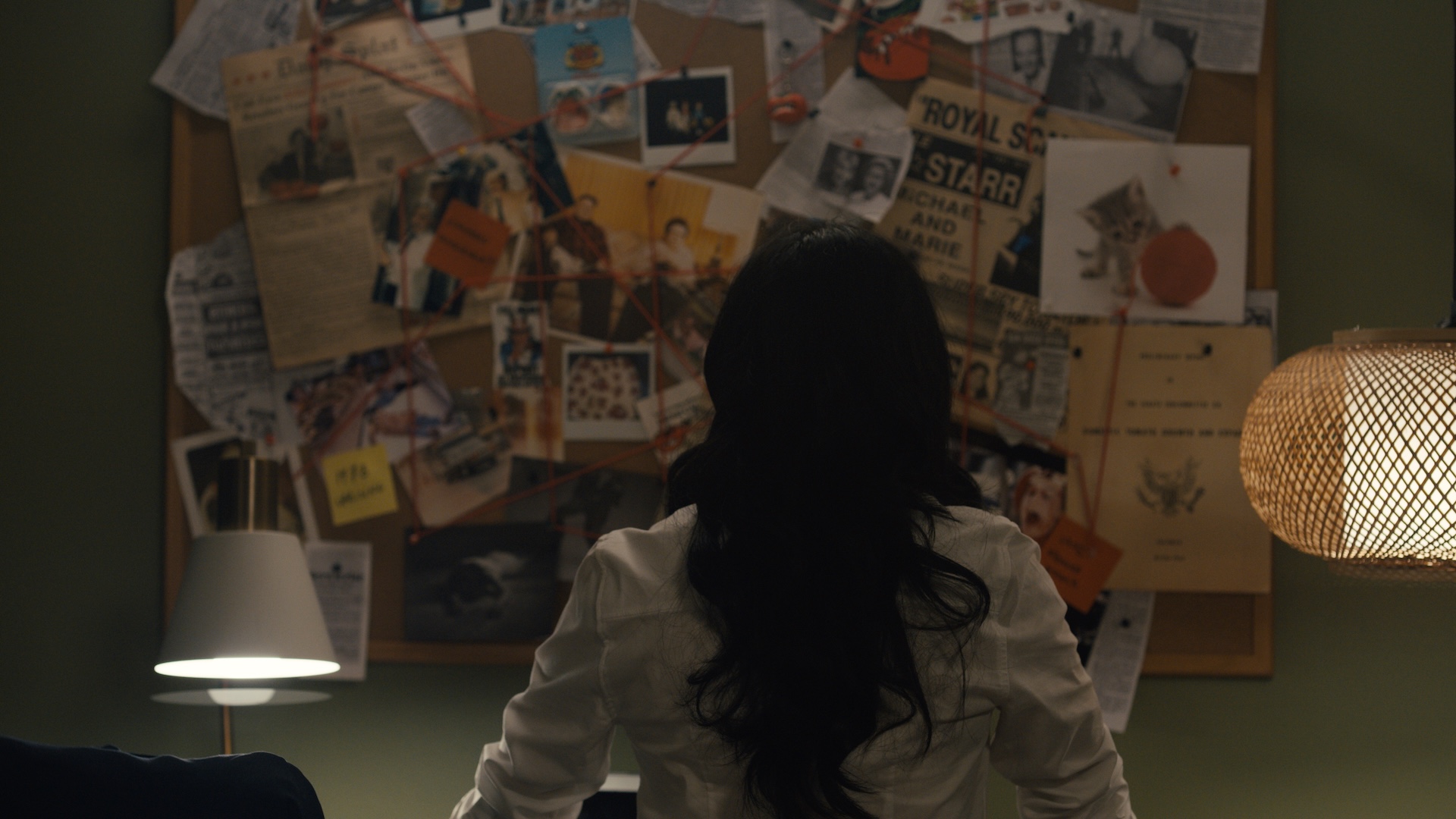
Those pesky killer tomatoes have been quiet for a while, but like many of our cult franchise faves, they were way overdue for a reboot! Enter this year’s Attack of the Killer Tomatoes: Organic Intelligence, a fifth film in the Killer Tomatoes series that follows a young biotech prodigy developing a revolutionary genetically engineered vegetable designed to solve humanity’s problems. Fortunately, for fans of the original 1978 movie and its sequels, the experiment spirals out of control, unleashing a new generation of killer tomatoes upon us.
We caught up with Organic Intelligence stars Dan Bakkedahl, Myrna Velasco, and Noor Razooky at San Diego Comic-Con and discovered that the killer tomato situation has grown much more serious than we realized…
Den of Geek: How did this project come to your doorstep, and what was your reaction? Was it like “oh, Attack of the Killer Tomatoes! I remember those!”
Dan Bakkedahl: Well, I was eight when the original film came out, and of course it was a taboo film. It wasn’t something you could go out and rent. You had to go find it, and as a little kid, you weren’t going to be able to, but it was kind of this forbidden fruit for my whole young life, and then I got a phone call a little over a year ago saying, “They’re doing another chapter of the story? Would you be interested? I said, “Absolutely,” because it was from my childhood. You know, it was something that I remember, and then finding out that it had all been true all along was really kind of the kicker for me when I read the script and realized, “oh, this is an attempt to expose the cover-up, to spread the truth about the dangers.” So I thought, “Well, I’ll take a shot.” I hope this doesn’t affect my career trying to get the truth out there, but do what you have to.
Myrna Velasco: You know, my whole life I’ve been hearing the grumblings of the Tomato movies as well. My parents were very learned vegetable people, if you will. Not people who are made of vegetables, but people who understand vegetables. My father was a gardener, and I grew up really knowing in the back of my mind that tomatoes are out there, and this role was really kind of thrust upon me. I got the first ask to present what I thought would have been the right way to encounter killer tomatoes as a federal vegetable investigator, and the process as an actor is you go through these auditions and callbacks and whatnot, and I was just told, “This is your job now. This is what you have to do. It is your calling.” So I just took on the mantle and am really trying to make it as clear as possible that these vegetables are out here, and it’s not safe.
Noor Razooky: I play Dr. Angela in the film. I am a marine biologist. I successfully grow tomatoes in salt water. I was essentially born to play this, considering my entire life, my physics teacher father would only show respect to math and science, so it seemed like that was the path I would have to take. I grew my first tomato at a very young age, through seed and soil, traditionally, and I would check on those tomato plants every single day in my childhood bedroom through the blinds.
I’d watch its progress until one day I heard the sound of gardeners, and a weed whacker engine was roaring and rumbling and shaking my house, and I thought, “Oh my God, something must have gone wrong.” So I went back to my blinds, and I checked through my childhood window, and my tomato plant had gone. Immediately, visceral reaction. My chest got tight, my fingers started to constrict, my heart rate went up, and I was like, “They have no idea what they have done. They have no idea the retaliation that will come after this chopping, this carnage that happened in my backyard.”
And so I thought to myself, “the safest way to continue growing tomatoes going forward is in the ocean, where there will be no gardeners chopping it down, I’ll have full control over them,” until we realized that these tomatoes are actually plotting and communicating through almost like a fungal mycelium network, and like Dan said earlier, the truth came to me a little bit later. I was in it for the science, not the conspiracy, until …you know, data doesn’t lie.
This is starting to sound like your classic The Last of Us situation. That’s very troubling, I would say. You’ve mentioned gardeners a couple of times. Where are they in the context of Attack of the Killer Tomatoes? Are they allies in the fight against the tomatoes, or willing collaborators with them?
Dan Bakkedahl: Look, from eight to 80, we need as many hands as we can get, you know. So, regardless of what you do for a living, it’s your fight too. This is the fight for humanity. I mean, I would imagine that a gardener is going to have a greater knowledge, but he may also have a greater sympathy for these creatures.
Noor Razooky: Unknowingly.
Dan Bakkedahl: Yeah, unknowingly, or you know, it might be a conscious bias. But look, the fact of the matter is, if you want to remain on this planet and you’re human, you’ve got to join the fight.
Noor Razooky: It’s us against them.
Chilling stuff. Noor, I don’t want to critique your character’s approach, but bringing tomatoes out into the ocean seems kind of counterproductive. Like, you just create hydroponic tomatoes? If anything, it feels like they’d be stronger.
Noor Razooky: I mean, essentially, but that brings us back to organic intelligence and the evolution of it. Organic intelligence is something we cannot control. It’s evolved over billions and billions of years through adapting to their environments. So, if these tomato plants are just being cut down by weed whackers, they will simply adapt, roll on into the ocean where there are no weed whackers, where they can immerse themselves in a different ecosystem. So you have to roll with the punches in that sense. AI is man-made, and that’s something we can control. We can unplug it if we want to. But organic intelligence, we cannot unplug it. We have to adapt. We have to become organic with them.
Okay, I think that all makes perfect sense. Dan, can you tell us about your character, Wilbur Finletter?
Dan Bakkedahl: Yeah, Wilbur Finletter is one of the original characters in this franchise. One of the original combatants in the fight against the tomatoes in the first film, and of course, in this film we find Wilbur has retired. He’s no longer in that. He’s running a pizza shop along with a couple of his former cohorts, and he thinks it’s done, it’s all over, but he doesn’t know about the evolution. This new wrinkle brings Wilbur and his gang out of retirement. You’re scared when you haven’t done something for a while, like if you haven’t ridden a bike in a long time. Sure, you still know how to ride a bike, but are you still as good at it? That’s really the question. And it turns out it takes a little coaxing for Wilbur and his compatriots to get up to speed. But rest assured, they’re ready for the fight.
Gotcha. So, Attack of the Killer Tomatoes: Organic Intelligence is the fifth iteration in this series of…
Myrna Velasco: ….documentaries?
Yes, documentaries. So we’re five in. Why do we keep getting our asses handed to us by these tomatoes?
Myrna Velasco: Because organic intelligence knows no bounds, and you know, much like The Last of Us, you chop a tomato down, and then at the very least, you get 10 more seeds of the enemy that you have to think about and find, and it’s not easy. It’s not an easy job to eradicate the tomato villainry. It’s not, which is again why we need all hands on deck. We need every single person who is willing and capable to stomp a tomato to please make that your mission as a human being.
Dan Bakkedahl: And to be clear, it’s not all tomatoes. You know, just look out for the bad ones. That’s really what you do.
We don’t want to be bigoted against all the tomatoes, but of the “bad tomatoes,” is it limited to like heirloom? Cherry? Is it a whole wide variety we’re dealing with?
Myrna Velasco: It’s like with everybody. There’s no type of person that is bad, and there’s no one type of tomato that is bad. It really is just the organic intelligence moves through every tomato. I personally believe, and have research to back up, that they are coaxing tomatoes, as well as potentially other vegetables, into badness, into killing. It’s not every tomato, but every type of tomato has one.
Dan Bakkedahl: Just know the warning signs. You know, if you see a tomato in a place that it shouldn’t be, if you’re in a public restroom and there’s a tomato in there, you’re probably looking at a killer tomato.
Noor Razooky: They probably came from the toilet. They go through these rooting systems through the pipes, and that’s how they communicate; that’s the evolution of their intelligence and their communication networks.
Context matters.
Dan Bakkedahl: Oh, for sure. If you’re about to eat a burger and there’s a slice on there, dig in. Feel no fear. You got a little salad in front of you, and just a couple of little cherry tomatoes on there. No fear.
Noor Razooky: Certainly. We’re actually in touch with a lot of universities to start adding courses because it starts with the youth, and that’s where the movement really begins. It’s always about education, awareness, and visibility. So that’s our purpose for this film.
Myrna Velasco: What really comes to mind is: “If you see something, say something.”
On the the poster of this harrowing documentary, there’s a lot of our nation’s finest character actors who are all identified just by a project that they starred in, and for you, Dan, it just has your face and says “Veep,” which I was very appreciative of because I think that happens to be maybe the funniest thing that’s ever existed in the history of humanity.
Dan Bakkedahl: Thank you very much.
There is a line that Roger Furlong delivers in that series that I hear running through my head maybe four or five times a day. He’s speaking to Jonah Ryan, who just got assigned his own Secret Service detail because he’s a presidential candidate, and he says, “You’re still likely to get assassinated, but the killer, may God guide his hand, will just have to work a little harder.” I wanted to hear you laugh at that, and I also wanted to ask what it’s like getting to deliver lines like that.
Dan Bakkedahl: Well, that show was the thrill of a lifetime. You’d get that script, and they’d change it three times before you’d shoot it. So by the time you’re actually finally shooting it, you’re on like your third or fourth iteration of the line, and then once they get it, they would come over with a piece of paper with a bunch of alts on it and say, “Pick one,” and they’re all delicious and horrible things to say. So you kind of got to guide your own destiny in that way. You got to improvise a little bit. You got to choose a little bit. It was a lovely experience. I mean, it was a really hard job. Comedies don’t normally shoot 16-hour days, but that show did on the regular.
Comedies aren’t even usually that wordy.
Dan Bakkedahl: Well, no, that’s the other thing. It’s 50-page scripts, and it’s usually a minute per page. But with Veep, it was a 30-minute show, and the scripts were regularly 50 pages and longer because of the rapid-fire nature of the dialogue, overlapping almost like Mamet, like talking, talking, talking. I’m talking too, and we’re all talking at the same time.
Thank you so much for stopping by and telling me about the dangers of these killer tomatoes.
Dan Bakkedahl: If you’re not part of the solution, you’re part of the problem.
I’ll get the message out as best I can.
Attack of the Killer Tomatoes: Organic Intelligence is set for a limited release in New York, Los Angeles, Chicago, and San Diego on August 7.
The post Attack of the Killer Tomatoes: Organic Intelligence Stars Prepare Us for the War on Vegetables appeared first on Den of Geek.