By
By 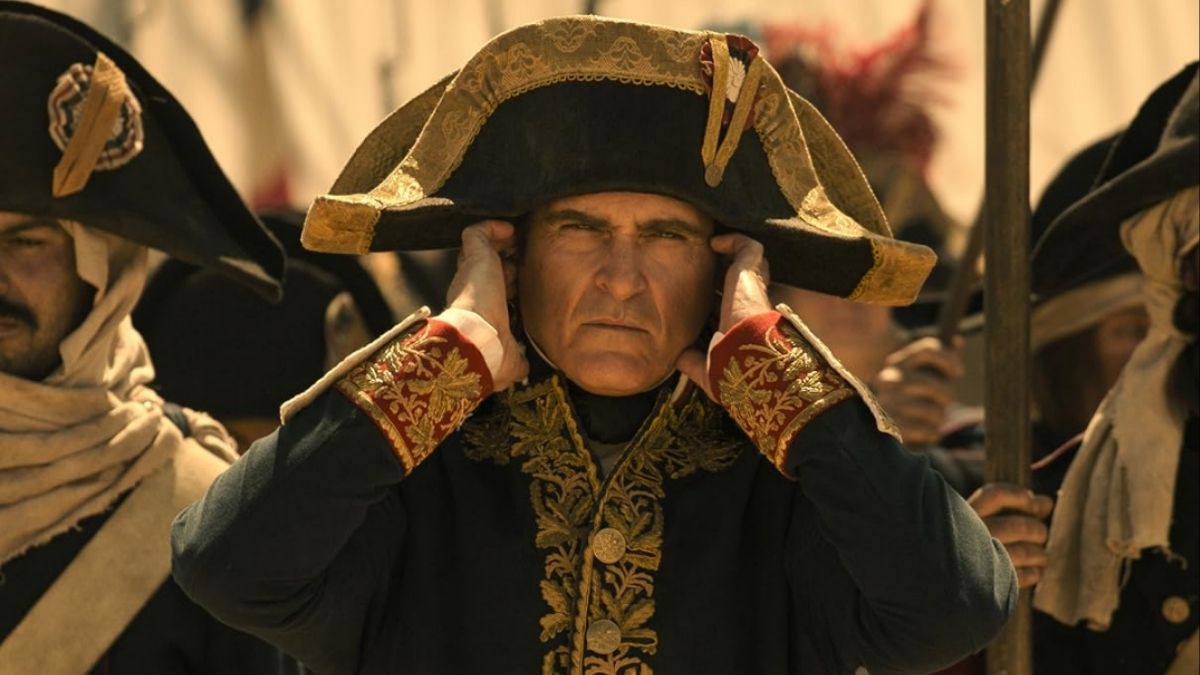
History is written by those that conquer, make good decisions, and predict correctly what the future may bring. Yet it is also full of events shaped by misfortune, mishaps and overall blunders that made everything possible. Historical figures of the past were as fallible as we are today.
In more cases than you might imagine, the people responsible had no idea how enormous the consequences would become. Looking back, it’s remarkable how often the modern world can trace pivotal turning points back to decisions that, in hindsight, should never have happened.
IMDb
Napoleon Invades Russia
In 1812, Napoleon Bonaparte marched more than 600,000 troops into Russia expecting a decisive victory. Instead, harsh weather, stretched supply lines, and Russian scorched-earth tactics devastated his army and marked the beginning of his downfall.
IMDb
Hitler Declares War on the United States
Following Japan’s attack on Pearl Harbor, Adolf Hitler voluntarily declared war on the United States in December 1941. The decision brought America’s enormous industrial and military strength fully into the European theater.
IMDb
The Tacoma Narrows Bridge
Nicknamed “Galloping Gertie,” the Tacoma Narrows Bridge collapsed just months after opening in 1940 because engineers underestimated the effects of aerodynamic forces. The disaster permanently changed bridge engineering around the world.
IMDb
The Challenger Bank Financial Crisis
Throughout the early 2000s, banks increasingly packaged risky subprime mortgages into seemingly safe investments. When the housing bubble burst in 2008, the resulting financial crisis triggered a global recession that affected millions.
IMDb
The Mars Climate Orbiter Mix-Up
NASA lost the Mars Climate Orbiter in 1999 because one engineering team used imperial measurements while another used metric units. The simple conversion error destroyed a $125 million spacecraft before it reached Mars.
IMDb
The Maginot Line
France invested heavily in massive border fortifications after World War I, expecting another German invasion from the same direction. In 1940, German forces simply bypassed much of the Maginot Line through Belgium.
IMDb
The Treaty of Versailles
The harsh reparations and territorial losses imposed on Germany after World War I created widespread economic hardship and political resentment. Historians frequently cite the treaty as one factor that helped enable Adolf Hitler’s rise.
IMDb
The Chernobyl Safety Test
A poorly executed reactor safety test at the Chernobyl Nuclear Power Plant in 1986 spiraled into the world’s worst nuclear disaster. The explosion contaminated vast areas and accelerated growing distrust in Soviet leadership.
IMDb
Blockbuster Rejects Netflix
In 2000, Blockbuster reportedly declined an opportunity to purchase Netflix for about $50 million. As streaming transformed home entertainment, Netflix flourished while Blockbuster eventually filed for bankruptcy.
IMDb
Kodak Ignores Digital Photography
Ironically, Kodak engineer Steven Sasson invented one of the first digital cameras in 1975. Company leadership failed to embrace the technology aggressively, allowing competitors to dominate the digital photography revolution.
IMDb
The Challenger Launch
Despite engineers expressing concerns about cold-weather performance of the solid rocket boosters’ O-rings, NASA launched Space Shuttle Challenger on January 28, 1986. The shuttle broke apart shortly after liftoff, killing all seven astronauts.
IMDb
The Suez Crisis
Britain, France, and Israel launched a military operation after Egypt nationalized the Suez Canal in 1956. International pressure, particularly from the United States and Soviet Union, forced a withdrawal that weakened British and French global influence.
IMDb
Austria’s Ultimatum to Serbia
Following Archduke Franz Ferdinand’s assassination, Austria-Hungary issued an ultimatum containing demands Serbia could scarcely accept. The diplomatic gamble quickly escalated into a continent-wide conflict that became World War I.
IMDb
The New Coke Formula
In 1985, Coca-Cola replaced its century-old flagship formula with New Coke. Consumer backlash was immediate and overwhelming, forcing the company to restore the original recipe within months in one of marketing’s biggest missteps.
IMDb
Mao’s Great Leap Forward
China’s Great Leap Forward introduced disastrous agricultural and industrial policies based on unrealistic production targets and flawed reporting. The resulting famine became one of the deadliest human-made disasters in recorded history.
The post 15 Historical Blunders That Shaped the World appeared first on Den of Geek.