By
By 
If you’re heavily into horror movies, you’ll give most of them a chance, no matter how low-budget they are or how poorly they went down with critics. Occasionally, you’ll also hear online or from friends that there’s one you’ve just gotta check out because it’ll mess you up a bit. It’s natural to be wary, as many of those kinds of horror movies embrace the more psychological side of the genre and the last thing you want is a sleepless night. Still, those films can be spectacular and irresistible—they make you think!
In the spirit of celebrating those very movies, we’ve put together a list of the ones people just couldn’t stop thinking about after watching them. These films have clawed their way into audiences’ brains, either by presenting scenarios so grisly and realistic that people weren’t quite convinced they were fictional, or by playing deft psychological games that left viewers reeling.
Major spoilers ahead as we take a look back at the horror movies that had our psyches in a chokehold.
Possession
A movie that didn’t do any business when it was first released, Possession has gained appreciation as a truly great cult horror film every year since. The plot of Andrzej Żuławski’s film is, uh, let’s just say tricky. So tricky that 40+ years later, no one’s even agreed on exactly what sub-genre the film is. Supernatural? Psychological? Political? Lovecraftian? You can make a case for all of them.
Luckily, we don’t really need to go into the movie’s actual plot here, because that’s one of the reasons it’s held its ground in discussions of the best horror films of all time. A group of people can sit down for a screening of Possession and come away with completely different interpretations of it. There’s no straightforward explanation for what happens. Yet, thanks in part to a killer performance by Isabelle Adjani, no one forgets this surreal masterpiece in a hurry.
Perfect Blue
When JPop idol Mima Kirigoe decides to leave the music world behind and become an actress, things go from bad to worse as she tries to establish herself. An obsessive fan begins stalking her, and she sees small, day-to-day moments from her life written up on a website called “Mima’s Room.” What’s weirder is that they’re written from Mima’s perspective, and she soon starts to question whether she’s somehow subconsciously involved. She’s also landed a role in a TV detective drama where she’s required to film sexual scenes that make her uncomfortable, and people in her circle keep getting murdered. A paranoid Mima struggles with psychosis, unsure of where the line is between fact and fiction.
Satoshi Kon’s psychological horror eventually became one of the most respected anime movies of all time, heavily influencing the visually dynamic output of directors like Darren Aronofsky, and the film itself has certainly lost none of its boundary-blurring effectiveness since its release in the late 1990s.
Cannibal Holocaust
1980’s Cannibal Holocaust absolutely broke new ground in the genre, and not always in the best ways. Often considered the first-ever found-footage movie, the Italian exploitation flick tracks the efforts of an anthropologist leading a team into the Amazon rainforest to find a crew of missing documentary filmmakers. What follows is a stomach-churning series of events featuring largely unpracticed actors in scenarios with indigenous peoples. As a result, the film’s mix of graphic bloodshed, sexual assault, and actual cruelty toward animals had many people convinced it was snuff for a while.
Even today, critics can’t decide if Cannibal Holocaust displays genuine merit with its social and ethical commentaries or if it’s just really bloody unpleasant. Either way, this one will stick with ya and no mistake.
Hereditary and Midsommar
Ari Aster’s cinematic double-punch of Hereditary and Midsommar ensured they became instant classics for a new generation of genre fans. Although the plots of these two are fairly straightforward compared to some others on this list, both contain unnerving and shocking moments that burrow deep into the brain and refuse to leave, including an elderly couple flinging themselves off a cliff and a teenage boy sitting in shock after his sister becomes decapitated in the backseat of the family car.
As both films feature Aster’s disturbing visual touches and linger in the memory, we’ve paired them here. People may always wonder what happens beyond Paimon’s arrival or Dani’s choice at the culmination of the midsummer ceremony, but neither film offers any answers, leaving you to forever mull whether Christian deserved his fate or whether the cult that gathered at Charlie’s treehouse found the riches they pursued.
The Babadook
The Babadook became an unwitting precursor to a string of “the monster is grief/trauma” horror movies, which is a shame because it does terrify a lot of people and doesn’t deserve retrospective eye rolls from those who have grown tired of that particular theme.
Boasting an effective storybook monster and a disturbing family dynamic that really gets under your skin, The Babadook is probably the best to ever do “the monster is grief” while maintaining a proper sense of the genre, following a widowed single mother struggling to recover from a car accident that suddenly took her husband out of the picture just as their son was about to be born. For anyone going through their own grief, this one leaves a lasting impression.
Psycho
Defying audience expectations and introducing a new level of psychological horror to mainstream movies, Alfred Hitchcock and Joseph Stefano adapted Robert Bloch’s 1959 novel of the same name with Psycho, a groundbreaking film about a boy who loves his late domineering mother so much that he starts dressing up as her and slaying the women staying at his secluded motel who make “Mother” angry.
Bernard Herrmann’s incredible score and the film’s iconic shower scene (where audiences thought they saw much more than they actually did) both contributed to Psycho’s endurance in the minds of those who kept on revisiting it, as more of them began to not just fear the supernatural or alien monsters of cinema, but also the ones who could realistically live next door. Off the back of Psycho, serial killers became big business.
Get Out
Using the genre’s framework to explore themes of racism and power in contemporary society, Jordan Peele’s breakout hit once again proved that some of the funniest people alive can thrive in horror.
When Chris (Daniel Kaluuya), a Black photographer, visits the family of his white girlfriend and discovers a horrifying conspiracy hidden beneath their seemingly progressive attitudes, a sharp cultural critique emerges that encourages viewers to mull the movie’s complex themes long after the film’s final gag. A surprise hit, Get Out also inspired worthy conversations about race and privilege in a way that few horror films have managed before or since.
Lake Mungo
Lake Mungo starts off as one story about a family’s grief, then derails into an entirely different one before coming full circle, and that narrative disorientation serves the movie spectacularly.
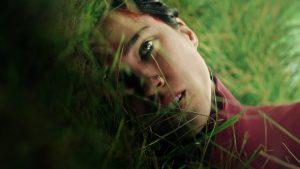
After 16-year-old Alice (Talia Zucker) drowns in a dam in Ararat, Australia, her brother deals with his grief by fooling people into believing that her ghost is haunting their house. Mathew’s grainy footage is spooky and compelling, but you’re not really sure where the film is going once it’s been debunked. As more of Alice’s secret life is exposed, we realize that she knew she was going to die after an encounter with her own bloated corpse on a school trip to Lake Mungo. We cannot warn you enough about the psychic damage you’ll take from the cell phone footage of the incident, unless you’ve already seen it. In that case, well, you already know. You will never be able to unsee it, and that’s just one reason you’ll still see people discussing Lake Mungo almost 20 years later.
Director Joel Anderson hasn’t helmed another movie since, which adds to the mystique of this compelling mockumentary, but he has recently got back into the industry, working as a script editor on Netflix’s Clickbait and Shudder’s Late Night with the Devil, which is a creepy movie, but not up there with Lake Mungo.
Men
Here’s a random peek behind the curtain at Den of Geek that supports adding Men to this list: our Ending Explained article is still going strong years after its release. Why? Because Alex Garland’s follow-up to Annihilation was somehow even weirder and more confounding than that movie, and it’s worth remembering that Annihilation had a kind of mutant bear creature that could do a human voice. Nevertheless, Men is certainly more challenging than Annihilation, which is probably why reviews were decidedly mixed. It’s also rather unforgettable.
We follow Harper Marlowe (Jessie Buckley) as she pops off on a lovely holiday to a Herefordshire village to try and decompress from a tragic incident where her husband suddenly hit her, then plummeted to his death from a balcony at their block of flats. Does she get a much-needed break from the psychological impact of this incident? No. No, she does not. Instead, she’s hounded by a string of unsettling men, all played by Rory Kinnear, who eventually give birth to her dead husband. “What?” you may ask. Exactly, yes.
Mulholland Drive
One of the scariest entries on this list is not technically considered a horror movie. Instead, Mulholland Drive is a hugely unnerving story that refuses to be straightforward or linear. Many have tried to interpret David Lynch’s film over the years, but the director always refused to fully elaborate on it (RIP to a real one), so sometimes you’ll see a few theories about what exactly happens in Mulholland Drive doing the rounds, yet never anything definitive.
One of many options is to look at Mulholland Drive like this: a failed actress called Diane Selwyn (Naomi Watts) goes to sleep one night in the knowledge that she’s paid for her estranged lover, Camilla Rhodes, to be killed by a hitman. She dreams that she and Camilla are back together, solving a mystery, and that those who have wronged her are getting their comeuppance, but when Diane wakes up she realises that the real Camilla is dead and that she’s responsible. Unable to live with her crime, she takes her own life.
That is just one way to look at it. Still, Mulholland Drive is ultimately open to interpretation, and fans of the film have kept coming back to it over and over again because it’s a puzzle box of identity-questioning and weirdness that can never really be solved, even with a shiny blue key.
The Blair Witch Project
The Blair Witch Project wasn’t the first found-footage horror movie ever made, but it was the first to achieve such massive success, grabbing almost $250 million at the box office from a budget of less than $1 million.
For a while, many people were convinced that the movie was actually a true story, and that what they were witnessing were real events from the Appalachian Mountains where three students had apparently gone missing. Thanks to a convincing promotional mockumentary and a fascinating website about the “missing” actors, The Blair Witch Project picked up hype before its release and went viral before anyone really knew what that meant, haunting those who watched it for years to come.
Martyrs
Martyrs is one of the most discussed (but divisive) horror movies of this century. Kicking off as a brutal revenge tale, it becomes so much more than that as it goes along, transforming into a distressing exploration of whether suffering can unearth hidden truths about the nature of existence and forcing us to think about how much we’re willing to sacrifice to be truly certain about what happens after we die (Flatliners ain’t got nothin’ on this bad boy!). Shocking, existential, and absolutely traumatizing, this movie has messed with a lot of heads since it emerged. And as more people discover it, more heads will be messed with.
Funny Games
Some people might have been fooled by the title of this movie when they sat down to watch it, but there’s not much to laugh at when two young guys arrive at a vacation home to hold a family hostage and torture them with games like “how good y’all movin’ with a broken leg?” and “guess how alive your dog is right now?”
While those games are upsetting enough, the pair’s knowing winks, glances, and questions to the camera break the fourth wall, making viewers partly complicit in watching the horrors play out. Director Michael Haneke doesn’t consider Funny Games a horror film; rather, it’s supposed to be a pointed message about violence in media. Still, people usually do feel like they’ve watched one, and for a long time after.
The Exorcist
There have been about a trillion possession movies since The Exorcist, but back in the early 1970s, depicting the demonic possession of a child was shocking. Controversy raged on for years after its debut, with the movie’s content said to have caused nausea, fainting, and even spiritual crises in those who had lapsed in their faith.
But all publicity is good publicity, as they say, and wild reactions to The Exorcist continued. In fact, video copies of the movie were withdrawn from circulation in the U.K. as late as 1988. It wasn’t until 1999 that it was once again granted a home video release, such was the furore over its “lenient” rating and its controversial story of an exorcism performed on a young girl by two priests. Don’t even get us started on whether the film itself is cursed!
Faces of Death
This mondo horror from 1978 pretends to be a documentary, but although some of the footage in Faces of Death shows actual humans dying from a distance, much of the movie is fake, with other queasy real-life footage purchased from the likes of random news stations and medical researchers and reappropriated in a mockumentary context. Despite many having this knowledge, the film sparked a moral debate over exploitative movies and their worthiness.
If you were a kid at the time, you often heard whispers in the playground about Faces of Death. Apparently, it showed real, grisly crimes, and it had scarred the kid who watched it for life. If you happened to hear those whispers in the U.K., you may have also been aware that it was a banned “video nasty,” which may have conjured gory imaginings far beyond the movie’s actual content.
These days, many countries have removed their bans on Faces of Death, but some still called for substantial cuts. However, the fact that there’s been a Hollywood reboot of the film tells you all you need to know about how shocking it is compared to what people regularly see online these days.
Pulse
Depending on who you talk to, Kiyoshi Kurosawa’s Pulse, a.k.a. Kairo, is either one of the scariest movies ever made or wildly underwhelming, and we would argue that both reactions are understandable. Pulse is just so…intentionally empty. Yet, we’d also suggest that Pulse was pretty damn prophetic, given it came out back in 2001.
Exploring loneliness and disconnection in the digital age, and the fear that technology may be opening a door to something beyond human understanding, the characters in Pulse slowly become detached from the living world as society collapses into isolation. As such, it’s lingered somewhere in the back of our minds ever since, as real-world technology becomes more invasive and AI is thrust upon us.
Jacob’s Ladder
Massively influential on a whole bunch of horror movies and games that came after it (the Silent Hill universe wouldn’t truly look or feel as cool without this one paving the way), Jacob’s Ladder follows a Vietnam vet now living in New York called Jacob Singer (Tim Robbins), who struggles to cope in a fragmented reality. After a string of disturbing visions, it’s revealed that much of the film has taken place in his mind and that he actually died in Vietnam. Surreal and essential, Jacob’s Ladder is often namechecked as a triumphant, modern spin on Carnival of Souls that invites multiple interpretations.
Obsession
This year’s movie that people just can’t stop thinking about is a real peach. Inspired by the “be careful what you wish for” theme of The Simpsons’ “Treehouse of Horror II,” we follow “nice guy” Bear (Michael Johnston) as he makes a wish on a novelty toy for his crush Nikki (Inde Navarrette) to love him more than anyone else in the world. The wish comes true, but in such a horrifying way that you’d assume Bear would just wish he had never made it. Bear being Bear, though (insecure, selfish, irredeemable), he just kinda wants to make alterations, even knowing that Nikki’s newfound devotion is entirely beyond her control. Her bodily autonomy ripped away, Nikki no longer has free will and Bear doesn’t have consent, forcing Nikki to act strangely even when it’s harmful toward others or herself.
Curry Barker’s second feature film seemed to get the whole internet talking as social media filled up with people either misunderstanding the film’s themes or arguing over the nuances of the characters and story. With some key moments in the movie remaining open to interpretation, Obsession became an instant conversation starter in an age when social dynamics and relationships appear more complex, even when they very much aren’t.
Thought of a different movie you couldn’t stop thinking about? Let us know in the comments!
The post From Possession to Obsession: The Horror Movies People Just Couldn’t Stop Thinking About appeared first on Den of Geek.