By
By 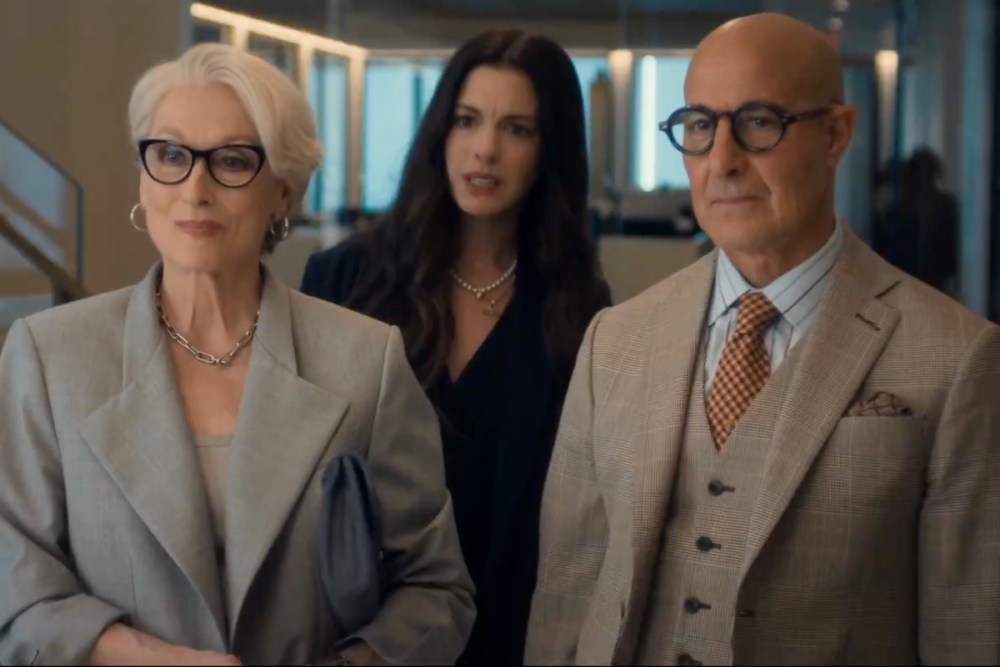
The Devil Wears Prada 2 is unfortunately the complete opposite of Miranda Priestly. Lacking bite or edge, it plays it safe with mushy kindness between the characters and leans heavily into nostalgia rather than telling a story of real substance. Unlike a cerulean sweater, The Devil Wars Prada 2 does not feel the product of years of investment and decision-making.
The original, The Devil Wears Prada, was no masterpiece. It played in the same space that many early-00’s chick flicks did with characters engaged in lofty dream jobs oblivious to economic realities. They were a good bit of fantasy, and this one was no different.
That said, The Devil Wears Prada did manage to be a cut above with talented performances and a somewhat uncompromising look at the fashion industry. For every praise about the art of fashion, there were many scenes putting the shallowness and cut-throat nature on full display. Priestly was an antagonist elevated by the nuance of Meryl Streep‘s fantastic performance.
But The Devil Wears Prada 2 enters 2026 in a different world than 2006. It’s as though the screenwriter decided the escapism and bite of the original was not what modern audiences wanted, and rather embarrassingly devotes many a line of dialogue to making Anne Hathway‘s Andy into a spout of the assumed collective frustration towards capitalism, fashion’s excesses, and any other “virtuous values.” Everything from gentrification of old apartment buildings, to corporate downsizing, and the shrinking field of journalism are all throw into the film’s sauce. Andy even makes sure to apologize for complaining about losing her job when so many others have it harder, a line that felt meant to be spoon-fed right to the audience.
Were a more talented chef stirring the pot, perhaps The Devil Wears Prada 2 could have taken these various elements and melded them into a satisfying medley of flavor with both surface flair and deeper appeal. The ideas were all there to make this movie a real commentary on where fashion stands in 2026 and how professionals had to navigate a different economic market than twenty years ago. But instead, they allowed that drug nostalgia to spill into the stew and utterly ravage it.
One of the bigger crimes comes in the characterization of Miranda overall. The first film ended with Miranda making a vicious move to assert the thesis that no matter what Andy did to earn Miranda’s respect, the industry and its head honchos were inherently never going to do so and would betray whoever they needed to get ahead. Thus, Andy exists working for Runaway with her morality intact, if her doe-eyed innocence reduced.
Indeed, it seems director David Frankel decides to make the primary purpose of the editing beats to leap from one nostalgic moment to another without regard to any other narrative flow or telling a cogent storyline. The editing is so all over the place that it feels like three different versions of a movie mashed together. It treats every instance of Andy and Stanley Tucci‘s Nigel interacting with a doe-eyed fondness, hoping to reinvoke the spritely friendship from the first film. And while there is some amusement in seeing Miranda to attempt to navigate a business meeting in 2026 where the workplace tolerates far less verbal thrashing than Miranda dealt out in 2006, these moments too are more played as callbacks than new moments in their own right.
While the ending of this film attempts to have some dialogue vaguely enforce the same principle, it’s a complete kid-gloves version of the scene. Instead, Miranda is lacking the same forceful vigor here and too much of the movie is having Andy and Miranda make nice with each other. By the end, it hardly feels like the same character anymore, though Streep continues to do well. The ending also feels like a betrayal of Andy’s character and not at all what her character would dream of doing.
Emily Blunt‘s Emily, meanwhile, feels added to the film as an afterthought. She’s thrown in haphazardly in the first two acts in ways that feel the product of multiple rewrites with little narrative cogency. This is compounded in a very sloppy final act that attempts to take the idea of Miranda’s corporate espionage from the first movie and put it on overdrive. As part of the theme of everything needing to end with happiness and harmony, Emily’s rather massive betrayal of Miranda and Andy is brushed over.
The movie has its merits, to be fair. There are some funny moments and amusing performances from Justin Theroux and Blunt acting as a dating couple. B.J. Novak always seems at home playing cartoonish corporate executive jerks. The ideas it hints at seem intriguing.
One just wishes something more than 00’s nostalgia was driving this recent wave of movies. Between this and Freakier Friday, it seems only a matter of time until things like 13 Going on 30, How to Lose a Guy in 10 Days, and Failure to Launch get sequels. Hopefully, they can make films that don’t feel like they were edited to be split into Tik Tok reels.
Hopefully, they can have something to say.
Tell us your thoughts on The Devil Wears Prada 2 below and rank it on the new Flickchart now!!!