By
By 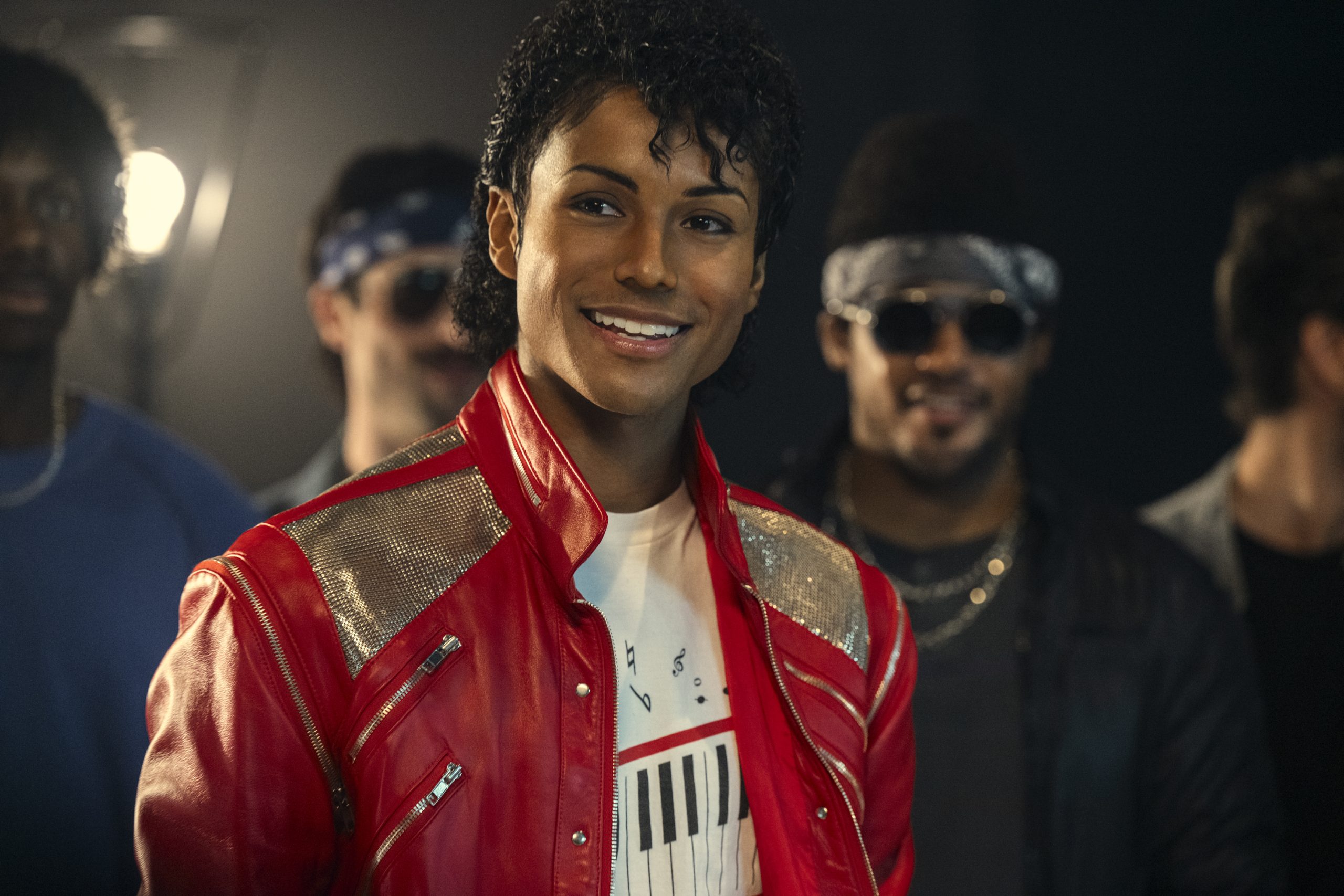
Michael (2026)
His Story Begins
Like anything related to Michael Jackson, there’s gonna be controversy. At this point, it feels inevitable. A figure as iconic, as mythologized, and as debated as Michael Jackson was never going to make it to the big screen without a few raised eyebrows — and Michael (2026) arrives carrying all of that weight. Directed by Antoine Fuqua, a filmmaker known more for hard-edged drama than musical storytelling, and led by Jaafar Jackson — Michael’s real-life nephew — the project always had a built-in level of scrutiny. Add producer Graham King (who previously handled Bohemian Rhapsody), and expectations were sky-high… with a healthy dose of skepticism on the side.
But here’s the thing: Jaafar Jackson doesn’t just step into Michael’s shoes — he moonwalks straight into them and somehow makes them fit. He goes beyond resemblance and fully channels him. The voice, the posture, the impossibly precise movement — this isn’t an impression, it’s a transformation. And honestly, it’s the kind of performance that carries the entire production on its shoulders… or glove.
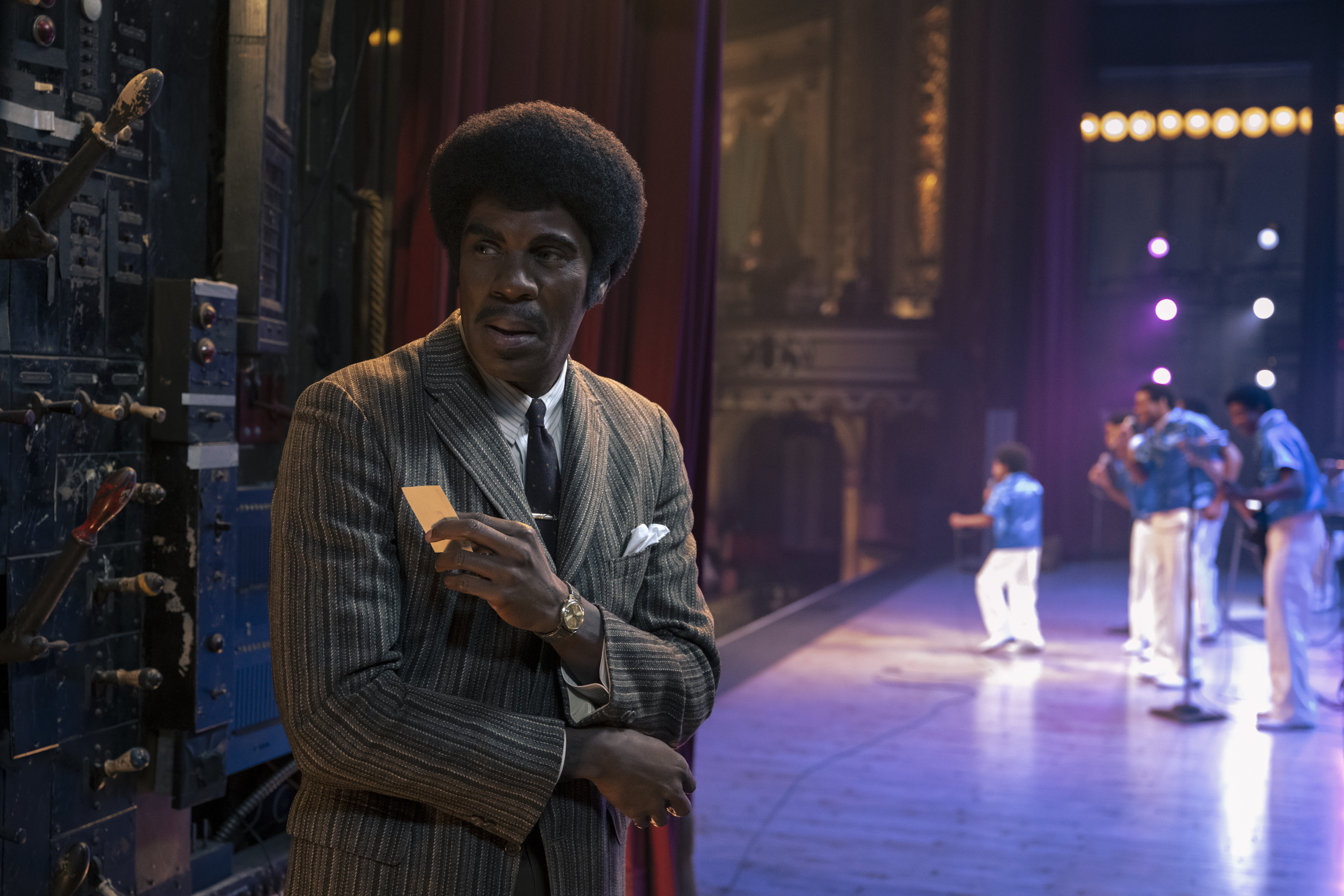
The narrative treks a fairly straightforward path. The film traces Michael’s early years with the Jackson 5, his rise under the intense guidance of his father Joe (Colman Domingo), and his eventual evolution into a solo superstar. It’s a journey through talent, pressure, and the early formation of a global icon laying out the building blocks of the King of Pop — almost like learning his ABC before the crown fully settles.
The challenge here is obvious — Michael Jackson wasn’t just a pop star. He was an era. A sound, a look, a cultural shift. Larger than life in a way that doesn’t neatly fit into a standard biopic make-up. And beyond that, he was also a deeply complicated figure, with serious allegations that have long been part of his story. That’s where Michael runs into its biggest issue — and it’s one it never fully overcomes.
Early in development, the filmmakers reportedly set out to tell a broader, more complete version of Michael’s life. However, reports suggest that once the realities of portraying certain controversial aspects became clear — particularly from legal and estate-related perspectives — the production had to pivot. Significant portions of the later timeline appear to have been off-limits. The result is a major restructuring that trims away what would have been the third act. What’s left is a film that leans heavily into two key phases of Michael’s life — his time with the Jackson 5 and the complicated, often confronting relationship with his father, Joe Jackson. These sections are given room to breathe, building momentum and emotional weight as they go.
Don’t stop ’til you get enough — or else.
The story keeps pushing forward, beat by beat… and then it abruptly stops. Right on the edge of the most publicly turbulent and defining period of his life. And that absence is hard to ignore. The screenplay, credited to John Logan, does what it can to hold everything together. Structurally, it’s coherent, a little familiar, but it flows. Yet there’s no getting around it — the end result comes across as incomplete. It isn’t broken or poorly made — it just feels cut short. Like a record that cuts out before the final chorus.
That sense of incompleteness carries over into the themes as well. On paper, there’s a lot here — Michael’s loneliness and isolation, his vitiligo and changing appearance (including the now-iconic glove), his insecurities around his image, the racism he faced in the industry, even the Pepsi commercial accident where his hair caught fire. It covers everything you’d expect — but never interrogates any of it. Each idea is introduced and then quickly abandoned. There’s little insight and even less depth. Moments that should land with weight instead feel like quick snapshots, ticking over to the next beat before they’ve had time to fully hit. It captures the icon — but never fully confronts the man.
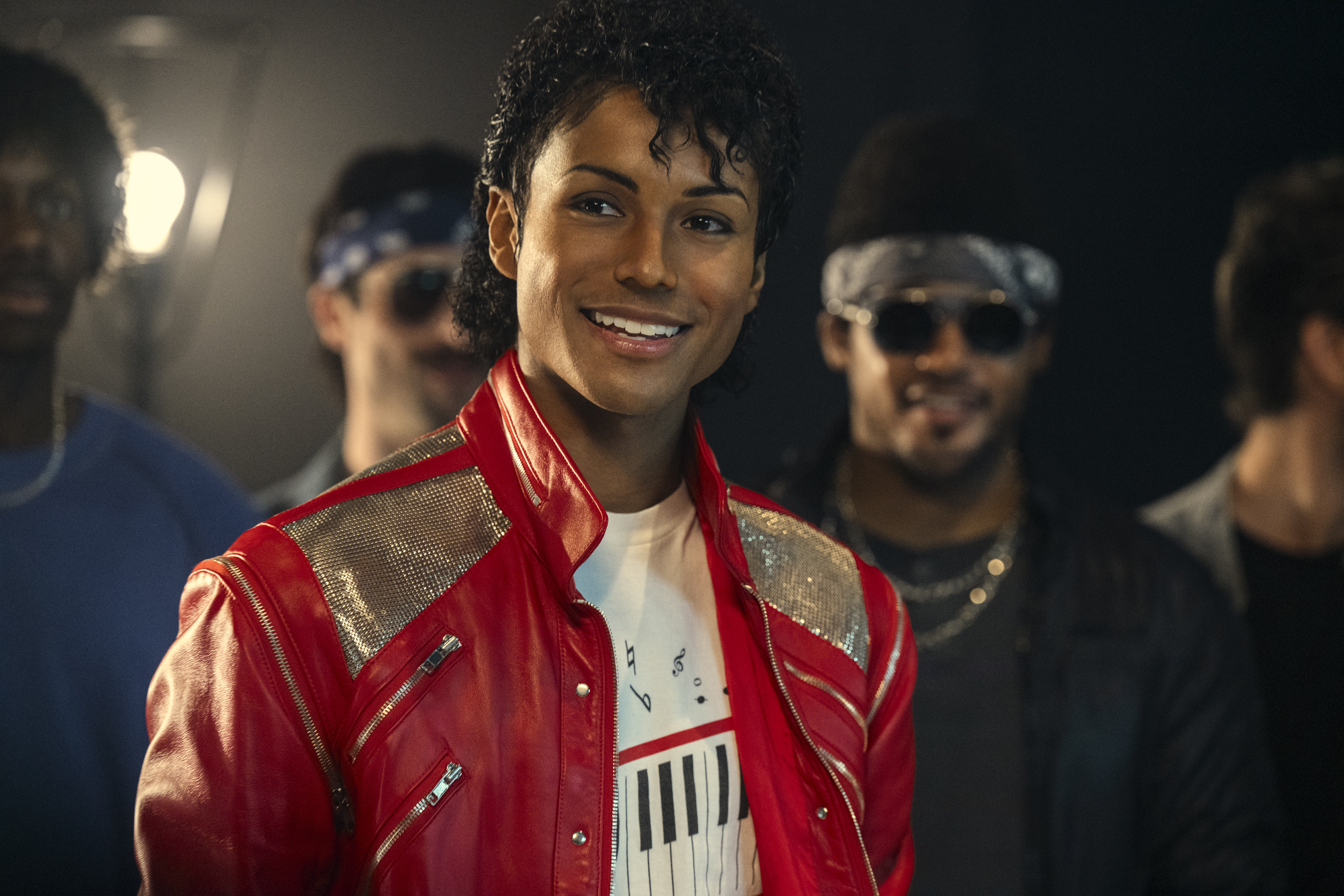
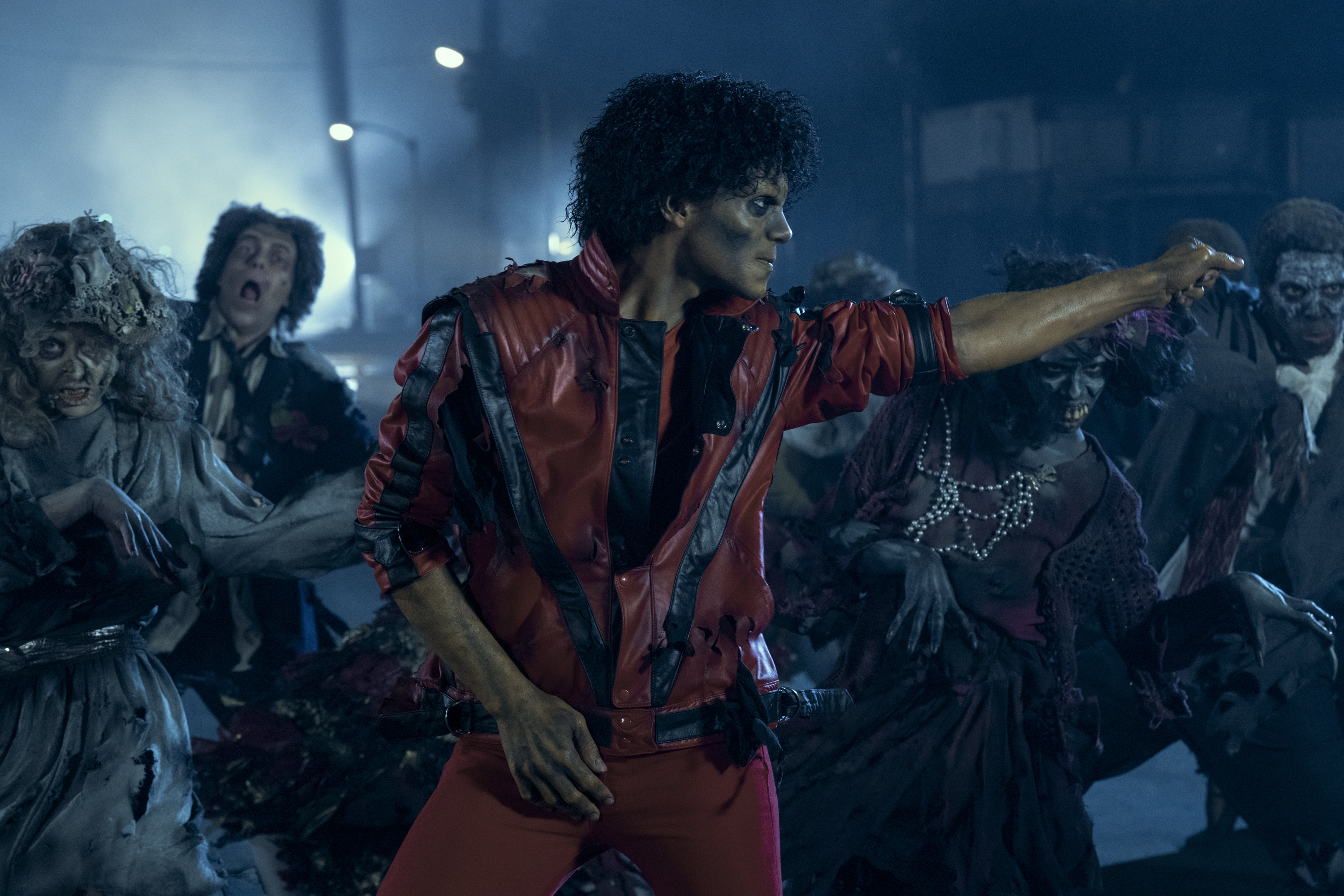
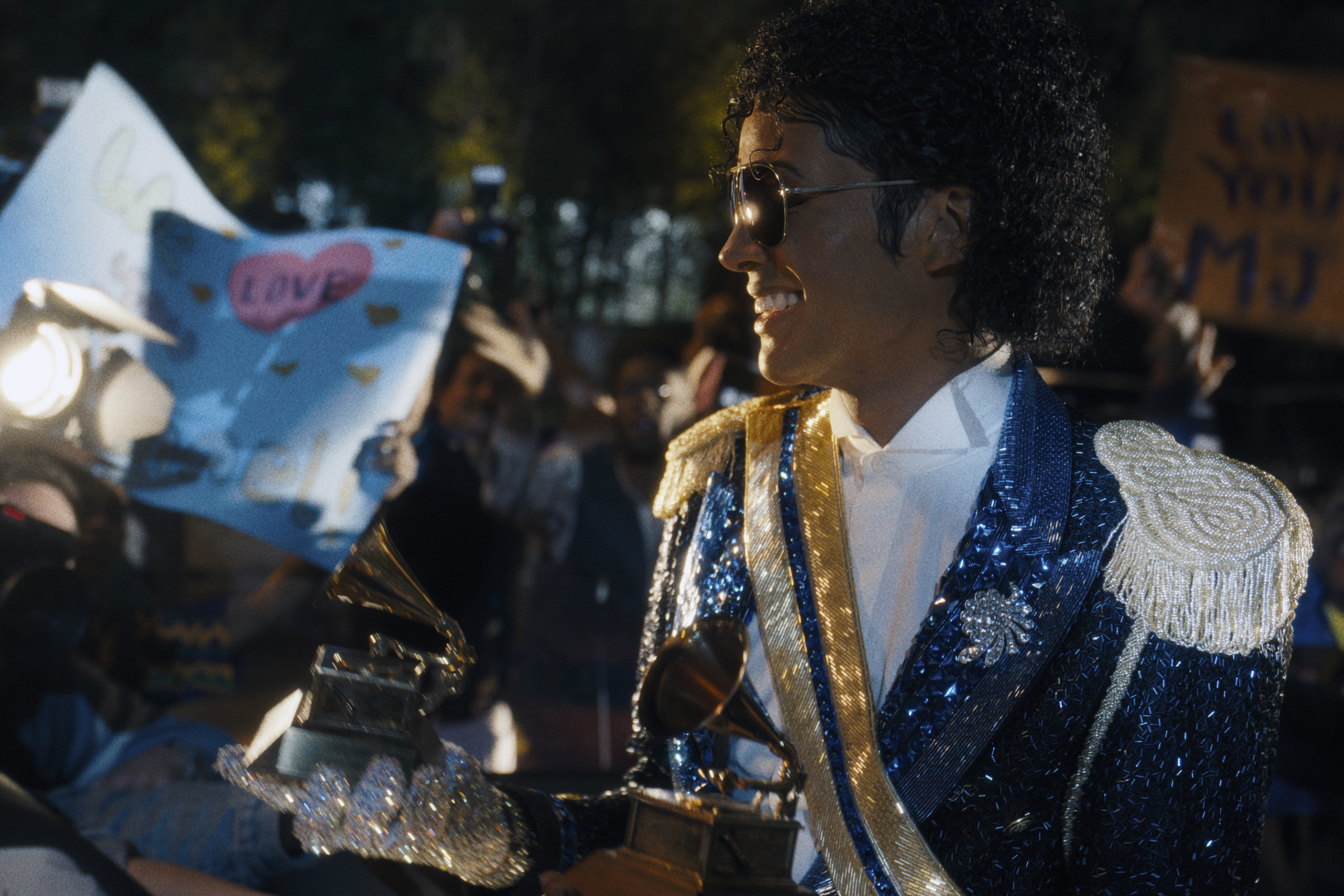
Where it really comes alive, though, is in the recreation of Michael’s artistry. This is where Antoine Fuqua and the production team lock in. The performance sequences are the clear standout. “Human Nature” is staged with a dreamy, almost hypnotic quality that captures the softness of Michael at his peak. “Beat It” brings back the tension and edge of the original video, even weaving in the real gang influence that gave it that raw, grounded feel. “Billie Jean” hits with that signature precision and swagger — the timing, the movement, the presence, all exactly where it needs to be. And the closing “Bad” number lands big, full of scale and attitude, reminding everyone why he dominated the global stage in the first place. These feel less like recreations and more like revivals.
When ‘Thriller’ still raises the dead.
As you’d expect, Michael looks fantastic. The costumes, the lighting, the sheer scale of certain sequences — it all comes together to create a strong aesthetic that genuinely honors the man’s musical legacy. There’s a real sense of time and place, and whenever the film leans into that aspect, it really clicks. The editing can feel uneven at times, but considering the reported restructuring during production, it makes sense. Some scenes feel like they’ve been shifted around rather than flowing naturally. Even so, the direction stays solid throughout, and the overall presentation remains polished.
Performance-wise, this is Jaafar Jackson’s stage — everyone else is just stepping into his spotlight. He’s essential to making the movie work. There are long stretches where it genuinely feels like archival footage has been dropped straight in. The voice, the movement, the posture, the tiny mannerisms — it’s all there. And crucially, it never feels like impersonation. It’s controlled, detailed, and convincing enough that it carries the entire production. Even when the script starts to thin out, he keeps things grounded. It’s also worth calling out Juliano Krue Valdi, who plays young Michael and quietly sets the tone early on. He absolutely nails the innocence, the pressure, and that early spark of talent, giving the opening stretch a strong emotional base to build from. It makes the transition into Jaafar’s performance feel seamless.
From there, the supporting cast slides in nicely without ever pulling focus. Colman Domingo’s Joe Jackson has real presence — firm, intimidating, but never played as a one-note villain. Nia Long brings a quiet warmth as Michael’s mother Katherine, grounding everything whenever things start to feel heavy. Laura Harrier, as Motown executive Suzanne de Passe, and Miles Teller, as lawyer John Branca, both represent the business side of Michael’s world, and do it without overcomplicating things. KeiLyn Durrel Jones adds a steady, loyal energy as bodyguard Bill Bray, while Mike Myers pops up as Bob Thiele in a brief but memorable turn that feels just left-of-field enough to work. It’s a strong lineup across the board — but there’s no confusion about who this belongs to. Everything still orbits around Jaafar, and he holds it there.
The crown fits — and it always did.
Overall, Michael is a fascinating case. It’s engaging, well-crafted, and consistently watchable. It captures the scale of Michael Jackson’s rise and delivers some genuinely great performance sequences. Jaafar Jackson’s portrayal is the real deal — the kind that makes the whole thing work. At the same time, it feels undeniably surface-level. Not by choice, but by circumstance. The filmmakers clearly had their hands tied, and the final product reflects that — a biographical story that builds toward something it ultimately can’t show. Still, what’s here works. It celebrates the music, honors the image, and reminds everyone why the world didn’t stop ’til he got enough — even if it never delivers the full picture. In the end, it lands on a note that feels oddly fitting… Because even when the story cuts short, the legacy doesn’t. The music may fade out — but the man in the mirror never does.
3.5 / 5 – Great
Reviewed by Dan Cachia (Mr. Movie)
Michael is distributed by Universal Pictures Australia