By
By 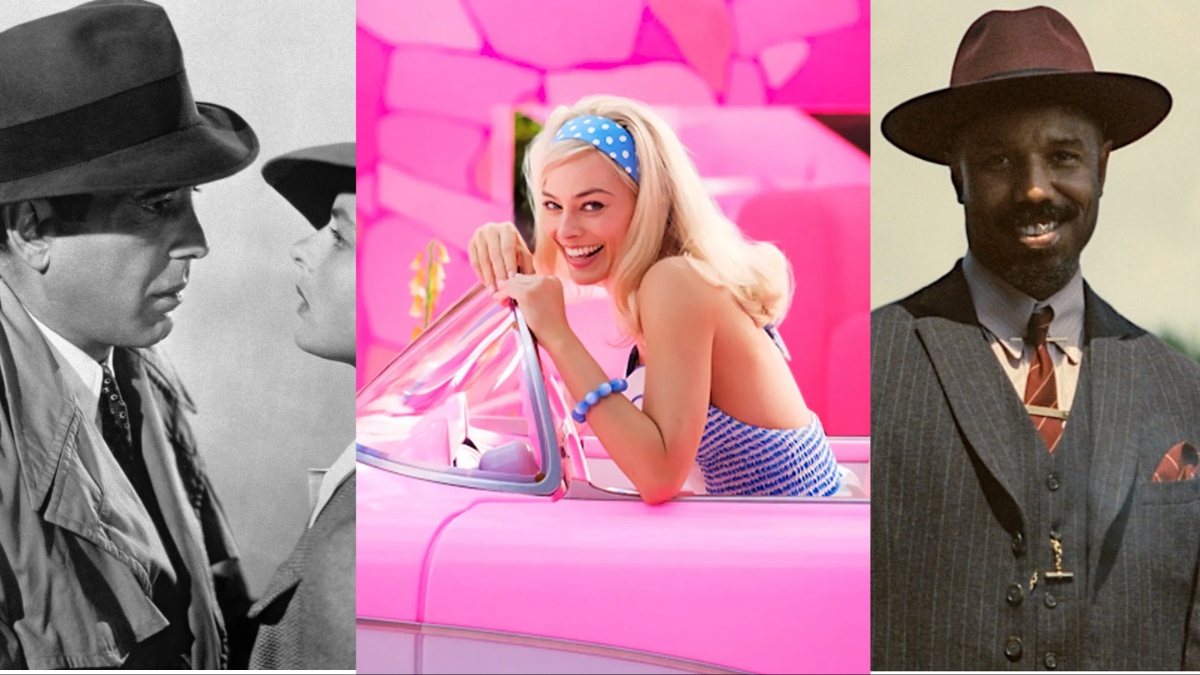
It’s official! Or at least as official as these sorts of things can be before ever increasingly corporate-compliant regulators in D.C. give the next black hole of resource-consolidation its rubber stamp. Yep, Netflix is buying Warner Bros. Discovery.
To put that another way, the company that started as a DVD rental mailing service has grown gargantuan enough in the streaming era to buy out one of the last remaining (and biggest) movie studios in the world, Warner Bros. Pictures—plus all the attendant accessories that come with it, including HBO, HBO Max, and CNN. The company that began by hawking WB’s wares (among others) will now own and decide the fate of a 103-year-old studio which counts Casablanca, The Wizard of Oz (though technically an MGM picture), The Dark Knight, and The Lord of the Rings among its library.
Technically consolidation is the name of the game in 21st century media, as decreed by Wall Street arithmetic, but given Netflix’s infamous indifference (if not outright hostility) toward the theatrical experience, it is fair to understand why so many cinephiles are repulsed by the news. Not that Netflix leadership seems to mind.
With the confidence of someone who just won the game of Monopoly for realsies, Netflix CEO Ted Sarandos felt no need to assuage those fears Friday morning when he told Wall Street investors he following about theatrical releases: “My pushback has been mostly in the fact of the long, exclusive windows, which we don’t really think are that consumer friendly.” The implicit upshot is that Sarandos seems determined to fracture the demands of movie theater owners who are seeking to maintain an at least 30-45 day theatrical window.
Soon Sarandos will have the ability to dictate whether Matt Reeves’ The Batman 2 or future Dune movies have only the token seven or 14-day windows of most modern nominal Netflix films. Granted, the failure of Disney and Marvel Studios’ Black Widow doing a day-and-date release strategy in 2021 recently confirmed the limitations of such a move with even big tentpole releases. It leaves money on the table. But given Netflix refuses to release even Rian Johnson’s Knives Out movies or Guillermo del Toro’s Frankenstein in a wide theatrical release, they have shown no compunction about leaving money on the table as long as it starves competition they deem an antiquated business model (i.e. movie theaters).
With that in mind, we here at Den of Geek thought it would be nice to take a moment to look back at WB’s century of moviemaking and consider just how “consumer-friendly” it really is (or was) when studios made movies with the intent of dominating the culture for months on the big screen, instead of a weekend on your phone…
The Jazz Singer (1927)
Anyone watching The Jazz Singer today might not take notice of a moment 20 minutes in when Al Jolson’s Jack Robin settles down the applause he earns for singing “Dirty Hands, Dirty Face” and goes into “Toot, Toot, Tootsie (Goo’bye).” Instead of cutting to intertitles to portray Robin’s dialogue, as was done earlier in the film—and in every other film of the silent era—the camera keeps rolling and we hear Robin say, “Wait a minute, you ain’t heard nothin’ yet!”
Contrary to popular belief, The Jazz Singer wasn’t the first talking movie. Innovators had been trying to meld sound and movement ever since moving pictures were invented in the late 19th century. But The Jazz Singer was the first feature film with that much synchronized talking, a feat so incredible that the film not only became a smash hit, but it also convinced other studios to follow the lead of Sam Warner (who died the day before The Jazz Singer’s premiere) and embrace sound films. To get a sense of what a revelation it was, watch not only the scene in question but a recreation of audiences’ reaction to hearing the song in Dameien Chazelle’s Babylon. – Joe George
Little Caesar (1931)
The Jazz Singer may have made Warner Bros. into a major studio, but at the start of Hollywood’s Golden Age, they still lagged behind MGM in terms of prestige. But prestige isn’t the only way to sell tickets. Warners soon established itself as the home of gritty crime pictures, the forerunners to what would later be called film noir. And few were as infamous as the Douglas Fairbanks Jr. and Edward G. Robinson two-hander, Little Caesar.
Directed by Mervyn LeRoy and based on the novel by W. R. Burnett, Little Caesar follows childhood friends Caesar, aka “Rico” (Robinson), and Joe (Fairbanks) as they move to the big city of Chicago. While Joe pursues his dream of being a dancer, Rico makes his way up the criminal ranks, growing more violent as he rises. Distasteful as Rico’s brutality may be to Joe, moviegoers loved it and Little Caesar became a smash hit. So popular was Little Caesar’s bloodlust that it, along with Warners’ other gangster hit from that year, The Public Enemy, plus 1932’s Scarface, forced Hollywood to adopt the Motion Picture Production Code (aka the Hays Code), leading to a long period of movie censorship. – JG
Captain Blood (1935)
While the fantastic image of “pirates” goes back to at least Daniel Defoe’s mythmaking about the “Golden Age of Piracy” in the early 18th century (or Robert Louis Stevenson’s further exaggerations a century later in Treasure Island), much of the imagery we associate with pirates today comes from this movie: the swashbuckling verve of Errol Flynn, the cantankerous crews partying on a rowdy Tortuga and throwing pieces of eight in the air; someone with a peg leg!
Before Jack Sparrow, there was Captain Blood, and his movie was such a sensation in 1935 that it made Flynn and leading lady Olivia de Havilland overnight sensations, leading to the even better… – David Crow
The Adventures of Robin Hood (1938)
Even more so than Captain Blood, our vision of Robin Hood and his Merry Men are shaped almost a century later by Flynn’s emerald green tunic and oh, so tight tights running around a technicolor Sherwood Forest while outwitting the dastardly sheriff and rotten old Prince John.
When someone makes a swashbuckler to this day, it is often done in homage or reaction to the iconography of Michael Curtiz’s direction, which burned into multiple generations’ imaginations the silhouettes of a hero and villain’s shadows dueling to the death on a castle wall, or Robin and Marian (de Havilland again) swearing devotion to each other on a castle’s balcony. It was one of the early technicolor wonders of its age, releasing a year before The Wizard of Oz and Gone with the Wind. – DC
The Maltese Falcon (1941)
Of course when one thinks about Golden Age Warner Bros., it is easy to focus entirely on their gangster pictures. A version of this list could be nothing but Bogie and James Cagney movies. Yet we think it worth singling out The Maltese Falcon, because in addition to being another of Jack Warner’s “tough guy” movies, The Maltese Falcon holds the distinction of inadvertently creating another genre/movement of cinema: film noir.
Often cited as the movie that synthesized the tropes and archetypes we associate with what would become a much more common narrative in the post-WWII years—the world weary and cynical detective, the malevolent femme fatale who leads men to their doom, and the bleak ending—the film made Humphrey Bogart a movie star and didn’t just strike an audience’s fancy, but burrowed into the growing disillusioned subconscious of an entire generation. To this day, folks still are chasing Bogie in the trenchcoat. – DC
Casablanca (1942)
Why is Casablanca such a perfect film? There remains eternal debate since it was a studio programmer largely built by assignment and commercial interests, as opposed to any singular artistic vision or obsession. Even so, Casablanca really is a perfect, heart-rending love story filled with such brilliant dialogue—courtesy of screenwriters Julius and Philip Epstein—and character work, not least of which includes Bogart, Ingrid Bergman, and Claude Rains, that folks quote it to this day, even when they don’t realize it.
“Round up the usual suspects;” “play it again, Sam;” “we’ll always have Paris;” “I think this is the beginning of a beautiful friendship;” “A kiss is just a kiss…” But the movie is more than a collection of lines that were meme-ified 70 years before memes existed. It’s that they built an actual funny, tragic, and stirring WWII romance during a moment when the war was literally still happening, the future was unwritten, and the problems of three little people didn’t amount to a hill of beans. Their tiny hill, nonetheless, could amount to a movie magic that is eternal. – DC
A Streetcar Named Desire (1951)
Another turning point that WB was right at the vanguard of is the emergence of naturalistic, method acting in the American cinema. While the acting method goes back to Russia in the 19th century, and the American stage in the early 20th century, it didn’t enter the mainstream American zeitgeist until Marlon Brando stood in a sleeveless undershirt screaming “Stella!” in A Streetcar Named Desire.
The contrast between Brando’s bombastic, slurred new school intensity and Vivien Leigh’s Old World, faded grandeur as poor Blanche made A Streetcar Named Desire go off like an atom bomb for moviegoers who went back again and again to see Brando’s louse reveal the kindness of strangers. – DC
Rebel Without a Cause (1955)
Obviously, teenagers have existed as long as people started measuring their ages in years. But the concept of the “teenager” as a distinct group developed in the 20th century, and the movies were right there to cater to them. For the first half of the 1900s, cinema’s answer to the bildungsroman were wholesome pictures about courtship and first jobs, such as the Andy Hardy series starring Andy Rooney and Judy Garland. Where The Wild One (1953) and Blackboard Jungle (1955) brought juvenile delinquents to screens, it was James Dean in Rebel Without a Cause that turned the troubled teen into a romantic hero.
With his red jacket, rolled up blue jeans, and untamed hair, Dean embodies cool as Jim Stark. But director Nicholas Ray wastes no time in peeling back that exterior to reveal the tender heart within. Whether romancing fellow outcast Judy (Natalie Wood), standing up to bully Buzz Anderson (Corey Allen), or confronting his bickering parents (“You’re tearing me apart!” belonged to Dean long before Tommy Wiseau made it a punchline), James Dean turned the plight of the American teen into high tragedy, and the cinema screen was his spectacular stage. It shaped generations of cool to come, beginning with the kids it catered to in ‘55. – JG
My Fair Lady (1964)
When we think of golden age musicals, we tend to think of either Arthur Freed’s technicolor factory at MGM or RKO’s Fred and Ginger hoofers from an earlier era. However, the last gasp of the golden age was marked by the epic mega musicals of the 1960s. It ended in disaster by 1969, but when an aged Jack Warner led the way with George Cukor’s luscious adaptation of Lerner and Loewe’s My Fair Lady, it was the second biggest hit of 1964.
More stagebound than the even bigger Sound of Music that would come a year later (from the now also defunct 20th Century Fox), My Fair Lady still soared in its day thanks to both its songbook and brilliant casting. Yes, Audrey Hepburn was dubbed, but she makes for what I’d argue is a fiery Eliza Doolittle. Meanwhile, Rex Harrison’s Henry Higgins has such a lasting pop culture tail in audiences’ minds that he echoes to this day in the personality and voice of Stewie Griffin on Family Guy. And that influence was achieved by a three-hour roadshow presentation that did not seek to mildly divert a viewer’s attention while they folded laundry. – DC
Bonnie and Clyde (1967)
Once again, we come back to the power of a gutsy gangster picture, but now in an entirely different context. By 1967, old Hollywood was in its death throes, New Hollywood was only beginning to emerge, and Jack Warner was gone. So it was the perfect time to take a gamble on relative young guns like director Arthur Penn and stars Warren Beatty and Faye Dunaway.
Bonnie and Clyde was among the first movies to mark the turning of the sensibility tide, and it did so by offering a gangster film with no moralizing. This is a brief, brutal, bloody fun ride until it turns just bloody. Seeing the titular characters gunned down on the big screen changed a medium and its audiences forever. – DC
Dirty Harry (1971)
In 1971, Americans were scared. The Zodiac Killer committed horrific murders and despite the fact that he openly mocked law enforcement with letters sent to newspapers, the police could not identify him, let alone stop him. Their fears unresolved, Americans sought solace in the movie theaters where they found a cop violent enough to meet these turbulent times: Dirty Harry Callahan.
Rewatching Dirty Harry today, when pop culture is inundated with super cops who kill criminals without compunction, it’s remarkable to see how well Clint Eastwood plays the title character’s moral conflict. Callahan does what he must to stop the unhinged hippie known as Scorpio (Andrew Robinson), a man crazy enough to hijack a bus full of children. But when Callahan tosses his badge into murky water in the final shot, minutes after gunning down Scorpio, any sense of relief the audience may have had is replaced by a different unease, the sense that we’ve replaced killer criminals with killers in blue. – JG
The Exorcist (1973)
Audiences did not just go to see The Exorcist during the holiday season of 1973, and the ensuing early months of ‘74. They went to experience battle with the Devil himself. Watch the above local news stories from the time period. The Exorcist sold more tickets than Avatar or Avengers: Endgame.
Part of that is a testament to director William Friedkin’s blending of documentarian verisimilitude with shock-horror imagery so heinous it still disturbs half a century later. But it is also a testimonial to the power of hearing about “the scariest movie ever made,” a film which challenged many Americans’ religious and secular anxieties alike, and finding the nerve to stare into the abyss. It left folks vomiting, traumatized, and most of all possessed by the power of cinema. – DC
Blazing Saddles (1973)
There had never been flatulence in an American movie before Blazing Saddles. That shattered-barrier is a kind of charming time capsule for the state of cinema after 40 years of self-censorship. But it only begins to explain why Mel Brooks’ Blazing Saddles played and played, and played in its heyday. And plays still.
A depressingly still timely caricature about the inherent racism of American life then (the Old West), now (1973), and in the decades to come (what is the “sheriff is Near” scene but a prophecy of birtherism in the Obama Years?), Blazing Saddles has a lot on its mind thanks to Brooks and Richard Pryor’s fearless screenplay. It also is just demented enough to win all audiences’ over with its unhinged, go-for-broke mania that is so preposterous it ends by breaking the fourth wall and all the characters escaping the Warner Bros. lot. Along the way, they even do live-action variations on WB Looney Tunes classics. – DC
All the President’s Men (1976)
Warner Bros. may have built its reputation on stories about working-class hustlers and gangsters, but it is still a Hollywood movie studio and therefore concerned with spectacle and glamour. Not even the New Hollywood movement could completely change that, not when dreamboats like Robert Redford were involved. But with All the President’s Men, director Alan J. Pakula and screenwriter William Goldman used Redford and Dustin Hoffman to make a movie so immediate that it almost felt like the evening news.
Based on their book of the same name, All the President’s Men follows Washington Post reporters Bob Woodward (Redford) and Carl Bernstein (Hoffman) as they chase down the story of the Watergate scandal, an event that occurred just four years earlier. Certainly, Redford and Hoffman retain their movie star charm, and Pakula knows how to shoot scenes of the duo meeting informant Deep Throat (Hal Holbrook) for maximum thrills. Yet the spectacle only underscored the importance of those unprecedented times, and the film helped viewers make sense of the history happening around them. It also defined the modern image of the movie journalist to this day. – JG
Superman: The Movie (1978)
In 1978, you will believe a man can fly. This simple but firm aspiration repeated on the poster for Superman: The Movie speaks to both the innocence of a world without superhero movies, as well as Richard Donner’s determination to make a grand epic about the guy in a red cape. On another level, it also speaks to the power of a studio’s marketing machine being used for good in support of such an actual artistic aspiration—at least on the part of Donner and Christopher Reeve, if not necessarily the producing Salkind family.
Superman was sold on the promise, and later fulfillment, of wonder and astonishment. And it made an event out of the sight of Christopher Reeve being held up by wires as he caught Margot Kidder in one arm and what seemed like a helicopter in the other. This, too, marked a turning point in American culture and the birth of a new genre that would come to define the next century’s cinema. – DC
The Shining (1980)
This entry could honestly have been any number of Stanley Kubrick movies. That’s because the one thing about latter-day WB—at least in the days before AT&T and then David Zaslav got involved—is that it knew how to cultivate long, fruitful relationships with auteur directors. One of the best examples of this is Kubrick, who came to Warners in 1971 to make his controversial and initially X-rated A Clockwork Orange. Kubrick never really left the studio either, helming while there Barry Lyndon, Full Metal Jacket, and Eyes Wide Shut.
We picked The Shining for the list because it’s the one that contemporary critics generally sniffed at. Why was the great master of 2001 and Dr. Strangelove “lowering” himself to do a horror movie? Incredulously, Shelly Duvall and Kubrick both were nominated for Razzies. But then, the Razzies’ taste for “worst of the year” has always sucked. Audiences though? In 1980, millions came back time and again transfixed by Kubrick and Jack Nicholson’s aloof portrait of madness, and the quickened descent that leads to a snowbound hell. There is an unnerving magic when you sit in a darkened theater and enter the Overlook Hotel that both seduces and repels all moviegoers. You might even come to wonder which of the other strangers in the dark are ghosts… – DC
Gremlins (1984)
Warner Bros. can’t claim that it birthed the blockbuster. That honor belongs to Universal for Jaws and 20th Century Fox for Star Wars. But Warners did make one of the most enduring entries in the early blockbuster era with Gremlins. Thanks to its combination of cuddly hero Gizmo and monstrous enemy Stripe, Gremlins was a merchandising goldmine, following Star Wars’s practice of making movies a phenomenon that went far beyond the theater.
Part of Gremlins’ appeal came from its blending of tones. Originally conceived as a dark horror movie by screenwriter Chris Columbus, the man who would later make family classics such as Home Alone, Gremlins introduced audiences to Mogwai, mythical creatures that would turn into rampaging beasties if fed after midnight. The production process softened Columbus’ script, first when Spielberg inserted his family-friendly sensibilities and then when director Joe Dante injected it with Looney Toons slapstick. The result was a movie that made going to the cinema into a proper cultural event for the whole family, raising a new line of Gen-Xers on Spielbergian fairy dust. – JG
The Lost Boys (1987)
As in the folk tales and books that preceded them, movies mostly kept vampires consigned to crypts and castles. Bela Lugosi and Christopher Lee stalked Gothic hallways, the threat they presented kept far in the past, no matter how giant they appeared on the movie screen. With The Lost Boys, director Joel Schumacher brought bloodsuckers into the 1980s and projected them in all their neon glory for a hip Gen X.
Jason Patric plays teen Michael Emerson, who comes to Santa Cruz with his newly-divorced mother Lucy (Dianne Wiest) and his younger brother Sam (Corey Haim). Drawn in by the beautiful Star (Jami Gertz), Michael finds himself part of a gang led by the alluring David (Kiefer Sutherland)—a gang, he learns too late, of vampires. When David turns Michael, it’s up to Sam and his new friends the Frog Brothers (Corey Feldman and Jamison Newlander) to restore his humanity. These plot points might fit any creaky classic by Universal or Hammer, but The Lost Boys gives them a gloss that’s pure ‘80s. It defined a new image of cool for moviegoers of the day. – JG
Batman (1989)
We could run the risk of including too many of WB’s superhero films on this list. A quirk of the rise of IP movies is that only those who hold said intellectual property can make those movies—which leaves superhero flicks these days relegated to either being a WB or Disney joint. Still, when the studio picked eccentric wunderkind Tim Burton to helm their vaguely experimental Batman summer tentpole, nothing was so safe, rote, or predictable back then.
Burton was the one-time Disney animator fired from the Mouse for being too weird, and he’d since proven the latter part true by making movies like another ‘80s gonzo gamble, Beeetlejuice (also a WB release). The studio then trusted the kid when he said he wanted Mr. Mom to be his dark, brooding, and Gothic Batman. The studio was all behind it as well, creating the biggest marketing campaign for a film ever upon release. If you were alive in 1989, Batmania was inescapable. The logos; the T-shirts; the visage of Jack Nicholson grinning at you on the TV. All of it sold a grandiose dark fantasy that blended old WB aesthetics like noir and gangster pictures with Prince music and German Expressionism. It was the biggest movie of the decade. – DC
The Fugitive (1993)
In these days of 72-inch LED screens and prestige shows, one can almost understand why Netflix would consider the theater obsolete. But one need only look at The Fugitive to see how wrong that opinion is. On the surface, The Fugitive follows the basic elements of the 1960s television series: Dr. Richard Kimble is unjustly sentenced for murdering his wife, but a train derailment allows him to escape. He subsequently goes on the run, searching for the one-armed man who actually killed his wife while being hunted by a law enforcer named Gerard (Tommy Lee Jones). The movie’s script by Jeb Stuart and David Twohy has the same premise, and even makes time for Kimble to do a good deed, just like he did on random episodes of the show.
But everything in 1993’s The Fugitive is pure cinema. There’s bonafide A-lister Harrison Ford giving perhaps his best dramatic performance as Kimble, alongside Tommy Lee Jones in an Academy Award-winning turn as Gerard. Even better is Andrew Davis’ direction, which shoots the material for maximum impact while capturing the frigid brutality of winter in Chicago like only a Midwesterner could. From the spectacle of the train wreck and Kimble’s daring waterfall escape to the one-liners that Gerard trades with partner Cosmo Renfro (Joe Pantoliano), The Fugitive demonstrates what movies do better than any other medium, and it still works best on a big screen. – JG
L.A. Confidential (1997)
One more gangster/noir picture we feel deserves a shoutout is Curtis Hanson’s sterling crime epic, L.A. Confidential. As much a love letter to the type of movies WB made back in its early glory days, L.A. Confidential adapts (and honestly improves upon) James Ellroy’s epic novel to offer a scuzzy but seductive portrait of the City of Dreams that were turning out crime pictures and Doris Day musicals alike in the 1950s, which is when this movie is set.
With three titanic performances among its leads, including then young and unknown Russell Crowe and Guy Pearce, L.A. Confidential hit moviegoers like a ton of bricks in ‘97. So much so, it won Kim Basinger an Oscar and was the only film viewed as a nominal threat to the actual Titanic movie’s awards hype that season. – DC
The Matrix (1999)
There isn’t always a 1:1 relationship between how influential a film is and how often it gets parodied or referenced. But in the case of 1999 sci-fi action thriller The Matrix, it’s pretty close. The Matrix was an utterly inescapable cultural force at the end of the 20th century. Blending Y2K anxieties with an exploration of this state-of-the-art technology called “the internet,” the Wachowski siblings’ film spoke to audiences in a way that few other films could and became an enduring cultural meme because of it.
It helped, of course, that the experience of watching it absolutely whipped. Even for young viewers who didn’t fully understand the “real world vs. Matrix simulation” lore at its center, The Matrix is simply a thoroughly thrilling experience. The Wachowskis pioneered new technologies like the 360-degree slow-motion “bullet time,” while incorporating gunplay-centric martial arts long before a certain John Wick (it’s certainly not a coincidence that Keanu Reeves stars in both) made it famous. Like many of its successful sci-fi peers, The Matrix would go on to spawn a franchise with middling results. But before something can become “IP,” it’s gotta wow folks in the theater. The Matrix did that and then some. – AB
Harry Potter (2001 – 2011)
Reading has rarely been viewed as a group activity. And yet, countless Millennials got to experience literature together thanks to the behemoth that was the Harry Potter books. By the time Harry Potter and the Goblet of Fire—the fourth book in the series about the boy wizard—rolled around in 2000, midnight release parties at Barnes & Noble and/or Borders Books had become the hottest ticket in town. And that enthusiasm naturally extended into Warner Bros.’ eight-film adaptations of J.K. Rowling’s wizarding opus.
There was no moviegoing experience in the 2000s quite like Harry Potter. Arriving with admirable regularity and featuring little-to-no casting turnover, the Harry Potter movies capitalized on a legitimate worldwide phenomenon. They also reminded us of how inextricable from our lives the theatergoing experience can be. Many of the same viewers who were brought to the Sorcerer’s Stone by their parents in 2001 probably brought a date to The Deathly Hallows: Part 2 in 2011. That’s what it’s all about, baby. (Trying to impress girls with your Harry Potter knowledge). – AB
Mystic River (2003)
Another filmmaker synonymous with WB is Clint Eastwood. That relationship began with the aforementioned Dirty Harry, but it took hold with Eastwood as a director when he made The Outlaw Josey Wales for the studio in 1976. Among their finest collaborations is Mystic River, a symphony of childhood tragedy and regret set in the crime-ridden Boston of Dennis Lehane’s typewriter.
A generational epic that stars Sean Penn, Tim Robbins, and Kevin Bacon, Mystic River is the type of adult drama that adults actually went to the movie theater for en masse once upon a time. It also features some of the best work in Penn and Robbins’ careers. – DC
V for Vendetta (2006)
Another film which speaks to the power of audiences turning up week after week, as well as why it was good to have a studio still willing to take curio risks with some of the stranger comic book and graphic novel stories in their library, is V for Vendetta. While the original comic’s writer Alan Moore understandably disowned the commercialization of his tale (and the fact that a distinctly anti-Thatcher book was retooled for American audiences in the 21st century), this V for Vendetta, which is largely filtered through the prism of the Wachowski siblings who wrote the screenplay and produced the picture, offered a modern portrait for resistance that’s still subversive and leftist enough to make it a mystery how this thing got through the studio system.
When younger audiences turned up in 2006, the portrait of Natalie Portman’s transformation from frightened, compliant citizen to a radicalized freedom fighter who drops off the grid to help a man whom propagandistic news networks label a terrorist felt like a blast of fire. Curiously, the film was claimed as a rallying cry as much by the right as the left. Media literacy issues aside, the fact the movie became a touchstone across the political landscape is a testament to both it and the power of a well-made, well-acted, and well-publicized film that I personally recall joining friends to see week after week. It’s the difference between a story catching fire and disappearing into the doomscrolling aether. – DC
The Dark Knight (2008)
Oftentimes we go to the cinema to be surprised. Other times, however, we know exactly what we’re going to get and the experience is no less thrilling. As someone who was 18 years old in the summer of 2008, it’s hard for me to articulate just how much of a “sure thing” we all knew The Dark Knight was going to be.
Then-young gun director Christopher Nolan had bought an immense amount of goodwill with audiences thanks to the previous caped crusader film, Batman Begins, and his indie darling Memento. After the shock of his casting (and then processing of his untimely death) had subsided, Heath Ledger already seemed certain to turn in a legendary performance as the Joker from the trailers alone. Add in a captivating marketing campaign, led by Ledger’s Joker’s “Why So Serious?” taunt, and the expectation was that The Dark Knight would be no less than the greatest superhero movie ever made.
So then we all went to see it, and it was the greatest superhero ever made. – AB
Inception (2010)
One more director-studio partnership worth singling out further is Christopher Nolan’s time at WB before corporate players like Jason Kilar and David Zaslav got involved. Nolan of course became a golden boy at WB after popularizing the term “reboot” with his pair of 2000s Batman classics. But it is also a testament to the filmmaker and the studio that they worked hard on the back of that in turning Nolan’s name into a brand unto itself, similar to Spielberg in the 1980s or Hitchcock in the mid-20th century.
The film that crystallized this is Inception, an original, mind-bending sci-fi epic that the studio began cryptically marketing a year in advance with the deconstructed sounds of Edith Piaf. In the summer of 2010, there was no better fun to be had in a movie theater than going back to see Inception for a second or third time and debating the logics and rules of dreams-within-dreams with friends, figuring out together whether Leonardo DiCaprio was asleep or awake at the end. What really mattered is even in an era of IP, original, auteur-driven spectacles could still dominate our shared dreamscapes. – DC
Wonder Woman (2017)
It’s a truth universally acknowledged that cinema, over the past few decades, has largely been dominated by superhero films. And like it or not, most of those movies have been headlined by men. While Superman and Batman have been popping up on the big screen since the 1940s in both serials and feature productions, it took us all the way until 2016 for the third pillar of DC’s famous trilogy to show up in theaters, and her first live-action appearance was essentially as a glorified cameo in a movie about two men fighting. (Batman vs. Superman: Dawn of Justice). Sigh.
But while we still had to wait another year for Diana Prince to actually get a movie of her own, boy, was the end result worth it. Directed by Patty Jenkins, 2017’s Wonder Woman was not just a movie; it was a cultural moment, an experience that allowed female fans the world over to finally see themselves as something more than love interests and supporting figures in the genre they had loved for so long. It helped that the movie was legitimately great—you either got emotional and cheered during that No Man’s Land sequence or you’re lying—but it’s difficult to overstate what Wonder Woman’s arrival meant to women at the time, who packed into theaters and took endless photos in front of the lobby posters with arms in Diana’s crossed bracelet pose. (It’s me; I’m women.) -– Lacy Baugher
Barbie (2023)
Come on Barbie, let’s go party. Which is precisely what we all did in the summer of 2023. Look, it’s doubtful that any of us expected a movie based on little more than a line of dolls to be particularly good, let alone the cultural event of the year, but that’s what we all get for underestimating Greta Gerwig. Mixing smart writing, sharp humor, a hefty dose of nostalgia, some light feminist politics, and a surprisingly incisive understanding of our contemporary moment, Gerwig and star Margot Robbie somehow managed to make a movie that spoke to every woman in the audience, no matter her age. And women everywhere responded by showing up—wearing pink, sipping themed cocktails, and attending repeat viewings with their mothers, daughters, and best friends—and embracing a pitch perfect media rollout by a studio that actually made an “event film” the reason for the moviegoing season.
Further bolstered by the unexpected internet-fueled cultural phenomenon known as Barbenheimer— a joyous, meme-fueled counterprogramming boost that paired Barbie with Universal Pictures and Christopher Nolan’s Oppenheimer, which released that same day—the film soared to unprecedented heights, becoming the first film solely directed by a woman to make a billion dollars at the box office. Yes, it helped that Barbie’s actually a great movie. But the summer of Barbenheimer is a rare and necessary reminder that it’s the shared experience of seeing movies together that makes it so magical. — LB
Sinners (2025)
Warner Bros. has provided plenty of superb moviegoing experiences over the years, but rarely has a moviegoing experience been so…educational as Ryan Coogler’s 2025 music-tinged vampire thriller, Sinners. A “blank check” effort following the massive success of both the Creed and Black Panther franchises, Sinners is an intensely personal creation for Coogler. The film contends with Jim Crow bigotry of the 1930s and revives the blues music legacy of Coogler’s family, all the while indulging cool-as-hell genre action.
But more than any of that, Sinners is a movie movie—so much so that Coogler collaborated with Kodak to present a 10-minute video explainer on how to actually watch the thing. Filled with breakdowns on aspect ratios, film strips, and digital projections, Coogler’s clip walks viewers through the many formats in which they could experience his movie. In a time when the theater experience was more endangered than ever, Coogler’s brief film class paid dividends, with Sinners generating $365 million in box office receipts and creating a cinematic experience that a young generation of filmgoers wouldn’t soon forget.
It is the most satisfying artistic and commercial success in a year where WB has dominated both ends of cinema, be it the former with One Battle After Another or the latter via The Minecraft Movie. – AB
The post Classic WB Movies Whose Theatrical Events Were Extremely ‘Consumer-Friendly’ appeared first on Den of Geek.