By
By 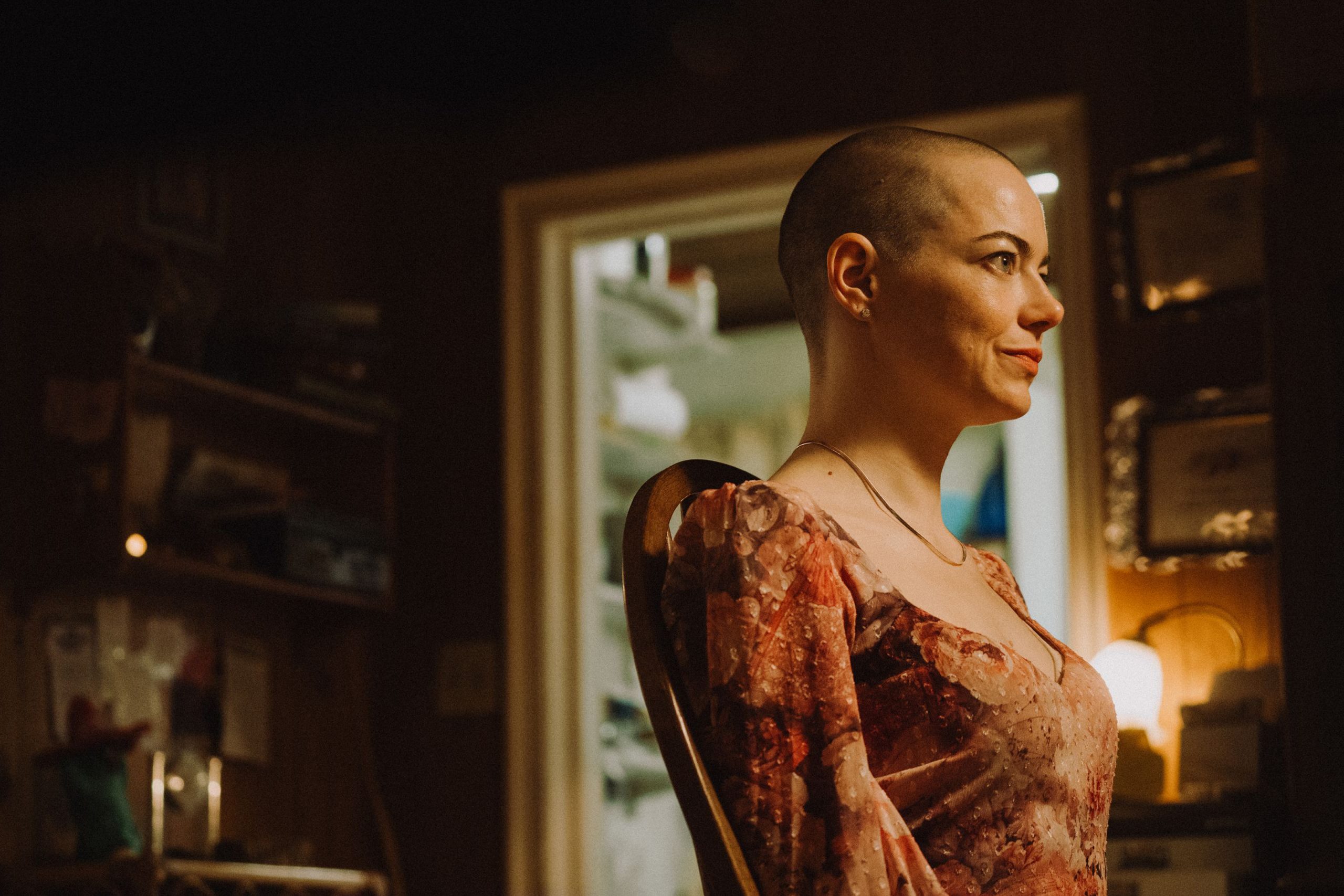
Bugonia (2025)
It all starts with something magnificent.
Bugonia opens with the audacity typical of Yorgos Lanthimos, hiving off from realism into a buzzing nest of conspiracy, grief, and satire. A loose remake of Jang Joon-hwan’s 2003 South Korean cult film Save the Green Planet!, it filters that original’s manic energy through Lanthimos’s distinctively clinical and absurdist lens. The plot is simple yet strange: Teddy (Jesse Plemons), a beekeeper haunted by environmental collapse and personal loss, becomes convinced that Michelle Fuller (Emma Stone), the ruthless CEO of a biotech conglomerate, is not human at all but an alien bent on the destruction of Earth. Teddy enlists his cousin Donny (Aidan Delbis) in a hostage plan — kidnap Michelle, interrogate her, and expose her extraterrestrial design before the world ends.
She’s late for her 9 a.m. — the destruction of humanity waits for no one.
The title Bugonia is neither random nor decorative — it’s derived from the ancient Mediterranean ritual or belief that bees spontaneously generate from the carcasses of dead animals, particularly oxen. In invoking this archaic myth, the film hints at themes of unnatural generation, parasitic life, decay yielding life, and the uneasy border between death and creation. In short: it’s a bee-ritual pun and one that sets the tone for a film constantly playing with life, death, infestation, and identity.
At the heart of Bugonia are two powerhouse performances. Stone’s Michelle evolves from a sleek, self-assured executive to a desperate captive whose composure steadily unravels. She’s icy one moment, volatile the next — frightened, furious, and deeply human throughout. In a pivotal scene, her head is shaved after her abductors become convinced her hair transmits alien signals, a gesture that captures both the madness of her situation and the vulnerability beneath her defiance. Stone’s transformation, physical and emotional, is executed with remarkable precision and intensity, anchoring the film’s spiraling sense of paranoia. Plemons, as Teddy, is magnetic in a different register: sweaty, nervous, sometimes absurd, sometimes terrifying — but always with a manic conviction. Their exchanges crackle with tension and ambiguity. The supporting cast is equally strong: Delbis’s Donny is the credulous foil whose loyalty fractures, Alicia Silverstone’s brief turn as Teddy’s mother lingers with a weird echo of familial guilt, and Stavros Halkias as a local cop offers a grounded counterpoint to the more cosmic stakes.
Conspiracy, condiments, and cosmic dread.
Visually and stylistically, Bugonia bears Lanthimos’s unmistakable stamp. Cinematographer Robbie Ryan captures sterile corporate spaces, dimly lit basements, and desolate coastal landscapes with cold symmetry and unnerving precision. The film often frames its subjects just off-kilter, as though we’re peering into a distorted reflection of our own world. The Greek island of Milos — used partly for the film’s ending — provides wind-whipped expanses that contrast sharply with the tight, suffocating interiors, and you can sense Lanthimos’s impulse to trap his characters within those spaces, both visually and psychologically. The music, composed by Jerskin Fendrix and performed with the London Contemporary Orchestra, is eerie and insistent; Fendrix was reportedly asked to write much of the score from a series of keywords rather than a completed script, giving it a jagged, half-detached quality. The result underlines moments of horror and emotional fracture without ever fully resolving them, keeping the audience in a state of shimmering unease.
On a thematic level, Bugonia hums with anxiety about ecological collapse, corporate malfeasance, conspiracy culture, alienation, and the fragility of belief. On one hand, Teddy’s crusade about dying bees (and by extension the natural world) is a thinly veiled metaphor for humanity’s own collapse: if the bees vanish, what hope for us? On the other hand, the film reaches into paranoia — how far do we go to assert meaning or find a cause when the world seems unraveling? Michelle’s alien status (real or imagined) becomes a mirror of how faceless corporations feel alien already, untethered, cloaked. There’s a thread about power and control: who gets to define life, who demands compliance, who becomes the parasite and who becomes the host. Bugonia is not exempt from irony: the conspiracist becomes the missionary, the captive becomes the enigma, and the bees, wordless and innumerable, serve as a chorus of accusation. The title itself suggests origin stories that are grotesque, unnatural, and contradictory — life from decay, order from entropy.
Yet for all its ingenuity, Bugonia is not flawless. By the midway point, you can almost smell the direction it’s heading. The escalating revelations, lunar-eclipse countdown, shifting loyalties, and final reckoning all follow a familiar Lanthimos — and even Jang’s original — blueprint, leaving you anticipating the sting before it lands. The film telegraphs so many visual and thematic cues that once you sense the endpoint — the sacrificial logic, the convergence of meaning, the collapse of certainty — the suspense starts to leak away. Some scenes linger longer than they should, taking too much time to reach their point, and the denouement, though emotionally resonant, arrives with the inevitability of an unavoidable swarm.
Still, even knowing how the hive will behave, Bugonia buzzingly holds your attention. Its audacity, its tone, its performances and visual nerve make it a compelling, if not perfect, ride. It may not hum with pure novelty from first frame to last, but it stings where it intends to sting. For fans of Lanthimos — or fans of films that force you to squirm in the frame — Bugonia is well worth a flight into its strange, hive-like logic. Just don’t be surprised if you see the queen’s gambit coming from a mile off.
3.5 / 5 – Great
Reviewed by Dan Cachia (Mr. Movie)
Bugonia is currently streaming on Universal Pictures Australia