By
By 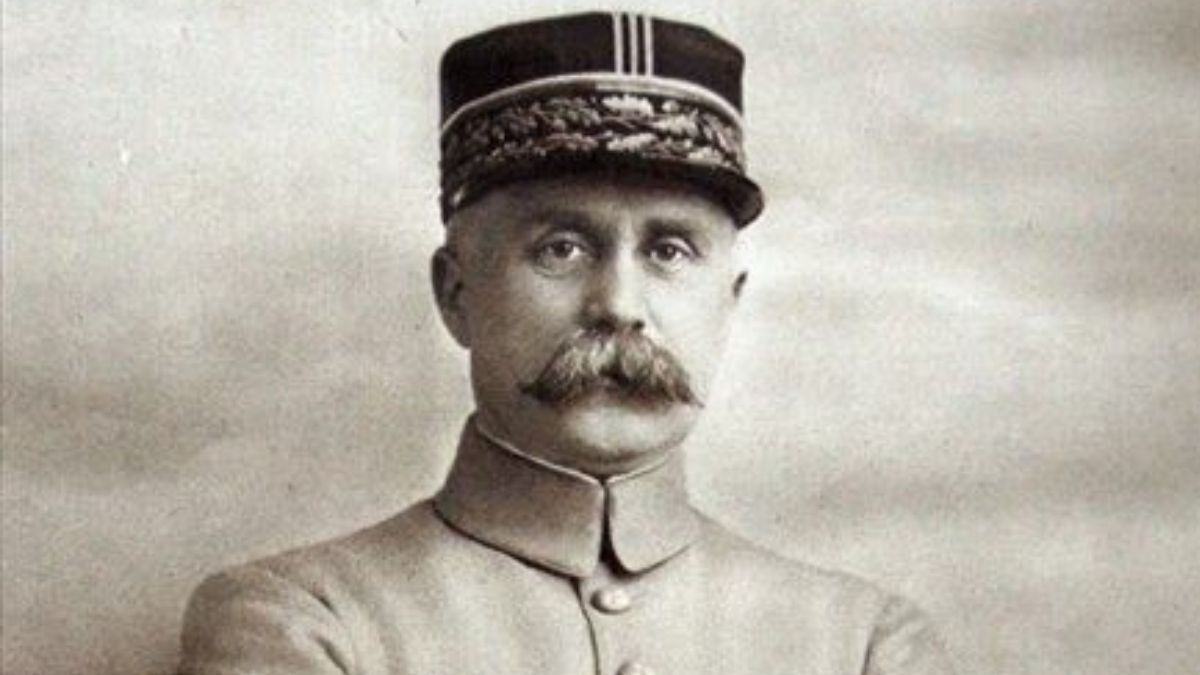
There is a very popular saying that says “you either die a hero, or live long enough to see yourself become the villain.” It isn’t exactly subtle; time and power corrupt even the best of us, so it’s best to die for a cause than see yourself become everything you once opposed.
This is hardly the case for every single human being in existence, but it certainly rings true in enough cases to give us pause. Here, there are several cases of people all across the world, with beliefs that once seemed noble, and ended up turning not only into villains, but at times into outright monsters.
Wikimedia Commons
Jim Jones
Before Jonestown, Jim Jones cultivated a reputation as a progressive religious leader and civil-rights ally. His integrated congregation and charitable work earned considerable praise, including a 1977 Martin Luther King Jr. Humanitarian Award, before his deadly cult ended in mass murder.
Wikimedia Commons
Philippe Pétain
Philippe Pétain entered history as the “Lion of Verdun,” a celebrated French general whose leadership during World War I made him a national hero. Decades later, he headed Vichy France, collaborated with Nazi Germany, and was convicted of treason.
Wikimedia Commons
Bob Packwood
Bob Packwood was a prominent Republican senator and respected moderate before allegations of sexual misconduct involving numerous women destroyed his career. In 1995, the Senate Ethics Committee unanimously recommended expulsion, prompting his resignation and ending his three-decade political career.
Wikimedia Commons
David Baszucki
Roblox co-founder David Baszucki once championed user creativity and community-driven game development. In 2025, however, his response to questions about predators on Roblox sparked backlash after he described the problem as “not necessarily just a problem, but an opportunity.”
Wikimedia Commons
Fritz Haber
Fritz Haber won the Nobel Prize for developing industrial ammonia synthesis, a breakthrough crucial to modern fertilizers and food production. During World War I, however, he became a central figure in Germany’s chemical-warfare program, earning the grim designation “father of chemical warfare.”
Wikimedia Commons
Fred Phelps
Fred Phelps spent part of his early legal career representing Black clients in civil-rights cases and challenging racial discrimination in Kansas. He later became infamous as the founder of Westboro Baptist Church and its intensely hateful protest campaigns.
Wikimedia Commons
Larry Page and Sergey Brin
Larry Page and Sergey Brin founded Google around an ambitious mission to organize the world’s information. As Google evolved into an advertising giant, however, its extensive data collection and targeted-advertising practices made privacy a defining controversy surrounding their creation.
Wikimedia Commons
Joe Paterno
Joe Paterno spent decades as one of college football’s most revered coaches, with Penn State celebrating his integrity and success. After the Jerry Sandusky scandal, the Freeh investigation concluded that Paterno and other senior officials failed to protect children and concealed critical information.
Wikimedia Commons
Jimmy Savile
Jimmy Savile died in 2011 still widely regarded as a beloved British entertainer and charitable figure. After his death, extensive allegations of sexual abuse emerged, transforming his reputation and prompting investigations into how institutions had overlooked or failed to act on warning signs.
Wikimedia Commons
Benedict Arnold
Benedict Arnold was one of the Continental Army’s most capable battlefield commanders, and he was badly wounded at Saratoga. Yet his later attempt to hand West Point to Britain made his name synonymous with betrayal, despite a monument commemorating his wounded leg.
Wikimedia Commons
Ingrid Newkirk
Ingrid Newkirk began as an animal-welfare advocate whose work helped establish shelters, spay-and-neuter programs, and investigations into laboratory abuse. As PETA’s leader, however, her increasingly provocative campaigns and comparisons involving human atrocities made her one of animal activism’s most controversial figures.
Wikimedia Commons
Naomi Wolf
Naomi Wolf became a prominent feminist writer and public intellectual during the 1990s, particularly after The Beauty Myth. In later years, her public profile shifted dramatically as she embraced conspiracy theories about vaccines, COVID-19, and government power.
Wikipedia
Herbert Hoover
Herbert Hoover entered the presidency with an extraordinary humanitarian reputation built partly through wartime relief work. His presidency became synonymous with the Great Depression, while later policies associated with his era and administration left a far more complicated historical legacy.
Wikimedia Commons
Noam Chomsky
Noam Chomsky spent decades as an enormously influential left-wing intellectual and critic of American foreign policy. Later revelations about his relationship with Jeffrey Epstein, including meetings and correspondence, complicated the reputation of a figure many admirers had regarded as morally uncompromising.
Wikimedia Commons
Robert F. Kennedy Jr.
Robert F. Kennedy Jr. built a reputation as an environmental lawyer and author, including the 2004 book Crimes Against Nature. His later embrace of vaccine skepticism transformed his public image, culminating in his controversial tenure as U.S. health secretary.
The post 15 Times Someone Really Lived Long Enough to Become the Villain appeared first on Den of Geek.