By
By 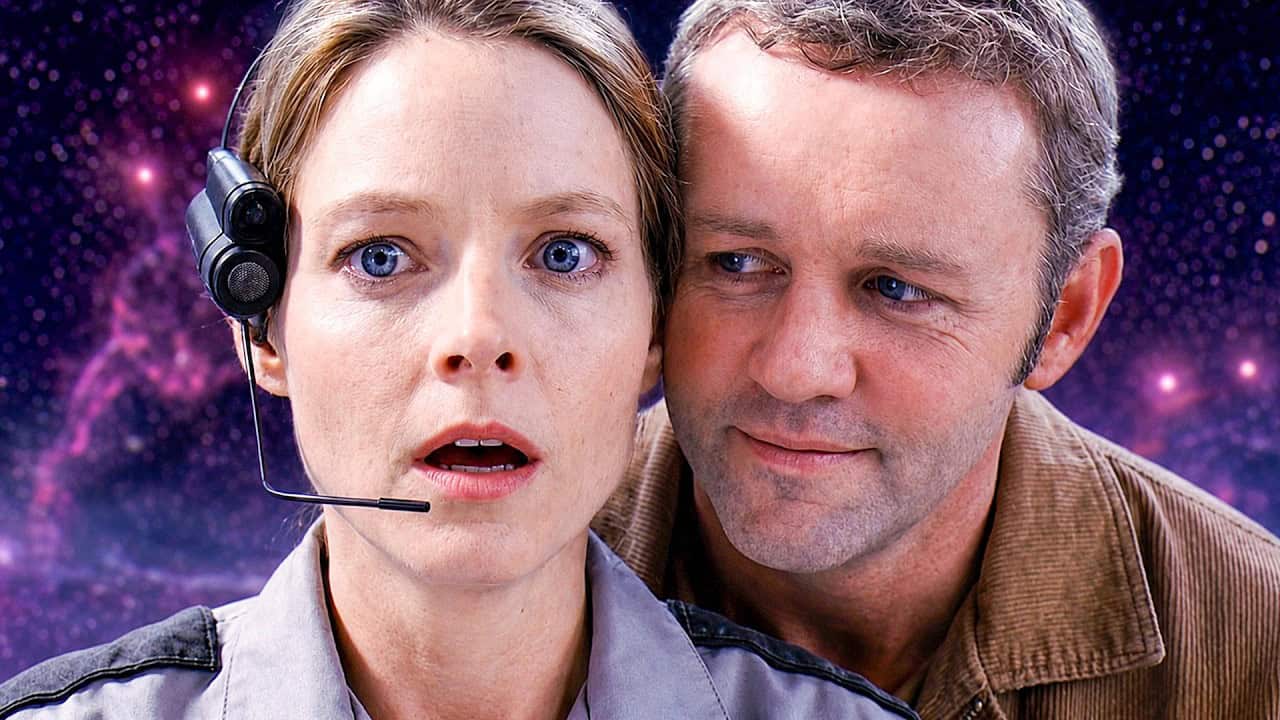
Robert Zemeckis’s Contact, based on the acclaimed novel by Carl Sagan, was among the most anticipated movies of its time. At last, a realistic, scientifically rigorous movie was being made about first contact.
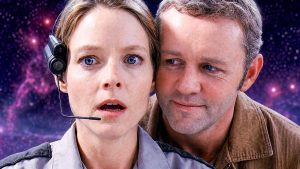
But the ending, to many, proved to be the ultimate cop-out—albeit not that different from the book. The film hinges on the idea of faith vs. science, but the ending is ambiguous in both regards. More than that, audiences expected to see an alien, only to see—well: Jodie Foster’s dead father.
So what about the ending? Is it as bad as all that, or is it actually exactly what Carl Sagan intended, designed to provoke intellectual debate rather than provide your typical Hollywood ending? And why didn’t we see an alien?
After all, the movie is directed by the guy behind Back to the Future, Who Framed Roger Rabbit, and Forrest Gump. Weren’t audiences deserving of something a little more exciting than, well, Jodie Foster’s dead father?
Robert Zemeckis at the Peak of His Career
While somewhat more obscure now than you’d think given the pedigree, Contact was one of the most high-profile films of the nineties. If it fell somewhat short of industry expectations, that was only because of the sheer talent involved.
It was directed by Robert Zemeckis, who, at the time, was one of the most bankable directors in Hollywood, rivaling Steven Spielberg. His more recent work has certainly been a mixed bag, but at the time he was on an incredible box office run.
First there was 1984’s Romancing the Stone, which was followed by Back to the Future. That alone made him among the most sought-after directors in town, able to skillfully blend humor, drama, and cutting-edge VFX in what’s now thought to be among the greatest films ever made.
He followed it up with another industry disruptor—Who Framed Roger Rabbit, which blended live action and animation in a way no one thought possible, becoming another classic. It was quickly followed by his back-to-back Back to the Future sequels. And while his follow-up, Death Becomes Her, was seen as something of a disappointment financially, it was another movie that pushed boundaries in terms of on-screen VFX.
But nothing really prepared Hollywood for his follow-up, Forrest Gump. It not only won him a Best Director Oscar and became a box office behemoth, but it did something no one thought possible at the time: it used cutting-edge technology to make dead historical figures like JFK, John Lennon, and others seem to interact with Tom Hanks’ Forrest Gump. While very dated in our era of deepfakes and AI, at the time Gump’s effects were considered mind-blowing.
When Zemeckis signed on to Contact, everyone expected another film that would push the envelope in terms of what technology could bring to the big screen. But while that’s maybe what the public or even some studio execs expected, that’s not what Contact was ever intended to be.
Carl Sagan and the Origins of Contact
Contact was based on the novel by Carl Sagan. Sagan was known as perhaps the greatest science communicator of his day. An astronomer and planetary scientist, he had the talent of taking complex scientific theories and breaking them down into language the layman could understand.
The most famous example of this was his passion project Cosmos: A Personal Voyage, a thirteen-part miniseries on PBS that covered cosmology and its relation to the origin of human life. It was a sensation throughout the eighties, seen by an estimated 500 million people in sixty countries. Among others, it inspired Neil deGrasse Tyson, who would later host his own version of Cosmos in tribute to the man he called his mentor, picking up the torch as the great science communicator of his day following Sagan’s death from cancer in 1996—only months before Contact came out in theaters.
In addition to his scientific work, Sagan was an author. The book actually began life as a screenplay he co-wrote with his future wife Ann Druyan in 1979. Frustrated with its lack of momentum at the studios, Sagan transformed the script into a novel, which became a bestseller.
While a fictional story, Sagan aimed to make it as scientifically accurate as possible, consulting with physicist Kip Thorne on the concept of “wormholes,” which figure prominently in the book. It centers around Eleanor “Ellie” Arroway, an astronomer working for the SETI Institute—short for the Search for Extraterrestrial Intelligence.
The project detects a signal from Vega, 26 light-years away, transmitting prime numbers and later a retransmission of Adolf Hitler’s 1936 Olympic speech, the first TV signal to escape Earth’s ionosphere. Convinced they are on the verge of first contact, Ellie and four other scientists are chosen to travel on a ship that moves through a network of wormholes to make contact, with the alien lifeforms eventually taking the form of a loved one.
Upon their return, they discover that to the humans left behind on Earth, it seems like they never left. No evidence remains of first contact, leading many to disbelieve their story, although Ellie later discovers scientific evidence revealing the trip did indeed happen.
The Long Road to Adaptation
When Contact was published as a novel and sold so well, the project—and Sagan and Druyan’s script—once again became a hot property in Hollywood, initially optioned by Warner Bros.
At first, Roland Joffé, director of The Killing Fields and The Mission, was set to direct, with a revised screenplay by James V. Hart, who would later write Hook and Bram Stoker’s Dracula. Eventually, Joffé was replaced by Mad Max’s George Miller, with Michael Goldenberg brought in to further develop the script.
Miller wanted to cast Uma Thurman as Ellie, with Ralph Fiennes playing Palmer Joss, a Christian philosopher who becomes Ellie’s love interest and further inhabits the faith vs. science aspect of the search for extraterrestrial life. Yet Miller and the studio parted ways over his script ideas, and they went to Robert Zemeckis. Thanks to his place in Hollywood following Forrest Gump, Zemeckis was given carte blanche to do the movie his way, including final cut privileges and casting. Still, he kept Sagan intimately involved, hoping to make a science-based film that could rival 2001: A Space Odyssey.
Key Differences Between the Novel and the Movie
Robert Zemeckis assembled a fine cast, led by Jodie Foster, who was perhaps only second to Julia Roberts at the time as one of the most acclaimed actresses in Hollywood. She was coming off two Oscar wins, first for The Accused in 1988, and then for The Silence of the Lambs, which was also one of the biggest blockbusters of its time. Her track record at the box office was excellent, having also won acclaim for directing Little Man Tate, as well as her foray into comedy starring opposite Mel Gibson in Maverick.
The role of Palmer Joss would be taken by Matthew McConaughey, who had skyrocketed to stardom overnight after being cast in the lead of the John Grisham adaptation A Time to Kill the year before. When that film was a hit, he became a megastar, and this would be his follow-up.
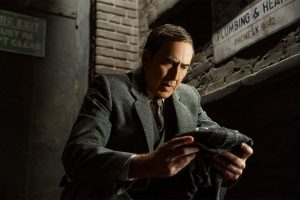
The supporting cast included James Woods, Tom Skerritt, Angela Bassett, and David Morse, who played an important role as Ellie’s deceased father, whose image the aliens take at the end.
The film version of Contact would be different from the novel in many ways:
• Five people travel in the novel. Ellie is joined by four international passengers, reflecting the book’s emphasis on global cooperation. In the film, Ellie travels alone, making the experience more personal and emotionally direct while keeping Foster as the film’s central focus.
• Palmer Joss is less of a romantic lead in the book. The film greatly expands his relationship with Ellie and makes their romance central to the conflict between faith and science. Not only did this appeal to a larger audience—particularly because of McConaughey’s heartthrob status—but it gave equal screen time to the faith aspect of the debate, aiming the movie at both a faith-based and secular audience.
• The movie makes Ellie’s father central. The alien appears to Ellie in the form of her late father. The novel also uses a familiar human form to communicate with her, but Ellie’s childhood grief and relationship with her father are much more prominent in the film.
• The novel is more political and scientific. Sagan spends considerably more time on international negotiations, the construction of the machine, mathematical ideas, and debates between different nations and belief systems. The film turns much of this into a focused Hollywood character drama.
• The endings offer different evidence. In the film, officials suppress the fact that Ellie’s recording device captured roughly 18 hours of static, subtly supporting her account. In the novel, Ellie discovers a remarkable pattern hidden deep within the digits of pi: a circle emerging from a seemingly random sequence. This suggests that intelligence—and perhaps design—exists within the structure of the universe itself.
• The book’s aliens are more explicit about the larger mystery. They explain that they did not create the transport network and are themselves investigating who built it. The film hints at this ancient cosmic infrastructure but leaves more unexplained.
Why We Didn’t See an Alien
The decision to have the extraterrestrial appear as Ellie’s father came from Carl Sagan—not Robert Zemeckis. The same basic encounter occurs in Sagan’s novel: the being assumes the appearance of Ellie’s deceased father, Ted, because it has accessed her memories and wants to communicate through a form she can understand and trust.
Zemeckis did, however, make that choice feel much more sentimental. Because the movie is called Contact, comes from Robert Zemeckis, and was positioned as a summer blockbuster, audiences expected some kind of alien at the end of the film. Instead, they got something more intellectual—but also, in the opinion of many, overly sentimental.
Intellectually and thematically, a conventional alien was never really what Sagan was promising. His reasoning appears to be:
A genuinely advanced extraterrestrial might be so unfamiliar that humans couldn’t meaningfully perceive or communicate with it.
Any recognizable creature design—grey alien, insect, humanoid—would be a Hollywood invention.
The aliens are managing humanity’s first step into a much larger reality, so they deliberately provide Ellie with a psychologically comprehensible interface.
The movie does give Ellie glimpses of enormous structures and distant civilizations during her journey. What it withholds is the extraterrestrial’s true physical form. That distinction matters: she unquestionably contacts another intelligence, but the film refuses to pretend it knows what such an intelligence would look like.
In some ways, this isn’t dissimilar to what Denis Villeneuve would later do in his own first contact movie, Arrival. Now, you actually see the aliens in Arrival, which is important and likely why that film was a success, but it’s similar in that the aliens have to find a way to communicate with humanity beyond language—with that movie also playing with how the aliens process time.
Technological Realism and Controversy
While Zemeckis avoided reaching into his VFX bag of tricks for a big-screen alien, in other ways the film was indeed cutting-edge.
Footage of then-President Bill Clinton was manipulated to make it look like he was addressing first contact, allowing the film to establish him as the president rather than cast an actor. This proved controversial, with the White House Counsel sending a strongly worded letter to the studio protesting the use of Clinton in the film. Warner Bros. defended it by saying the White House was notified early on and even sent a print of the film before release, even if they never specifically sought permission.
The movie also starts with a three-minute CGI sequence depicting the vastness of the universe which, at the time, was the longest continuous CGI shot in a live-action film.
Also worth noting is Zemeckis’ devotion to making the film look like it takes place in the contemporary world, using clips from Crossfire, Larry King Live, and The Tonight Show with Jay Leno. Like with Clinton, the use of several CNN correspondents proved controversial. Because Time Warner owned CNN, it gave the impression that the news channel was being manipulated by its parent company. In the future, anytime CNN was approached for use in a film, it had to go through an ethics committee.
Box Office, Reception, and Legacy
In the end, Contact’s reaction was mixed—both critically and with audiences. Many critics liked it, and audiences gave it an A-minus CinemaScore rating, which was good, but not high enough to suggest audiences loved the movie unreservedly.
It was seen as something of a box office failure when it failed to take the top spot the weekend it came out, making just over $20 million. That was a record for star Jodie Foster, but not strong enough to beat out the movie that won that weekend—ironically, Men in Black, which featured a whole whack of aliens and appealed directly to the blockbuster audience Contact missed out on.
Contact ended up having legs at the box office and just passed $100 million domestically. Given the high $70 million budget, it lost money in theaters, though it made up for the shortfall overseas, on home video, and on cable. It became an early DVD hit but was shut out at the Academy Awards, receiving only a single nomination for Best Sound. This was likely seen as a bitter disappointment for a movie directed by Zemeckis.
Zemeckis quickly bounced back in the year 2000 with two major hits: the Harrison Ford and Michelle Pfeiffer-led What Lies Beneath, and the Tom Hanks-led Cast Away. Yet Zemeckis would later embark on a controversial chapter of his career based on his interest in pushing what was possible on screen, pioneering motion capture technology in The Polar Express, Beowulf, and A Christmas Carol through his company ImageMovers. The last two saw mixed results at the box office, while the ImageMovers production Mars Needs Moms was a total disaster.
He’d do one more great live-action movie—the Denzel Washington-led Flight—but his follow-up movies were all received poorly, both critically and financially. Allied was a disappointment, Welcome to Marwen was a disaster, while The Witches and Pinocchio went straight to streaming. His film Here once again tried to push boundaries in terms of VFX, but failed financially.
Looking at Zemeckis’ career as a whole, one needs to give him some praise for his work on Contact. By not showing an alien at the end, he actually showed restraint.
Zemeckis, due to his love of tech, could have easily given us a giant CGI alien. But it would have gone against Carl Sagan’s original concept. While Zemeckis changed some aspects of the book, he opted to remain faithful to Sagan’s core intentions, giving the film the feeling of something the late Sagan would have been proud of.
It wasn’t financially all that successful, but it’s well regarded nearly thirty years later—and certainly a movie everyone involved can hold their heads up high while talking about.
The post Nearly 30 Years Later, Robert Zemeckis’s Most Misunderstood Sci-Fi Epic Deserves a Reevaluation appeared first on JoBlo.