By
By 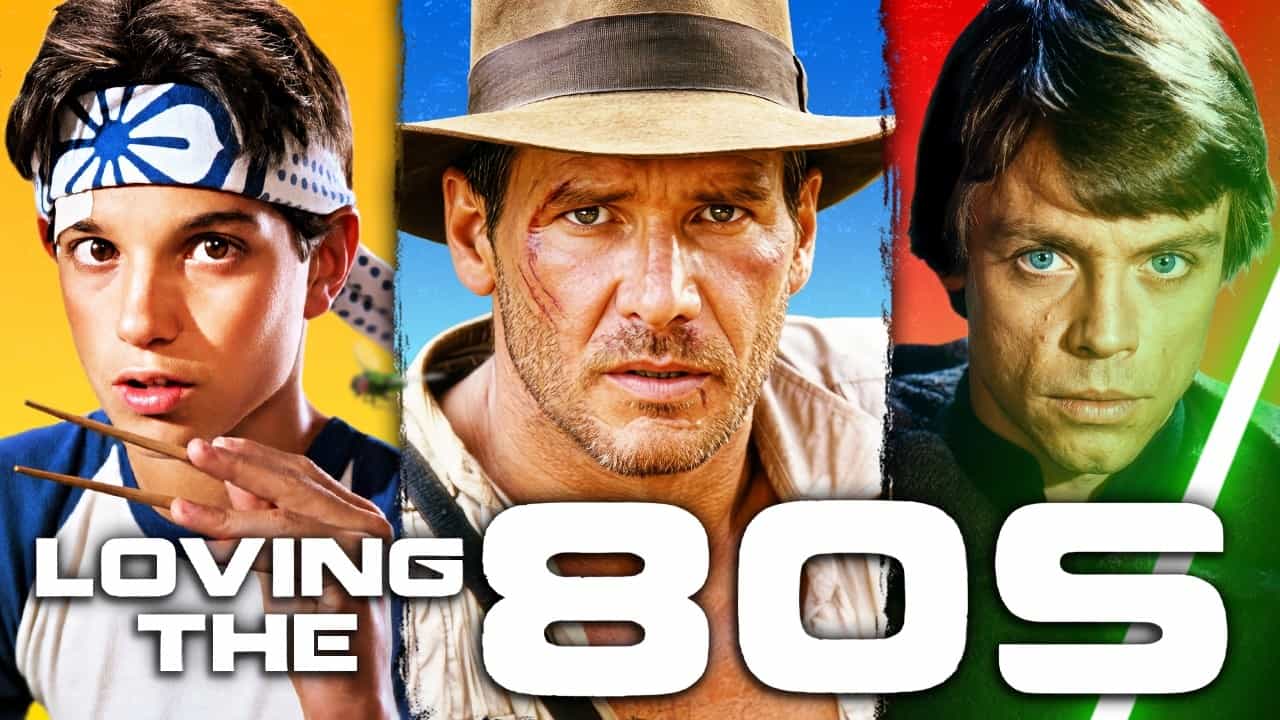
The Hollywood film franchise, in today’s world, is the most profitable artistic endeavor in all of media. Millions and sometimes billions of dollars are raked in by studios and executives year after year by cashing in on the love, admiration, and nostalgia that audiences feel for our favorite properties. Be it Star Wars, DC, 007, or you’re online obsessing over seeing the new Marvel in Infinity Vision, the odds are that your favorite film franchise was either started in the ’80s or owes its string of sequels to the format popularized in the ’80s.
What I’m saying is, the ’80s was the true dawn of the Hollywood franchise. And today, we’re going to talk all about it.
In today’s episode, we’re taking the DeLorean out for a spin, and you’re riding shotgun as we travel back to the ’80s and break down the rise of film sequels, merchandising, and the absolute money pool that was founded during the greatest decade for movies. We’ll talk about where the idea came from, how it became a bankable formula for studios to make profits, and potentially how it destroyed movies the way we knew them and rebuilt an industry of endless dead-horse beating. Let’s get into it.
In our previous episodes in this series, we’ve talked about the action heroes of the decade, the B- and C-list stars, the martial arts movement, the stuntmen, directors, aesthetics, VHS gems, and even what makes ’80s villains the true standouts of the era. All of our previous installments have been leading to this, so, in a way, this video is kind of part of a franchise… where’s my billion bucks?!
How Do We Define a Film Franchise?
Now, how do we define a “film franchise”? Well, to me, a movie or character that receives multiple sequels, spin-offs, or ventures into other forms of media qualifies. I don’t know that I’d consider some of the great trilogies of the ’80s to be full-on franchises, though, so the Back to the Future trilogy is respectfully being excluded from today’s video, as it’s an iconic trilogy that really doesn’t have much else in terms of franchise success. And ya know what? That’s a good thing. Let some things stay precious and sacred forever, I say.
Before the ’80s, you’d of course see the occasional film sequel or series of film sequels pop up here and there, particularly with the Western genre, but in those days, movie studios were always looking for the next big thing. Looking ahead at the future of cinema and mining for golden ideas.
However, when the ’80s rolled in, the world was changing, and it was necessary for the film industry to adapt. During the ’80s, movies shifted from being gritty character dramas with relatable, morally grey characters to being idealized and stylized aspirational blockbusters that showed us what we WANTED to be and not what we WERE.
This came at the perfect time, as filmmaking technology was improving at a rapid rate and movies were starting to feel bigger than they ever had before.
Star Wars Showed Hollywood the Way
Star Wars was released in the late ’70s, and I think this is really where it all starts. George Lucas brought us a film that took audiences to worlds we’d never seen but gave us a found-family space adventure that was somehow also full of hope, meaning, and characters we’d come to love and cherish. But the ’80s, that’s where this iconic film became a massive franchise with enough cash flow to fill the Death Star AND the second Death Star.
Now, I know what you’re thinking. You’re probably about to comment that Star Wars was nothing more than a trilogy in the ’80s as well, and it wasn’t until years later that Hollywood expanded it with the prequels. Well, that’s where you’re wrong.
See, the ’80s of course saw the two sequels that completed the original Star Wars trilogy, but the booming popularity of the films led to an unprecedented explosion of merchandising and continued media. There was the often-shit-on Star Wars Holiday Special that honestly was so bizarre and ugly that it could have ruined the series, and there were novelizations, comic books, and magazines dedicated to the film, which brought awareness to other types of consumers. But where the money REALLY came from, outside of the movies, was the toys.
Star Wars toys took on a life and identity of their own in the 1980s, and it cemented this iconic trilogy as a staple in pop culture that would keep it going all the way into today. Most people forget this, but Star Wars just released a theatrical film THIS YEAR in 2026, and they don’t seem to be slowing down on the Disney+ streaming shows either.
Now, what did this movement do for cinema, and specifically franchises? Well, Star Wars was the first real example of just how big movies and their characters could get OUTSIDE of the box office. The merch and toy sales showed studios that there was money to be made by making each film a brand unto itself.
Rocky Proved a Franchise Could Keep Reinventing Itself
You’ll notice this in spades throughout the decade as we got sequels for just about everything. Like, look at Rocky. An indie movie made in the late ’70s somehow became a huge hit franchise throughout the ’80s, ’90s, 2000s, and 2010s, with only the occasional slip-up in quality.
This is a franchise that dominated the ’80s, with three films in the series releasing that decade and a ’90s installment to cap it off, only for it to be brought back in the 2000s with Rocky Balboa, a sort of legacy sequel to send Rocky off in style, and then the Creed spin-off trilogy, which launched Michael B. Jordan as a director in its third installment. This method of franchise filmmaking has launched SO many careers in the industry it’s almost unbelievable.
But not all franchises were career-starting box office bangers like Star Wars or Rocky. Some of them, like many horror franchises of the decade, were smaller productions that could produce multiple subsequent installments for cheap, so they did just that.
Franchises like Friday the 13th, Child’s Play, Leprechaun, and even The Stepfather, which saw three films AND a remake, all became as iconic and recognizable as they are today because Hollywood just kept churning them out. When we see Freddy, Michael, Jason, Pinhead, or even Lubdan the Leprechaun, we see the product of ’80s franchises beating us over the head with cool characters until we refused to let go of them, thus keeping their franchises alive well after some of them should have ended.
The thing to remember here is that this is all about money, right? Studios have success with a thing, so they make more of that thing. I heard a quote once that said, “I’ll stop beating the dead horse when it stops spitting out money.” And that truly sums up what I think motivates studios to do things like make an Indiana Jones movie in the 2020s with an 80-year-old Harrison Ford just to squeeze the tube dry.
Indiana Jones and the Danger of Never Letting Go
Speaking of Indiana Jones, THIS is an iconic franchise that was also nearly ruined by its own fame and popularity. Raiders of the Lost Ark was one of Spielberg’s best films, and it just so happened to star his friend Harrison Ford, who was still counting his cash from the success of his role as Han Solo in Star Wars.
This movie had all the makings of a great franchise-able film. It starred a likable action hero who had a relatable everyman quality, it had lore and lived-in world-building that felt like there was more to explore in future films, and perhaps most importantly, it made STUPID amounts of money.
This, of course, led us to receiving the initial Indiana Jones trilogy that was started and wrapped up with Indy and his dad literally riding off into the sunset, all in the 1980s, only to be reborn with Kingdom of the Crystal Skull in the 2000s and further diminished by the recent James Mangold-directed Dial of Destiny.
I think originally this was only planned to be three movies, but after a few duds from Spielberg and enough desperation from the 2008 recession, Lucasfilm was right back in the saddle to relive the glory days. The problem, obviously, is that despite Ford being an incredible actor, he was simply too old to keep doing this. Plain and simple.
In total, the Indiana Jones franchise has pulled in billions of dollars. With that being said, please leave well enough alone and STOP making these movies.
Ghostbusters Becomes a Pop Culture Phenomenon
Anyway, in the ’80s, none of these lessons were being learned. So franchises kept coming.
Ghostbusters was planned as a single film that was originally meant to star Eddie Murphy, Chevy Chase, and John Belushi alongside creator Dan Aykroyd, but later became the beloved classic we all adore. Similar to Indy, the characters of Ray Stantz, Winston Zeddemore, Peter Venkman, and Egon Spengler won us over to the tune of millions of dollars in theaters, which obviously made it prime for franchising.
We’re talking Ghostbusters II in the ’80s, The Real Ghostbusters cartoon, also in the ’80s, a new Ghostbusters cartoon in the ’90s, a reboot in 2016, two legacy sequels in the 2020s, and billions of dollars made in merchandising. If you’re any kind of movie fan, but especially an ’80s movie fan, you own SOMETHING with the logo on it. I promise.
This is an interesting case because, for many, this franchise hasn’t been great since the first film. While I admit the original 1984 movie is superior to anything that came after it, I think this is one of those franchises that will always find its place somewhere in pop culture. The first movie is famously hailed as “a movie about nothing,” and that’s exactly what we love about it.
The second movie is trying harder to do a little more and ultimately lacks the charm of the first one, despite having a more polished and colorful look. The failure of the second film haunted any new live-action Ghostbusters from being developed, but the cartoon was a hit for kids who grew up on Saturday morning cartoons, and that kept the brand in the public consciousness for years to come.
There was a hit video game that also served as a third installment to the original two films that is very cool and has a great story. Then, in 2016, it was time for the inevitable film reboot — which, by the way, I feel like film REBOOTS deserve their own video one day — but this movie did not impress audiences, nor did it seem to breathe new life into this ghost of a franchise.
Directed by the great Paul Feig, this movie replaced our usual characters with an all-new set of ghost-hunting blue-collar workers. This time, they’d be an all-girl lineup starring Melissa McCarthy, Kristen Wiig, Leslie Jones, and Kate McKinnon. I admit, I don’t love this movie, but I think people are WAY too hard on it. It’s still pretty good, even if it’s somehow an even lower-brow version of what we’re used to.
I also think the first legacy sequel, Ghostbusters: Afterlife, was excellent. It felt like a tried-and-true legacy sequel that had all the makings of a nostalgia bomb. It brought back the original cast, even the dead ones, it was directed by original director Ivan Reitman’s son, and it picked up years after the events of the second film, ignoring the reboot completely.
Unfortunately, all the good shit this movie did was kind of undone in Ghostbusters: Frozen Empire, which seems to have done what Ghostbusters II did and ruined the series for live action. However, Ghostbusters ain’t going anywhere. Mark my words.
The Karate Kid Just Keeps Going
1984 was a hot year for movies in general, but specifically movies that birthed giant franchises. Not only with Ghostbusters, but what about The Karate Kid?
This franchise is CRAZY. The lore for something so simple has gotten so deep that it’s exhausting yet hard to look away from. The Karate Kid came out the same year as Ghostbusters and starred Ralph Macchio as Daniel LaRusso, a New Jersey transplant living in L.A. who learns the discipline of karate from his mentor, an old maintenance man called Miyagi, who teaches Daniel how to defend himself and do it with honor.
This should have always been a single standalone movie, in my opinion. It’s just so simple in scope. A bullied kid learns how to fight and takes down his bully at the end. However, this movie also cleaned up too well at the box office to let it be a single bolt of lightning sitting in a bottle.
So, The Karate Kid Part II came out and took Daniel and Miyagi to Japan to expand on the lore of Miyagi’s past while adding new characters to the mix. This movie is pretty good and has some amazing set pieces, like the fight in the rain at the end, but it ultimately didn’t carry the same weight as the original.
However, it made enough money to keep things up, so The Karate Kid Part III was released shortly after that, which again expanded on past lore, set up future lore, and introduced characters like Terry Silver and Mike Barnes into the blend. Characters we’d be sure to see again one day.
After the original trilogy, we got the ’90s version called The Next Karate Kid, with Pat Morita reprising his role as Miyagi, but this time taking on a new pupil in Hilary Swank. I don’t like this movie. It has a Karate Kid setup but a way less likable protagonist and less going on. There’s like a bully task force in this movie or something and… IDK, I hate it.
Audiences didn’t like it either, so the franchise went on ice for a while until it was time for the reboot in 2010, which reinvented what we knew of the original film and followed new characters, including Jaden Smith as the tiny ass-kicking machine student and Jackie Chan as Han, this movie’s Mr. Miyagi. This movie was a relative success but didn’t excite audiences for a sequel, so it just kind of came and went.
However, in the 2010s, YouTube was looking to get into the streaming game and created a platform meant to rival Netflix with YouTube Red. One of its projects was a revival of The Karate Kid in TV series form, a show called Cobra Kai that would follow the villain of the original film and frame him as the hero of his own story.
This show eventually moved to Netflix, where the remaining seasons were released, and I know this show got kind of lame and stupid in the later seasons, but man, I love Cobra Kai. I think this show does more for the original film than any of the other movies ever could. It brings back like every single character from every movie and truly lives up to its source material.
The rave success of the show also led to the recent Karate Kid: Legends, which… sucks. Again. This movie crosses over the original film with the Jackie Chan reboot and has Daniel and Han training a new kid. I don’t care for it. And I’m sure you don’t either because nobody saw this movie.
The Terminator Becomes an Icon
Also in 1984, we got James Cameron’s seminal film The Terminator, which not only became a hit franchise, it also became something of an iconic warning for the now very real threat of AI.
This original film introduced Arnold Schwarzenegger as the Terminator and helped launch his career into the stratosphere. This neon-soaked horror-action romp became one of the most popular films of its era, and it all started here in 1984, going up against already iconic films like Ghostbusters, Gremlins, The Karate Kid, and even Conan the Destroyer, ANOTHER Arnold outing.
This was the only Terminator flick to come out in the ’80s, and I admit that T2 is a better film — the best in the series — and that released in the ’90s. But after the numbers this movie did, there was no way it wouldn’t get sequels.
In the early ’90s, we got Judgment Day, which was kind of a reimagined version of the original film, and this led to the early 2000s Terminator 3: Rise of the Machines, which was… bad. Very bad. But it had a hot new robot for fanboys to gush over.
This movie follows a now-grown John Connor on a mission to shut Skynet down and blah blah blah, this movie isn’t great and would be completely forgotten just a few years later when Christian Bale took on the role of John for Terminator Salvation. This movie is technically in the same continuity as the third movie, but I honestly don’t know how. Salvation was okay and made some money as a more war-thriller-esque installment in the series, but didn’t crush the box office and was also forgotten about shortly after its release.
However, that was only until the mid-2010s when we got Terminator Genisys, a movie set in an alternate reality with multiple T-800s from different timelines. This movie is the first truly awful Terminator movie, and it just doesn’t belong in the lineup.
Of course, during all of these attempts to relaunch the character in film, there were TV shows like The Sarah Connor Chronicles, which takes place AFTER the events of T2, and some pretty fun video games in the ’90s.
Unlike some films that see diminishing returns as a bad thing, this franchise made ANOTHER attempt to capture its former glory with Terminator: Dark Fate, which seemingly finally ended the franchise. This movie was a fun nostalgia trip, but it was ultimately hollow and not doing anything audiences really felt the need or want for by the time it came out.
And to this franchise I say, hasta la vista, baby.
Actually, wait, there was an animated thing called Terminator Zero that released on Netflix a few years ago. Is that any good?
Arnold Schwarzenegger and Predator
And Arnold is basically the king of the franchise in the ’80s. Similar to Stallone with Rocky and Rambo, and similar to Harrison Ford, who was doing Indy and Star Wars, Arnold was making waves as the Terminator AND kicking off the Predator franchise as Dutch.
Now, Predator is a unique case because it started great, quickly got bad, then very bad, then came back around in recent years to now being great once again. Predator was a mess of a production that paid off big at the box office and established action horror as a viable genre for Schwarzenegger.
The film kind of leans into the idea that being the strongest and baddest dude means nothing when your adversary is miles ahead of you in physical prowess and dominance. The series went off the rails with its subsequent films, like Predator 2in 1990, starring Danny Glover and Gary Busey and taking place in the metropolitan city of Los Angeles, then crossed over with the Xenomorphs in Alien vs. Predator 1 & 2, both of which are fun concepts that, in my opinion, don’t really make for any interesting new developments in either saga. Although, I have to admit, the idea of Aliens and Predators on Earth is a cool idea.
In 2010, Predators released, which also came and went. This was Adrien Brody’s attempt at being an action star, and it was more or less just a sloppy and uninspired rehashing of the original film.
Then, in 2018, it was time for the official reboot with The Predator. See, they added a “The” before the original title so you know it’s new. This was Shane Black’s Predator film, and as much as I love Shane Black, this is probably the most forgettable Predator film yet.
The cast is stacked with Boyd Holbrook, Jacob Tremblay, Keegan-Michael Key, and even Thomas Jane and Jake Busey, who plays the son of his father’s character from the second film.
After the financial failure of this movie, it took some years before Hollywood knew what to do with the franchise. That is until Fox was acquired by Disney, which is known for pumping out films well beyond their welcome, and they… actually turned things around.
Prey was directed by Dan Trachtenberg as a Hulu original film, and this movie kicks so much ass. It’s a prequel that doesn’t bother with any of the original lore because it just hadn’t happened yet in the timeline. Great way to go.
Trachtenberg would also direct the recent Predator: Killer of Killers, which was another prequel, but it was an animated anthology separate from all other films, and the recent Predator: Badlands, which, in my opinion, is the best installment since the original. This movie follows a Predator as the hero of the tale and flips what we thought we knew of these monsters. It’s awesome.
RoboCop and the Franchise That Never Recovered
Of course, movies like RoboCop also couldn’t avoid becoming massive franchises that would die a slow and agonizing death, but unfortunately, it’s one that wouldn’t come back from.
RoboCop was Paul Verhoeven’s masterpiece. A perfect action commentary on capitalism, police systems, and class divides that brought us gore, gunshots, and whatever the hell this dude can be called after that chemical bath… yikes.
The first film is easily Peter Weller’s most recognizable movie, and it just hits on all levels every time you rewatch it. The movie was such a hit that Weller returned to the role for RoboCop 2, which was a significant step down in quality and led him to quit the job before they could squeeze out RoboCop 3, which is definitely the WORST one in the series.
These movies truly never got good again after the first movie. However, like many hit ’80s movies, it did have a more PG-rated cartoon that did okay in the ratings while the movies floundered on the video store bottom shelf.
In the mid-2010s, Joel Kinnaman starred as Alex J. Murphy in a RoboCop remake that I simply cannot stand. Look, I know this movie gets too much hate as it is, but I just don’t like it. I love Joel as the character, but the sleek redesign, the black costume, the story, and the villain, played by Michael Keaton, are boring and lame, and there’s a tremendous lack of understanding of the original film’s whole point.
This is a soulless movie, and I can smell the desperation for it to reignite the franchise all over it.
However, much like Ghostbusters, we did eventually get a proper revisit with RoboCop: Rogue City and its follow-up, which let you play as Alex Murphy, voiced by Peter Weller once again. Rogue City is almost a perfect RoboCop movie, honestly. The comics are okay too, specifically RoboCop: Mortal Coils, which you should read if you like the original film.
The ’80s Changed Hollywood Forever
Of course, we also had the Die Hard franchise, the many horror franchises, Mad Max, and so many more to look back on from that era of movies that made franchises so popular.
Franchises aren’t going anywhere anytime soon. They are the lifeblood of Hollywood in today’s world, and that is something that drives everything. They make money because we can’t help but see what our favorite characters are up to, even if it’s 30 years after we met them or have seen them.
The post The ’80s Franchises That Changed Hollywood Forever appeared first on JoBlo.